 Skip to content
EEAT and topical authority are two ideas that work hand in hand, and understanding how they connect helps you build content that ranks and earns trust. EEAT stands for experience, expertise, authoritativeness, and trust, the qualities Google uses to judge content. Topical authority is the expertise you build by covering a subject completely. The two reinforce each other, complete coverage proves expertise, and expertise strengthens authority. This guide explains the connection and how to build both.
EEAT is about demonstrating you are a credible, trustworthy source. Topical authority is about proving you know your subject inside out. They overlap heavily, because deep, complete coverage is one of the clearest ways to demonstrate real expertise.
Below, we walk through what EEAT means, how each part connects to topical authority, and how to build them together.

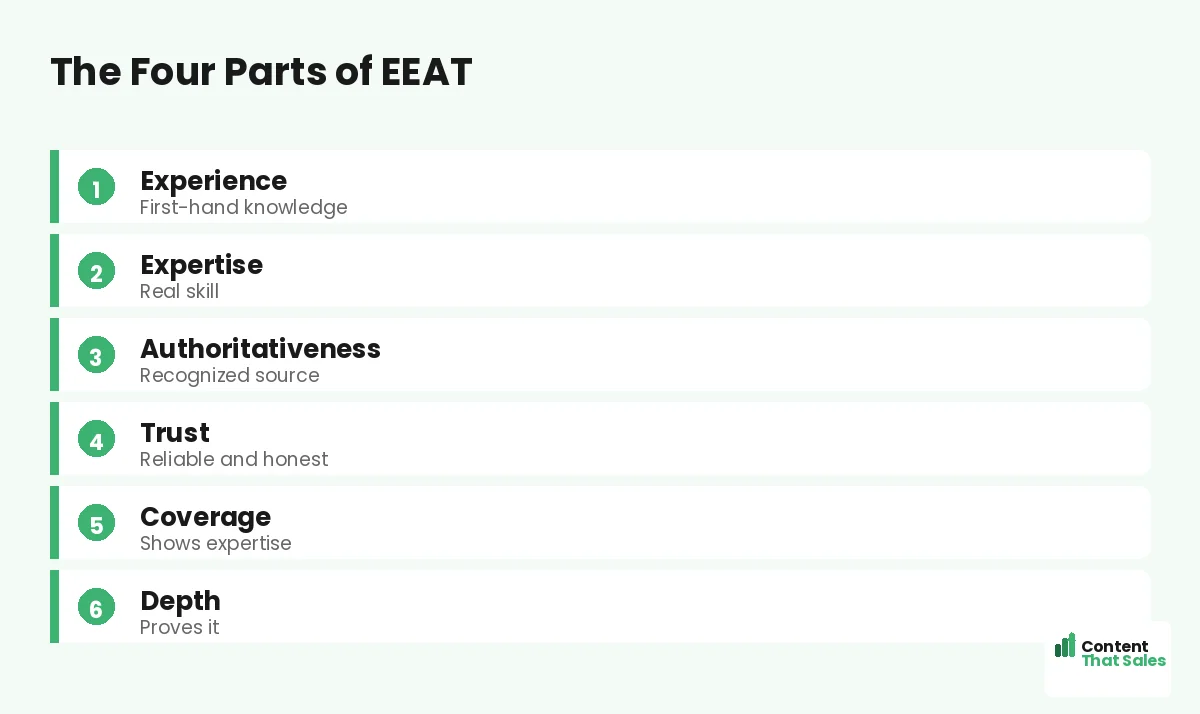
What EEAT Means
EEAT stands for experience, expertise, authoritativeness, and trust. It is part of Google’s quality guidelines, describing the qualities that make content credible. Google uses these ideas to judge whether a page deserves to rank, especially on important topics.
EEAT is not a direct score but a framework for quality. It captures whether real, knowledgeable people created trustworthy content. This connects closely to what topical authority is, since both are about proving genuine expertise on a subject.
How Experience Connects
Experience is first-hand knowledge, having actually done or used what you write about. Content showing real experience feels more credible and useful. On a topical map, covering subtopics with genuine, practical detail demonstrates the experience Google values.
Experience shows up in specifics, real examples, practical tips, and details only someone who has done the thing would know. Weaving this into your coverage strengthens both your EEAT and the depth that builds your topical authority.
How Expertise Connects
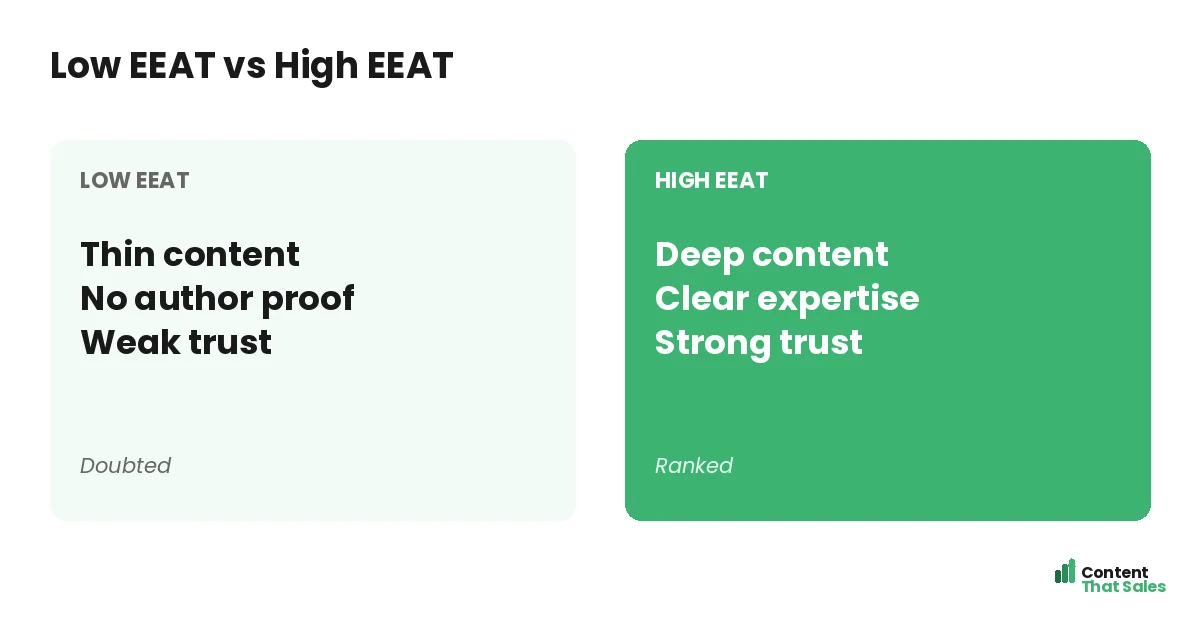
Expertise is knowing your subject deeply. This is where EEAT and topical authority overlap most directly, complete, thorough coverage of a topic is the clearest demonstration of expertise. Covering every subtopic well proves you are an expert.
A topical map is essentially a plan to demonstrate expertise systematically. By covering your subject fully and deeply, you show both the EEAT expertise signal and the coverage that builds topical authority at the same time.
How Authoritativeness Connects
Authoritativeness is being recognized as a go-to source on your subject. This is almost the definition of topical authority. When your site covers a topic completely and others reference it, you become the authority Google and readers turn to.
Building topical authority directly builds the authoritativeness part of EEAT. Complete coverage, quality, and recognition over time make your site authoritative. The two concepts point at the same outcome, being the trusted expert source on your topic.
How Trust Connects
Trust is the foundation of EEAT, is your content accurate, honest, and reliable? Trust underpins authority, since search engines and readers only treat trustworthy sources as authorities. Without trust, coverage and expertise count for little.
Build trust with accurate, well-sourced, honest content and clarity about who you are. Since readers scan more than they read, make trustworthy content clear and easy to verify. Trust turns coverage into genuine authority.
Did you know?
EEAT and topical authority are not separate checklists. Deep, complete, honest coverage of your subject builds both at once, which is why a strong topical map serves both goals.
Why They Reinforce Each Other
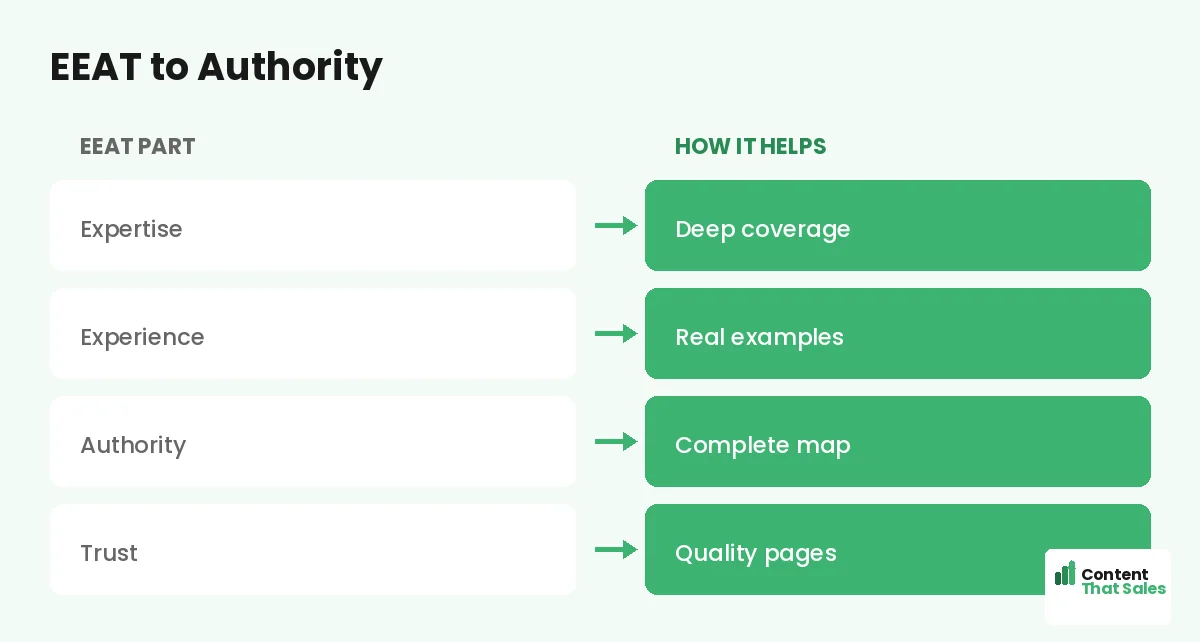
EEAT and topical authority feed each other. Complete coverage demonstrates expertise and authoritativeness. Real experience and trust make that coverage credible. Build one well, and you naturally strengthen the other, because they describe the same underlying quality.
This is why you should not treat them as separate projects. A strategy that builds deep, complete, trustworthy coverage satisfies both. Understanding how Google evaluates topical authority shows these signals working together as one.
How to Show EEAT in Your Content
Show EEAT by including real experience and examples, demonstrating deep knowledge, being accurate and honest, and making clear who created the content. These practices strengthen credibility while you build the coverage that creates topical authority.
Practical steps include clear authorship, citing sources, keeping facts current, and writing from genuine knowledge. Each adds an EEAT signal. Combined with complete coverage, they make your site both authoritative and trustworthy in Google’s eyes.
How to Build Both Together
Build a topical map for complete coverage, write deep pages that show real expertise and experience, keep everything accurate and trustworthy, and make authorship clear. This single strategy builds topical authority and EEAT at the same time.
You do not choose between them, you build both with quality, complete content. Simple, clear pages keep winning, and since easy reading lifts engagement, make each page clear, useful, and credible.
Put It All Together
EEAT and topical authority connect deeply. Experience and expertise show through deep coverage. Authoritativeness is recognition for that coverage. Trust underpins it all. Build complete, credible content, and you strengthen both at once.
Do not treat them as separate checklists. A topical map that drives deep, complete, trustworthy coverage builds EEAT and topical authority together. Focus on genuine quality and completeness, and both follow naturally over time.
Connect Your Pages to Reinforce Both
Internal linking strengthens EEAT and topical authority together. When your pages link to each other in a logical way, they show Google a connected body of expertise rather than isolated articles. Links also let one strong, trusted page lend credibility to related pages, spreading both authority and trust across your site.
This is why a well-linked structure matters as much as the individual pages. Building clear connections between pillar and cluster pages ties your coverage together so the whole reads as deep, organized expertise. A reader, and a search engine, can move from an overview to detailed answers without hitting dead ends, which reinforces the impression that you genuinely know your subject.
Common EEAT Mistakes to Avoid
A few mistakes quietly undermine EEAT even when your coverage is good. Publishing thin pages, leaving content outdated, hiding who wrote it, and making claims without support all weaken trust. Each one tells Google and readers that the content may not be as credible as it should be.
Avoiding these is straightforward. Keep pages deep and current, show clear authorship, back up claims with sources, and write honestly from real knowledge. These habits protect the trust that turns your coverage into genuine authority. Skipping them can hold back even a well-planned, complete topical map, because trust problems drag down the whole site rather than just one page.
How Content That Sales Helps
Building EEAT and topical authority together takes quality content and a clear plan. That’s where we come in. At Content That Sales, we build your map and write deep, accurate, credible pages that demonstrate expertise and earn trust.
You get content strong on both fronts. We plan complete coverage and produce trustworthy depth, often organizing it in a topical map template for clarity. The result is content that ranks and that readers trust.
Ready to Build Authority and Trust?
Now you know how EEAT and topical authority connect: deep, complete, credible coverage builds both. They are not separate goals but two sides of quality content. So why not build content that earns expertise and trust together?
Let’s build authoritative, trusted content together. Book your free consultation now. Call us at 8801631988589 or email service@contentthatsales.com. Let’s turn complete, credible coverage into authority and trust that rank.
Frequently Asked Questions About EEAT and Authority
What does EEAT stand for?
Experience, expertise, authoritativeness, and trust. It is part of Google’s quality guidelines, describing the qualities that make content credible and worth ranking.
How does EEAT relate to topical authority?
They overlap heavily. Complete, deep coverage demonstrates expertise and authoritativeness, while experience and trust make it credible. Building one strengthens the other.
Is EEAT a ranking factor?
Not a direct score, but a framework Google’s systems and raters use to judge quality. The qualities it describes strongly influence whether content ranks.
How do I show experience?
Include real examples, practical tips, and specific details that come from actually doing or using what you write about. Specifics signal genuine experience.
How does coverage show expertise?
Thoroughly covering every subtopic of your subject is the clearest demonstration of expertise, which is exactly what a topical map is built to do.
Why is trust so important?
Trust underpins everything. Search engines and readers only treat trustworthy sources as authorities. Without accuracy and honesty, coverage and expertise count for little.
Can I build both at once?
Yes. A topical map driving deep, complete, trustworthy coverage builds EEAT and topical authority together. They are two sides of quality content.
Can Content That Sales help?
Yes. We build your map and write deep, credible pages that demonstrate expertise and earn trust. Reach out for a quick quote.