 Skip to content
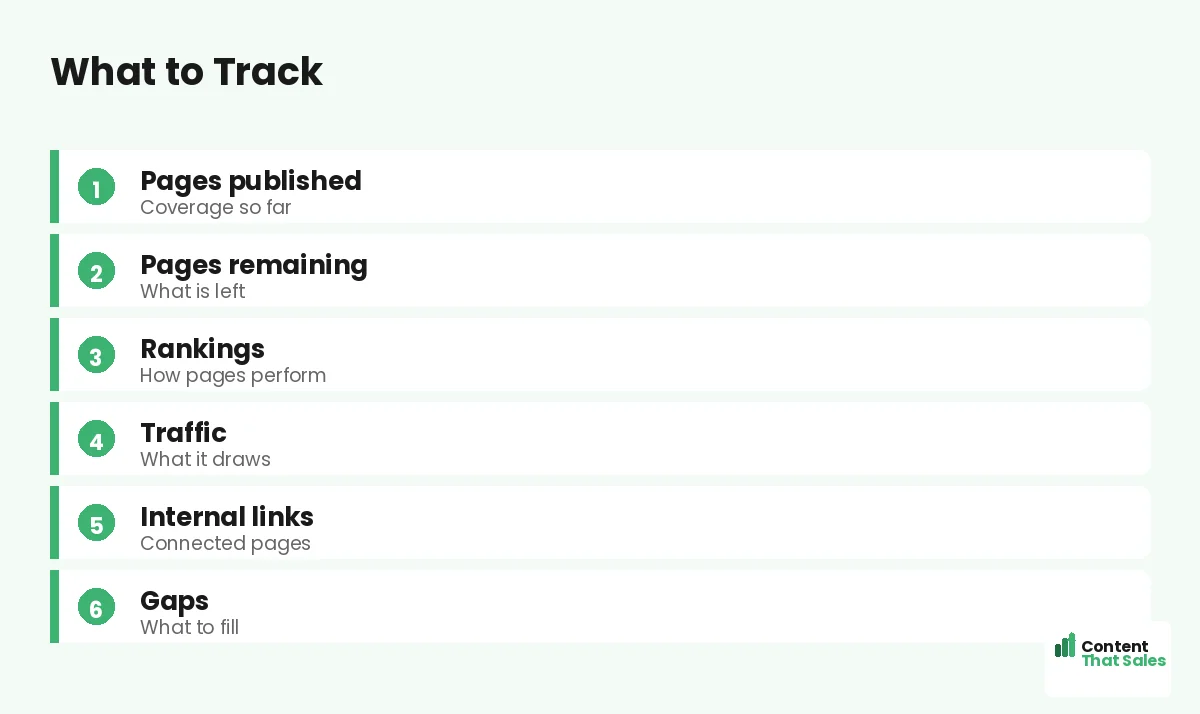
Knowing how to track progress on a topical map keeps your content effort on course and motivated. Tracking means watching how many pages you have published, what remains, how your pages rank, how much traffic they draw, and where gaps still sit. With a simple tracking system, the slow work of building a map becomes visible progress you can measure and act on. This guide shows you exactly what to track and how.
A topical map can take months to publish, and without tracking it is easy to lose sight of progress or drift off course. A clear view of where you stand keeps you moving and helps you decide what to do next.
Below, we walk through what to track, how to set up a simple system, and how to use what you see to keep improving.

Why Tracking Matters
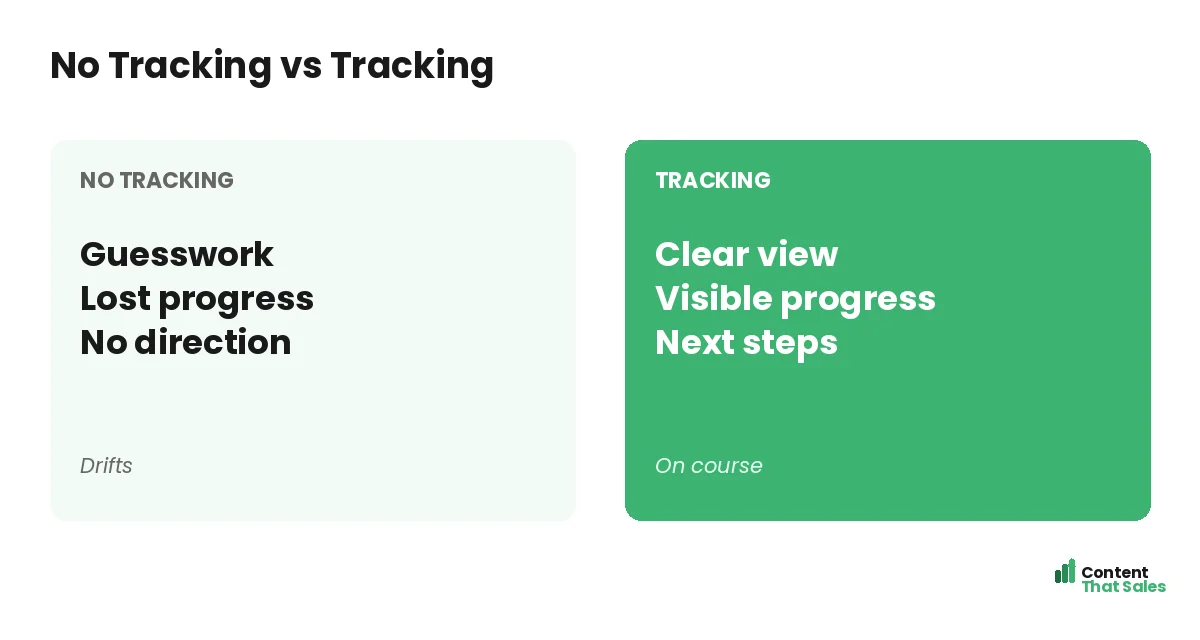
Building a map is a long project, and tracking keeps it from drifting. It shows your progress, reveals what is working, and tells you what to do next. Without tracking, you lose sight of where you are and can stall without noticing.
Tracking turns a long effort into visible milestones. As you work through your topical map, seeing coverage grow and rankings improve keeps you motivated and informed. It is the difference between flying blind and steering with clear feedback.
Track Pages Published
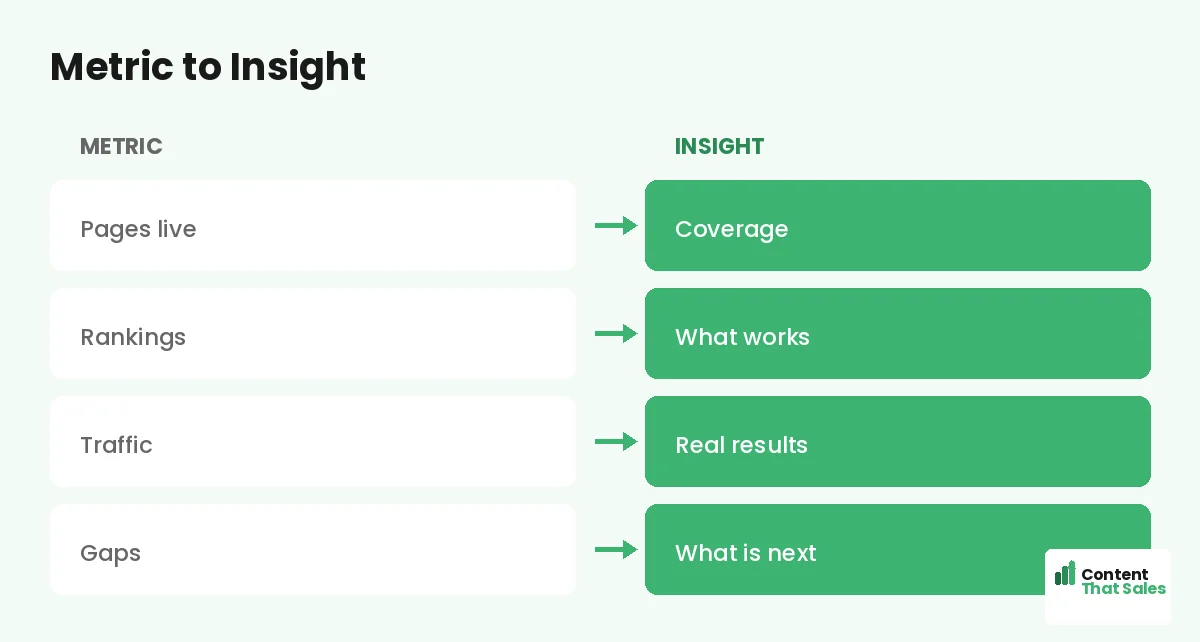
Start by tracking which pages you have published versus your full map. This shows your coverage at a glance, how much of your planned map is live. It is the most basic and important measure of your progress.
List every planned page and mark its status, published, drafted, or to do. This simple view tells you how far along you are and how much remains. Watching the published count grow is satisfying and keeps your momentum going.
Track Pages Remaining
Just as important is knowing what is left. Tracking remaining pages shows how much work remains and helps you plan your schedule. It keeps the finish line in view and helps you pace yourself toward complete coverage.
Seeing the remaining count shrink is motivating, and it helps you estimate your timeline. Knowing what is left also lets you prioritize, deciding which of the remaining pages to tackle next based on impact and effort.
Track Keyword Rankings
Track how your published pages rank for their target keywords over time. Rankings are the clearest sign your authority is growing, as more pages climb and rank for more terms. Watching rankings tells you whether your strategy is working.
Log rankings periodically to see the trend. You want pages improving and new keywords appearing. Since readers scan more than they read, rankings also reflect whether your pages serve searchers well enough to earn their place.
Track Traffic and Trends
Track the traffic each page and cluster draws over time. Traffic shows which parts of your map are resonating and where your authority is paying off in real visitors. Rising traffic is strong evidence your strategy is working.
Watch traffic trends, not just snapshots. A cluster gaining traffic over months signals growing authority, while flat traffic flags areas needing attention. Traffic data turns your tracking from a checklist into real evidence of results.
Track Internal Links
Track whether each page is properly linked into your map. Orphaned pages with no internal links weaken your structure. Tracking link status ensures every page is connected and contributing, not sitting isolated and ignored.
Noting which pages still need linking helps you maintain a strong structure. Keeping the connections between pillar and cluster pages healthy is part of progress, so tracking links ensures your map stays connected as it grows.
Did you know?
Tracking often reveals that authority shows up as a cluster of pages rising together, a pattern you would miss entirely without a record of progress over time.
Track Remaining Gaps
Track the gaps in your coverage, subtopics not yet covered. As you publish, new gaps may also appear as your topic evolves. Tracking gaps keeps your map moving toward completeness and tells you what to write next.
A running list of gaps doubles as your next-steps list. It connects your tracking directly to action, showing exactly where to focus. Watching gaps close as you publish is a clear sign of progress toward complete coverage and authority.
Set Up a Simple Tracker
The easiest tracking system is a spreadsheet, one row per page, with columns for status, keyword, ranking, traffic, and links. Update it on a regular schedule, and it becomes a living record of your map’s progress over time.
A dedicated topical authority tracker makes this easy. Simple, clear pages keep winning, and since easy reading lifts engagement, track whether your pages are clear and useful too, not just published.
Put It All Together
To track progress on a topical map, watch pages published and remaining, keyword rankings, traffic and trends, internal links, and remaining gaps. Set up a simple tracker, usually a spreadsheet, and update it on a regular schedule.
Tracking turns a long, slow project into visible progress you can measure and act on. It keeps you on course, motivated, and informed about what to do next. With a clear view of where you stand, your map keeps moving forward.
Turn Tracking Into Action
Tracking only pays off if you act on what it shows. A tracker full of data is useless unless it changes what you do next. Use it to decide which gaps to fill, which underperforming pages to improve, and where to add internal links. Each review should end with a short list of next actions.
This is where tracking connects directly to execution. The insights you gather feed straight back into how you implement your topical map, guiding your next batch of pages and edits. A page that is stuck might need more depth or better links; a cluster that is climbing might deserve more supporting pages. By turning every tracking review into concrete decisions, you keep your map moving in the most productive direction rather than just collecting numbers.
Keep Tracking Simple and Consistent
The best tracker is the one you actually keep updating. It is tempting to track everything, but a sprawling system you abandon helps no one. Track the few metrics that matter, coverage, rankings, traffic, links, and gaps, and skip the rest. Simplicity is what makes tracking sustainable over the long timeline of building a map.
Consistency matters more than complexity. A simple tracker updated every month reveals trends that a detailed one updated once never will. Pick a cadence you can hold, keep the columns minimal, and make updating it a routine habit. Over months, that steady rhythm gives you a clear, reliable picture of your progress and keeps your whole content effort on course.
How Content That Sales Helps
Tracking well takes setup and consistency. That’s where we come in. At Content That Sales, we track your map’s progress, pages, rankings, traffic, links, and gaps, so you always know where you stand and what to do next.
You get a clear view without the admin. We monitor coverage and results, often organized in a topical map template for clarity, and produce the pages that close the gaps. The result is steady, measurable progress you can see.
Ready to Track Your Progress?
Now you know how to track progress on a topical map: watch pages, rankings, traffic, links, and gaps with a simple tracker. So why work in the dark when tracking turns your effort into visible, measurable progress?
Let’s track your map’s progress together. Book your free consultation now. Call us at 8801631988589 or email service@contentthatsales.com. Let’s turn your content effort into clear, measurable progress toward authority.
Frequently Asked Questions About Tracking Progress
What should I track on a topical map?
Pages published and remaining, keyword rankings, traffic and trends, internal link status, and remaining coverage gaps. These few metrics show your progress clearly.
Why track progress?
It keeps a long project on course, shows what is working, and tells you what to do next. Without tracking, you can drift and stall without noticing.
How do I set up a tracker?
A spreadsheet is easiest, one row per page, columns for status, keyword, ranking, traffic, and links. Update it on a regular schedule to see trends.
How often should I update it?
Regularly, monthly works well. You need consistent data points to see trends in rankings and traffic, so pick a cadence you can keep.
What does growing authority look like?
Often a cluster of pages rising together, more keywords ranking, and increasing traffic, a pattern you would miss without tracking over time.
Why track gaps?
Your gap list doubles as your next-steps list, showing exactly what to write next. Watching gaps close is a clear sign of progress toward full coverage.
Why track internal links?
To catch orphaned pages that weaken your structure. Tracking link status ensures every page stays connected and contributing as your map grows.
Can Content That Sales help?
Yes. We track your map’s progress and produce the pages that close the gaps. Reach out for a quick quote.