 Skip to content
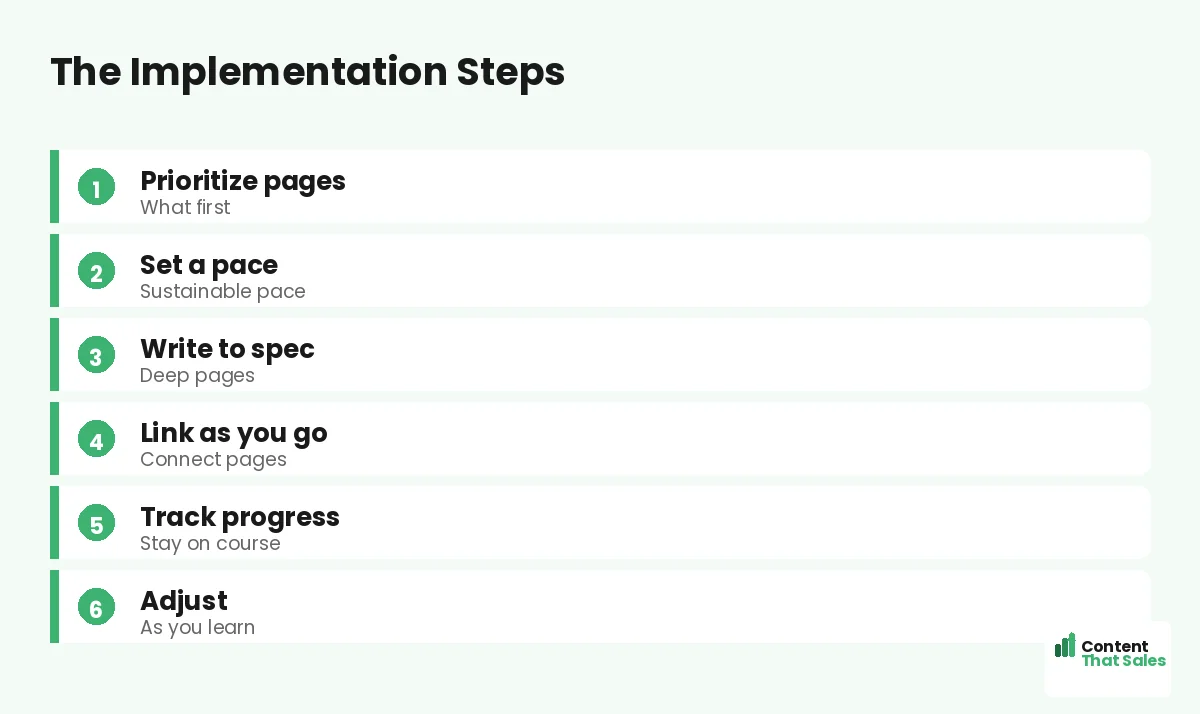
Knowing how to implement a topical map is what separates a plan on paper from real rankings. A map only works once you turn it into published, connected pages. Implementation means prioritizing what to write, setting a sustainable pace, producing pages to spec, linking them as you go, and tracking progress. This guide gives you a realistic roadmap for taking a finished map and turning it into a living, ranking body of content.
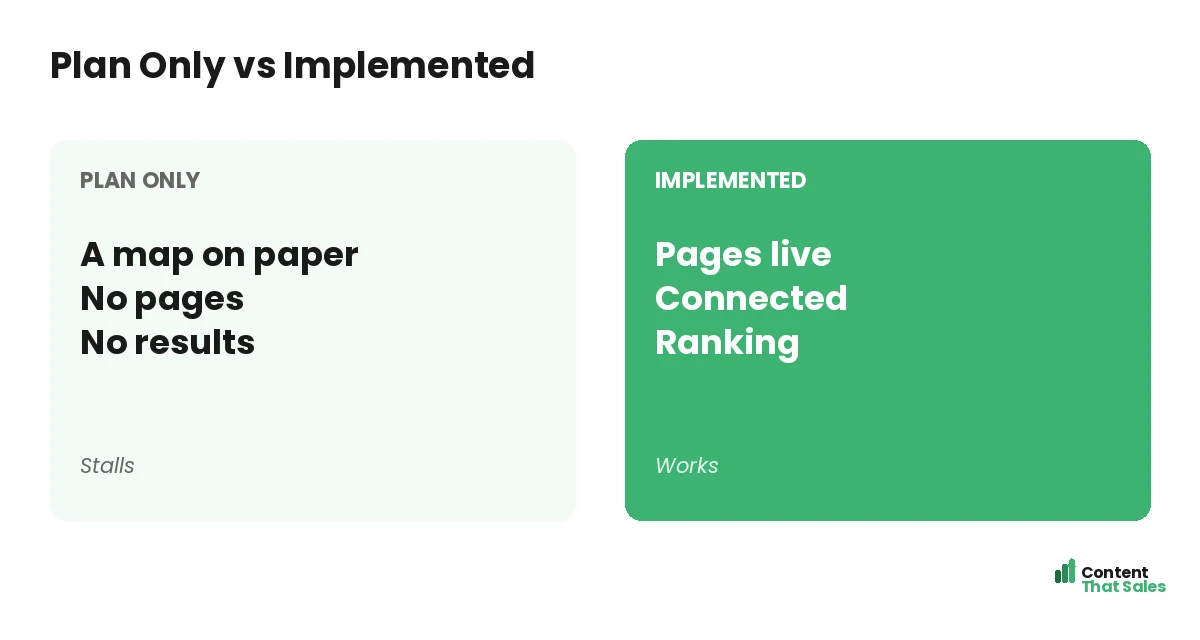
Plenty of maps are built and then never executed. The map is the easy part; implementation is where results come from. A realistic roadmap keeps you moving steadily from plan to published without stalling or burning out.
Below, we walk through the phases of implementing a map, from first page to a fully published, connected resource.

Why Implementation Is the Hard Part
Building a map takes effort, but implementing it takes sustained commitment. Many people stop at the plan, then never publish the pages. The map only delivers value once it becomes live, connected content, so implementation is where the real work and the real results lie.
A realistic roadmap makes implementation manageable. Rather than facing a daunting list, you work through your topical map in steady, planned phases. Breaking it down is what keeps you moving from a finished plan to a finished resource.
Start by Prioritizing Pages
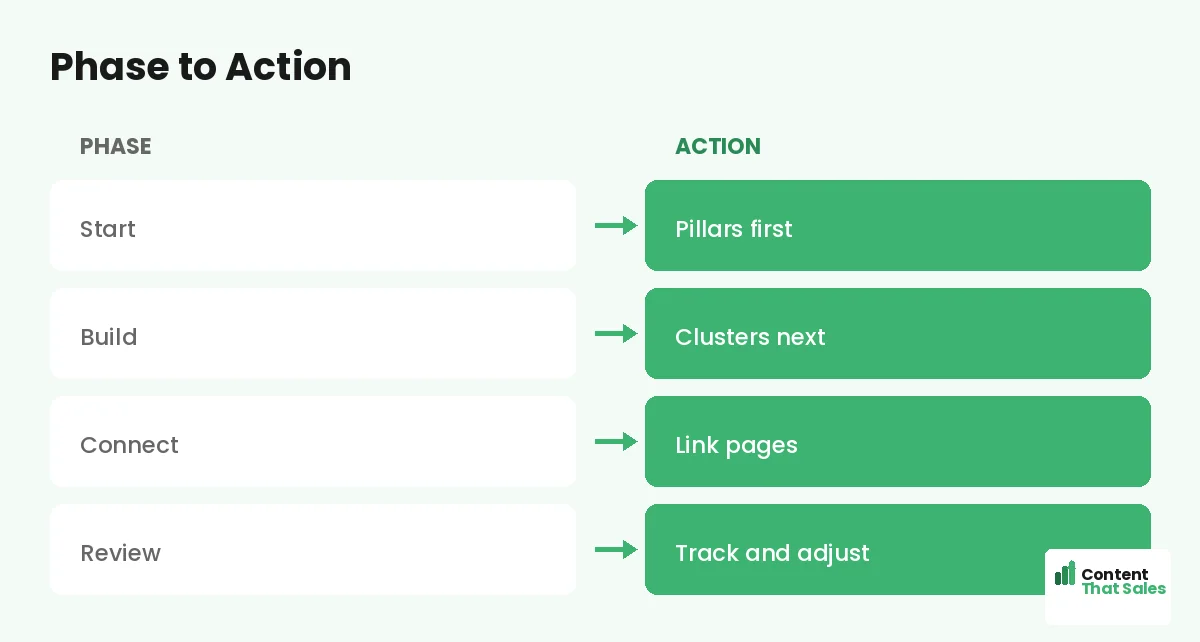
Begin by deciding what to write first. Not every page matters equally, so prioritize based on impact, foundational pages, quick wins, and high-value topics first. This ensures your early effort delivers the most, building momentum from the start.
A clear priority order turns your map into an action plan. Decide your publishing order so you know exactly what to write first, next, and later. Starting with the right pages makes your implementation efficient and your early results stronger.
Set a Sustainable Pace
Choose a publishing pace you can maintain. Consistency beats bursts, a steady cadence you can sustain for months will get your map published, while an unsustainable sprint leads to burnout and stalling. Pick a realistic rhythm and stick to it.
Your pace depends on your resources, but the key is sustainability. Whether it is one page a week or several, a steady pace adds up. Implementation is a marathon, not a sprint, so set a rhythm you can actually keep over the long haul.
Write Each Page to Spec
For each page, write deep, quality content that fully serves its topic and intent. Implementation is not just about quantity, each page must meet the bar to rank. Thorough, useful pages are what build the authority your map is designed to create.
Follow your map’s plan for each page, its keyword, intent, and angle. Since readers scan more than they read, write each page clearly and make it easy to use. Quality at the page level is what makes the whole map succeed.
Link Pages as You Publish
As you publish, link each new page into your existing structure, to its pillar and related clusters. Doing this as you go builds your connected structure naturally, rather than leaving a pile of orphaned pages to fix later.
Linking during implementation is far easier than retrofitting it. Build the connections between pillar and cluster pages with each publish, so your map becomes a reinforcing network as it grows. Every new page strengthens the ones around it.
Did you know?
Linking each page as you publish, rather than at the end, can save hours of cleanup later and means your authority starts compounding from the very first cluster.
Track Your Progress
Keep track of which pages are published, which remain, and how your content performs. Tracking keeps you on course, shows your progress, and tells you what is working. Without it, implementation can drift and stall without you noticing.
A simple way to track your topical map progress turns a long project into visible milestones. Watching coverage grow and rankings improve keeps you motivated and helps you adjust your plan based on what the results tell you.
Adjust as You Learn
Implementation is not rigid. As you publish and see results, adjust your plan, reprioritize based on what ranks, fill new gaps, and refine your approach. A roadmap guides you, but real results should shape how you proceed.
Stay flexible. If certain clusters perform well, lean into them; if gaps appear, address them. Learning from your published pages makes the rest of your implementation smarter. The best roadmaps adapt to what the data shows as you go.
Keep Going Until It’s Complete
The final key is persistence. Authority comes from complete coverage, so keep publishing until your map is fully implemented. The pages compound, so finishing the map is what unlocks its full power. Do not stop at half-built.
Steady persistence is what gets you there. Simple, clear pages keep winning, and since easy reading lifts engagement, keep each page clear and useful as you push through to a complete, connected map.
Put It All Together
To implement a topical map: prioritize what to write, set a sustainable pace, write each page to spec, link pages as you publish, track progress, adjust as you learn, and keep going until the map is complete.
Implementation is where a map becomes results. It takes sustained commitment, but a realistic roadmap makes it manageable. Work through your map steadily and connectedly, and you turn a plan on paper into a ranking, authority-building resource.
Common Implementation Pitfalls
A few predictable pitfalls derail implementation. The biggest is stopping too soon, publishing a handful of pages, seeing little immediate result, and giving up before coverage reaches critical mass. Another is sacrificing quality for speed, churning out thin pages that never rank. A third is skipping internal links, leaving a pile of orphaned pages that never form a real structure.
Avoiding these is mostly about expectations and discipline. Know that authority builds gradually, so early quiet is normal, not failure. Keep your quality bar high even when you want to move fast, since thin pages waste the slot they fill. And link every page as you publish so your structure grows with your content. Teams that sidestep these pitfalls finish their maps and see the compounding payoff; teams that fall into them stall halfway and wonder why the results never came. A little awareness up front keeps your implementation firmly on the winning path.
How Content That Sales Helps
Implementation is where most maps stall, and that’s where we come in. At Content That Sales, we do not just build your map, we implement it, writing the pages to spec, linking them, and working through your map until it is complete.
You get a fully implemented map, not just a plan. We prioritize, produce, link, and track, often organized in a topical map template for clarity. The result is a complete, connected, ranking body of content, not a plan gathering dust.
Ready to Implement Your Map?
Now you know how to implement a topical map: prioritize, pace yourself, write to spec, link as you go, track, adjust, and finish. Implementation is where results come from. So why let a good map sit unexecuted?
Let’s implement your map together. Book your free consultation now. Call us at 8801631988589 or email service@contentthatsales.com. Let’s turn your plan into a complete, connected, ranking resource.
Frequently Asked Questions About Implementation
What does it mean to implement a topical map?
Turning the plan into published, connected pages, prioritizing what to write, setting a pace, producing pages to spec, linking them, and tracking progress until complete.
Why is implementation the hard part?
Building a map is one effort; publishing all its pages takes sustained commitment. Many stop at the plan. The map only delivers once it becomes live content.
Where do I start?
By prioritizing pages, foundational ones, quick wins, and high-value topics first, so your early effort delivers the most and builds momentum.
What pace should I set?
One you can sustain for months. Consistency beats bursts. Whether one page a week or several, a steady rhythm gets the map published without burnout.
When should I link pages?
As you publish each one. Linking during implementation builds your connected structure naturally and is far easier than retrofitting links later.
Why track progress?
It keeps you on course, shows your progress, and reveals what works. Without tracking, implementation can drift and stall without you noticing.
Should I adjust the plan?
Yes. As results come in, reprioritize based on what ranks, fill new gaps, and refine. A roadmap guides you, but real data should shape your path.
Can Content That Sales help?
Yes. We implement your map, writing, linking, and tracking until it is complete. Reach out for a quick quote.