 Skip to content
Learning how to find cluster topics that support pillars is what fills out your topical map with the deep, specific pages that build authority. A pillar gives the overview, but the cluster topics beneath it, the real questions and subtopics people search, are where most of your traffic and depth come from. This guide shows you exactly where to find cluster topics, how to confirm they are worth covering, and how to map them to your pillars.
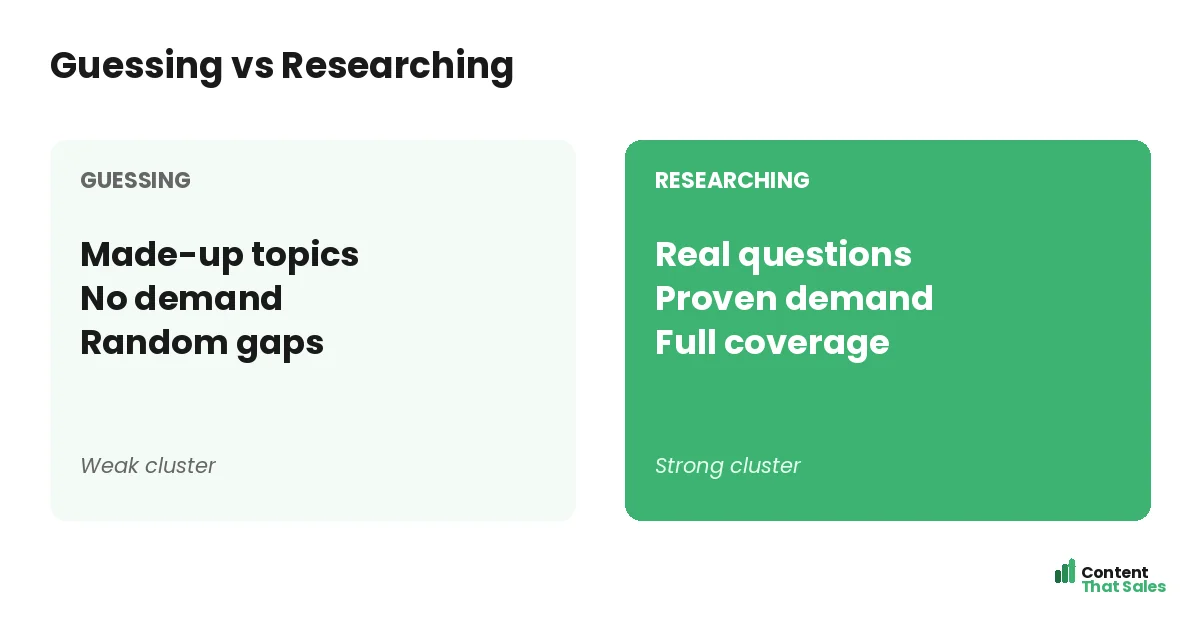
A pillar without strong clusters is just a lonely overview. The cluster topics are what turn it into a complete, authoritative resource. Finding them well, from real search demand rather than guesswork, is the difference between a map that ranks and one that stalls.
Below, we walk through the best sources for cluster topics, how to validate demand, and how to organize them under the right pillars.

What Cluster Topics Are
Cluster topics are the specific subtopics that sit beneath a pillar, each becoming a focused supporting page. Where the pillar covers a theme broadly, cluster topics dive deep into individual questions and angles, capturing specific searches and building depth.
They are the heart of a complete cluster. For how the two relate, see our breakdown of pillar pages vs cluster pages. Finding strong cluster topics is how you turn a pillar into a fully covered, authoritative group, the heart of any topical map.
Start With Keyword Research
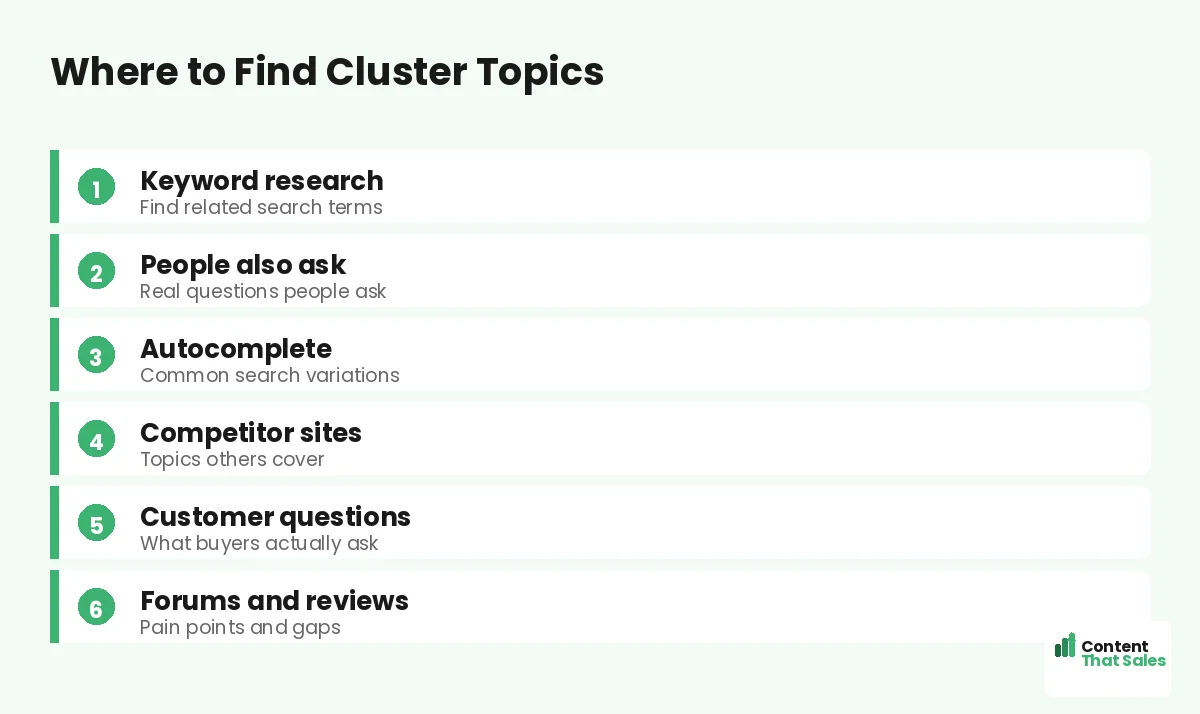
Keyword research is the first and best source. It reveals the specific terms and questions people search around your pillar topic, each a potential cluster page. The depth of your keyword research directly shapes the completeness of your cluster.
Look for related keywords, long-tail variations, and question phrases under your pillar. Each distinct, searched subtopic is a cluster candidate. Grounding your clusters in real keyword data ensures every page you plan has an audience waiting for it.
Mine People Also Ask
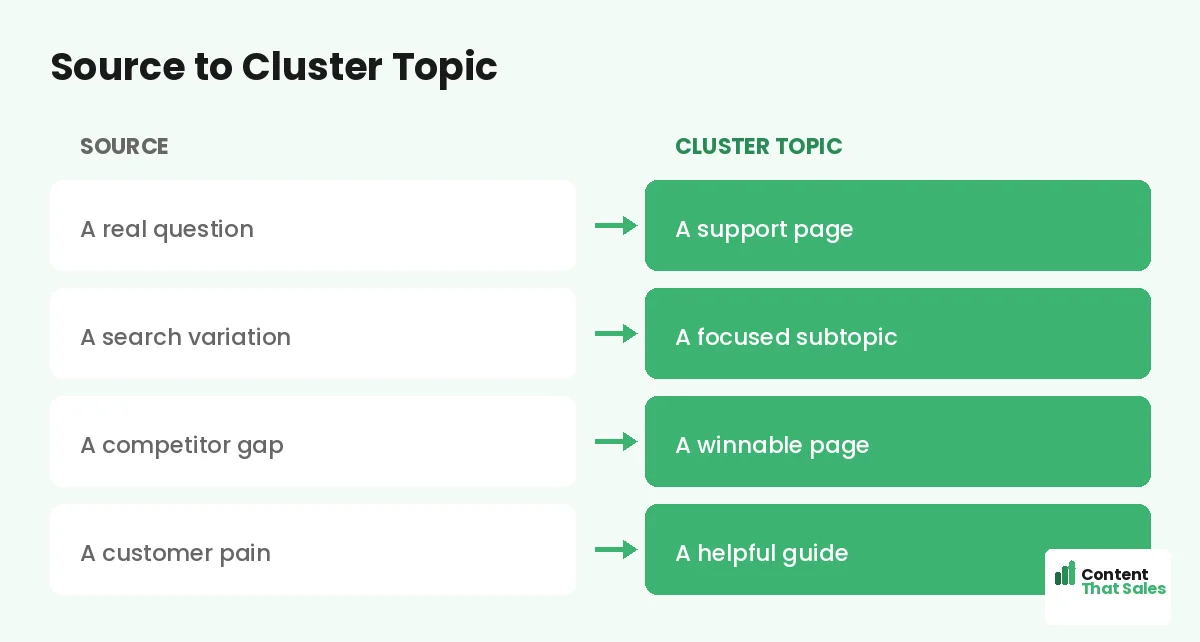
Google’s People Also Ask boxes are a goldmine of cluster topics. They surface the real questions people have about your pillar subject, each a perfect candidate for a focused cluster page. Expanding them reveals even more questions to cover.
Work through People Also Ask for your pillar term and main subtopics. Since readers scan more than they read, each question that becomes a page should answer it directly and clearly. These real questions align your clusters with what searchers actually want.
Use Autocomplete and Related Searches
Google autocomplete shows common search variations as you type, and the related searches at the bottom of the results surface more subtopics. Both are free, fast ways to find cluster topics straight from real search behavior.
Type your pillar topic and note the suggestions, then follow the related searches for more. These features reveal the phrasing and angles people actually use, helping you find cluster topics you might not have thought of on your own.
Study Competitor Coverage
Look at what competitors who rank for your pillar topic cover. Their cluster pages reveal subtopics worth addressing, and the gaps in their coverage show opportunities where you can do better. Competitor research both confirms topics and surfaces openings.
Do not just copy; aim to cover the subject more completely than they do. Note the topics they cover, then find the questions they miss. Beating competitors on coverage is how a newer site can win a cluster.
Listen to Your Customers
Your customers and audience are a rich source of cluster topics. The questions they ask in emails, calls, and support tickets are real subtopics people care about. These often reveal angles keyword tools miss, grounded in genuine need.
Also check forums, reviews, and community discussions in your niche for recurring questions and pain points. Each is a potential cluster page. Customer-sourced topics tend to convert well, because they address the exact concerns of real buyers.
Did you know?
The questions customers ask in emails and support tickets often reveal cluster topics that keyword tools miss, and these pages tend to convert especially well.
Validate Demand Before Committing
Not every idea deserves a page. Before adding a cluster topic, confirm there is real search demand for it. A topic no one searches becomes a thin page with no traffic. Validation keeps your cluster focused on pages that can actually rank.
Check each candidate in your keyword tool. Keep the ones with genuine demand; set aside the ones with none. This filter, the same discipline behind judging topical map depth, keeps your cluster strong rather than bloated.
Map Topics to the Right Pillar
Once you have your cluster topics, assign each to the pillar it supports. Every cluster page should clearly belong under one pillar, deepening that theme. If a topic does not fit any pillar, it may belong to a different cluster or a new pillar.
This mapping keeps your structure clean. Each pillar gathers its relevant cluster topics, forming a complete group. Organizing topics under the right pillars, the major themes you identify as pillar topics, is what turns a list of ideas into a structured, authoritative topical map.
Cover Every Angle of the Pillar
Aim for completeness. The goal is to cover every meaningful angle of your pillar topic, so a reader finds an answer to any related question. Gaps in your cluster are missed traffic and weakened authority. Thorough coverage is what builds it.
Review your cluster topics against the pillar and ask what is missing. Fill the gaps with new pages. A pillar surrounded by complete cluster coverage signals genuine expertise, which is exactly what earns strong rankings across the theme.
Keep Finding Topics Over Time
Finding cluster topics is ongoing. New questions emerge, search trends shift, and your audience asks new things. Revisit your sources regularly to add fresh cluster topics, keeping your clusters complete as the subject evolves.
Simple, clear content keeps winning, since easy reading lifts engagement. Keep mining questions and validating demand, and your clusters stay current and comprehensive. A living cluster keeps building authority long after the first pages go live.
Put It All Together
To find cluster topics that support pillars, mine keyword research, People Also Ask, autocomplete, competitors, and your own customers, then validate demand and map each topic to the right pillar. Aim to cover every meaningful angle of the theme.
Strong cluster topics, grounded in real demand and organized under clear pillars, are what turn a pillar into a complete, authoritative group. Find them well, keep finding them over time, and your topical map fills out into a structure that ranks.
How Content That Sales Helps
We find the cluster topics that build authority. That’s where we come in. At Content That Sales, we research the real questions and subtopics under your pillars, validate demand, and write the cluster pages that deepen each theme.
You share your pillars and goals. We mine the topics, map them to your pillars, and produce the connected content. The result is complete clusters, grounded in real demand, that turn your pillars into authoritative, ranking groups.
Ready to Fill Out Your Clusters?
Now you know how to find cluster topics that support pillars: mine real questions, validate demand, and map each to a pillar. Strong clusters are what build authority. So why leave your pillars without the depth they need?
Let’s find your cluster topics and build them. Book your free consultation now. Call us at 8801631988589 or email service@contentthatsales.com. Let’s turn your pillars into complete, ranking clusters.
Frequently Asked Questions About Finding Cluster Topics
What are cluster topics?
The specific subtopics beneath a pillar, each becoming a focused supporting page. They dive deep into individual questions and angles, capturing specific searches and building depth.
Where do I find cluster topics?
Keyword research, People Also Ask, autocomplete, related searches, competitor coverage, and your own customers’ questions in emails, calls, forums, and reviews.
Why use People Also Ask?
It surfaces the real questions people ask about your pillar subject, each a perfect candidate for a focused cluster page, straight from actual search behavior.
Should I validate demand?
Yes. Before adding a topic, confirm real search demand. A topic no one searches becomes a thin page with no traffic, so validation keeps your cluster strong.
How do customer questions help?
They reveal real subtopics people care about, often angles keyword tools miss. Customer-sourced topics tend to convert well because they address genuine concerns.
How do I organize the topics?
Map each cluster topic to the pillar it supports. Every cluster page should clearly belong under one pillar, deepening that theme and keeping the structure clean.
How many cluster topics do I need?
Enough to cover every meaningful angle of the pillar with real demand. Aim for completeness without forcing thin pages no one searches.
Can Content That Sales help?
Yes. We research the cluster topics under your pillars, validate demand, and write the pages that build authority. Reach out for a quick quote.