 Skip to content
Why does every serious website need a topical map? Because in modern SEO, the sites that win are the ones that cover a subject completely and connect their pages logically, and a topical map is the only reliable way to plan that. Without one, you publish in gaps and overlaps, your authority stays thin, and your effort scatters. With one, every page builds on the last. This guide makes the case for why a topical map is no longer optional for any site serious about ranking.
You can publish content for years and still struggle to rank if it is scattered and unstructured. The difference between sites that climb and sites that stall is rarely effort, it is strategy. A topical map is that strategy, made concrete.
Below, we lay out exactly what a topical map gives your site, from authority to better internal links, and why going without one holds you back.

It Builds Topical Authority
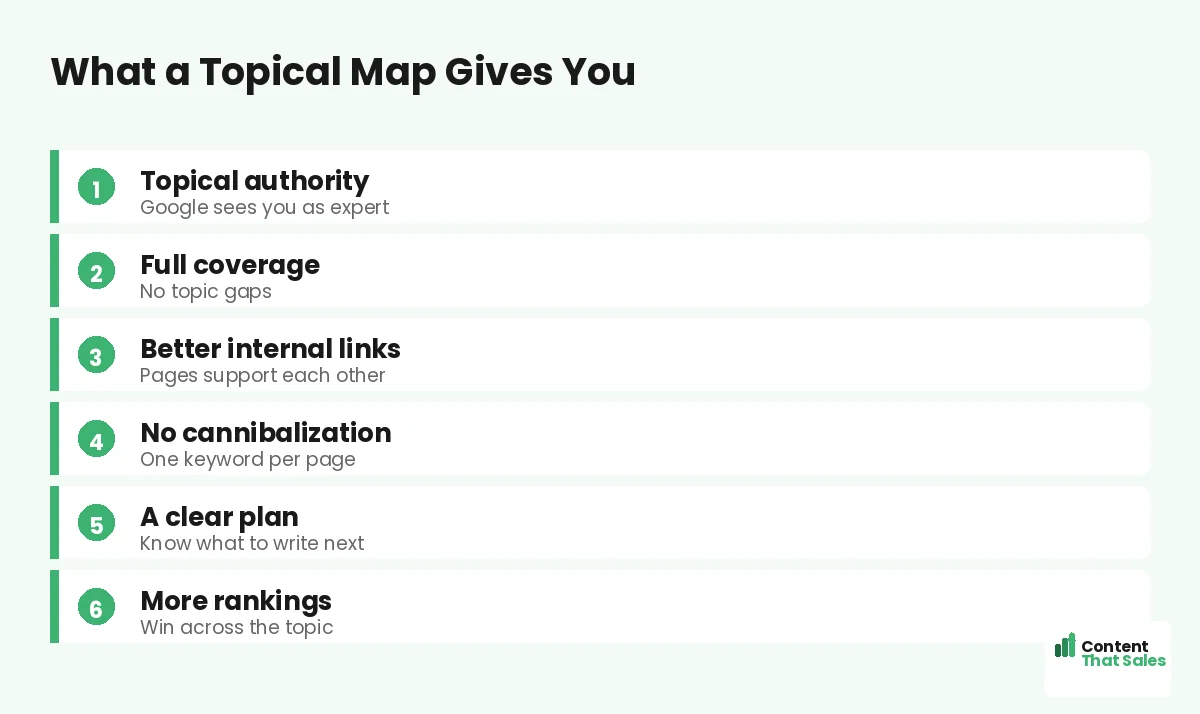
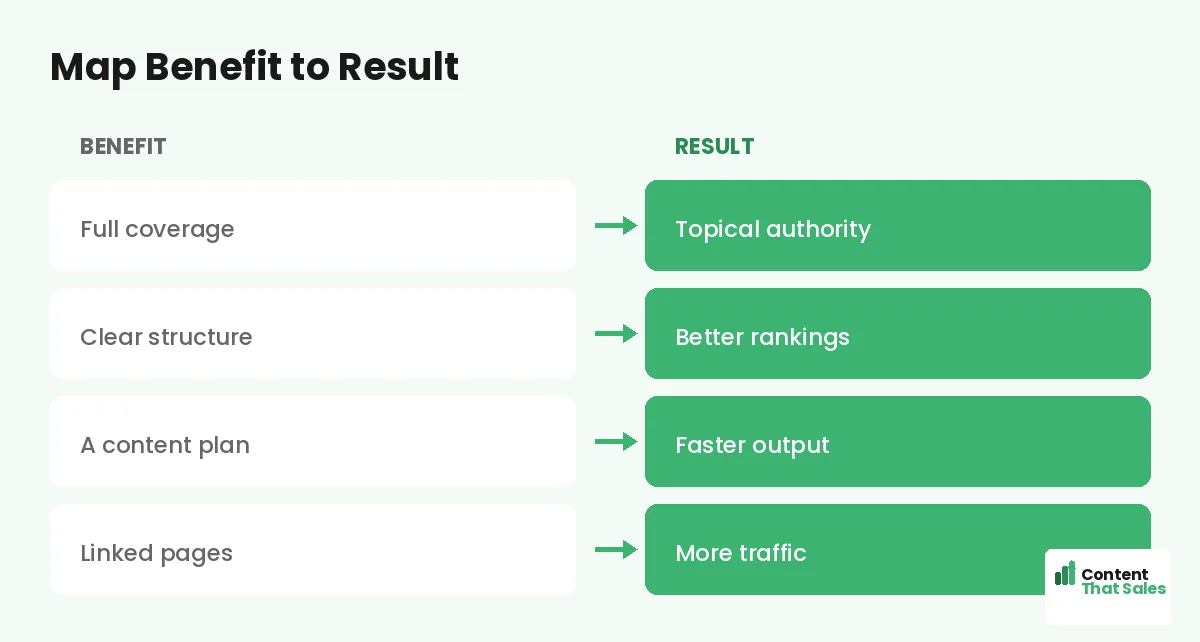
The biggest reason every serious site needs a topical map is authority. Google rewards sites that prove deep expertise on a subject, and you prove it by covering that subject completely. A topical map is how you plan complete coverage on purpose.
Without a map, your coverage has holes that signal incomplete expertise. With one, you fill every gap and build genuine topical authority. The map is the direct path to the authority that lifts your rankings across a whole topic.
It Ensures Full Coverage
A topical map gives you a bird’s-eye view of your entire subject, so you cover it fully. You see every subtopic that needs a page and can check them off as you publish. Nothing important slips through the cracks.
This completeness is what separates authoritative sites from shallow ones. A map ensures you address the full range of questions your audience asks, not just the obvious few. Full coverage means you capture traffic across the whole subject, not a sliver of it.
It Improves Internal Linking
Because a topical map groups pages into clusters with a clear hierarchy, it makes internal linking natural and powerful. Pillars link to supporting pages, and supporting pages link back and to each other, forming a connected web of content.
Strong internal links spread authority across your site and help Google understand your structure. They also help visitors find related content. A map turns internal linking from an afterthought into a deliberate strength that boosts your whole site.
It Prevents Keyword Cannibalization
Without a plan, it is easy to create multiple pages targeting the same keyword, and they end up competing with each other in the rankings. This cannibalization wastes your effort and confuses Google. A topical map prevents it by design.
Because the map assigns each page a distinct subtopic and keyword, no two pages overlap. Every page has a clear, unique purpose. This keeps your pages from fighting each other and ensures each can rank for its own search.
It Gives You a Content Plan
A topical map is also a ready-made content plan. Instead of staring at a blank calendar wondering what to write, you have a complete list of pages to produce, organized by cluster. You always know what to write next.
This removes guesswork and keeps your publishing focused. Since readers scan more than they read, each planned page targets one clear subtopic they search for. The map turns content creation from random ideas into a purposeful pipeline.
It Helps You Rank for More
By covering a subject completely and building authority, a topical map helps you rank for far more searches, including ones you did not directly target. Authority on a topic lifts your pages broadly, capturing long-tail and related queries.
A scattered site ranks for a handful of terms; an authoritative site ranks across its whole subject, which is the heart of what a topical map delivers. The map is what gets you there. More coverage and more authority mean more rankings, more traffic, and more opportunities to convert.
Did you know?
Sites that cover a subject completely often rank for searches they never directly targeted, because the authority they build lifts related pages across the whole topic.
What Happens Without a Map
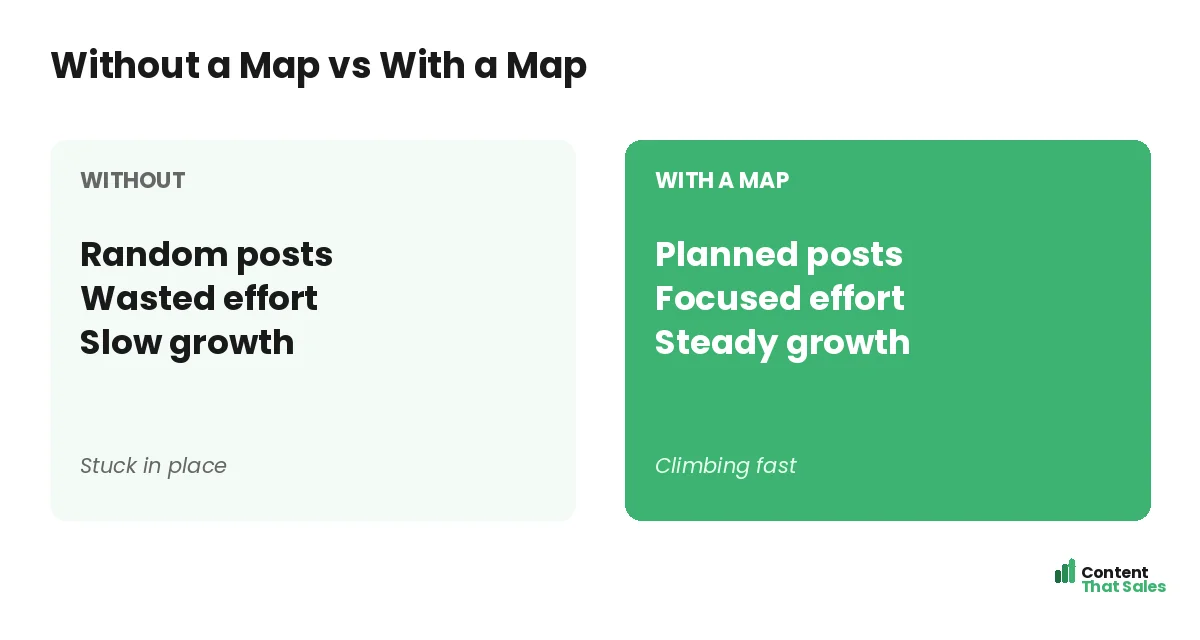
Without a topical map, content tends to scatter. You publish whatever ideas come to mind, leaving gaps in some areas and overlaps in others. Your authority stays thin because no subject is covered completely, and your effort does not compound.
The result is frustrating: lots of work, little ranking progress. Pages compete with each other, subtopics go uncovered, and Google never sees clear expertise. Most sites that struggle to rank are not lazy, they are unstructured. The missing piece is a map.
Maps Make Effort Compound
The real magic of a topical map is that it makes your effort compound. Each page you publish strengthens the cluster, and each completed cluster strengthens your authority. Over time, your content becomes a connected body of work, not isolated posts.
This compounding is why mapped sites pull ahead. The same publishing effort produces far more results when it is structured. A map ensures every piece of work builds on the last, turning steady effort into accelerating growth.
Every Type of Site Benefits
A topical map is not just for big publishers. New sites use it to plan from the start. Local businesses use it to own their niche. SaaS and ecommerce brands use it to cover their categories. Any site competing in search benefits.
The principle is universal: cover your subject completely and connect your pages. Whether you have five pages or five hundred, a map gives your content direction, and beginners can start simply with our guide to topical maps for beginners. The more competitive your space, the more a topical map matters.
It Starts With Building the Map
The good news is that building a topical map is straightforward. You choose a core topic, list subtopics, group them into clusters, set a hierarchy, and plan the order. Our guide on how to build a topical map walks through each step.
Once built, the map guides everything: what to write, how to link, and how to grow. Simple, clear content keeps winning, since easy reading lifts engagement. The map is the strategy; consistent, quality publishing makes it pay off.
Put It All Together
Every serious website needs a topical map because it builds authority, ensures full coverage, improves internal linking, prevents cannibalization, gives you a content plan, and helps you rank for more. It turns scattered effort into compounding growth.
Without a map, content scatters and authority stays thin. With one, every page builds on the last. If you are serious about ranking, a topical map is not a nice-to-have, it is the foundation of a content strategy that actually works.
How Content That Sales Helps
We give your site the strategy it needs. That’s where we come in. At Content That Sales, we build your topical map and write the connected pages that cover your subject completely and build the authority that ranks.
You share your subject and goals. We map the full structure, plan the clusters, and produce the content that fills them. The result is a site with direction, where every page builds authority instead of scattering your effort.
Ready to Give Your Site a Strategy?
Now you know why every serious website needs a topical map: it builds authority, ensures full coverage, and makes your effort compound. Scattered content rarely ranks. So why keep publishing without a plan?
Let’s build your topical map and the content that ranks. Book your free consultation now. Call us at 8801631988589 or email service@contentthatsales.com. Let’s turn your effort into authority and traffic.
Frequently Asked Questions About Needing a Topical Map
Why does my website need a topical map?
Because it builds authority, ensures full coverage, improves internal linking, prevents cannibalization, and gives you a content plan. It turns scattered effort into compounding growth.
What happens without a topical map?
Content scatters into gaps and overlaps, authority stays thin, pages compete with each other, and your effort does not compound. Lots of work, little ranking progress.
How does a map build authority?
It plans complete coverage of a subject, which is what Google rewards. Covering every subtopic and linking pages signals genuine expertise that lifts rankings.
Does a topical map help internal linking?
Yes. By grouping pages into clusters with a hierarchy, it makes linking natural. Pillars link to support pages, and they link back, forming a connected web.
What is keyword cannibalization?
When multiple pages target the same keyword and compete with each other. A topical map prevents it by giving each page a distinct subtopic and keyword.
Do small sites need a topical map?
Yes. New sites, local businesses, SaaS, and ecommerce all benefit. The principle, cover your subject completely and connect your pages, is universal.
How do I start?
Choose a core topic, list subtopics, group them into clusters, set a hierarchy, and plan the order. Then write and link the pages cluster by cluster.
Can Content That Sales help?
Yes. We build your topical map and write the connected pages that cover your subject and build authority. Reach out for a quick quote.