 Skip to content
Knowing when and why to update your topical map keeps your content strategy from going stale. Your map is not a one-time plan, it should grow as new subtopics emerge, search trends shift, competitors appear, and your business changes. Updating it at the right moments keeps your coverage complete and your authority climbing. This guide covers the triggers that signal an update and how to do it well.
A topical map reflects a topic at a moment in time. Topics evolve, so a map left untouched slowly falls behind. Regular, well-timed updates keep it current, complete, and competitive as the landscape changes around it.
Below, we walk through the signs that it is time to update, what to add, and how to keep your map a living, growing asset.

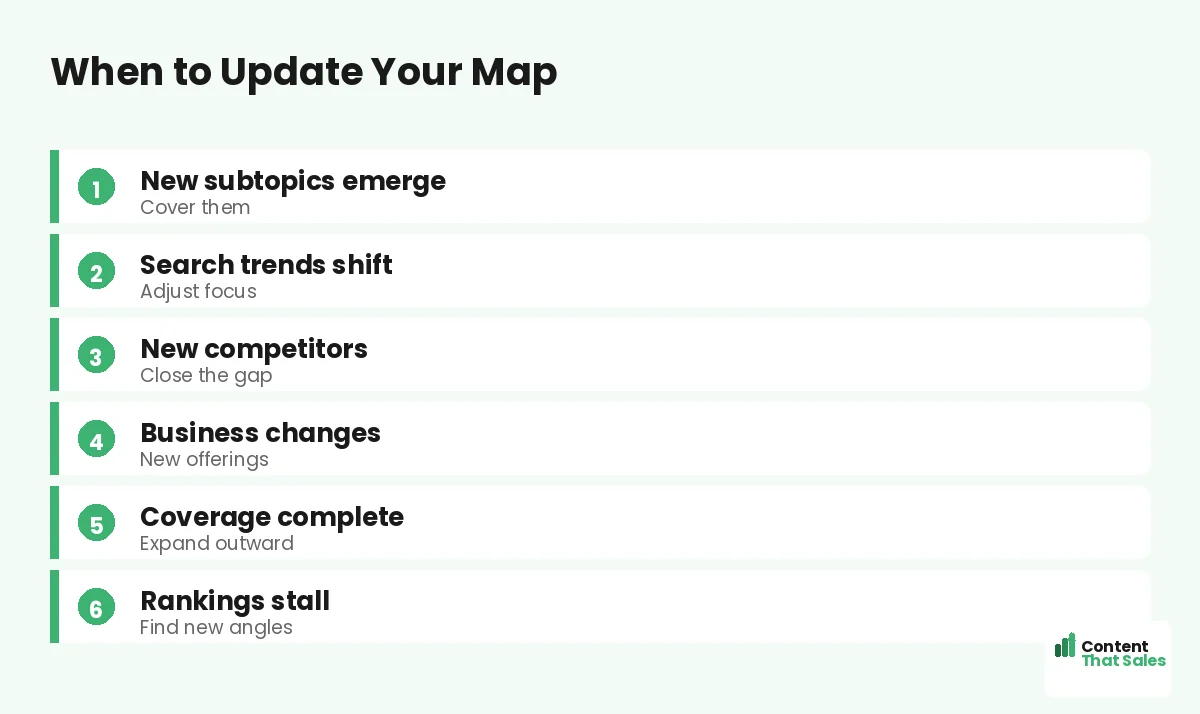
Why Updating Your Map Matters
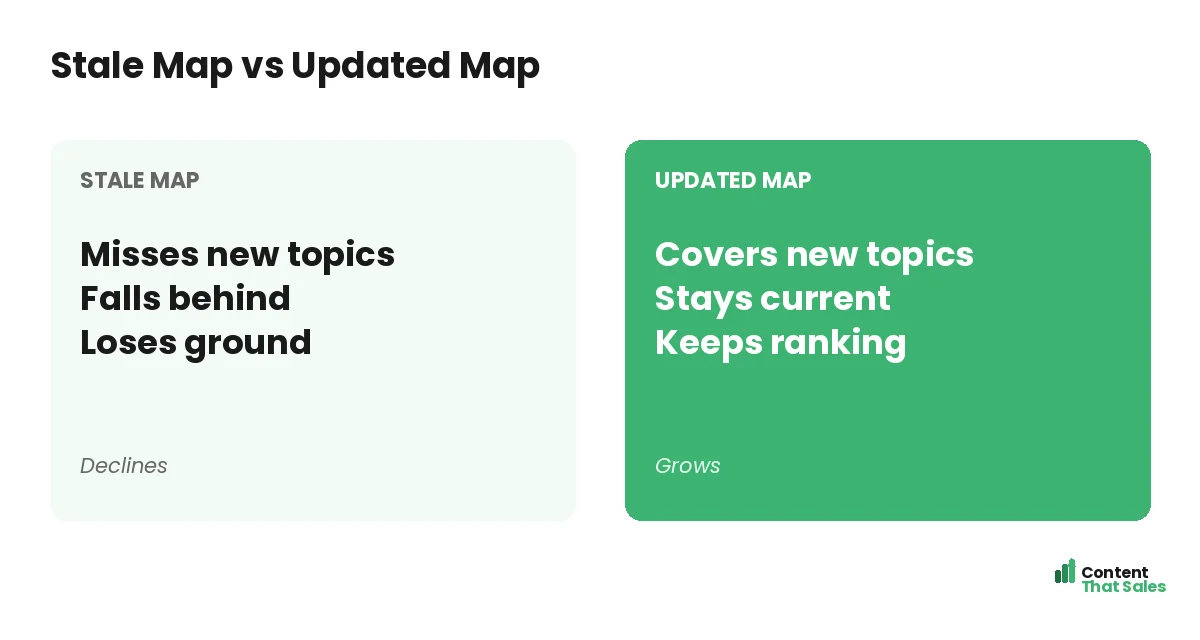
A topical map captures your topic as it is today. But topics change, new questions arise, trends shift, and competitors publish. A map left unchanged slowly loses relevance and coverage, letting rivals fill the gaps you ignore.
Updating keeps your topical map aligned with the current landscape. It is how you maintain and grow authority over time, ensuring your coverage stays complete as your subject and audience evolve around you.
When New Subtopics Emerge
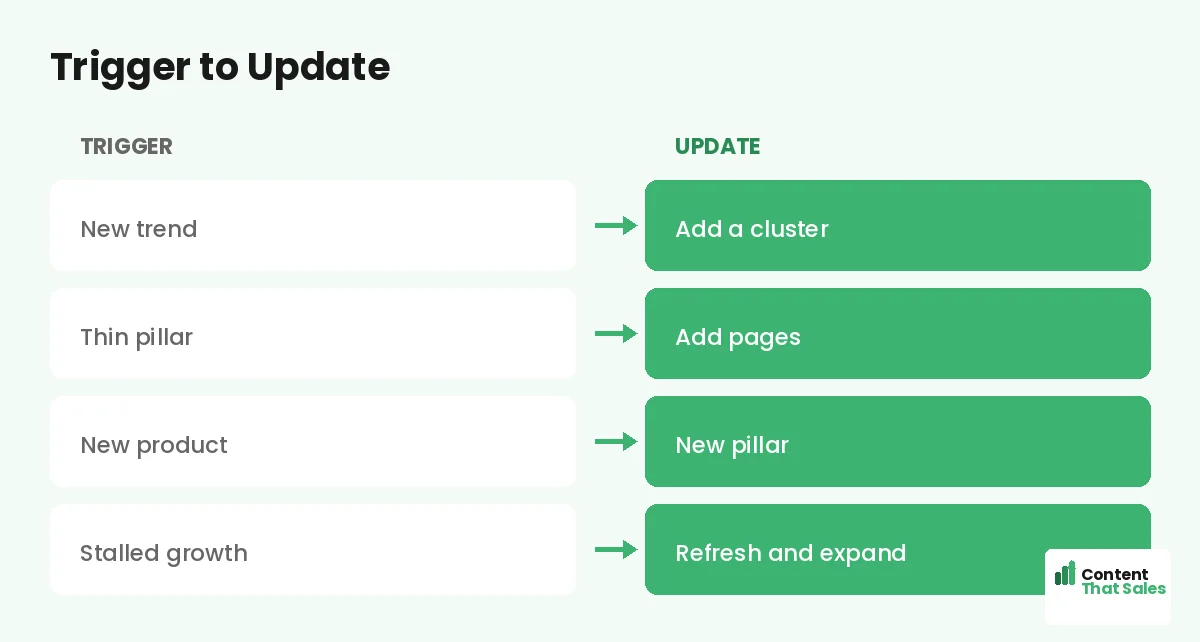
Topics grow over time. New tools, techniques, questions, and trends appear within your subject. When they do, your map should expand to cover them. Missing emerging subtopics leaves gaps that competitors will happily fill before you.
Watch your field for what is new, then add those subtopics to your map. This keeps your coverage complete and signals freshness. Staying on top of emerging topics is one of the clearest reasons to update regularly.
When Search Trends Shift
How people search changes. New keywords rise, old ones fade, and intent behind terms evolves. When you notice these shifts, update your map to match, adding new target keywords and adjusting which pages you prioritize.
Tracking search trends keeps your map aimed at real demand. Since readers scan more than they read, align your pages with how people actually search now, not how they searched when you first built the map.
When Competitors Move
When competitors publish content you lack, that is a signal to update. Their new pages reveal subtopics you may be missing. Reviewing what rivals cover helps you spot gaps and keep your map at least as complete as theirs.
Competitor moves are useful intelligence. They show where the topic is heading and where you risk falling behind. Use them to identify pages to add, then close the gap before they pull further ahead in your shared niche.
When Your Business Changes
New products, services, or focus areas should be reflected in your map. When your business evolves, your content needs to cover the new ground. This may mean adding whole new pillars to support areas you did not serve before.
Aligning your map with your business keeps your content relevant to what you actually offer. A new service line deserves its own cluster. Updating the map this way ensures your content supports your goals as they change.
When Coverage Is Complete
Once you have fully covered your original map, it is time to expand outward into adjacent subtopics. A complete map is not a stopping point, it is a foundation to build on by reaching into related areas you can now own.
Expanding from a complete base lets you grow authority into new territory. Look for adjacent topics that connect to your core, then build new clusters there, extending your pillar-and-cluster structure into fresh ground.
Did you know?
Adding even one new cluster to a complete map can open a whole new stream of traffic, because you already have the authority base to rank in adjacent topics fast.
When Rankings Stall
If your growth flattens, it may be time to update. Stalled rankings can signal that your coverage is no longer enough, that competitors have caught up, or that your content needs refreshing. An update can break the plateau.
Use stalled performance as a prompt to review and expand. Add new pages, refresh old ones, and strengthen links. Often a stall means the easy wins are done and your map needs new depth or breadth to keep climbing.
How to Update Without Breaking Things
Update carefully. When adding pages, link them into your existing structure so they strengthen the map rather than sitting alone. When refreshing pages, keep their URLs stable to preserve rankings. Thoughtful updates build on what works.
Always weave new pages into your map with proper connections between pillar and cluster pages. An update should reinforce your structure, not fragment it. Plan each addition so it fits cleanly into the whole.
Keep It a Living Document
Treat your map as a living document you revisit regularly, not a plan you build once and forget. Schedule periodic reviews, and update whenever a trigger appears. This habit keeps your map current and your authority growing steadily.
A living map adapts as your topic does. Simple, clear pages keep winning, and since easy reading lifts engagement, keep each new and updated page clear and genuinely useful for readers.
Put It All Together
Update your topical map when new subtopics emerge, search trends shift, competitors move, your business changes, your coverage is complete, or your rankings stall. Each is a signal that your map needs to grow or adapt.
Update carefully, linking new pages in and keeping URLs stable. Treat the map as a living document you revisit on a schedule. Done this way, updating keeps your coverage complete and your authority climbing over the long run.
Research Before You Add
Before adding new pages in an update, do a little research so you add the right ones. Check related searches, the questions people ask, and what is gaining traction in your field. This ensures the subtopics you add reflect real demand, not just hunches about what might be worth covering.
Good research keeps your updates focused and effective. The same work you do to find cluster topics when first building your map applies to updates too. A few minutes of checking demand before you write saves you from adding pages no one searches for, and it points you toward the gaps most worth filling next.
How Content That Sales Helps
Keeping a map current takes ongoing attention. That’s where we come in. At Content That Sales, we monitor your topic for changes, update your map when triggers appear, and write the new and refreshed pages that keep it strong.
You get a map that never goes stale. We watch the trends, spot the gaps, and produce the content, often organizing it in a topical map template for clarity. The result is steady, ongoing authority growth.
Ready to Update Your Map?
Now you know when and why to update your topical map: new subtopics, shifting trends, competitor moves, business changes, complete coverage, or stalled rankings. So why let your map fall behind when a timely update keeps it winning?
Let’s keep your map current together. Book your free consultation now. Call us at 8801631988589 or email service@contentthatsales.com. Let’s turn your map into a living asset that grows with your topic.
Frequently Asked Questions About Updating a Topical Map
How often should I update my topical map?
Revisit it on a schedule, every few months, and update whenever a trigger appears, like a new subtopic, trend shift, or competitor move. Treat it as a living document.
What are the main signs it needs updating?
New subtopics emerging, search trends shifting, competitors publishing, your business changing, your coverage becoming complete, or your rankings stalling.
What do I add when updating?
New cluster pages for emerging subtopics, new keywords for shifting trends, and sometimes whole new pillars when your business adds offerings.
What if my coverage is already complete?
Expand outward into adjacent subtopics. A complete map is a foundation to build on, letting you grow authority into related areas you can now own.
Why might stalled rankings mean I should update?
A stall often means the easy wins are done and competitors caught up. Adding depth, refreshing pages, and strengthening links can break the plateau.
How do I update without hurting rankings?
Link new pages into your existing structure, and keep URLs stable when refreshing pages. Thoughtful updates reinforce your map rather than fragment it.
Should new pages be linked in right away?
Yes. Always weave new pages into your map with proper internal links so they strengthen the structure instead of sitting orphaned and ignored.
Can Content That Sales help?
Yes. We monitor your topic, update your map, and write the new and refreshed pages. Reach out for a quick quote.