 Skip to content
People often confuse a topical map vs a sitemap, but they are completely different tools that do different jobs. A topical map is a content strategy that plans what topics to cover and how they connect, helping you build authority. A sitemap is a technical file or page that lists your URLs to help search engines and visitors find your pages. One plans your content; the other helps it get found. This guide explains the difference clearly so you know which you need and when.
The confusion is understandable, both have “map” in the name and both relate to your site’s structure. But they serve different purposes, different audiences, and different stages of your work. Knowing the difference helps you use each one correctly.
Below, we walk through what each one is, what it does, how they differ, and when to use which.

What a Topical Map Is
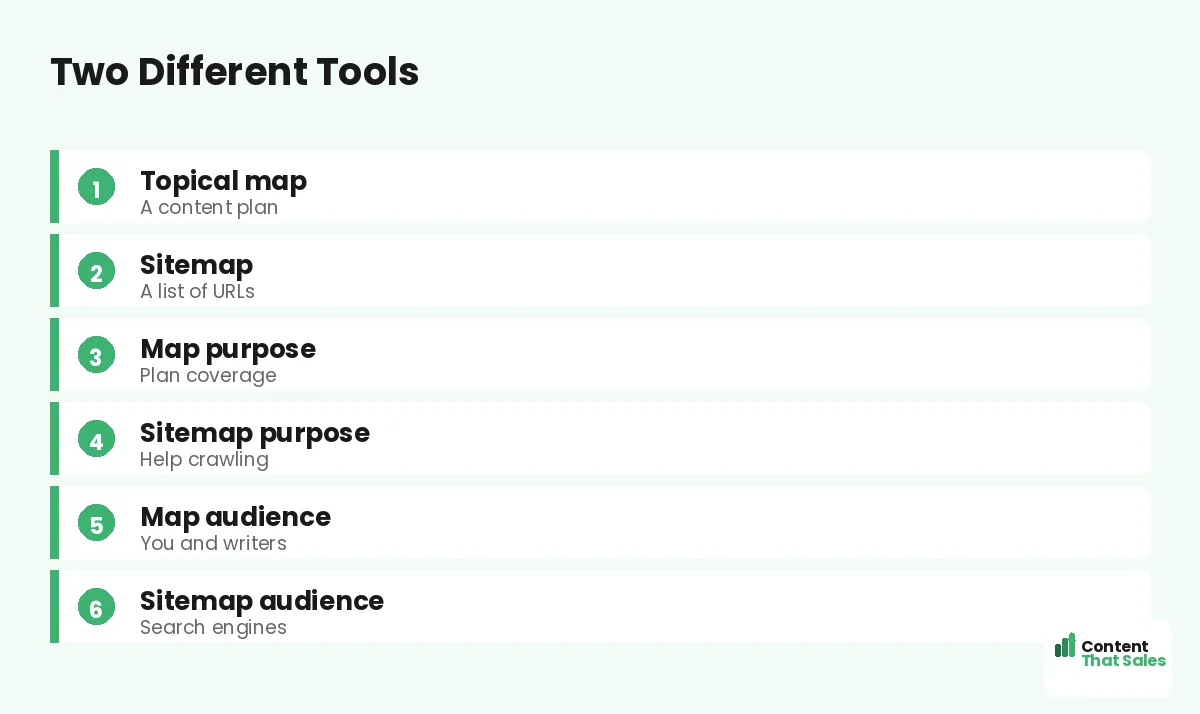
A topical map is a content strategy. It plans every topic you should cover on a subject, organized into pillars and clusters, so you build complete coverage and authority. It is a planning tool that guides what you write and how your content connects.
A topical map is about strategy and content, not technical structure. Learning how a topical map works shows it is a roadmap for covering a subject thoroughly, aimed at helping you and your writers build authority over time.
What a Sitemap Is
A sitemap is a technical tool that lists the pages on your website. There are two kinds: an XML sitemap that helps search engines find and crawl your pages, and an HTML sitemap that helps visitors navigate. Both are about helping pages get found.
A sitemap does not plan content or strategy, it simply lists what already exists. Its job is discovery and indexing, making sure search engines and users can locate your pages. It is a technical aid, not a content plan.
The Core Difference
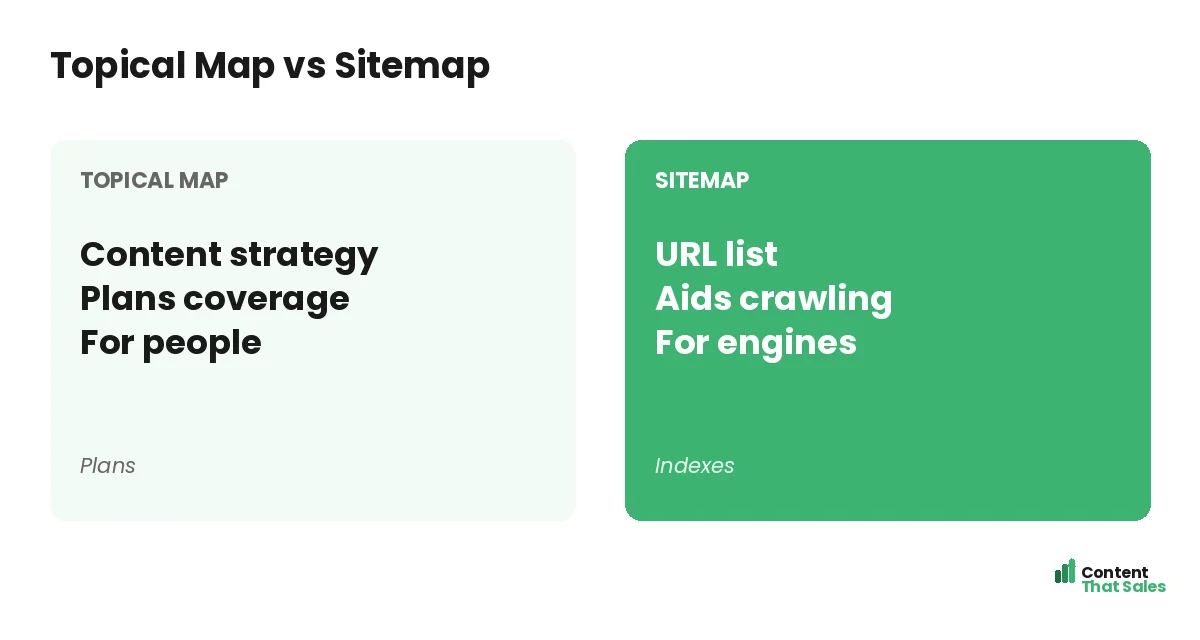
The core difference is purpose. A topical map plans what content to create and how it connects, before you write. A sitemap lists what already exists to help it get found, after you publish. One is strategy; the other is technical housekeeping.
They also serve different audiences. A topical map is for you and your writers, guiding your work. A sitemap is mainly for search engines and sometimes visitors, helping them navigate. They operate at completely different stages and levels of your site.
Different Purposes
A topical map’s purpose is to build authority through complete, planned coverage. A sitemap’s purpose is to ensure your pages are discoverable and indexable. One drives your content strategy; the other supports the technical side of getting found.
Because their purposes differ, they are not interchangeable. A sitemap will not tell you what to write, and a topical map will not help search engines crawl your site. You need each for its own job, and using one does not replace the other.
Different Audiences
A topical map is read by humans, you, your team, and your writers, who use it to plan and produce content. A sitemap is read mainly by search engine crawlers, with HTML versions occasionally used by visitors to navigate a large site.
This audience difference matters. Since readers scan more than they read, a topical map helps you plan content that serves them well. A sitemap, by contrast, is a behind-the-scenes file most visitors never see.
Did you know?
You need both, but for different reasons. A topical map decides what pages should exist; a sitemap makes sure the pages you have built actually get crawled and indexed.
How They Work Together
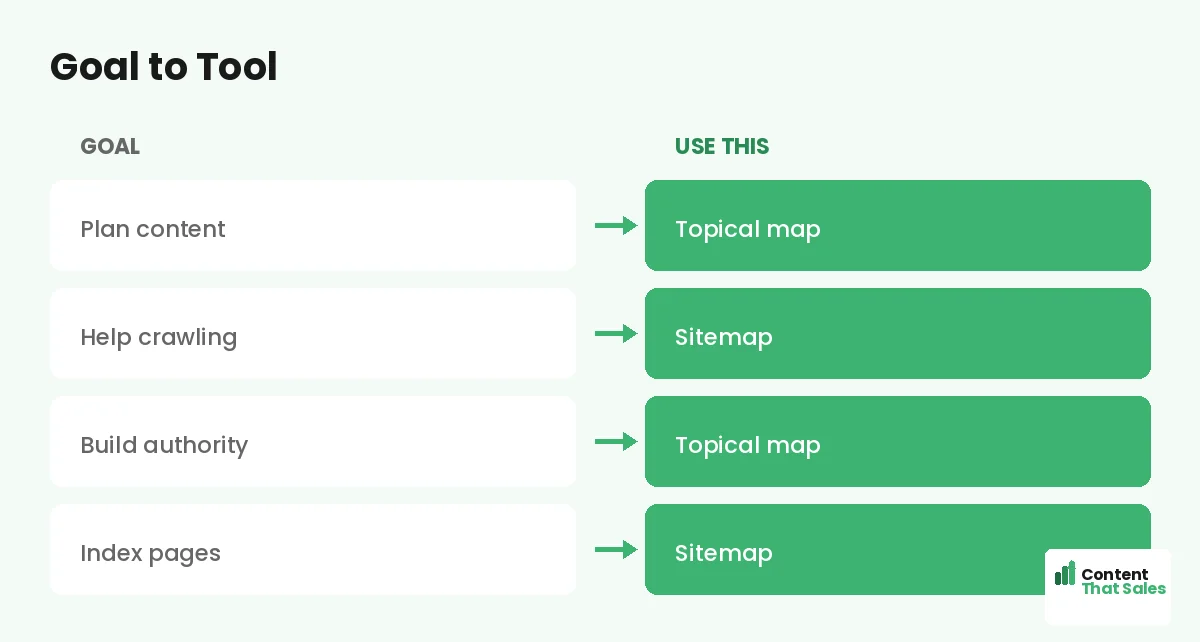
Though different, the two complement each other. You use a topical map to plan and create your content, then a sitemap helps search engines find and index those pages. The map builds the content; the sitemap ensures it gets discovered.
In practice, the topical map comes first, guiding what you create. As you publish, your pages join your sitemap. The map also guides the connections between pillar and cluster pages, which helps both readers and crawlers move through your content.
When to Use a Topical Map
Use a topical map when planning your content strategy, deciding what to write, organizing coverage, and building authority. It is the tool for the strategic, creative side of SEO, the work of figuring out what content your site should have.
Any time you are deciding what to publish or how to cover a subject, a topical map is the right tool. It is essential for anyone serious about building organic traffic through complete, authoritative content on their topic.
When to Use a Sitemap
Use a sitemap to help search engines crawl and index your site, especially for larger sites or new pages you want found quickly. An XML sitemap is a technical best practice; an HTML sitemap can help visitors navigate big sites.
You set up a sitemap as part of technical SEO, usually once and then maintained automatically. It is not something you plan content with, it is infrastructure that ensures the content you have created actually gets discovered and indexed.
Put It All Together
A topical map and a sitemap are different tools. A topical map plans your content and builds authority; a sitemap lists your URLs to help them get found. One is strategy for humans, the other is technical infrastructure for search engines.
You need both, but for different jobs. Use a topical map to decide what to create, and a sitemap to ensure it gets indexed. Do not confuse them, each plays its own essential role in a complete SEO approach.
Where Each Fits in Your Workflow
Seeing where each tool fits makes the difference concrete. Early on, you build a topical map to decide what to create, working out your pillars and clusters and how to find cluster topics that give your coverage depth. This is the planning phase, all strategy and no code. Your sitemap does not enter the picture yet because there is nothing to index.
Later, as you publish the pages your map planned, your sitemap quietly does its job, listing those URLs so search engines crawl them. The two never compete; they hand off to each other. Simple, clear pages keep winning, and since easy reading lifts engagement, the map ensures your content serves readers while the sitemap ensures it gets found. Understanding what topical authority is ties it together, the map builds it, and the sitemap simply helps the work get discovered.
How Content That Sales Helps
The tool you really need for content strategy is a topical map, and that’s where we come in. At Content That Sales, we build the topical map that plans your coverage and authority, while your sitemap handles the technical indexing.
You focus on strategy; we deliver the plan. We research and build your map, often organized in a topical map template for clarity, and can write the content too. The result is a clear content strategy, not just a list of URLs.
Ready to Plan Your Content?
Now you know the difference between a topical map and a sitemap: one plans your content and builds authority, the other helps pages get found. Both matter. So why not start with the topical map that drives your whole strategy?
Let’s plan your content strategy together. Book your free consultation now. Call us at 8801631988589 or email service@contentthatsales.com. Let’s turn a clear topical map into content that ranks, while your sitemap keeps it discoverable.
Frequently Asked Questions About Maps and Sitemaps
What is the difference between a topical map and a sitemap?
A topical map plans what content to create and how it connects, to build authority. A sitemap lists your URLs to help search engines and visitors find pages. Different jobs entirely.
Is a topical map the same as a sitemap?
No. They share the word “map” but serve different purposes. One is content strategy for humans; the other is technical infrastructure for search engines.
What does a topical map do?
It plans complete coverage of a subject, organized into pillars and clusters, guiding what you write and how it connects so you build topical authority.
What does a sitemap do?
It lists your pages so search engines can find and crawl them, and sometimes helps visitors navigate. It aids discovery and indexing, not content planning.
Do I need both?
Yes, for different reasons. A topical map decides what pages should exist; a sitemap ensures the pages you build get crawled and indexed properly.
Which comes first?
The topical map. It guides what content you create. As you publish those pages, they join your sitemap, which helps them get discovered.
Is a sitemap part of content strategy?
No, it is part of technical SEO. You set it up as infrastructure. Content strategy is the job of the topical map, not the sitemap.
Can Content That Sales help?
Yes. We build the topical map that drives your content strategy and can write the content too. Reach out for a quick quote.