 Skip to content
Knowing how to spot gaps in your topical map is how you find your next best pages to write. Gaps are the subtopics you have not covered, the questions you have not answered, and the clusters that are too thin. Find them, and you know exactly where to add content to strengthen your authority. This guide shows you the practical ways to spot every gap in your map.
A topical map builds authority through complete coverage. Any gap is a missing piece that competitors can fill and a chance for you to grow. Finding gaps systematically turns a vague to-do list into a clear, prioritized plan.
Below, we walk through where gaps hide and the methods to uncover them, so you always know what to write next.

Why Gaps Matter
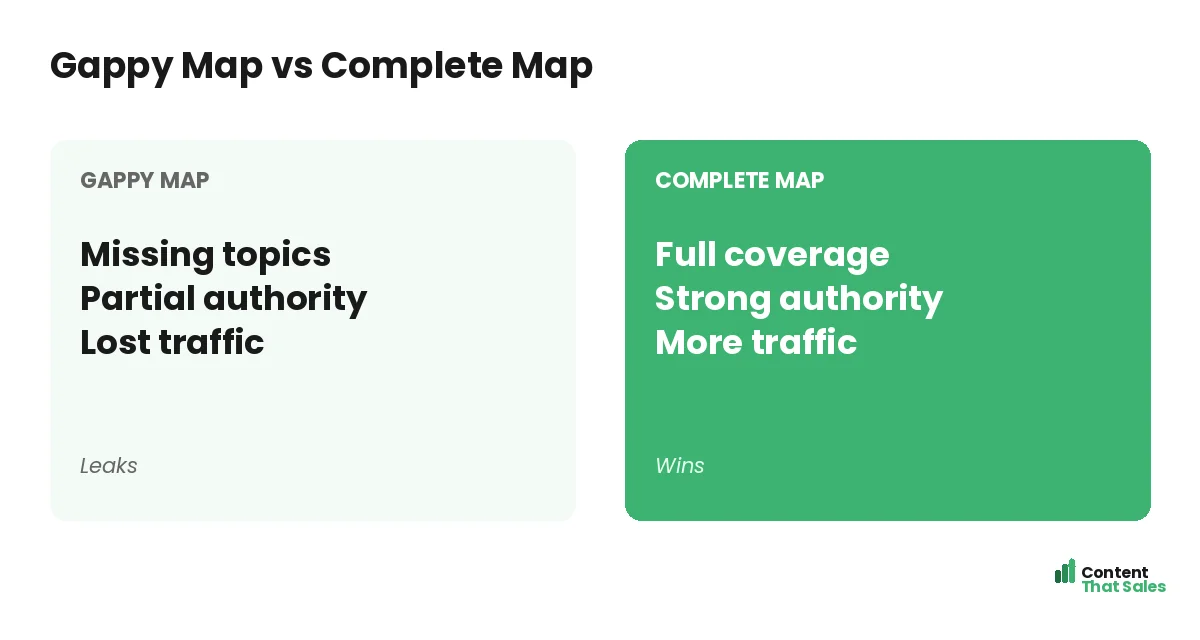
Every gap in your map is a hole in your coverage, a subtopic where you have no authority and a competitor can win. Gaps quietly limit your growth, so finding and filling them is one of the highest-value things you can do.
Spotting gaps keeps your topical map moving toward complete coverage. Each gap you close adds authority and traffic. The goal is a map with no missing pieces, and finding gaps is the first step to getting there.
Compare Pages to Your Map
The simplest gap-finding method is comparing your published pages against your planned map. Any planned page you have not written yet is an obvious gap. This quick check surfaces the most clear-cut missing content first.
Start here because it is fast and concrete. List your map’s planned pages, mark which exist, and the blanks are your gaps. These planned-but-unwritten pages are usually your easiest and highest-priority opportunities to close.
Look for Thin Pillars
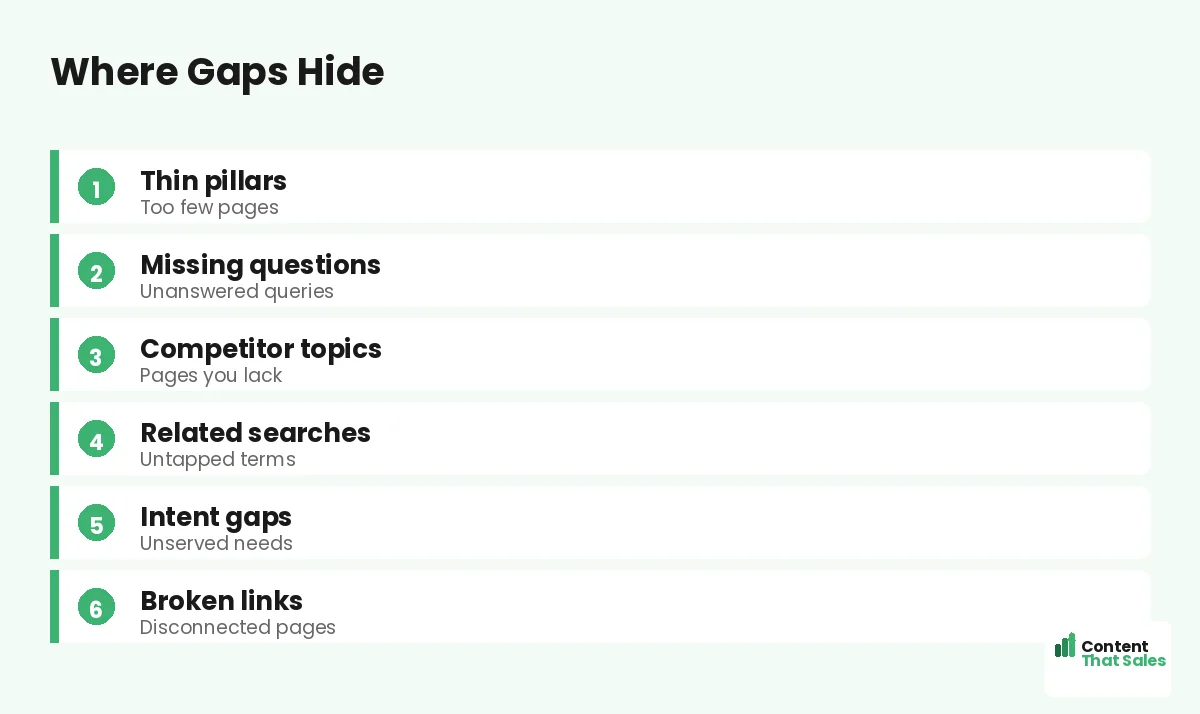
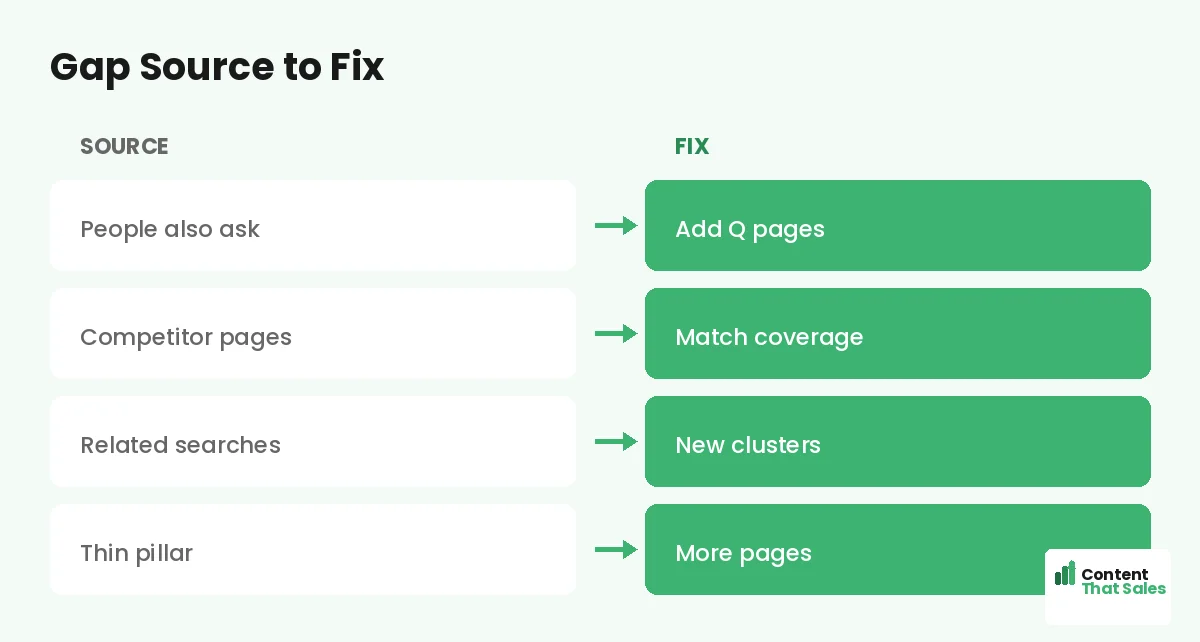
Some pillars have too few cluster pages beneath them. A thin pillar means that part of your topic is barely covered, a gap in depth rather than a single missing page. These pillars need several new pages to become complete.
Thin pillars are gaps hiding in plain sight. Review each pillar and count its clusters. Where coverage is shallow, plan to find cluster topics that add the depth that pillar needs to stand strong.
Mine People Also Ask
The people-also-ask box and related searches on results pages reveal questions your audience asks. If your map does not answer them, those are gaps. This is one of the richest sources of real, specific subtopics to cover.
These questions come straight from searchers, so they reflect genuine demand. Collect the ones related to your topic, then check which your map covers. The unanswered ones become new cluster pages aimed at real queries people type.
Study Your Competitors
Look at what competitors cover that you do not. Their pages reveal subtopics you may have missed and show where the topic is going. Any subject they cover well and you ignore is a gap worth considering for your map.
Competitor analysis is a shortcut to finding gaps. You do not have to copy them, but their coverage highlights areas of demand. Use it to spot missing pillars or clusters, then plan pages that match or beat their depth.
Check Related Searches
Related searches and keyword suggestions reveal terms and angles you may not have considered. Each represents a possible page. Comparing these against your map shows which searches you serve and which are still uncovered gaps.
These suggestions are a window into how people search your topic. Since readers scan more than they read, focus on the related searches that reflect clear intent, then plan pages to capture them.
Did you know?
The cheapest traffic wins often come from filling small gaps, single unanswered questions, since those pages are quick to write and face little competition.
Find Intent Gaps
Sometimes you cover a topic but miss an intent. You might have an informational page but no comparison page, or a how-to but no overview. These intent gaps mean you are not serving every way people search your subject.
Look at your topics and ask whether you cover every intent behind them, informational, commercial, and transactional. Filling intent gaps captures searchers at every stage, making your coverage of each subtopic truly complete rather than partial.
Spot Disconnected Pages
A linking gap is when pages exist but are not connected. An orphaned page, or a cluster not tied to its pillar, weakens your structure even though the content exists. These are gaps in connection rather than coverage.
Check that every page is linked into your map. Where connections are missing, add the right connections between pillar and cluster pages. Closing linking gaps strengthens your structure without writing any new content at all.
Prioritize the Gaps You Find
Once you have a list of gaps, prioritize them. Some matter more than others based on demand, competition, and how they fit your strategy. Tackle the highest-value gaps first so your effort produces the biggest gains soonest.
Not every gap is worth filling immediately. Rank them by impact, then work down the list. Simple, clear pages win, and since easy reading lifts engagement, make each gap-filling page clear and genuinely useful.
Put It All Together
To spot gaps in your topical map: compare pages to your plan, look for thin pillars, mine people-also-ask, study competitors, check related searches, find intent gaps, and spot disconnected pages. Then prioritize what you find.
Each gap you close adds coverage, authority, and traffic. Finding them systematically turns guesswork into a clear plan for what to write next. Keep hunting for gaps, and your map steadily becomes complete and hard to beat.
Map the Gaps Visually
One of the easiest ways to see gaps is to lay your whole map out visually, pillars across the top with their clusters listed beneath each. Seen this way, thin pillars and missing branches jump out immediately. A gap that hides in a long list becomes obvious in a clear visual layout.
This view also helps you check balance across your pillar-and-cluster structure. If one pillar towers over the others, the short ones are likely gaps. A simple visual map turns gap-finding into a glance instead of a hunt, and it makes it easy to share your plan with anyone helping you produce content.
How Content That Sales Helps
Hunting down every gap takes time and know-how. That’s where we come in. At Content That Sales, we analyze your map, find every gap, from missing pages to thin pillars to linking holes, and write the content to fill them.
You get a complete gap analysis plus the pages to close them. We do the research, spot the gaps, and produce the content, often organizing it in a topical map template for clarity. The result is a complete, winning map.
Ready to Find Your Gaps?
Now you know how to spot gaps in your topical map: compare, mine questions, study rivals, check searches, find intent gaps, and spot orphans. Each gap closed is a win. So why leave easy traffic on the table?
Let’s find and fill your gaps together. Book your free consultation now. Call us at 8801631988589 or email service@contentthatsales.com. Let’s turn your map’s missing pieces into ranking, traffic-driving pages.
Frequently Asked Questions About Topical Map Gaps
What is a gap in a topical map?
A subtopic you have not covered, a question you have not answered, a thin pillar, an intent you miss, or a page that is not linked in. Any missing piece is a gap.
How do I find gaps fast?
Start by comparing your published pages against your planned map. Any planned page you have not written is an obvious, easy-to-spot gap to fill first.
How does people-also-ask help?
It reveals real questions searchers ask. Any question your map does not answer is a gap and a ready-made cluster page aimed at genuine demand.
Should I copy competitors?
No, but their coverage reveals subtopics you may have missed. Use it to spot gaps, then write pages that match or beat their depth on those topics.
What is an intent gap?
When you cover a topic but miss a way people search it, like having a how-to but no comparison page. Filling intent gaps makes coverage truly complete.
What is a linking gap?
When pages exist but are not connected, like an orphaned page or a cluster not tied to its pillar. Fixing these strengthens your map without new content.
How do I prioritize gaps?
Rank them by demand, competition, and fit with your strategy. Tackle the highest-value gaps first so your effort produces the biggest gains soonest.
Can Content That Sales help?
Yes. We analyze your map, find every gap, and write the pages to fill them. Reach out for a quick quote.