 Skip to content
Semantic SEO frameworks for topical maps shift your planning from chasing exact keywords to covering entities, relationships, and meaning, the way modern search engines actually understand content. Google no longer matches strings of words; it understands concepts and how they connect. A semantic approach to your topical map aligns your content with that understanding, building deeper relevance and stronger authority. This guide explains semantic SEO and how to apply it to your map.
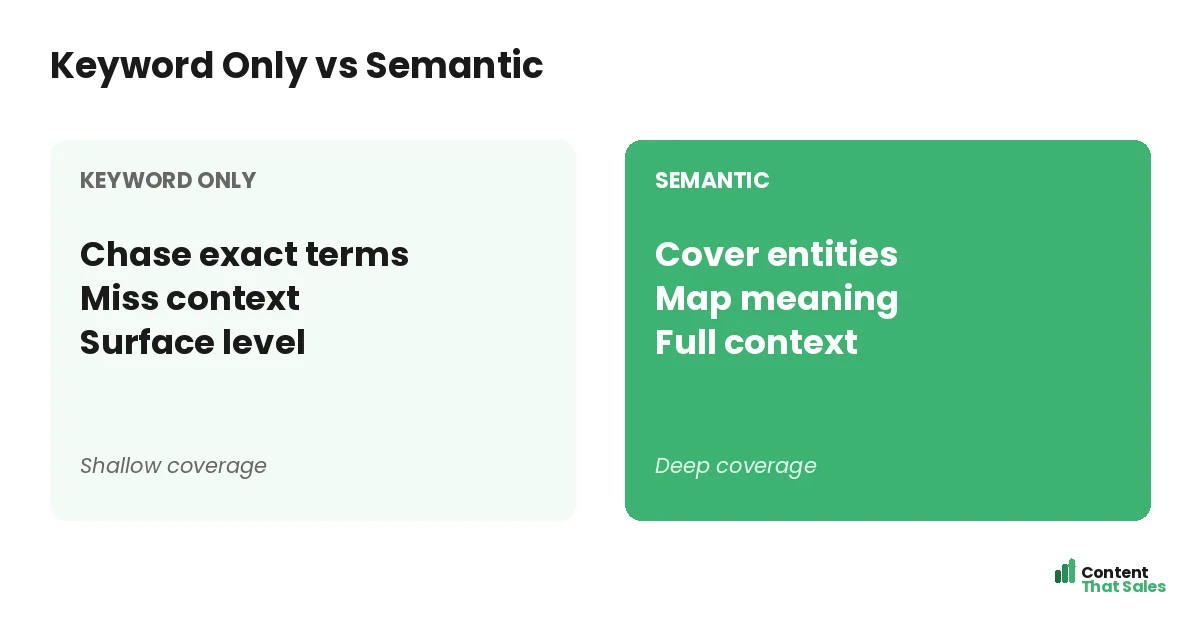
Keyword-only planning misses the bigger picture. Two pages can target different words yet mean the same thing, and one topic can connect to dozens of related concepts. Semantic frameworks capture those connections, so your coverage matches how search engines think.
Below, we explain what semantic SEO means, the elements it maps, and how to build a topical map around entities and meaning rather than keywords alone.

What Semantic SEO Means
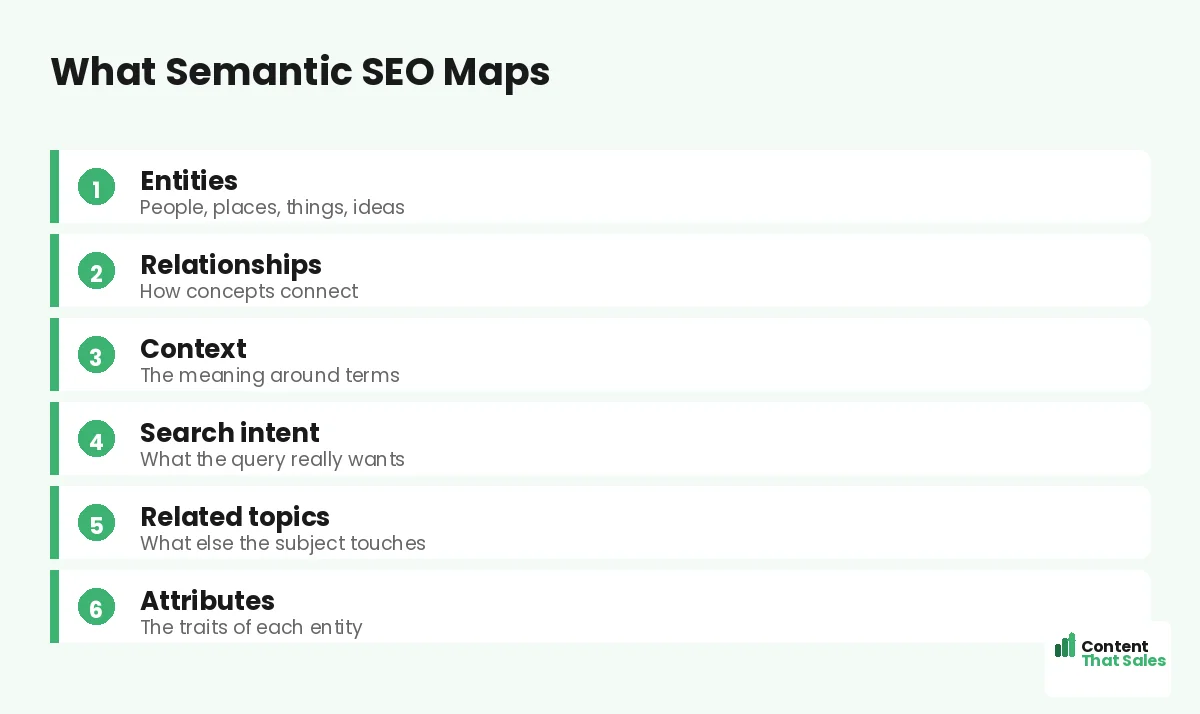
Semantic SEO is optimizing for meaning rather than exact keywords. Instead of targeting one string of words, you cover a concept and everything related to it, the entities, attributes, and connections that define a subject. It matches how search engines now interpret queries.
This builds on the foundation of a topical map. If you need the basics, see our guide on what a topical map is. Semantic SEO is the lens that makes your map align with meaning, not just search terms.
From Keywords to Entities
The shift at the heart of semantic SEO is from keywords to entities. An entity is a distinct thing, a person, place, product, concept, or idea, that search engines recognize and understand. Mapping entities means covering the real things your subject is about.
Instead of asking “what keywords do I target,” you ask “what entities define this subject, and how do they relate.” This is a deeper level than keyword mapping. For that comparison, see our guide on a topical map vs a keyword map.
Map the Relationships
Entities matter because of how they connect. Semantic SEO maps the relationships between concepts, how one idea relates to another within your subject. These connections form a web of meaning that mirrors how search engines model knowledge.
For example, a subject like coffee connects to beans, brewing methods, origins, and equipment, each related in specific ways. Mapping those relationships ensures your content covers not just isolated topics but how they fit together, which signals true subject mastery.
Cover Context and Meaning
Semantic SEO is about context. The same word can mean different things, and a topic carries meaning beyond its keywords. Covering context means addressing the full meaning around a subject, the why, the how, and the related ideas, not just the literal term.
This depth of context is what separates surface content from authoritative content. Since readers scan more than they read, clear, contextual content also serves them better, answering the real intent behind their search, not just the words they typed.
Match Search Intent
A core part of semantic SEO is matching search intent, what the searcher actually wants, not just the words they use. Different queries with the same words can have different intents, and a semantic approach covers each intent with the right content.
Mapping intent ensures every page answers a real need. An informational query needs a guide; a commercial one needs a comparison. By covering the intents around your subject, your semantic map serves searchers fully and earns the relevance that ranks.
Cover Attributes and Subtopics
Each entity has attributes, the traits, properties, and facts that define it. Semantic SEO maps these attributes and the subtopics around each entity, ensuring you cover a concept completely. This thoroughness is what signals expertise to search engines.
For a product entity, attributes might include features, uses, comparisons, and care. Covering them all, plus the related subtopics, gives Google a complete picture of your knowledge. Attribute coverage is how semantic depth turns into demonstrated authority.
Did you know?
Modern search engines understand content as entities and relationships, not strings of words, so covering the meaning around a topic often matters more than matching exact keywords.
Building a Semantic Topical Map
To build a semantic map, start with your core entity, the central concept. Identify the related entities, their attributes, the relationships between them, and the intents searchers have. Then create content covering each, linked to reflect the connections.
This produces a map organized by meaning, not just keywords. It overlaps with how you build a topical map, but with a semantic lens, you plan around concepts and connections, ensuring your coverage matches how search engines model the subject.
Link by Meaning
In a semantic map, internal links reflect real relationships between concepts, not just convenience. Link pages that are genuinely related in meaning, so your link structure mirrors the web of entities and relationships in your subject.
This meaningful linking reinforces the connections for search engines and helps readers follow the logic of your subject. Links that map true relationships strengthen the semantic signal far more than random or purely promotional links ever could.
Semantic SEO and Topical Authority
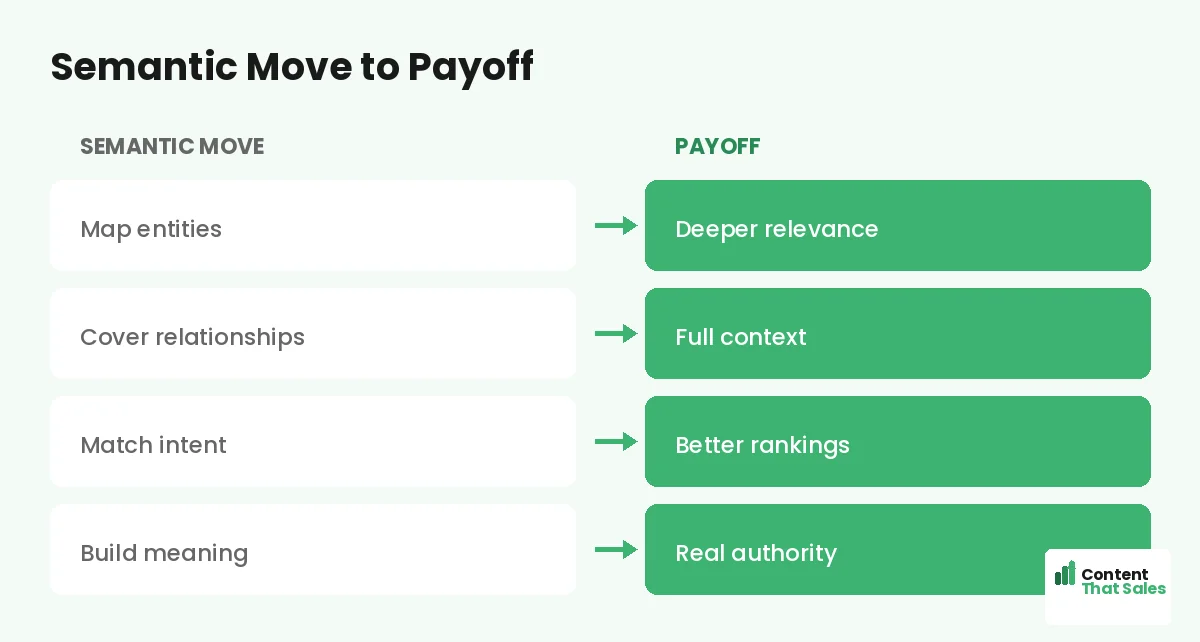
Semantic SEO is a powerful path to topical authority. By covering a subject’s entities, attributes, relationships, and intents, you demonstrate the kind of complete, connected understanding that search engines reward with strong rankings across the topic.
This is topical authority built on meaning. Where keyword coverage can feel mechanical, semantic coverage reflects genuine expertise. The two work together: keywords target pages, semantics ensure those pages cover the subject the way an expert would.
Keep It Practical
Semantic SEO can sound abstract, but it stays practical: cover your subject so completely and contextually that you address every entity, attribute, and intent a searcher might have. You do not need to overthink the theory to apply the principle.
Simple, clear content keeps winning, since easy reading lifts engagement. Write thorough, well-connected content that fully covers the meaning of your subject, and you are doing semantic SEO, whatever you call it.
Put It All Together
Semantic SEO frameworks plan your topical map around entities, relationships, context, and intent, matching how search engines understand content. They move you beyond exact keywords to cover the full meaning of a subject, which builds deeper relevance and authority.
Map your core entity, its related entities and attributes, the relationships, and the intents, then link by meaning. The result is content that mirrors how Google thinks, covering a subject so completely and connectedly that it ranks as a true authority.
How Content That Sales Helps
We plan content around meaning, not just keywords. That’s where we come in. At Content That Sales, we map your subject’s entities, relationships, and intents, then write the connected pages that match how search engines understand content.
You share your subject and goals. We build a semantic map, cover the entities and context fully, and link by meaning. The result is content with the depth and connection that earns genuine topical authority and ranks.
Ready to Go Beyond Keywords?
Now you know how semantic SEO frameworks plan a topical map around entities, relationships, and meaning, matching how search engines think. Keyword-only planning is shallow. So why not cover your subject the way Google understands it?
Let’s map your subject by meaning. Book your free consultation now. Call us at 8801631988589 or email service@contentthatsales.com. Let’s build content with the depth that ranks.
Frequently Asked Questions About Semantic SEO Frameworks
What is semantic SEO?
Optimizing for meaning rather than exact keywords, covering a concept and its related entities, attributes, and connections, matching how search engines now interpret queries.
What is an entity?
A distinct thing, a person, place, product, concept, or idea, that search engines recognize and understand. Semantic SEO maps the real things a subject is about.
How is it different from keyword SEO?
Keyword SEO targets exact terms; semantic SEO covers concepts and their relationships. It is a deeper level that reflects how search engines model knowledge.
Why map relationships?
Entities matter because of how they connect. Mapping relationships ensures your content covers how topics fit together, signaling true subject mastery to Google.
Does search intent matter?
Yes. Semantic SEO matches what the searcher actually wants, not just their words. Each intent, informational or commercial, needs the right content to satisfy it.
How do I build a semantic map?
Start with your core entity, identify related entities, attributes, relationships, and intents, then create and link content covering each by meaning.
Is semantic SEO too complex to apply?
No. In practice it means covering your subject so completely and contextually that you address every entity, attribute, and intent. Thorough content is semantic SEO.
Can Content That Sales help?
Yes. We map your subject’s entities and relationships and write the connected pages that match how search engines understand content. Reach out for a quote.