 Skip to content
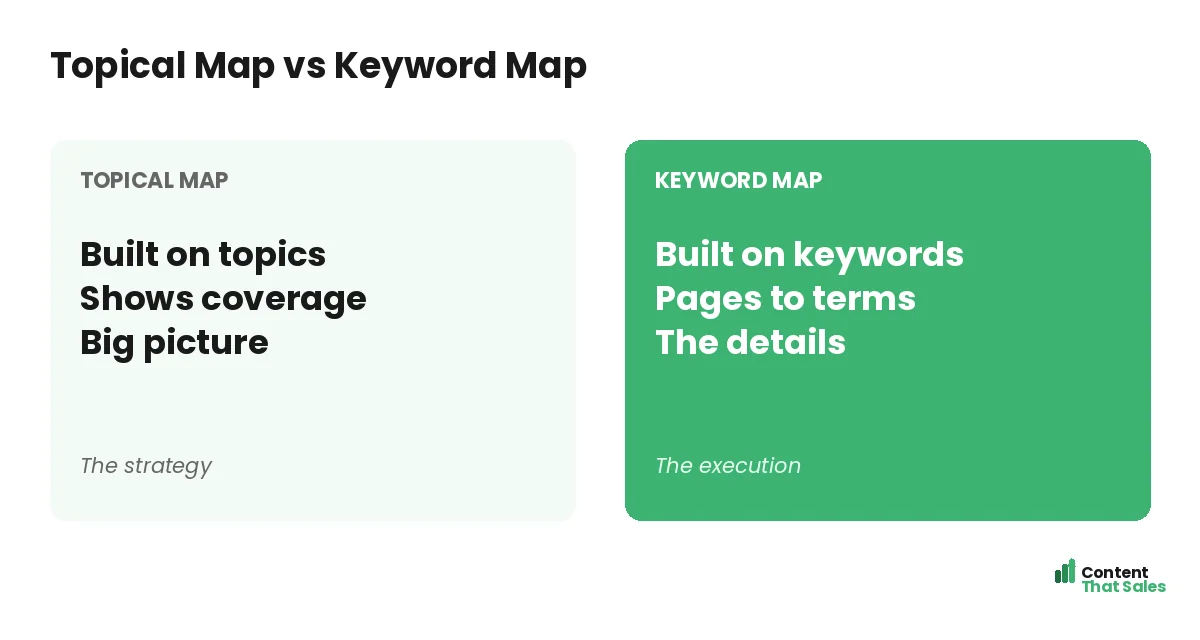
The topical map vs keyword map question comes up often because the two look similar but do very different jobs: a topical map plans the subjects and structure your site will cover, while a keyword map assigns specific search terms to individual pages. One sets the big-picture strategy; the other handles the targeting details. Knowing the difference, and using both, is how you build content that is strategic and precisely optimized. This guide explains how each works, when to use which, and how they connect.
Teams often build a keyword map and call it a strategy, but a list of keywords is not the same as a plan for covering a subject. The topical map provides that missing layer of structure, with keywords slotted in underneath. Together they form a complete approach.
Below, we define each tool, compare them, show when to use each, and explain how a topical map and a keyword map fit together.

What a Topical Map Is
A topical map is a plan built around topics. It defines your core subject, the subtopics under it, and how they group into clusters with a clear hierarchy. It answers “what should we cover to own this subject,” focusing on structure and completeness.
It is the strategic layer. For the full method, see our guide on how to build a topical map. The map decides the shape of your content, ensuring full coverage and the topical authority that comes from it, before you worry about specific keywords.
What a Keyword Map Is
A keyword map is a plan built around keywords. It assigns a specific target keyword, and often related terms, to each page on your site. It answers “which page targets which search,” focusing on precise optimization and avoiding overlap.
The keyword map is the targeting layer. It ensures every page has a clear search term to rank for and that no two pages compete for the same one. It is detailed and tactical, where the topical map is broad and strategic.
The Core Difference
The core difference is topics versus keywords, strategy versus targeting. The topical map decides the subjects and structure; the keyword map decides the exact terms each page targets. The map is the blueprint; the keyword map is the wiring diagram.
They operate at different levels. The topical map zooms out to the whole subject and how it connects. The keyword map zooms in to individual pages and their search terms. Both are needed, but they answer different questions and serve different purposes.
When to Use a Topical Map
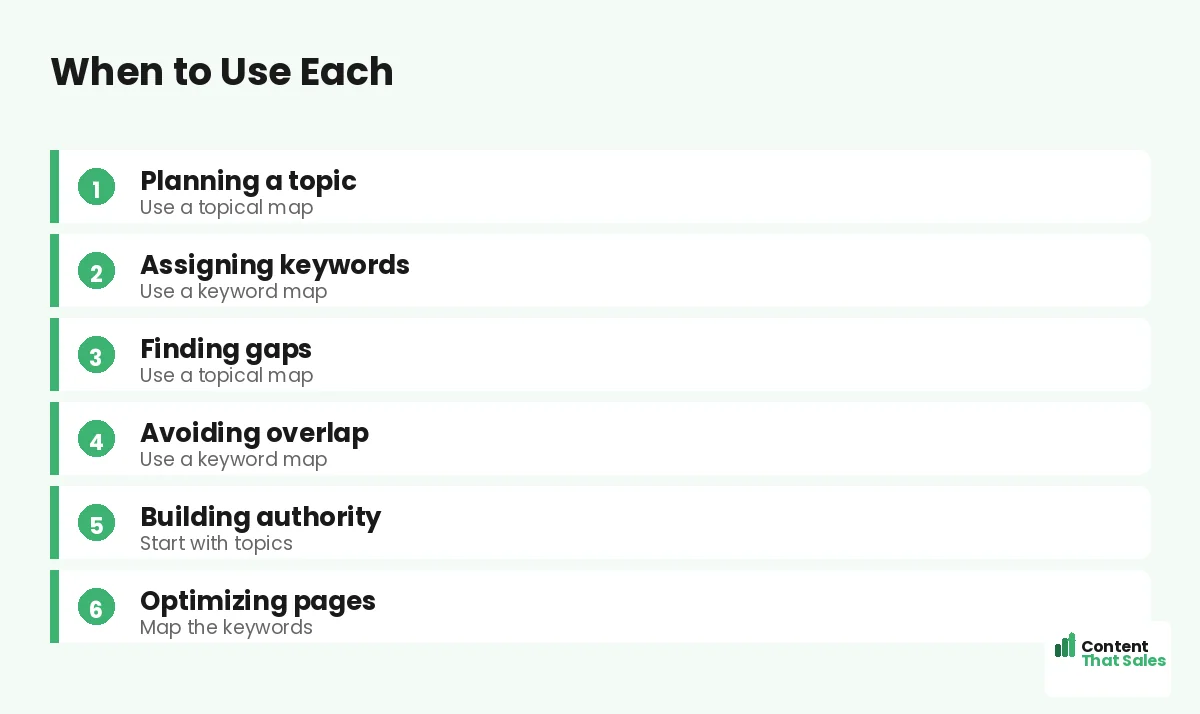
Use a topical map when you are planning coverage and structure. It is the right tool for mapping a new subject, finding content gaps, grouping pages into clusters, and building topical authority. The question it answers is always “what should we cover.”
The map is where you think about completeness and internal linking, the big strategic decisions. You build it first, before assigning keywords, because the structure of your content should drive your keyword choices, not the other way around.
When to Use a Keyword Map
Use a keyword map when you are assigning targets and optimizing pages. It is the right tool for giving each page a primary keyword, preventing cannibalization, and tracking which terms you target. The question it answers is “which page ranks for what.”
The keyword map comes after the topical map. Once you know your structure, you assign the specific search terms each page should win. This keeps your optimization precise and ensures your pages do not compete with one another in the rankings.
How They Connect
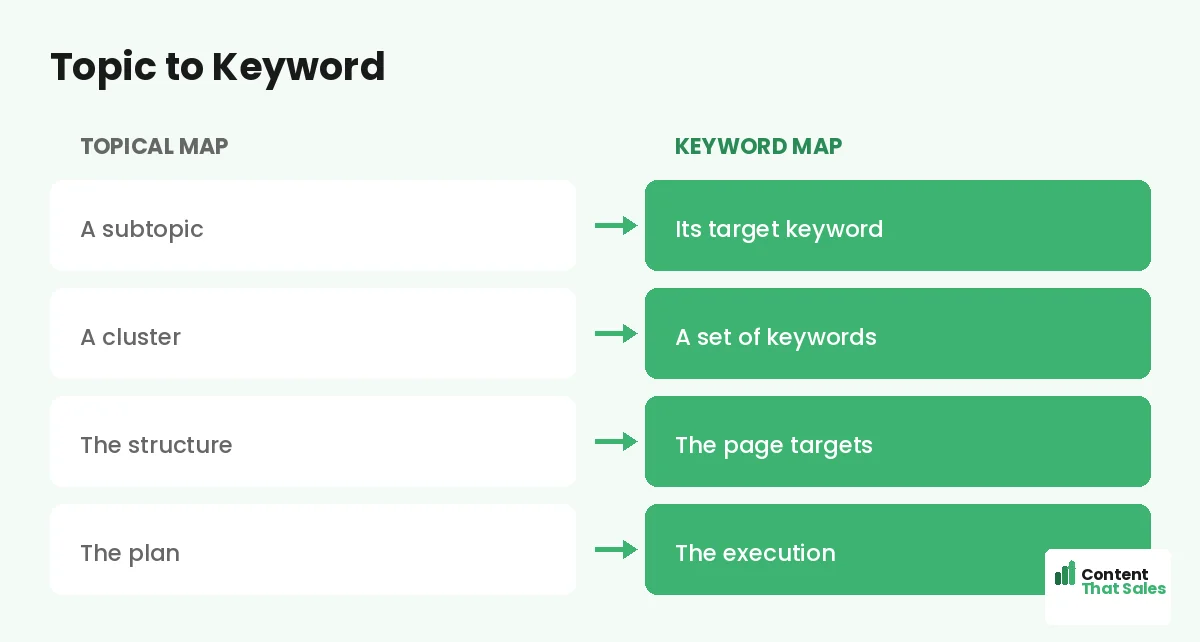
The two connect directly: each item on your topical map becomes a page, and each page gets a keyword from your keyword map. The topical map provides the structure; the keyword map fills in the precise targets within that structure.
Think of it as strategy flowing into targeting. The map says “we need a page on this subtopic”; the keyword map says “this page targets this search term.” Since readers scan more than they read, both layers keep each page focused on one clear purpose.
Did you know?
A keyword map alone can rank pages but miss whole subtopics, while a topical map ensures you cover the full subject, then assign keywords within it.
Why a Keyword Map Alone Falls Short
Many teams skip straight to a keyword map, listing terms and assigning pages. The problem is that a keyword list does not guarantee full coverage of a subject. You can target many keywords and still miss whole subtopics that build authority.
The topical map fixes this by starting from the subject, not the search terms. It ensures completeness first, the same goal behind a clear topical map, then the keyword map optimizes within that complete structure. Keywords without a topical plan are tactics without a strategy.
Why the Topical Map Comes First
Order matters here too. Build the topical map first to define your subject and structure, then create the keyword map to assign targets to each page. Starting with keywords risks a collection of pages that rank individually but do not form authoritative coverage.
Starting with topics ensures your content has shape and completeness. The keyword map then sharpens each page. This sequence, structure before targeting, produces content that both covers the subject and ranks for the right terms.
Use Both for Best Results
The strongest content programs use both tools together. The topical map ensures complete, authority-building coverage; the keyword map ensures each page is precisely optimized and distinct. Strategy and targeting working in concert produce the best rankings.
Add a content calendar to schedule it all, and you have a full system. For how the map differs from scheduling, see our guide on a topical map vs a content calendar. Map, keyword map, and calendar each play their part.
Avoid the Confusion
The confusion between the two usually comes from treating keywords as strategy. Keywords are targets, not a plan. The plan is the topical map, which decides what to cover and how it connects. Keep the roles clear and you avoid the trap.
When you separate strategy, the topical map, from targeting, the keyword map, both get sharper. You cover subjects completely and optimize pages precisely. The clarity between the two tools is what makes your whole content approach more effective.
Put It All Together
A topical map plans the subjects and structure your site covers; a keyword map assigns specific search terms to each page. The map is strategy, the keyword map is targeting. Build the map first, then map keywords to the pages within it.
Used together, they ensure complete coverage and precise optimization. Simple, clear content keeps winning, since easy reading lifts engagement. Plan with the topical map, target with the keyword map, and your content both covers the subject and ranks.
How Content That Sales Helps
We pair structure with precise targeting. That’s where we come in. At Content That Sales, we build your topical map for full coverage, then map keywords to each page so your content is both strategic and optimized.
You share your subject and goals. We plan the structure, assign the keywords, and write the connected pages. The result is content that covers the subject completely and targets the right searches, the best of both maps.
Ready to Plan and Target Your Content?
Now you know the difference: a topical map plans subjects and structure, a keyword map assigns search terms, and you need both. Keywords alone miss coverage; structure alone misses targeting. So why not use them together?
Let’s map your subject and target your keywords. Book your free consultation now. Call us at 8801631988589 or email service@contentthatsales.com. Let’s turn your topic into complete, optimized, ranking content.
Frequently Asked Questions About Topical Map vs Keyword Map
What is the difference between a topical map and a keyword map?
A topical map plans the subjects and structure your site covers; a keyword map assigns specific search terms to each page. One is strategy, the other targeting.
Which should I build first?
The topical map. Define your subject and structure first, then assign keywords to the pages within it. Structure should drive your keyword choices.
Can I just use a keyword map?
Not effectively. A keyword list does not guarantee full subject coverage, so you can target many terms and still miss whole subtopics that build authority.
What does a keyword map do?
It assigns a primary keyword to each page, prevents cannibalization, and tracks which terms you target, keeping your optimization precise.
How do the two connect?
Each item on the topical map becomes a page, and each page gets a keyword from the keyword map. Structure flows into targeting.
Why does the topical map come first?
Starting with topics ensures completeness and shape. Starting with keywords risks pages that rank individually but do not form authoritative coverage.
Do I need both?
Yes. The topical map ensures complete coverage; the keyword map ensures precise optimization. Together they produce the best rankings.
Can Content That Sales help?
Yes. We build your topical map and keyword map, then write the pages that cover the subject and target the right searches. Reach out for a quick quote.