 Skip to content
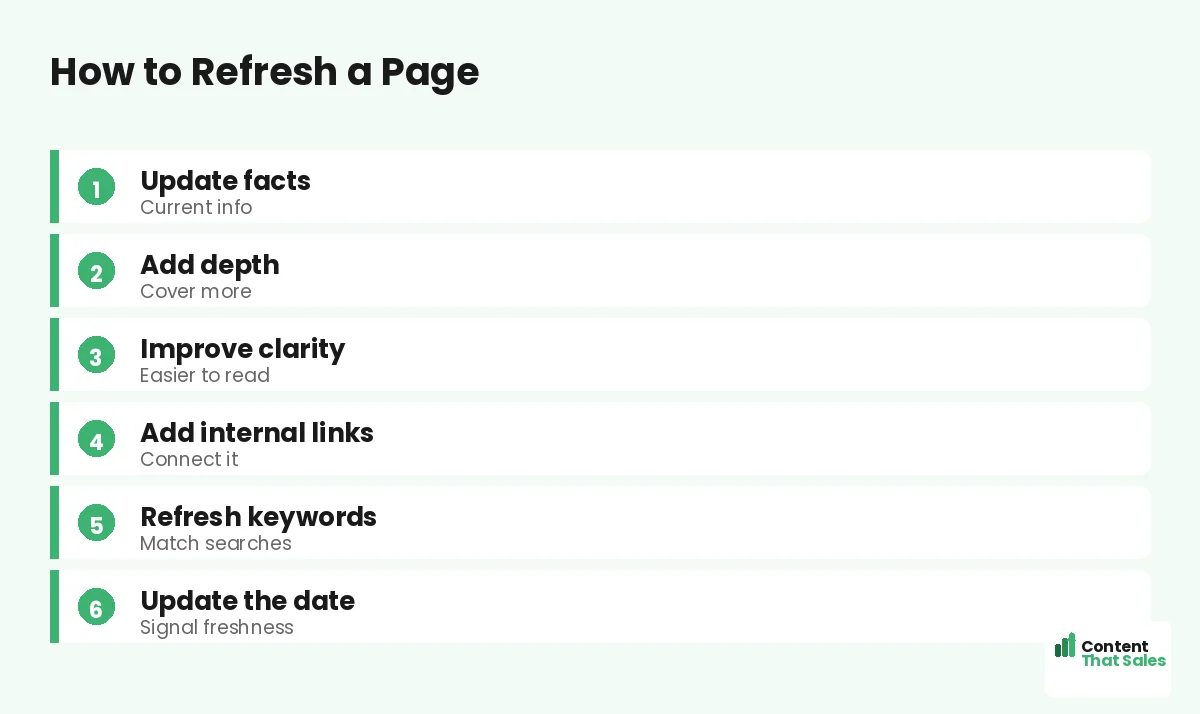
Knowing how to refresh old content to strengthen your topical map is one of the highest-return things you can do for your site. Refreshing means updating facts, adding depth, improving clarity, and reconnecting links on pages you already have. It is often faster than writing new pages and can win back lost rankings quickly. This guide walks through how to refresh content the right way so it boosts your whole map.
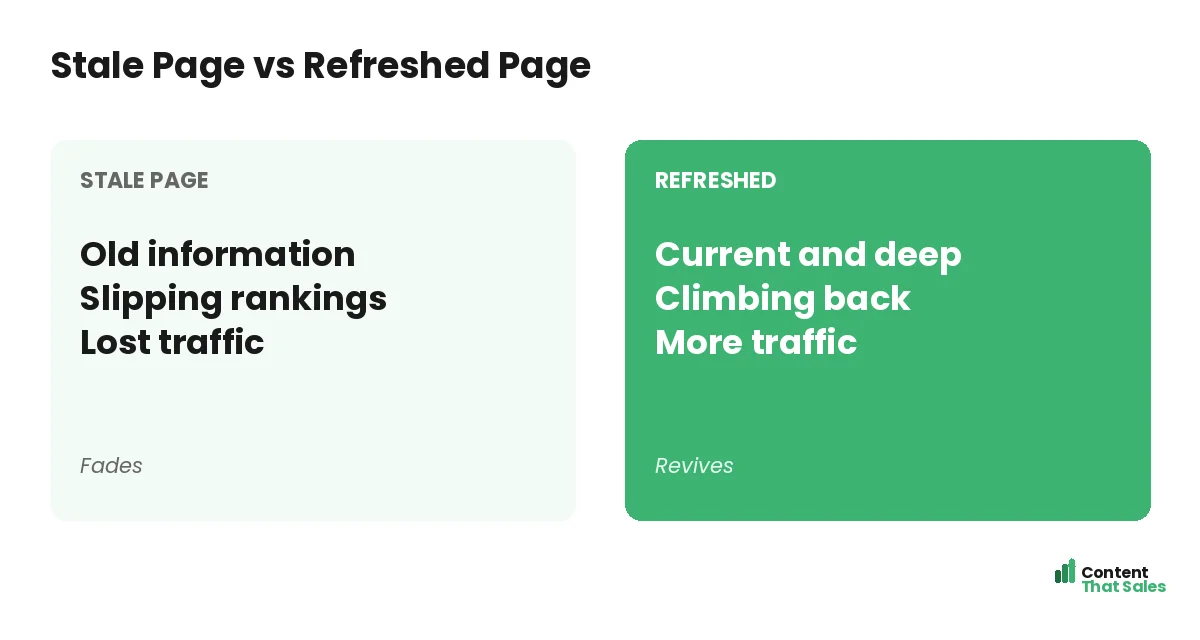
Old pages lose ground over time as facts age, competitors improve, and search trends shift. Refreshing brings them back to life, and because the page already has history, the payoff can come fast.
Below, we walk through which pages to refresh, how to do it, and how refreshing fits into building your topical authority.

Why Refreshing Content Works
Refreshing an existing page is often faster and more effective than writing a new one. The page already has age, links, and some ranking history. Improving it builds on that foundation, so gains can come quickly compared to starting fresh.
Refreshing also keeps your topical map strong by maintaining the pages already in it. A map is only as good as its pages, so keeping them current and deep is essential to holding and growing your authority.
Find Pages That Need Refreshing
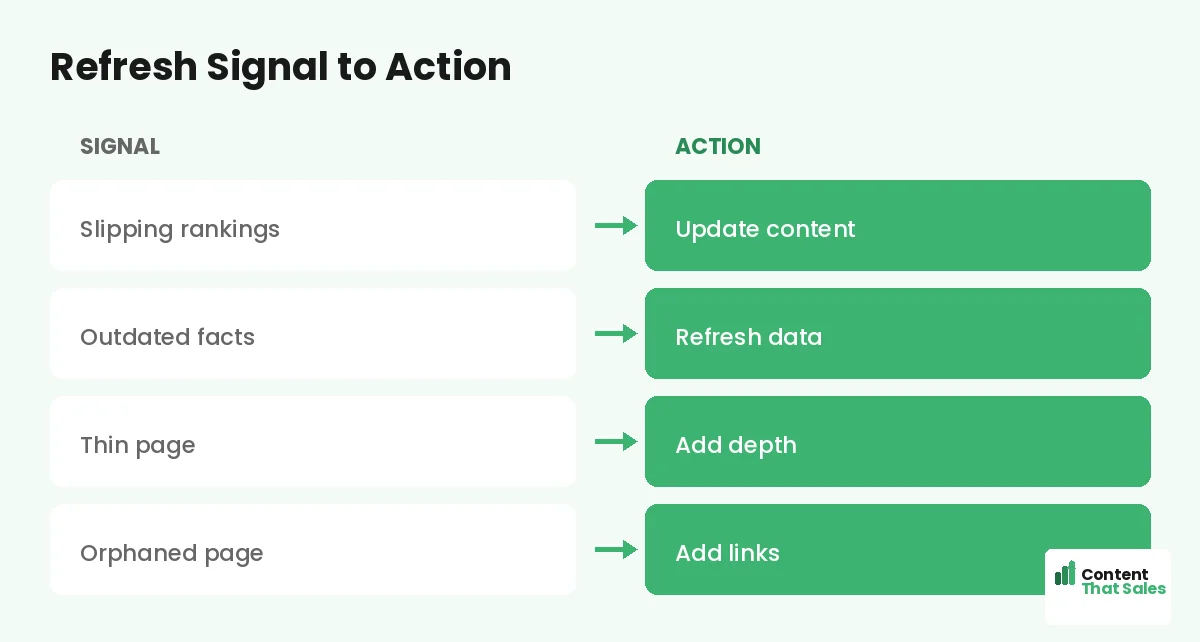
Start by identifying which pages to refresh. Look for slipping rankings, outdated information, thin content, and pages with declining traffic. These signals point to the pages where a refresh will have the most impact on your results.
Prioritize pages that matter to your map and are underperforming. A once-strong page that has slipped is a prime candidate, the demand is there and the page exists; it just needs to be brought back up to standard.
Update the Facts
The first refresh step is updating outdated information. Old stats, dated references, and obsolete advice make a page less trustworthy and less useful. Replacing them with current facts instantly improves quality and signals freshness to readers and search engines.
Accuracy builds trust. Go through the page and correct anything out of date, then add any new developments worth covering. This alone can revive a page that lost ground simply because its information aged out of relevance.
Add Depth and Coverage
Thin pages rarely rank well. Use a refresh to add depth, more detail, new sections, examples, and answers to related questions. A more thorough page serves readers better and signals stronger expertise on the subtopic it covers.
As you add depth, you may uncover related subtopics worth their own pages. This is a chance to find cluster topics that expand your coverage, turning a single refresh into a prompt for new pages around it.
Improve Clarity and Readability
A refresh is the time to make a page clearer. Break up walls of text, add headings, tighten sentences, and improve flow. A page that is easy to read keeps visitors engaged and serves them better than a dense, hard-to-scan one.
Readers reward clarity. Since readers scan more than they read, structure the page for scanning, with clear headings and short paragraphs. Better readability often improves both engagement and rankings together.
Reconnect the Internal Links
Old pages often have outdated or missing internal links. A refresh is the time to fix that, link the page to its pillar, to related clusters, and from newer pages back to it. This reweaves the page into your current map.
Strong linking is part of what makes a refresh work. Add the right connections between pillar and cluster pages so the refreshed page contributes fully to your structure and benefits from the authority of the pages around it.
Did you know?
A well-executed refresh can lift a page’s traffic significantly within weeks, far faster than a brand-new page, because the page already has authority to build on.
Keep the URL Stable
When refreshing, keep the page’s URL the same. Changing it risks losing the ranking history and links the page has built. Update the content in place so you keep all the equity the page has earned over time.
If you must change a URL, set up a redirect, but it is best to avoid it. The whole point of refreshing is to build on existing strength, and a stable URL preserves that strength while the improved content does its work.
Refresh in Place Within Your Map
Refreshing should reinforce your map, not disrupt it. Make sure the refreshed page still fits its pillar and cluster cleanly, with the right focus and links. A refresh is a chance to realign a drifting page with your structure.
Check that the page fits your pillar-and-cluster structure after refreshing. Simple, clear pages keep winning, and since easy reading lifts engagement, make the refreshed page clear and genuinely useful.
Put It All Together
To refresh old content: find pages that need it, update the facts, add depth, improve clarity, reconnect internal links, and keep the URL stable. Done well, refreshing builds on a page’s existing strength to win back rankings fast.
Refreshing is one of the highest-return moves in content. It keeps your map’s pages current and strong, often faster than writing new ones. Make refreshing a regular habit, and your whole map stays healthy and competitive.
Refresh on a Regular Schedule
Content does not age all at once, so refreshing should be ongoing rather than a one-time project. Set a schedule to review your pages, perhaps a batch each month, and refresh the ones that have slipped or gone out of date. A steady cadence keeps your whole map current without ever facing a giant backlog.
A regular schedule also helps you catch problems early, before a page loses too much ground. The longer a strong page sits stale, the more traffic it sheds and the harder it is to recover. Reviewing on a rhythm means you refresh pages while they still have momentum, which makes each refresh faster and more effective at protecting your rankings.
Track the Results of Each Refresh
After refreshing a page, watch how it performs. Note the rankings and traffic before you start, then check again a few weeks later. Tracking results shows you which refreshes worked and helps you learn what kinds of changes move the needle most for your site.
Over time this builds a playbook. You will see whether updating facts, adding depth, or improving links tends to drive the biggest gains, and you can focus your effort there. Measuring also proves the value of refreshing, making it easier to justify the time it takes as a regular part of maintaining your topical map and authority.
How Content That Sales Helps
Refreshing a whole library of pages takes time. That’s where we come in. At Content That Sales, we find your underperforming pages, refresh them with updated facts and depth, and reconnect them into your map to win back rankings.
You get refreshed, stronger pages without the work. We identify the opportunities, do the rewriting, and fix the links, often organizing it all in a topical map template for clarity. The result is a revived, competitive map.
Ready to Refresh Your Content?
Now you know how to refresh old content to strengthen your map: find the pages, update and deepen them, fix the links, and keep URLs stable. Refreshing is fast, high-return work. So why let strong pages keep slipping?
Let’s refresh and revive your content together. Book your free consultation now. Call us at 8801631988589 or email service@contentthatsales.com. Let’s turn your aging pages back into ranking, traffic-driving assets.
Frequently Asked Questions About Refreshing Content
What does refreshing content mean?
Updating an existing page, its facts, depth, clarity, and internal links, to improve quality and win back rankings, rather than writing a brand-new page.
Why refresh instead of writing new pages?
Refreshing builds on a page’s existing age, links, and ranking history, so gains often come faster than starting fresh. It is high-return, efficient work.
How do I know which pages to refresh?
Look for slipping rankings, outdated information, thin content, and declining traffic. Prioritize pages that matter to your map and are underperforming.
What should I update first?
Start with outdated facts and stats, then add depth and improve clarity. Updating accuracy alone can revive a page that slipped because its info aged.
Should I change the URL?
No. Keep the URL stable to preserve ranking history and links. If you must change it, set up a redirect, but avoiding the change is best.
How does refreshing help internal links?
A refresh is the time to reconnect the page to its pillar and related clusters, reweaving it into your current map so it contributes fully again.
How fast does a refresh work?
Often within weeks, faster than a new page, because the page already has authority to build on. Results vary, but refreshes typically pay off quickly.
Can Content That Sales help?
Yes. We find underperforming pages, refresh them, and reconnect them into your map. Reach out for a quick quote.