 Skip to content
Programmatic SEO landing pages let you create hundreds or thousands of search-optimized pages from a single template and a data set, so you can capture demand across many similar keywords at scale. Done well, it builds a library of useful pages that each rank and convert. Done badly, it produces thin, spammy pages that Google ignores or penalizes. This guide explains what programmatic SEO is, how the template-and-data model works, and how to keep quality high as you scale.
The appeal is obvious: instead of hand-writing a page for every city, product, or use case, you build one strong template and let data fill it. The risk is just as real: pages that only swap a word add no value. The line between a smart program and a doorway scheme is quality.
Below, we cover how programmatic SEO works, what each page needs, how to keep quality high, and the pitfalls that sink most attempts.

What Programmatic SEO Is
Programmatic SEO is the practice of generating many landing pages automatically from a template and a structured data source. Each page targets a specific, repeatable keyword pattern, like “best CRM for dentists” across dozens of professions, all built from one design.
It works when there is real, repeatable search demand and you have data that makes each page genuinely useful. The pages still follow a solid landing page structure, just produced at scale rather than one at a time.
How the Template Model Works
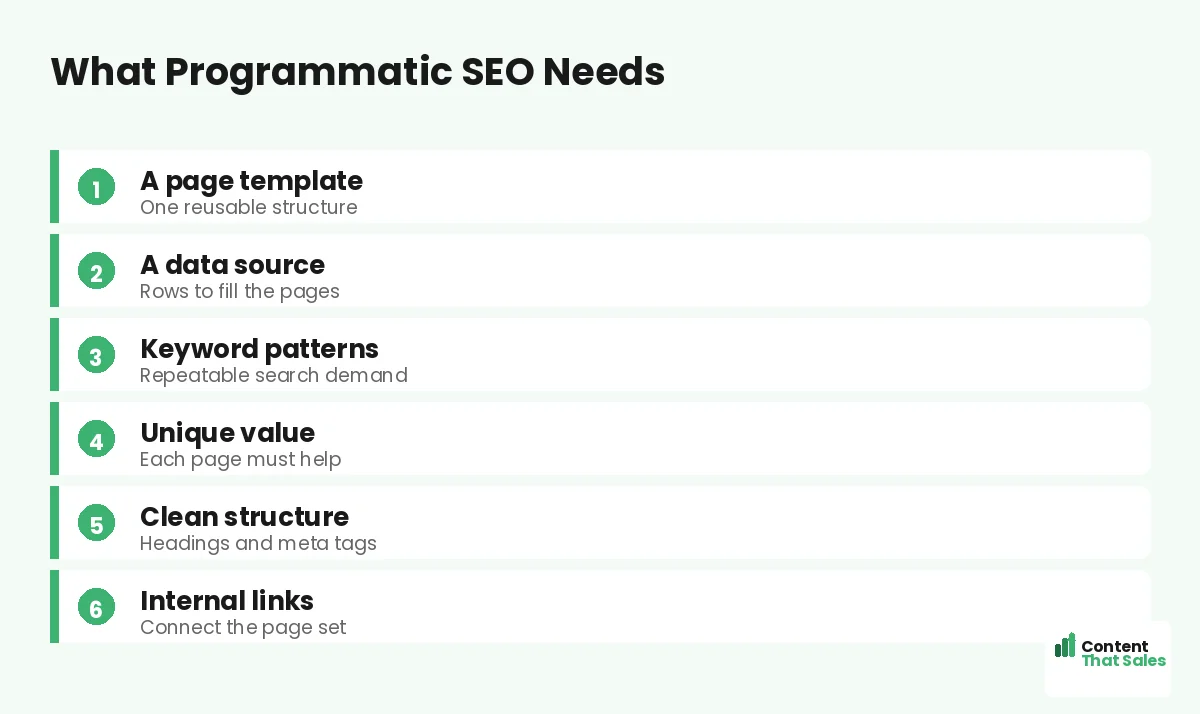
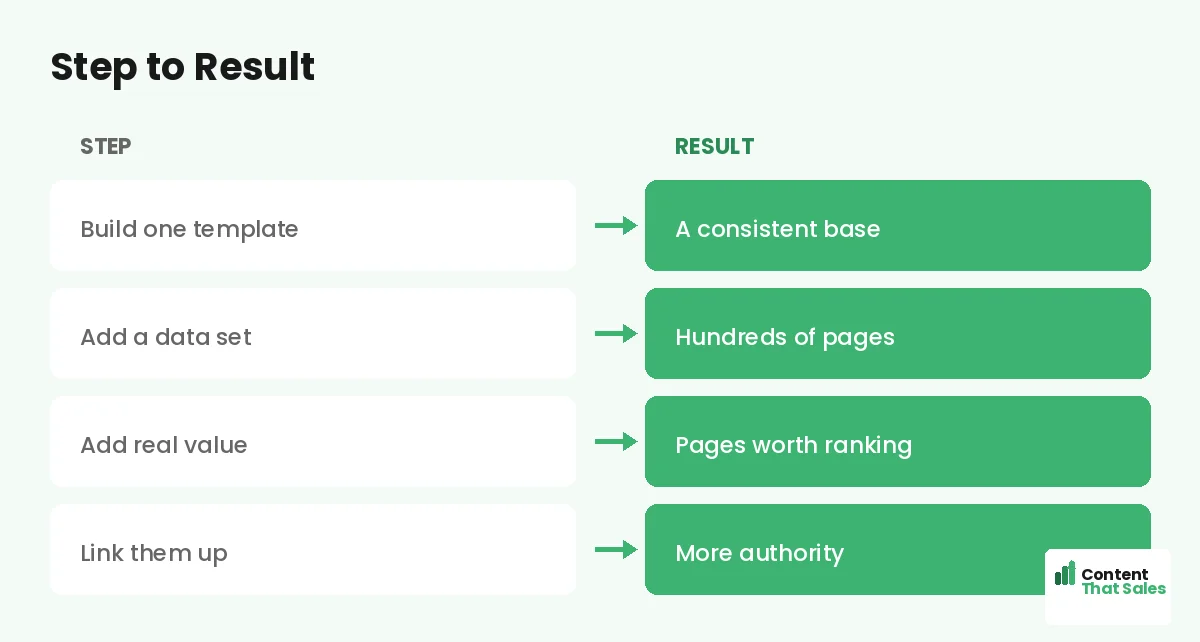
The model has three parts: a page template, a data set, and a keyword pattern. The template is the reusable layout and copy. The data fills the variable parts of each page. The keyword pattern defines the searches you target across the set.
For example, a template for “things to do in [city]” pulls from a database of cities and attractions. One build, many pages. The craft is in making the template flexible and the data rich enough that every generated page reads as a real, helpful page.
You Need Real, Useful Data
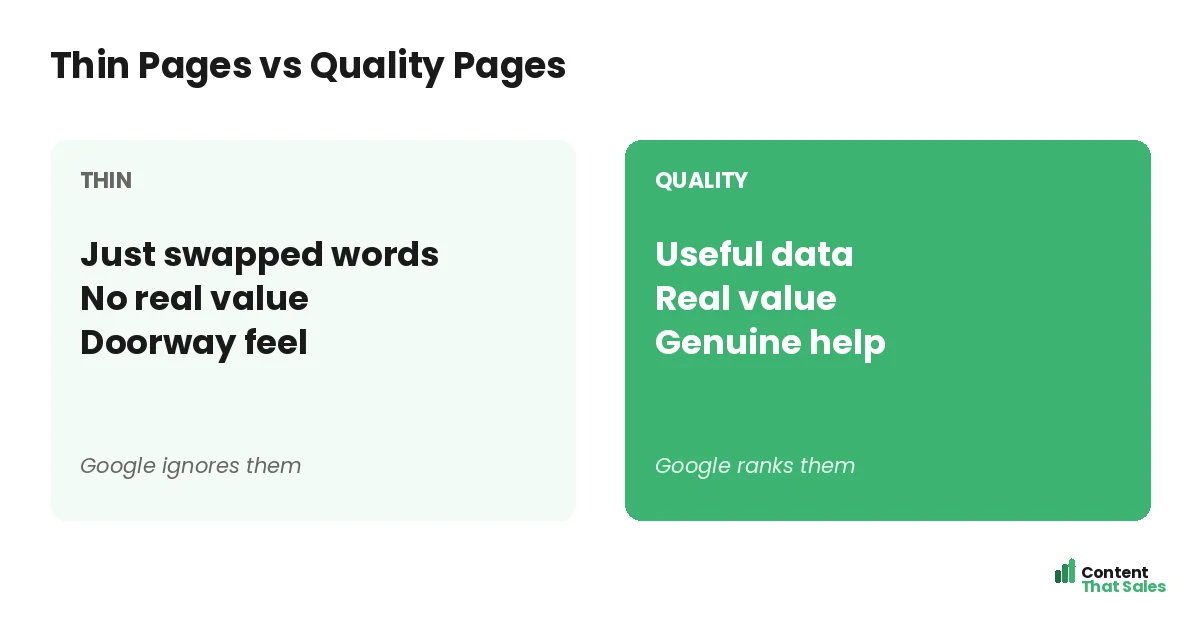
The data is what makes programmatic SEO work or fail. If each page only swaps a city name into otherwise identical copy, it adds no value and Google treats it as thin. The data must give each page something genuinely useful and unique.
Strong programmatic pages carry real information: prices, comparisons, local details, stats, or specifics that searchers want. The richer and more unique the data per page, the more each one earns its place in the index. Useful data is the whole foundation.
Match a Repeatable Keyword Pattern
Programmatic SEO only works when there is repeatable search demand. You need a keyword pattern that many people search across variables, like a service in many cities or a tool for many roles. No demand, no point in scaling, so confirm the pattern can rank on Google before you build.
Research the pattern before you build. Confirm people actually search the variations, and that the intent is consistent across them. A pattern with real, repeated demand is what makes generating many pages worthwhile instead of a waste of effort.
Keep Each Page Genuinely Useful
The golden rule is that every page must help the searcher. If a person landing on it finds real value, Google will too. Thin pages that exist only to rank, with no substance, are the classic doorway pages that get ignored or penalized.
Ask of each generated page: would this help someone if they found it? Since readers scan more than they read, make the useful data easy to scan. If a page would not stand on its own, it should not exist.
The Big Risk: Thin Pages
The most common failure is mass-producing near-identical, low-value pages. Google has long fought doorway pages and thin content. A program that simply swaps a word across thousands of pages invites a penalty rather than a flood of traffic.
Avoid this by making each page substantive. Real data, unique details, and genuine usefulness keep you on the right side of the line. Quality at scale is hard, which is exactly why most programmatic attempts fail and a careful one stands out.
Did you know?
Google actively targets thin, near-duplicate doorway pages, so programmatic SEO only works when each generated page offers real, unique value to the searcher.
Add Structure and Internal Links
Each programmatic page still needs SEO basics: a clean heading structure, a title tag and meta description with the keyword, fast load, and mobile friendliness. Skipping these undercuts the whole effort, no matter how good the data.
Internal links matter too. Connect your programmatic pages to each other and to your main site so Google can crawl and value them. A well-linked set of pages passes authority around and helps the whole library rank better than isolated pages would.
Quality Control at Scale
When you generate many pages, you must spot-check them. Review a sample for broken data, awkward copy, and duplicate-feeling content. One bad pattern repeated across thousands of pages multiplies the problem fast, so testing is essential.
Build quality checks into the process. A ready landing page copy template gives you a strong base, and reviewing the output keeps the whole set clean. Quality control is what separates a durable program from a short-lived experiment.
Do Not Forget Conversion
Ranking is only half the job. Each programmatic page should still convert the visitor it earns. Include a clear offer, proof, and a CTA in the template so every page guides the reader to act, not just informs them and lets them leave.
A page that ranks but never converts wastes the traffic. Bake the persuasion into the template alongside the data, so scale gives you both rankings and results. The best programmatic pages are useful and persuasive at once.
When Programmatic SEO Fits
Programmatic SEO fits when you have a repeatable keyword pattern with real demand and the data to make each page useful. Think directories, comparisons, local landing pages, or tool-and-use-case combinations. Without those, a few hand-built pages serve you better.
It is a powerful strategy for the right situation, not a shortcut for every site. Be honest about whether you have the demand and the data. When you do, programmatic SEO can build a large, durable stream of organic traffic.
Put It All Together
Programmatic SEO landing pages can scale your organic reach when you pair a strong template with rich, useful data and a repeatable keyword pattern. Keep every page genuinely helpful, add SEO basics and internal links, and bake in conversion.
Skip the quality and you build a liability. Simple, clear copy keeps winning, since easy reading lifts conversions, even at scale. Build with care, and programmatic SEO becomes a library of pages that rank and convert for years.
How Content That Sales Helps
We build templates that scale without going thin. That’s where we come in. At Content That Sales, we craft programmatic page templates with strong copy and conversion built in, so your scaled pages stay useful, rank, and convert.
You share your data and your keyword pattern. We build a template that turns that data into genuinely useful, persuasive pages. The result is scale without the spam, a library of pages that earn traffic and leads.
Ready to Scale Your SEO Safely?
Now you know how programmatic SEO landing pages scale your reach when each page offers real value, sound structure, and a clear path to convert. Done right, it builds a durable traffic library. So why risk thin pages that Google ignores?
Let’s build a template that scales the right way. Book your free consultation now. Call us at 8801631988589 or email service@contentthatsales.com. Let’s turn your data into pages that rank and convert.
Frequently Asked Questions About Programmatic SEO
What is programmatic SEO?
It is generating many landing pages automatically from a template and a structured data set, each targeting a repeatable keyword pattern, to capture demand at scale.
How does the template model work?
A reusable template plus a data source plus a keyword pattern. The data fills the variable parts of each page, so one build produces many pages.
What makes programmatic SEO succeed?
Real, useful data that makes each page unique and helpful, plus genuine search demand for the keyword pattern. Useful data is the whole foundation.
What is the biggest risk?
Thin, near-identical pages that only swap a word. Google treats these as doorway pages and ignores or penalizes them. Each page must add real value.
Do programmatic pages need internal links?
Yes. Connect them to each other and to your main site so Google can crawl and value them. Linking passes authority around the whole set.
Should programmatic pages convert too?
Yes. Bake an offer, proof, and a CTA into the template. A page that ranks but never converts wastes the traffic it earns.
When does programmatic SEO fit?
When you have a repeatable keyword pattern with real demand and data to make each page useful, like directories, comparisons, or location pages.
Can Content That Sales help?
Yes. We build programmatic templates with strong, conversion-focused copy so your scaled pages stay useful and rank. Reach out for a quick quote.