 Skip to content
Can landing pages rank on Google? Yes, they can, but only if they are built for search, with real content, a target keyword, and a clear match to what the searcher wants. A typical paid-ad landing page, thin and stripped down for one action, struggles to rank organically. The good news is you can build a page that both converts paid traffic and earns free organic traffic. This guide shows you when landing pages rank, what SEO requires, and how to do both.
The confusion comes from treating all landing pages the same. A PPC page and an SEO page have different jobs. One is built to convert a click you paid for, the other to satisfy a searcher and earn a ranking. Understanding the difference is the key.
Below, we cover when landing pages can rank, what a rankable page needs, how PPC and SEO pages differ, and how to build a page that does both.

The Short Answer
Landing pages can rank on Google, but most are not built to. A page designed only to convert ad clicks is usually too thin and too narrow for organic search. Add the right content and structure, though, and a landing page can rank well.
So the question is not whether landing pages can rank, but whether yours is built to. A page that follows a solid landing page structure and also satisfies search intent has every chance to earn organic traffic alongside its conversions.
Why Many Landing Pages Do Not Rank
Typical PPC landing pages are stripped down on purpose. Little text, no menu, one action. That focus converts paid clicks well, but it gives Google little to understand or rank. Thin content and no internal links are hard for search engines to reward.
These pages also often target a single transactional phrase with no supporting content. Google favors pages that thoroughly answer a query. A bare page with a headline and a form simply does not give the search engine enough to work with.
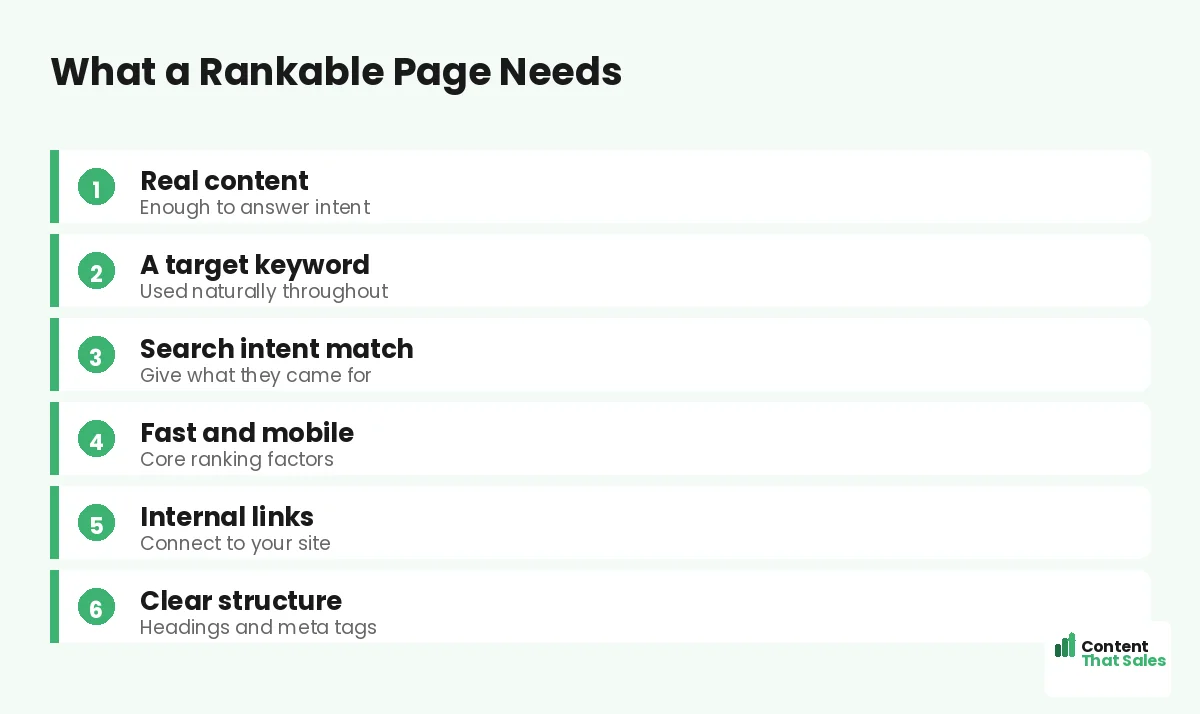
What a Rankable Page Needs
To rank, a page needs real, useful content that answers the searcher’s question, a clear target keyword used naturally, and a match to search intent. It also needs the basics: fast load, mobile friendliness, a logical heading structure, and internal links.
In short, it needs to look like a page worth ranking. That means more depth than a bare PPC page, organized clearly, and genuinely helpful. Give Google substance and signals, and a landing page becomes eligible to compete in organic results.
Match Search Intent First
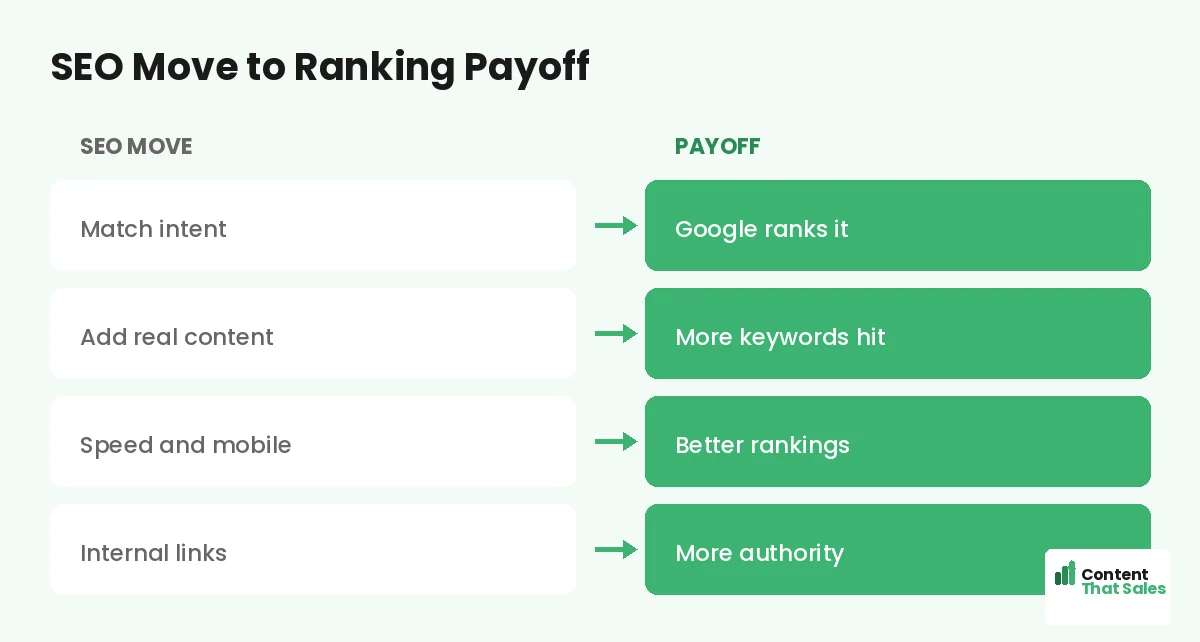
Intent is the heart of SEO. Before anything else, the page must give searchers what they came for. Someone searching how to write landing page copy wants a guide, not just a sales pitch. Match the content to the intent behind the keyword.
Get intent wrong and no amount of optimization will rank you. Get it right and the rest follows. Study what already ranks for your keyword, see what those pages deliver, and make sure your page satisfies the same need at least as well.
Add Real, Useful Content
Ranking pages give Google something to read. Add content that genuinely helps: explanations, answers, examples, and an FAQ. This is what lets the page rank for your main keyword and related terms, widening the traffic it can capture.
You do not need to bury the conversion goal in text. Keep the page persuasive, but add the depth search needs. Since readers scan more than they read, use clear headings so the content serves both searchers and skimmers.
PPC Pages vs SEO Pages
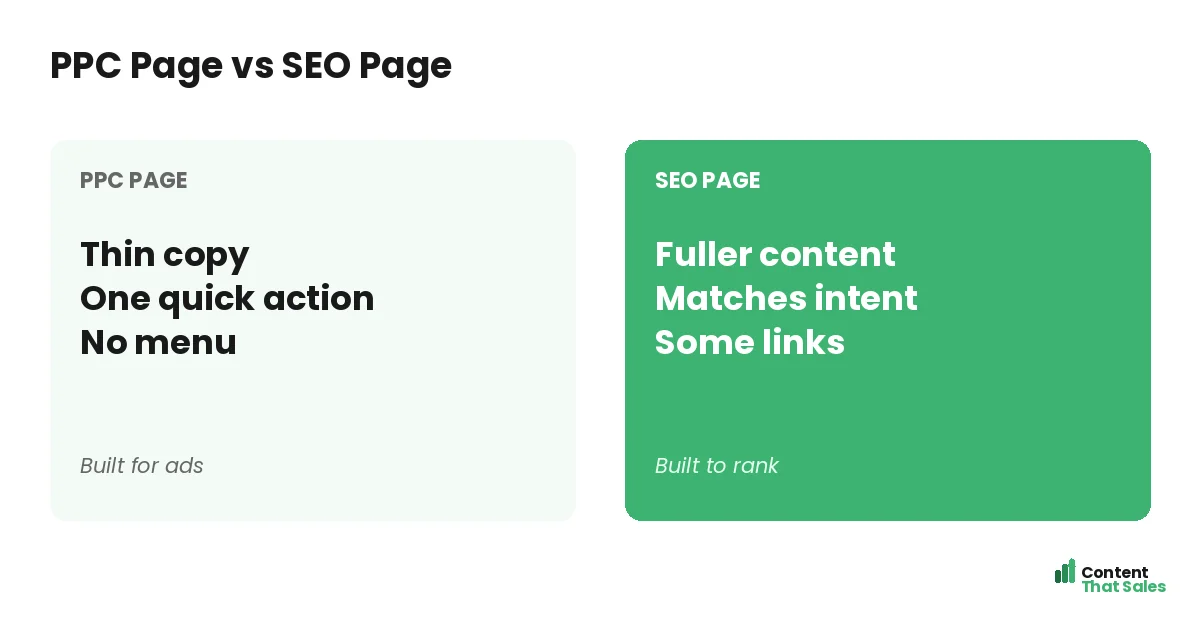
A PPC page is built to convert a paid click: thin, focused, no distractions, one action. An SEO page is built to rank and satisfy a searcher: fuller content, intent match, internal links, and clear structure. They share DNA but serve different goals.
This is why a page can excel at one and fail at the other. A great PPC page may never rank, and a great SEO page may convert paid traffic less efficiently. Knowing which job you need comes first, then you build accordingly, which is the core of the SEO vs PPC landing page decision.
Did you know?
A landing page that ranks organically earns clicks for free, month after month, while a PPC-only page stops getting traffic the moment you pause the ads.
Can One Page Do Both?
Yes, with care. You can build a page that ranks and converts by giving it enough content to satisfy search while keeping a clear conversion path. Lead with a strong offer and CTA, then add the depth and answers that earn the ranking below.
This hybrid works best for keywords with both informational and commercial intent. The page helps the searcher and guides them to act. It is more work than a bare PPC page, but it earns free traffic that converts on its own.
The Technical Basics
Ranking also depends on technical health. The page must load fast, work on mobile, use a clean heading structure, and include a clear title tag and meta description with the keyword. Internal links from your site help Google find and value the page.
These basics are non-negotiable for SEO. A ready landing page copy template gives you the content structure, and pairing it with sound technical setup makes the page genuinely competitive in organic search.
Internal Links Matter
A standalone page with no links in or out is hard to rank. Connect your landing page to the rest of your site. Link to it from relevant articles and pages, and link from it to related content. This passes authority and helps Google understand it.
Internal links also keep visitors on your site longer, which supports both SEO and conversions. A well-connected page signals to Google that it is a real part of your site, not an isolated, disposable ad page.
Be Patient With Organic
SEO is slower than ads. A landing page will not rank overnight. It takes time for Google to crawl, index, and trust the page, and for it to climb the results. Plan for weeks or months, not days, when you build for organic.
The payoff is worth the wait. Once it ranks, the page earns free traffic continuously. Simple, clear copy keeps winning, since easy reading lifts conversions, so a ranking page also converts the organic visitors it attracts.
Put It All Together
Landing pages can rank on Google when they are built for it: real content, a target keyword, intent match, technical health, and internal links. A bare PPC page rarely ranks, but a fuller page designed for search can earn free traffic and convert it.
Decide the job first. For paid clicks, keep it lean. For organic traffic, build for search. And where intent allows, build a hybrid that does both. With the right approach, your landing page can be a paid converter, an organic earner, or both at once.
How Content That Sales Helps
We build pages that rank and convert. That’s where we come in. At Content That Sales, we write landing pages with the content, structure, and keyword focus that earn organic traffic while still driving the action you want.
You share your keyword and your goal. We build a page that satisfies search intent and converts visitors, so it works for both paid and organic traffic. The result is a page that earns clicks for free and turns them into leads.
Ready to Rank and Convert?
Now you know that landing pages can rank on Google when they are built for search with real content, intent match, and technical health. A bare PPC page rarely ranks, but a page built right earns free traffic. So why settle for a page that only works when you pay?
Let’s build a page that ranks and converts. Book your free consultation now. Call us at 8801631988589 or email service@contentthatsales.com. Let’s turn your next searcher into your next customer.
Frequently Asked Questions About Landing Pages and Google Rankings
Can landing pages rank on Google?
Yes, if they are built for search with real content, a target keyword, and a match to search intent. A bare, thin PPC page rarely ranks organically.
Why do most landing pages not rank?
Typical PPC pages are stripped down to convert ad clicks. With little content and no internal links, they give Google too little to understand and rank.
What does a rankable page need?
Useful content that answers the query, a target keyword used naturally, intent match, fast mobile load, clear structure, and internal links.
What is the difference between a PPC and SEO page?
A PPC page is thin and focused to convert a paid click. An SEO page has fuller content, matches intent, and includes links and structure to rank.
Can one page rank and convert?
Yes, with care. Give it enough content to satisfy search while keeping a clear conversion path. This works best for keywords with mixed intent.
How important is search intent?
It is the heart of SEO. The page must give searchers what they came for. Match the content to the intent behind the keyword or it will not rank.
How long does it take to rank?
Longer than ads, often weeks or months. Google needs time to crawl, index, and trust the page. The payoff is free traffic once it ranks.
Can Content That Sales help?
Yes. We build pages with the content and structure to rank while still converting, so they work for paid and organic traffic. Reach out for a quote.