 Skip to content
Writing landing page copy that converts means saying one clear thing to one ready buyer, then guiding them to act. That’s the whole game. Good landing page copy is not clever wordplay or a wall of features. It’s a quiet promise that earns a click. You came here to learn how to write it, so let’s skip the fluff and get into the part that actually moves the needle.
Here’s the hard truth. Most pages drown in words and starve for meaning. The reader scans, shrugs, and leaves. But it doesn’t have to go that way. When your words match what someone already wants, selling feels less like pushing and more like helping. Ready to write a page that pulls its weight?

What Landing Page Copy Really Is (and What It Isn’t)
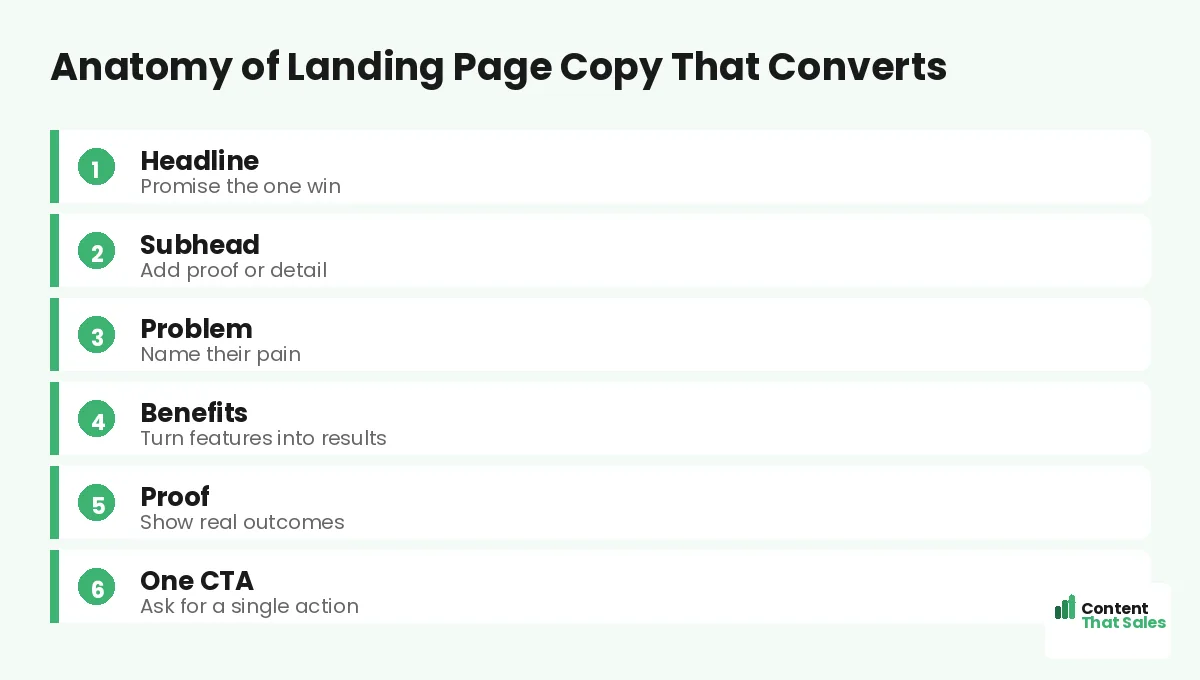
Landing page copy is the words on a page built for one job. Someone clicks an ad or a link. They land. The copy then has one task, which is to turn that visit into an action. It is not your whole website. It is not a brochure. It is a focused pitch with a single door out.
Think of it like a good salesperson at a counter. They don’t read you the catalog. They ask what you need, then point. Your copy should do the same. When it matters most, it speaks plainly and leads the way. A homepage greets everyone, but a landing page greets one person with one need. That focus is what separates a page that sells from one that just sits there.
Why Most Landing Page Copy Falls Flat
Most pages fail for boring reasons, not fancy ones. They talk about the company instead of the reader. They cram three offers where one belongs. Adding extra offers can cut conversions by a painful margin, so more is not better here. The page tries to please everyone and connects with no one.
There’s an old saying that fits. Don’t dig a well when you’re already thirsty. Plan the message before you need the leads. Many pages also bury the point under jargon and filler. The reader has to dig for the value, and most won’t. If your words make people work, they leave. Clear beats clever, every single time.
Start With One Reader, One Promise
Write for one person, not a crowd. Picture the owner who needs leads but has no time to write. Picture the founder burned by cheap content that ranked for nothing. Speak to that one human. When you write to everyone, you reach no one.
Then make one promise you can keep. What will their life look like after they act? Spell it out in plain words. A strong promise is a handshake, not a hard sell. It says, here’s what you get, and here’s why you can trust it. Match your message to the reader’s search intent and the page starts to feel personal, almost like you read their mind.
Did you know?
One company changed a vague headline to a clear, specific one and saw conversions jump by 90%. Same offer. Better words. That’s the power of clear landing page copy.
Write a Headline That Stops the Scroll
Your headline does most of the heavy lifting. Roughly eight in ten people read it, and far fewer read the rest. So if the headline misses, the page is done. Make it about the reader’s win, not your brand name.
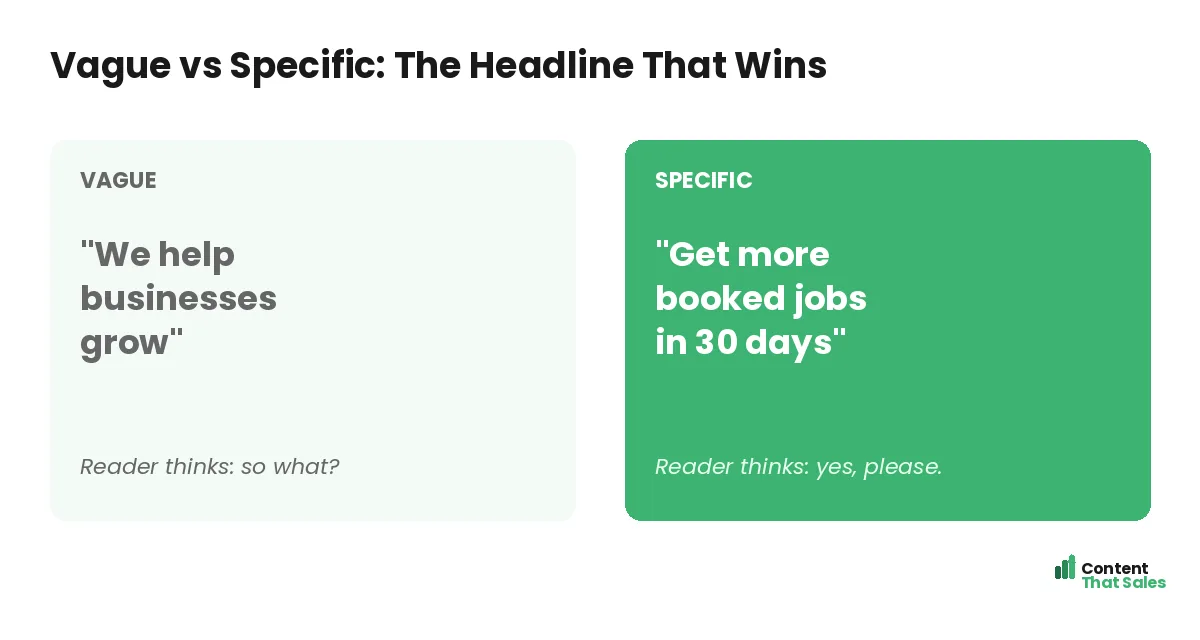
Lead with the outcome they want. Be specific. Swap “We help businesses grow” for “Get more booked jobs in 30 days.” One is noise. One is a promise. Want a deeper playbook on this? Study some click-worthy headlines and notice the pattern. The best ones are short, clear, and impossible to misread.
Nail the Subhead and Opening Lines
The headline earns attention. The subhead keeps it. Use the subhead to add proof or detail the headline left out. If the headline promises more jobs, the subhead can say how fast or how easy. Together they form a one-two punch.
Then your first lines must pull the reader down the page. Open with their problem, not your history. Keep sentences short. Use words a smart ten-year-old would get. The goal is simple. Make reading feel effortless, so they slide into the next line without thinking.
Speak to the Problem Before the Pitch
People buy to solve a problem, so name it first. Show them you understand the late nights and the wasted ad spend. When you describe their pain better than they can, they trust you have the cure. Empathy opens the door that hype slams shut.
But don’t wallow in the problem. Touch the nerve, then turn toward relief. A doctor names the symptom, then writes the prescription. Your copy should move the same way. From ache to answer, calm and quick. That shift from worry to relief is where trust is born.
Turn Features Into Benefits People Feel
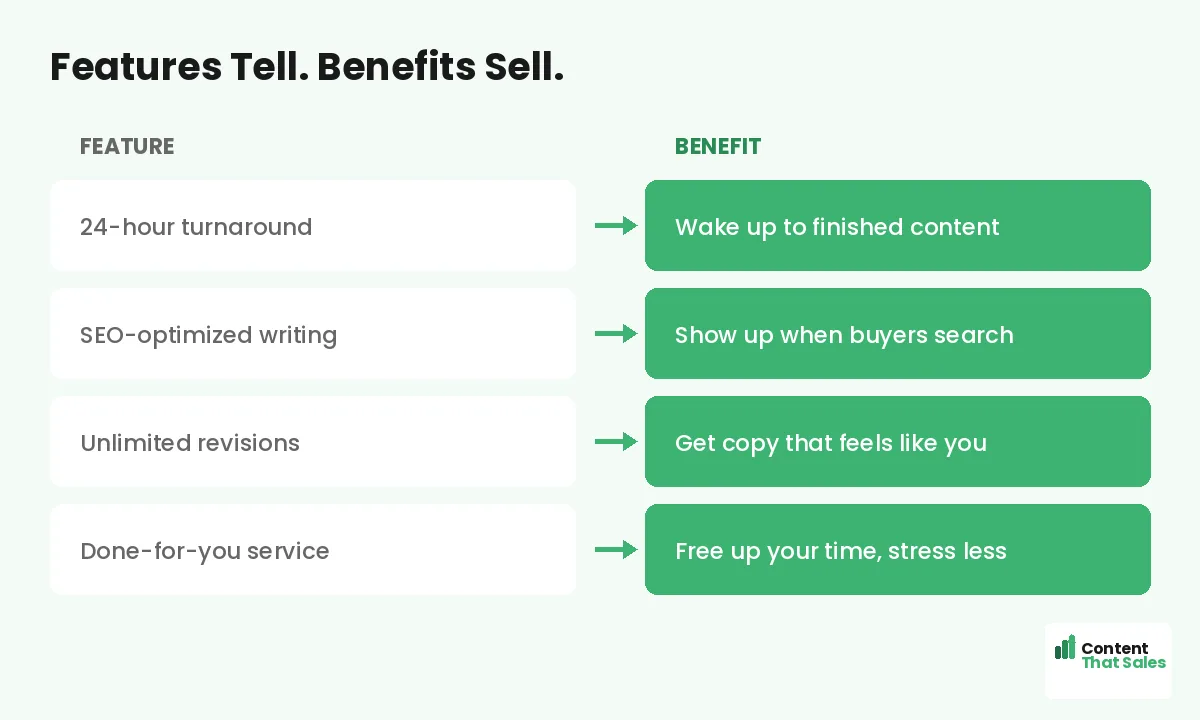
Features tell. Benefits sell. A feature is what your service has. A benefit is what the reader gets. “24-hour turnaround” is a feature. “Wake up to finished content” is a benefit. See the difference? One informs, the other excites.
Walk every feature through one question. So what? Keep asking until you hit the feeling. People don’t want a drill, they want the hole, and the shelf, and the proud look on their face. Sell the result, not the tool. That’s how you make value land.
Build Trust With Proof, Not Hype
Anyone can claim to be the best. Proof is what makes people believe. Show real results, real names, and real numbers. A short quote from a happy client beats a page of adjectives. Trust is the currency of conversion.
Use social proof close to your call to action, where doubt creeps in. Testimonials, logos, ratings, and case results all work. Even a simple count helps, like “trusted by 200 owners.” Seeing is believing, and proof lets the reader see before they leap.
Write One Clear Call to Action
Every page needs one main action. Just one. Pick it before you write a word. Do you want a call, a form, or a booking? Decide, then point every line toward that single door.
Make the button copy specific and easy. “Book your free consultation” beats “Submit.” Speak to the value, not the task. Remove the risk with words like free, fast, and no obligation. A confident, secure call to action feels safe to click. And a safe click is a click you win.
Cut Friction So People Say Yes
Friction is anything that makes saying yes feel hard. Long forms. Vague buttons. Too many choices. Each one adds doubt, and doubt kills action. Your job is to clear the path.
Ask for less. A name and an email often beats ten fields. Answer the quiet worries before they grow, like cost, time, and commitment. When the next step feels small and safe, people take it. A short path to yes is a guaranteed friend of conversion.
Edit Until Every Word Earns Its Place
First drafts are bloated. That’s fine. The magic is in the cut. Read each line and ask if it helps the reader act. If not, delete it without mercy. Lean copy moves faster than fat copy.
Trim adjectives. Kill filler. Break long thoughts into short ones. Vary how your sentences open so the page never feels flat. A tight page respects the reader’s time, and respect quietly builds trust. Remember, you’re not writing to sound smart. You’re writing to be understood.
How Content That Sales Helps You Write Pages That Convert
Writing this well takes time and skill, and you may not have either to spare. That’s where we come in. At Content That Sales, we write words built to bring traffic and leads, not just fill space. No generic filler. No robotic prose. Just clear pages that earn action.
Our team handles the strategy, the structure, and the polish. You get a page that sounds like you and sells like a pro. If you want done-for-you landing page copy, we make the whole thing effortless. You bring the offer, we bring the words that work.
Your Landing Page Copy Checklist (Quick Start)
Let’s pull it all together. Before you publish, run your page through a simple test. Does the headline promise one clear win? Does the body speak to one reader’s problem? Is there proof near the button? Is there one action, not five?
If you can say yes to each, you’re ahead of most. A clear page beats a clever page. A focused page beats a busy page. Start small, ship it, then improve with real data. Rome wasn’t built in a day, and neither is a page that prints leads.
Ready to Turn Visitors Into Customers?
You now know how to write landing page copy that converts. One reader. One promise. One clear action. The recipe is simple, even if the craft takes practice. So why let a weak page keep costing you leads?
If you’d rather hand it to people who do this every day, we’re here. Book your free consultation now and let’s build a page that earns its keep. Call us at 8801631988589 or email service@contentthatsales.com. Let’s turn your next visitor into your next customer.
Frequently Asked Questions About Landing Page Copy
What makes landing page copy convert?
Strong landing page copy converts when it makes one clear promise to one reader. It names their problem, shows proof, and offers a single, low-risk action. Clarity wins more than clever lines.
How long should landing page copy be?
As long as it needs to be, and not a word more. Simple offers need short copy. Complex or costly offers need more proof and detail. Let the reader’s questions set the length.
Should I write the copy or the design first?
Write the copy first. The words decide the message, and the design should serve the words. When you design first, you often squeeze the message to fit a box.
Can I write landing page copy myself?
Yes, with practice and a clear process. But if time is short or results matter now, a pro can save you weeks. A skilled writer turns your offer into action faster.
What is the biggest landing page copy mistake?
Talking about your company instead of the reader. People care about their own goals first. Lead with their win, then show how you deliver it.
How many calls to action should a landing page have?
One main action, repeated a few times down the page. More offers split focus and lower results. Pick the single step you want, then point everything at it.
How is landing page copy different from homepage copy?
A homepage serves many visitors and many goals. A landing page serves one visitor with one goal. That tight focus is what drives higher conversions.
How do I know if my landing page copy is working?
Track one number, your conversion rate. Test one change at a time, like the headline or the button. Keep what lifts results and drop what doesn’t.