 Skip to content
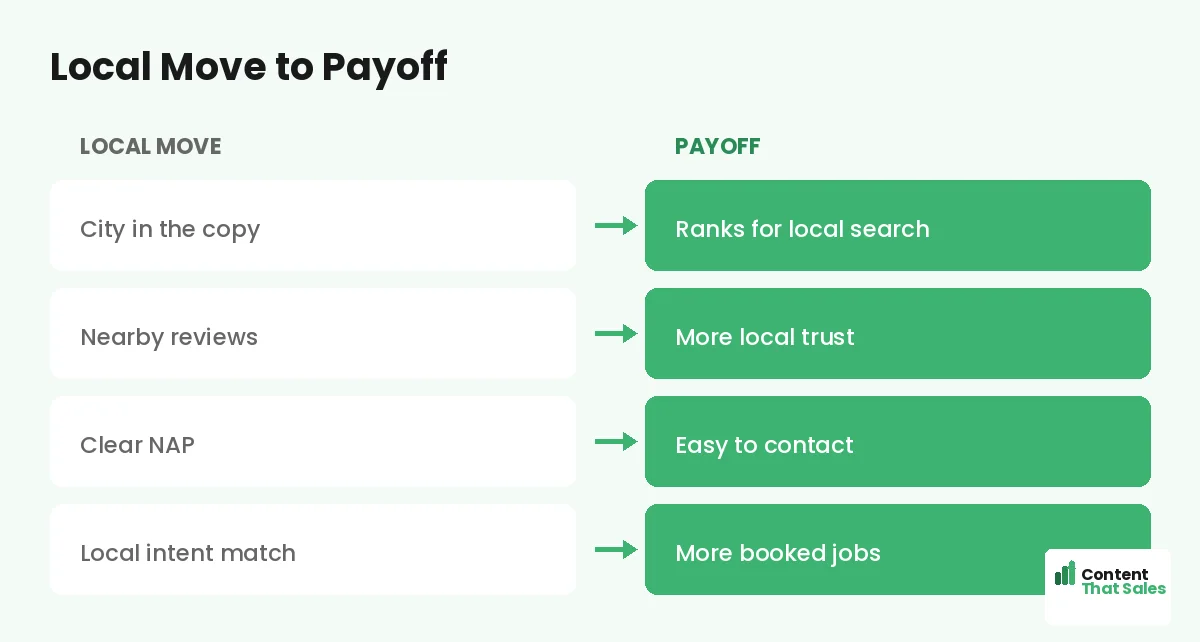
Local landing pages help you win customers in your area by ranking for local searches, building local trust, and matching the intent of nearby buyers ready to call or book. A generic page that ignores location loses to competitors who name the city, show nearby reviews, and make it easy to get in touch. This guide shows you what a local page needs, how to rank in your area, and how to convert the people searching right around you.
Local search is where ready-to-buy customers look. Someone typing a service plus a city is close to a decision. A page built for that moment, specific, local, and trustworthy, captures the lead. A page that feels generic and far away gets passed over.
Below, we walk through the elements of a strong local page, how to match local intent, the trust signals that matter, and the mistakes to avoid.

Why Local Pages Win
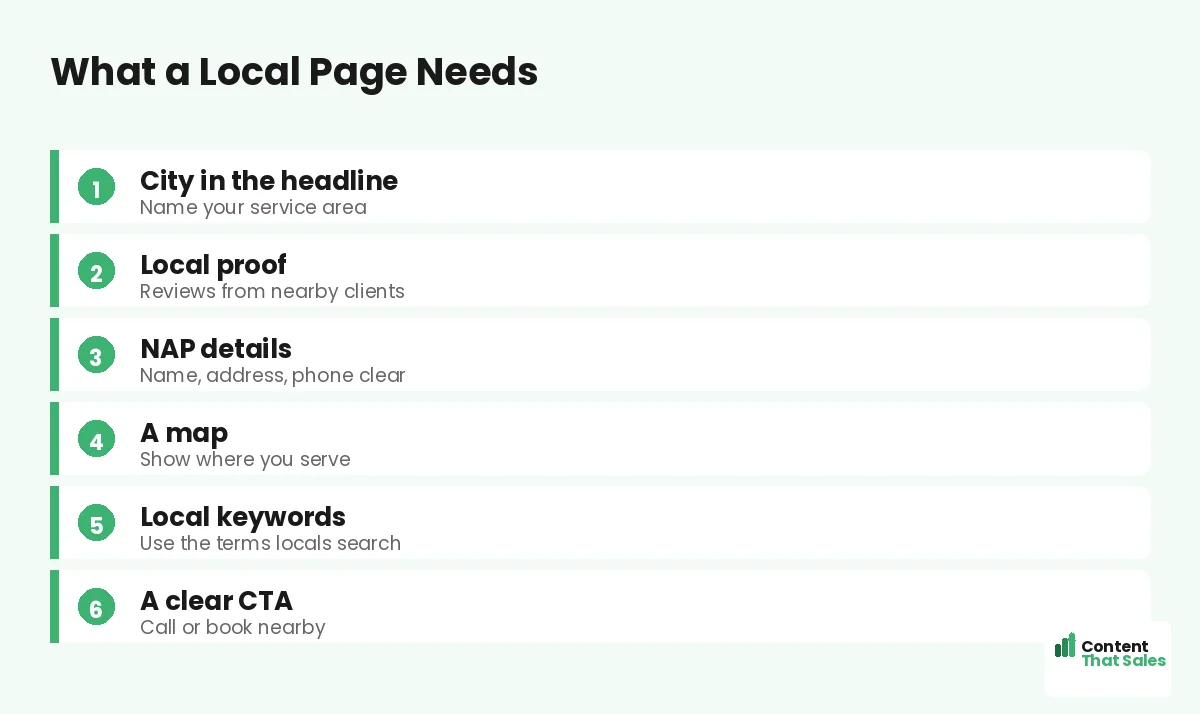
A local page speaks directly to people in your area. When someone searches for a service near them, they want a local provider they can trust and reach. A page that names their city and shows nearby proof feels made for them, and that relevance converts.
Local pages also rank better for local searches. Google favors pages that clearly serve a place. Built on a strong landing page structure and tuned for location, a local page earns both the ranking and the click from nearby buyers.
Put the City in the Headline
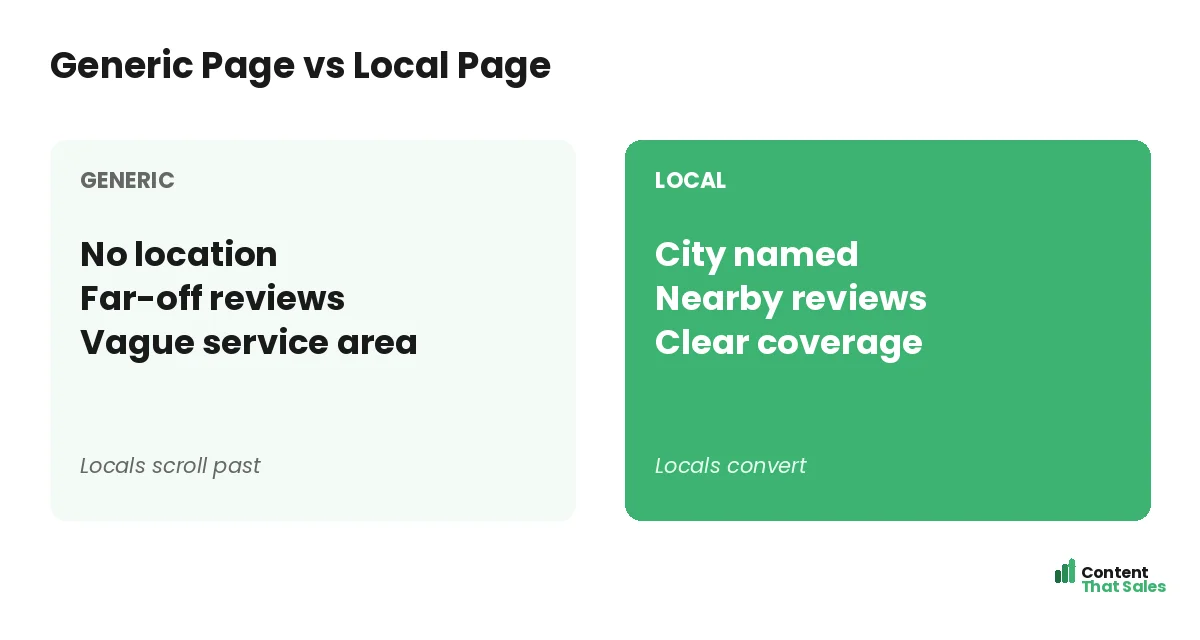
The fastest way to signal local relevance is to name the location up top. A headline like “Emergency Plumber in Austin” tells both the visitor and Google exactly who and where you serve. Generic headlines miss this powerful, simple cue.
Use the city or region the searcher is likely typing. If you serve several areas, build a page for each rather than cramming them into one. A specific local headline beats a vague national one every time for nearby intent.
Show Local Proof
Reviews from nearby customers build trust far better than far-off ones. A testimonial that mentions a local neighborhood or a recognizable area tells the reader you really serve their community. Local proof is the most persuasive proof you can show.
Feature reviews, ratings, and results from your service area near the top and beside the CTA. When a reader sees their neighbors trust you, the decision gets easy. Specific, local social proof turns a cautious searcher into a confident customer.
Make Your NAP Clear
NAP means name, address, and phone number. Display them clearly on the page. This builds trust, helps local SEO, and makes it easy for a nearby customer to reach you. A hidden or missing phone number quietly costs you calls.
Keep your NAP consistent with your other listings, like your Google Business Profile. Consistency signals legitimacy to both customers and search engines. Clear, consistent contact details are a small detail that makes a real difference locally.
Add a Map and Service Area
A map shows visitors exactly where you operate and reassures them you serve their location. Spell out your service area in plain text too, listing the neighborhoods or towns you cover. This answers the silent question, “do they come to me?”
Defining your area also helps you rank for those places. The clearer you are about where you work, the more confident a local searcher feels. Removing that uncertainty is often the nudge that turns a visit into a booking.
Match Local Search Intent
Local searchers usually want fast action, a call, a quote, or a booking. Give them that, prominently. Do not bury the phone number under a long brand story. Since readers scan more than they read, lead with what they came for.
Match the page to the urgency of local intent. Someone searching for an emergency service wants speed and a number, not a newsletter signup. The closer the page fits the local goal, the more of those ready buyers you convert.
Did you know?
Local searchers often have high buying intent, since a search for a service plus a city usually means the person is ready to call or book very soon.
Use Local Keywords Naturally
Weave the terms locals actually search into your copy, the city, the region, and nearby landmarks where they fit. This lifts your local relevance for Google and reassures the reader. Use them naturally in the headline, subheads, and body.
Do not stuff locations awkwardly. A few well-placed local terms beat a page jammed with city names. The aim is a page that reads naturally to a human while clearly signaling its location to a search engine, the same balance you strike when you write landing page copy that converts. Balance is everything.
Build a Page Per Location
If you serve multiple areas, resist the urge to list them all on one page. Build a dedicated page for each location, each with its own local headline, proof, and details. This ranks far better and feels more relevant to each searcher.
This takes more work, but it pays in local rankings and conversions. A focused local service page following our guide to a landing page for a local service business wins its area better than one generic page trying to cover everywhere at once.
Make Contact Effortless
Local buyers often want to act now, so make contact frictionless. A tap-to-call button on mobile, a short quote form, and clear hours remove every barrier. The easier you make it to reach you, the more nearby leads you capture.
Repeat the contact option as the visitor scrolls. A ready lead generation landing page approach helps here, pairing a clear local offer with an easy way to respond. Effortless contact is the final step that turns local interest into a booking.
Keep It Fast and Mobile
Many local searches happen on phones, often on the go. A slow or clunky mobile page loses impatient local buyers fast. Design mobile first, keep the page light, and make buttons easy to tap. Speed and mobile ease are essential locally.
Test the page on a real phone. If the number is hard to tap or the page lags, you lose calls. A fast, smooth mobile experience is now the baseline for winning local customers who decide in seconds.
Put It All Together
A winning local page names the city, shows nearby proof, displays a clear NAP and map, matches local intent, and makes contact effortless on mobile. Get those right and you rank in your area and convert the ready buyers who find you.
Simple, clear copy keeps winning, since easy reading lifts conversions. Build a focused page per location, lead with what locals want, and your local pages become a steady source of nearby customers.
How Content That Sales Helps
We build local pages that win nearby customers. That’s where we come in. At Content That Sales, we write location-focused landing pages that rank in your area, show local trust, and turn nearby searchers into calls and bookings.
You share your service and your areas. We write a focused page for each, with local proof, clear contact, and copy that matches local intent. The result is a page that captures the ready buyers right around you.
Ready to Win More Local Customers?
Now you know how local landing pages win customers by naming the city, showing nearby proof, and making contact effortless. Local searchers are ready to buy. So why send them to a generic page that feels a world away?
Let’s build a local page that books more jobs. Book your free consultation now. Call us at 8801631988589 or email service@contentthatsales.com. Let’s turn your next local searcher into your next customer.
Frequently Asked Questions About Local Landing Pages
What is a local landing page?
A page built to win customers in a specific area. It names the city, shows nearby proof, and matches local intent so it ranks locally and converts nearby buyers.
Why do local pages convert better?
They feel made for the searcher. Naming the city and showing local reviews builds trust and relevance that a generic, location-free page cannot match.
Should I name the city in the headline?
Yes. A headline like service plus city signals local relevance to both the visitor and Google instantly. It is the simplest, most powerful local cue.
What is NAP and why does it matter?
Name, address, and phone number. Displaying them clearly builds trust, helps local SEO, and makes it easy for nearby customers to reach you.
Should I build one page per location?
Yes. A dedicated page per area, each with its own headline, proof, and details, ranks and converts far better than one generic page covering everywhere.
How do I match local intent?
Lead with what locals want, usually a call, quote, or booking. Make the phone number and CTA prominent rather than burying them under a brand story.
Does mobile matter for local pages?
A lot. Many local searches happen on phones on the go. A fast, tap-friendly mobile page with click-to-call captures impatient local buyers.
Can Content That Sales help?
Yes. We write location-focused pages that rank locally and convert nearby searchers into calls and bookings. Reach out for a quick quote.