 Skip to content
Knowing how to internally link cluster pages to pillars is a small skill with a big payoff: every cluster page that links up to its pillar passes authority to the hub and signals that the page belongs to the group. Miss these links and your pillar stays weak and your clusters sit orphaned. This guide shows you exactly how to link cluster pages to pillars the right way.
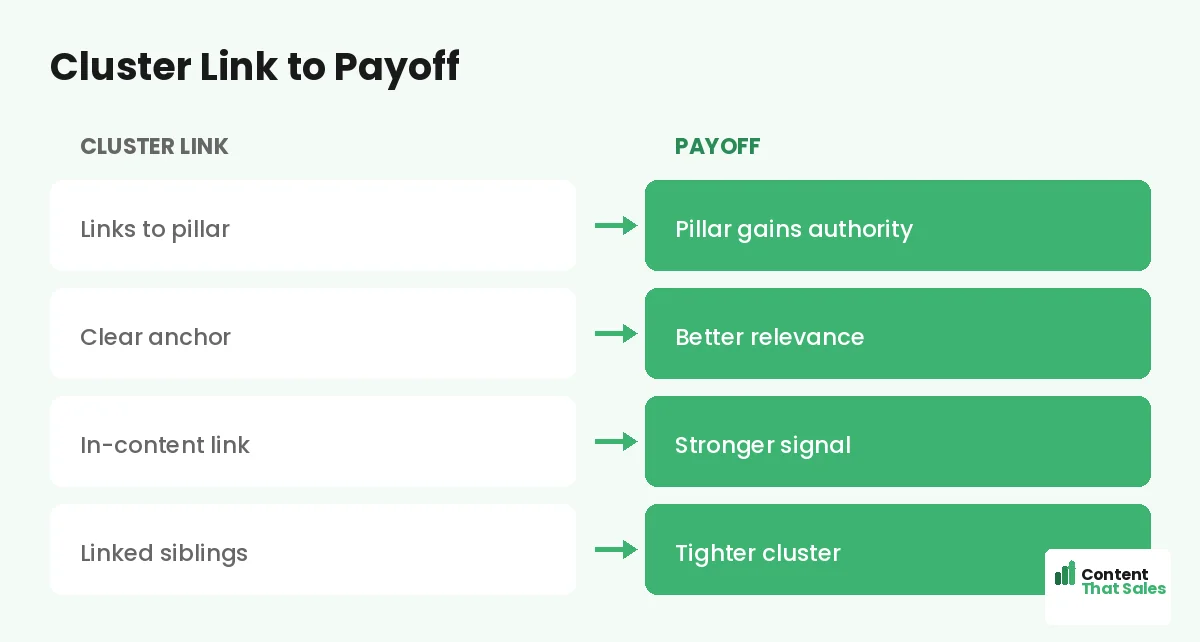
The pillar gets much of its strength from the links flowing up to it from its clusters. Each cluster page is a vote of relevance for the pillar. Done consistently, these upward links concentrate authority on the hub and tie the whole cluster together.
Below, we cover why cluster-to-pillar links matter, where and how to place them, what anchor text to use, and the mistakes to avoid.

Why Cluster-to-Pillar Links Matter
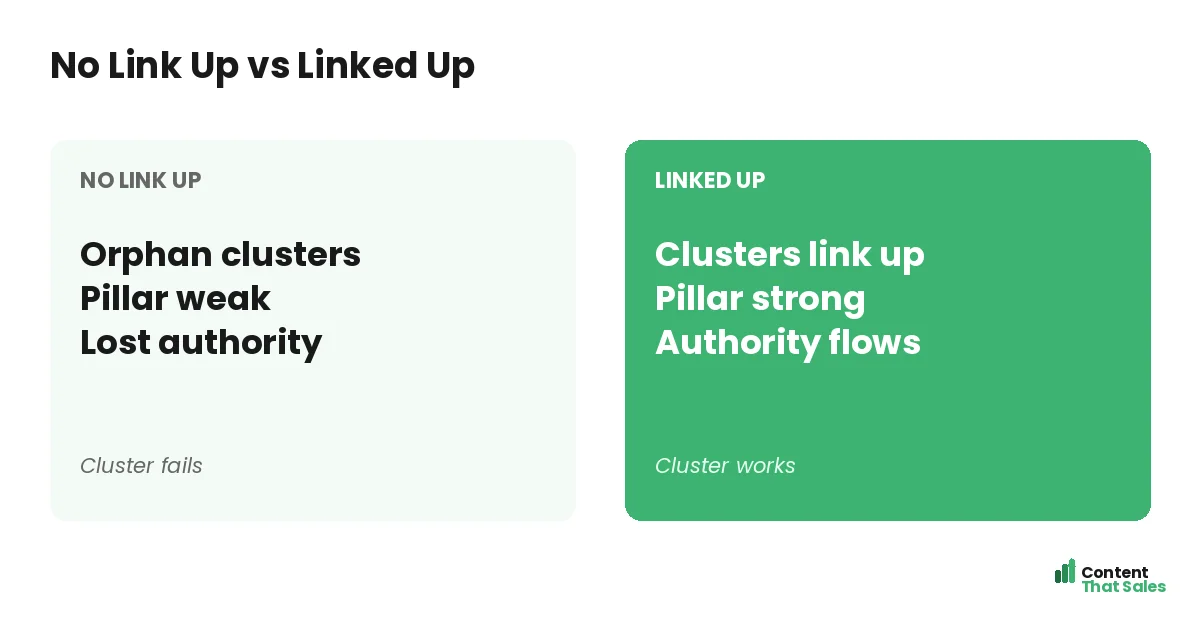
When a cluster page links up to its pillar, it passes authority to the hub and tells Google the two belong together. With many cluster pages all linking up, the pillar gathers concentrated authority, helping it rank for its broad, competitive keyword.
This upward flow is half of what makes the pillar-and-cluster framework work. The pillar links down, the clusters link up, and authority circulates. Skipping the cluster-to-pillar links breaks that flow and weakens the whole group.
Link to the Pillar From Every Cluster
The core rule is simple: every cluster page should link to its pillar. No exceptions. A cluster that does not link up is a missed connection that leaves both the cluster and the pillar weaker than they should be.
Make this a standard step when you publish any cluster page, add a link to its pillar. This is part of how you connect pillar and cluster pages. Consistent upward linking from every cluster is what builds the pillar’s authority.
Place the Link in the Content
Place the link to the pillar within the body content of the cluster page, woven into a relevant sentence, rather than only in a footer or sidebar. In-content links carry more weight and feel more natural, helping both readers and rankings.
A good spot is early in the page, where you reference the broader topic the pillar covers. Since readers scan more than they read, a contextual link near the top gets seen and followed more than one buried at the bottom.
Use Descriptive Anchor Text
The anchor text for your pillar link should describe the pillar’s topic. A descriptive anchor that names the broad subject reinforces the relationship for readers and Google. Avoid vague anchors that say nothing about the destination.
For example, link to a pillar on email marketing with anchor text like email marketing guide, not click here. Vary the phrasing across cluster pages so it reads naturally. For the full approach, see our guide on anchor text strategy.
Link Early and Naturally
Where possible, link to the pillar early in the cluster page, since links higher up tend to carry more weight and get more clicks. But never force it, the link should fit naturally where you reference the broader topic.
If the natural place to mention the pillar topic is partway down, that is fine. The goal is a link that makes sense to the reader, placed as early as it naturally can be. Natural placement beats forced early placement every time.
Link Related Clusters Too
Beyond linking up to the pillar, link cluster pages to related sibling clusters where relevant. These cross-links strengthen the cluster’s internal web and help readers move between related subtopics, adding to the group’s connectedness.
Only link siblings that are genuinely related, but where the connection is real, the link adds value. Combined with the upward pillar link, these sibling links complete the connected structure that makes a cluster strong and authoritative.
Did you know?
Every cluster page that links up to its pillar acts like a vote of relevance, so a pillar with many clusters linking to it gathers strong, concentrated authority.
Do Not Over-Link
Linking up to the pillar does not mean linking to it five times on one page. One clear, well-placed link to the pillar is usually enough, plus a few relevant sibling links. Over-linking dilutes value and can clutter the page for readers.
Keep each cluster page’s links purposeful: one to the pillar, a few to relevant siblings or deeper pages. Quality and relevance matter more than quantity. A clean, well-linked cluster page beats one stuffed with repetitive links.
Make It a Publishing Habit
The easiest way to ensure every cluster links up is to make it part of your publishing routine. Whenever you publish a cluster page, add the pillar link as a standard step. Building the habit means no cluster ever ships orphaned.
You can also plan these links in your topical map, noting each cluster’s pillar in advance. Then linking up is just execution. A consistent habit, supported by your map, keeps every cluster connected to its pillar from day one.
Check Older Cluster Pages
Older cluster pages, published before you had a clear structure, often miss the pillar link. Go back and add it. Auditing existing clusters for missing upward links is one of the quickest wins for strengthening your pillar’s authority.
An internal link audit will surface clusters that do not link up. Fixing them passes more authority to your pillar and tightens the cluster. Do not just link new pages; make sure old ones link up too.
Keep the Links Relevant
Link up to the pillar because the cluster genuinely belongs to that group, which it always should. The relevance is built in: a cluster page covers a subtopic of the pillar, so the link is naturally relevant. That is exactly why it works.
Simple, clear content keeps winning, since easy reading lifts engagement, and a relevant link to the pillar helps readers see the bigger picture. Relevant, natural upward links serve both readers and your topical authority.
Put It All Together
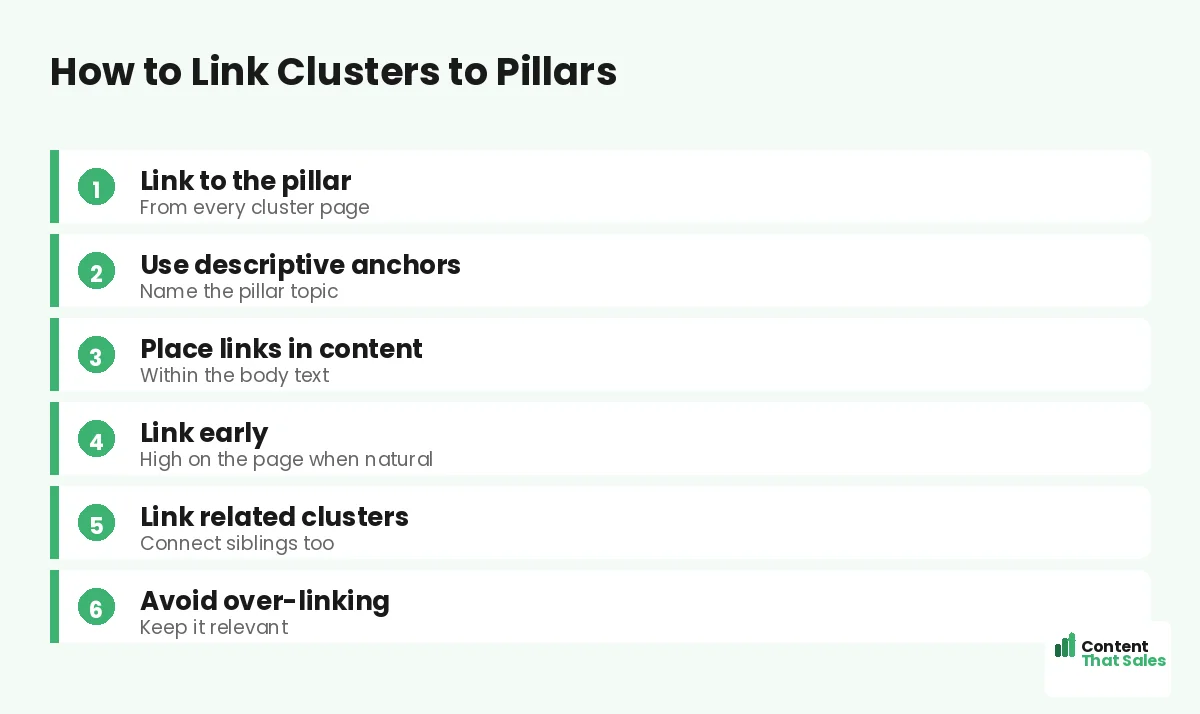
To internally link cluster pages to pillars, link every cluster up to its pillar, place the link in the content with descriptive anchor text, do it early and naturally, link related siblings too, and avoid over-linking. Make it a publishing habit.
These upward links are what concentrate authority on your pillar and tie the cluster together. Build the habit, plan the links in your map, and audit old pages. Consistent cluster-to-pillar linking is a small effort that pays off across your whole map.
How Content That Sales Helps
We make sure every cluster links up. That’s where we come in. At Content That Sales, we write and connect your cluster pages, linking each up to its pillar with clear anchors so authority flows to your hubs.
You share your pillars and clusters. We build the upward links, audit old pages for missing ones, and keep the structure tight. The result is pillars that gather authority from every cluster and rank for their topics.
Ready to Strengthen Your Pillars?
Now you know how to internally link cluster pages to pillars: link every cluster up, in the content, with clear anchors, naturally and without over-linking. These links build your pillar’s authority. So why leave any cluster orphaned?
Let’s link your clusters to their pillars. Book your free consultation now. Call us at 8801631988589 or email service@contentthatsales.com. Let’s concentrate authority where it counts.
Frequently Asked Questions About Linking Clusters to Pillars
Why link cluster pages to the pillar?
It passes authority to the pillar and tells Google the pages belong together. Many clusters linking up concentrate authority on the hub, helping it rank.
Should every cluster link to its pillar?
Yes, without exception. A cluster that does not link up is a missed connection that leaves both the cluster and the pillar weaker than they should be.
Where should the pillar link go?
Within the body content, woven into a relevant sentence, ideally early in the page. In-content links carry more weight than footer or sidebar links.
What anchor text should I use?
A descriptive phrase that names the pillar’s topic, like a guide name, not click here. Vary the phrasing across cluster pages so it reads naturally.
Should I link related clusters too?
Yes, where genuinely relevant. Sibling links strengthen the cluster’s web and help readers move between related subtopics, adding to connectedness.
Can I over-link to the pillar?
Yes. One clear, well-placed link to the pillar is usually enough. Repeating it many times dilutes value and clutters the page for readers.
What about old cluster pages?
Check them. Older pages often miss the pillar link. Adding it is a quick win that passes more authority to your pillar and tightens the cluster.
Can Content That Sales help?
Yes. We write and connect your cluster pages, linking each up to its pillar so authority flows to your hubs. Reach out for a quick quote.