 Skip to content
An internal link audit for a topical map finds the broken connections, orphan pages, and weak anchors that quietly drain your authority, so you can fix them and tighten your structure. Over time, as a map grows, links break and pages get stranded. A periodic audit keeps your clusters connected and your authority flowing. This guide shows you exactly what to check and how to fix what you find.
Internal linking is one of the few ranking levers you fully control, but it degrades without maintenance. An audit is how you keep it strong. Done regularly, it catches small problems before they cost you rankings across a whole cluster.
Below, we walk through what to check in an internal link audit, how to turn findings into fixes, and how to make auditing a regular habit.

Why Audit Your Internal Links
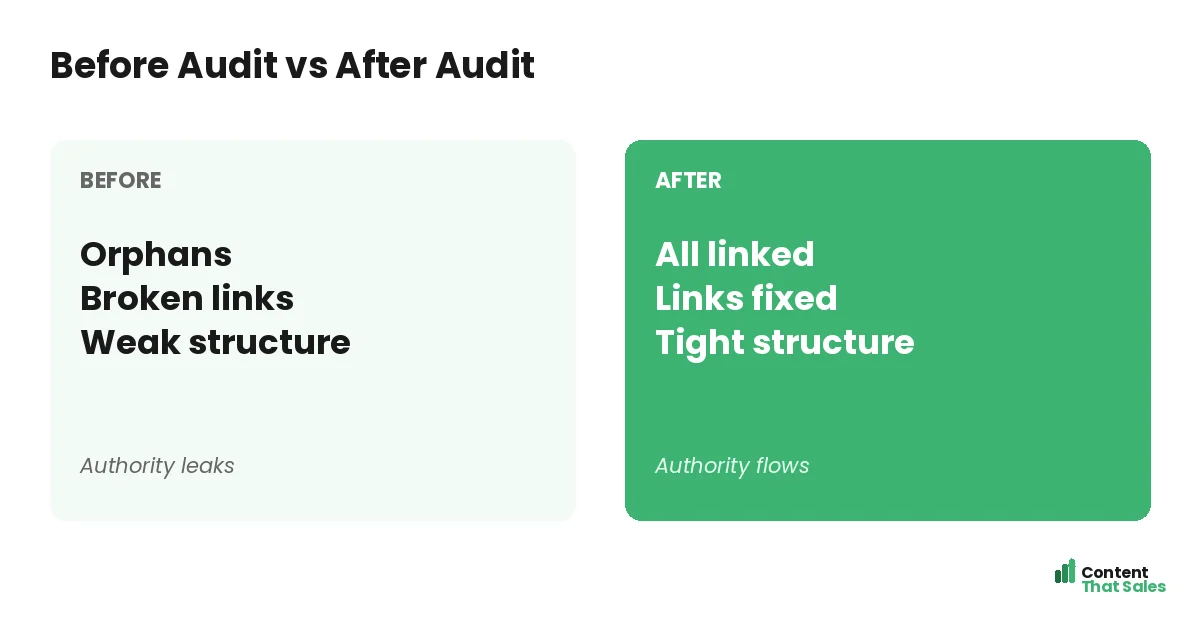
As your topical map grows, its links can drift out of shape. New pages get published without links in, old links break, and anchors get sloppy. An audit catches these issues, keeping your internal linking for topical authority strong.
Because internal links are a lever you control, maintaining them is high-value work. A regular audit ensures your clusters stay connected and authority keeps flowing to your pillars. It is preventive maintenance for your whole structure.
Find Orphan Pages
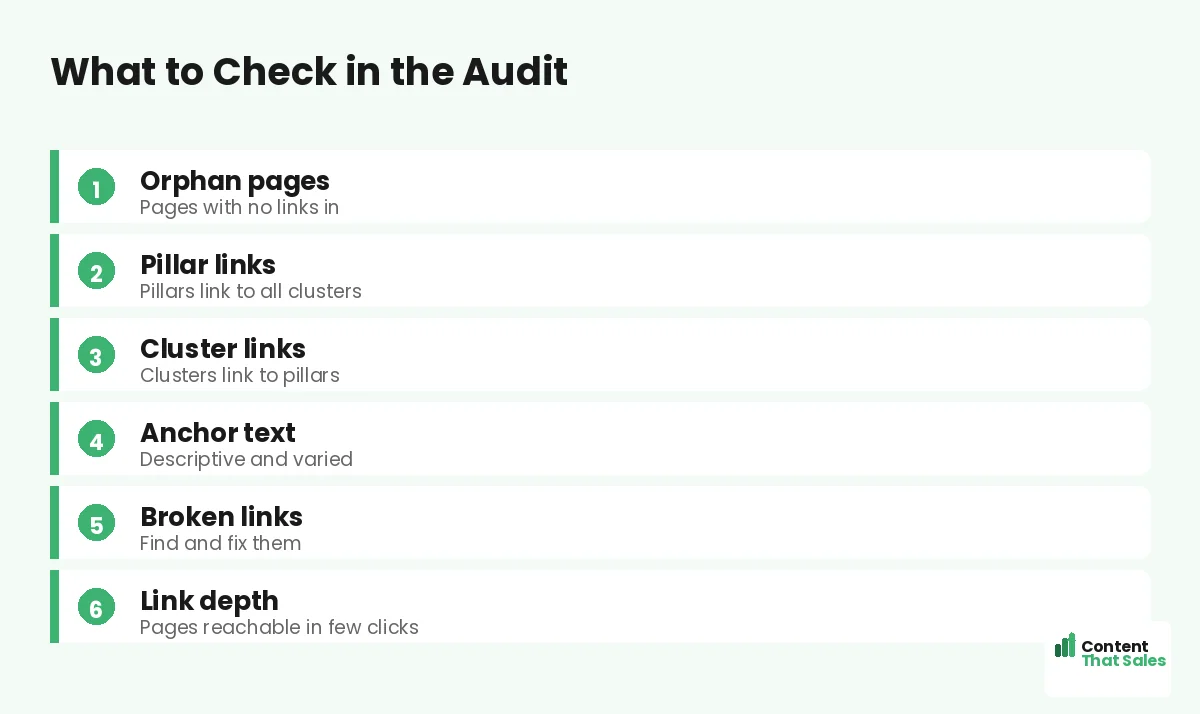
The first thing to check is orphan pages, pages with no internal links pointing to them. Orphans are hard for Google to find and value, and they sit outside your authority flow. Every page should be linked from somewhere relevant.
List your pages and check which have no internal links in. Each orphan is wasted content. The fix is to add relevant links to it, from its pillar, related clusters, or other pages. Eliminating orphans is one of the biggest audit wins.
Check Pillar-to-Cluster Links
Next, verify that each pillar links to all of its cluster pages. A pillar that misses some clusters fails to route authority and readers to them. Confirm every cluster in a group is linked from its pillar, the core of how you connect pillar and cluster pages.
Go through each pillar and check its links against its cluster list. Add any missing links. This keeps the pillar functioning as the hub it should be, sending authority down to every cluster page beneath it.
Check Cluster-to-Pillar Links
Just as important, verify that every cluster page links back up to its pillar. Clusters that do not link up fail to pass authority to the hub. This upward linking is often where older pages fall short, so check them carefully.
For each cluster page, confirm it has a link to its pillar, ideally in the content with a descriptive anchor. This is how you link cluster pages to pillars. Adding missing upward links is a quick, high-impact fix.
Review Anchor Text
Audit your anchor text too. Look for vague anchors like click here, over-optimized exact-match repetition, and anchors that do not match their target. Fixing anchors strengthens your linking without adding a single new link.
Replace vague anchors with descriptive ones, vary over-used exact matches, and correct any mismatches. For the full approach, see our guide on anchor text strategy. Clean anchors make every existing link work harder.
Find and Fix Broken Links
Broken internal links, links pointing to pages that no longer exist or have moved, waste authority and frustrate readers. Find them and fix them by updating the URL or removing the link. Broken links are a common, easily fixed audit finding.
Since readers scan more than they read, a broken link that leads nowhere is a jarring dead end. Repairing broken links restores both the user experience and the authority flow those links were meant to carry.
Did you know?
Adding missing cluster-to-pillar links is often the single highest-impact fix in an internal link audit, because it concentrates authority on your hubs.
Check Link Depth
Audit how deep your pages sit, how many clicks from the homepage or main hubs it takes to reach them. Important pages buried too deep are harder for Google to find and value. Aim to keep key pages reachable in a few clicks.
If valuable pages are too deep, add links from higher-level pages to bring them closer. Your pillars and main hubs should keep important content shallow. Checking depth ensures no key page is stranded far from your site’s authority.
Look for Over-Linking
An audit should also catch over-linking, pages stuffed with too many internal links. Too many links dilute the value each passes and overwhelm readers. Trim excessive or irrelevant links so each remaining link is purposeful and relevant.
Balance is the goal. A page should have enough links to connect it well, but not so many that they lose meaning. Pruning over-linked pages is as much a part of a healthy audit as adding missing links elsewhere.
Turn Findings Into Fixes
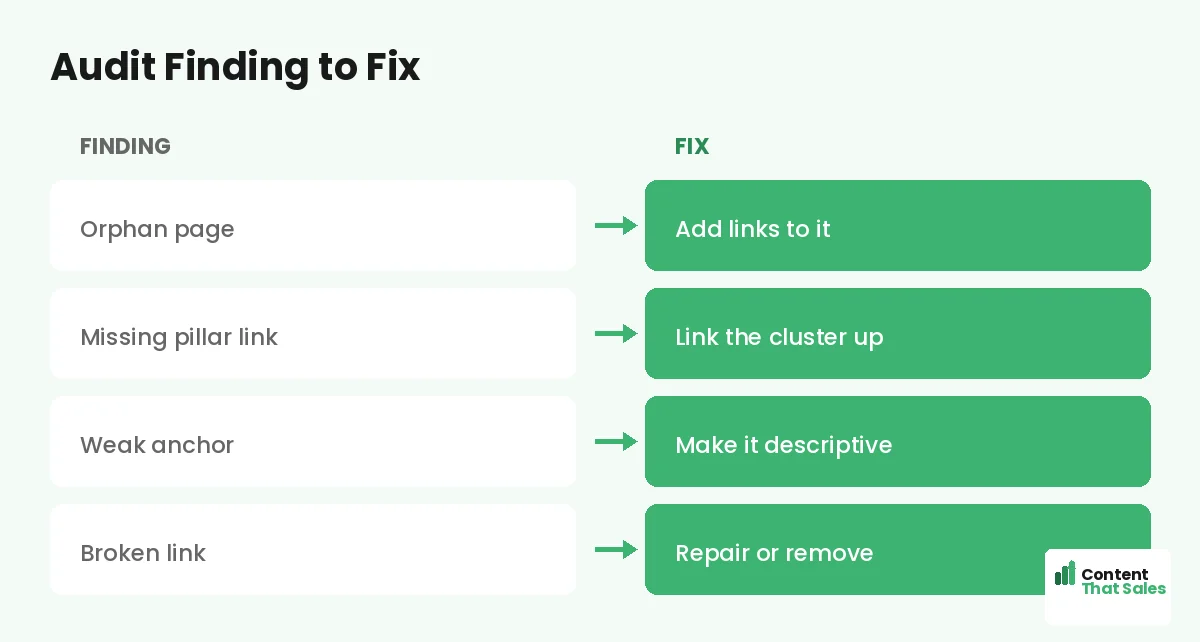
An audit is only useful if you act on it. For each finding, make the fix: add links to orphans, connect missing pillar and cluster links, repair broken links, improve anchors, and trim over-linking. Prioritize the highest-impact fixes first.
Work through your list systematically, cluster by cluster. The cluster-to-pillar links and orphan fixes usually give the biggest gains, so start there. Turning findings into fixes is what actually strengthens your map; the audit just shows you where.
Use the Right Tools
You can audit links manually for a small site, but tools help at scale. Site crawlers and SEO tools can surface orphan pages, broken links, and link counts quickly. Even a simple crawl reveals issues that would take ages to find by hand.
Pair tool data with your topical map to check that the intended links exist. The tools find the technical problems; your map tells you whether the structure matches your plan. Together they make the audit thorough and efficient.
Make Auditing a Habit
Internal linking degrades over time, so audit regularly, not just once. Schedule a periodic link audit, and run a quick check whenever you publish a batch of new pages. Regular maintenance keeps your map connected as it grows.
Simple, clear content keeps winning, since easy reading lifts engagement, and well-maintained links keep readers moving through it. A standing audit habit ensures your topical map stays tight and authoritative for the long run.
Put It All Together
An internal link audit checks for orphan pages, missing pillar and cluster links, weak anchors, broken links, link depth, and over-linking, then turns each finding into a fix. It keeps your topical map connected and authority flowing.
Use tools to find issues, your map to confirm the structure, and fix the highest-impact problems first. Make auditing a regular habit, and your internal linking stays strong as your map grows. A connected map is what keeps building authority.
How Content That Sales Helps
We audit and fix your internal linking. That’s where we come in. At Content That Sales, we review your topical map’s links, find orphans, broken links, and gaps, and fix them so authority flows to your pillars.
You share your site and structure. We audit the links, connect what is missing, improve the anchors, and tighten the whole map. The result is a fully connected structure where every page contributes to your topical authority.
Ready to Audit Your Links?
Now you know how to run an internal link audit for a topical map: find orphans, check pillar and cluster links, fix anchors and broken links, and trim over-linking. A connected map keeps building authority. So why let links drift?
Let’s audit and tighten your linking. Book your free consultation now. Call us at 8801631988589 or email service@contentthatsales.com. Let’s keep your authority flowing.
Frequently Asked Questions About Internal Link Audits
What is an internal link audit?
A review of your site’s internal links that finds orphan pages, missing pillar and cluster links, weak anchors, broken links, and over-linking, so you can fix them.
Why audit internal links?
Linking degrades as a site grows, links break and pages get orphaned. An audit catches these issues, keeping your clusters connected and authority flowing.
What is the first thing to check?
Orphan pages, pages with no internal links in. They are hard for Google to find and sit outside your authority flow. Add relevant links to fix them.
What is the highest-impact fix?
Usually adding missing cluster-to-pillar links, since it concentrates authority on your hubs. Orphan fixes are also high-value. Start with these.
Should I check anchor text in an audit?
Yes. Look for vague anchors, over-optimized exact matches, and mismatches. Fixing anchors strengthens your linking without adding new links.
What about broken links?
Find and fix them by updating the URL or removing the link. Broken internal links waste authority and frustrate readers with dead ends.
How often should I audit?
Regularly, and after publishing batches of new pages. Linking degrades over time, so a standing audit habit keeps your map connected as it grows.
Can Content That Sales help?
Yes. We audit your map’s links, find orphans and gaps, and fix them so authority flows to your pillars. Reach out for a quick quote.