 Skip to content
Choosing the right AI topical map tools can make planning your content far faster, but not every tool fits every need. Some are general chat assistants, some are dedicated SEO platforms with clustering features, and some are keyword tools with AI add-ons. Knowing what each type does best helps you pick the right one. This review walks through the main categories of AI topical map tools and how to choose for your situation.
A topical map is the plan for covering your subject completely. AI tools speed up building that plan, but they vary widely in approach, depth, and cost. Understanding the categories saves you from picking the wrong fit.
Below, we review the main types of AI topical map tools, what each does well, and how to choose the right one for you.

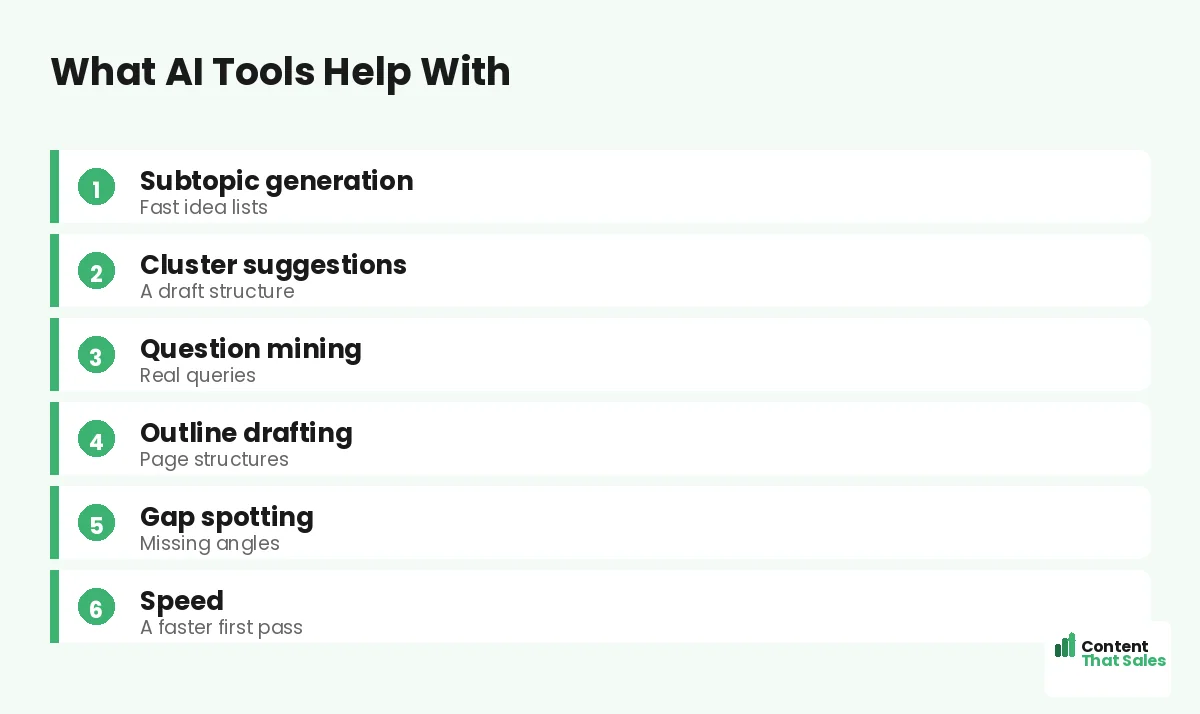
What to Look for in a Tool
The best AI topical map tool depends on your needs, but a few things matter for all of them, how well it generates relevant topics, whether it uses real search data, how it organizes output, and whether it fits your budget and workflow.
Keep your goal in mind: a complete, accurate topical map. The right tool helps you get there faster without sacrificing quality. Match the tool to how you actually work, not to its longest feature list.
General AI Chat Assistants
Tools like ChatGPT and Claude are flexible and cheap, often free. They generate pillars, clusters, and keywords through conversation, and handle refinement well. The trade-off is they guess at search demand rather than using real data.
These are great for fast drafting and brainstorming. They help you build a pillar-and-cluster structure quickly, but you must verify their keyword suggestions against real data, since they can invent terms that nobody searches for.
Dedicated SEO Platforms
Full SEO platforms now include AI clustering and topic features. They combine real search data with AI organization, grouping keywords into clusters automatically. They are more accurate but cost more and have a steeper learning curve.
These suit serious, ongoing SEO work. Because they use real data, their output is grounded, helping you find cluster topics with proven demand. The investment pays off if you are building many maps or managing large sites.
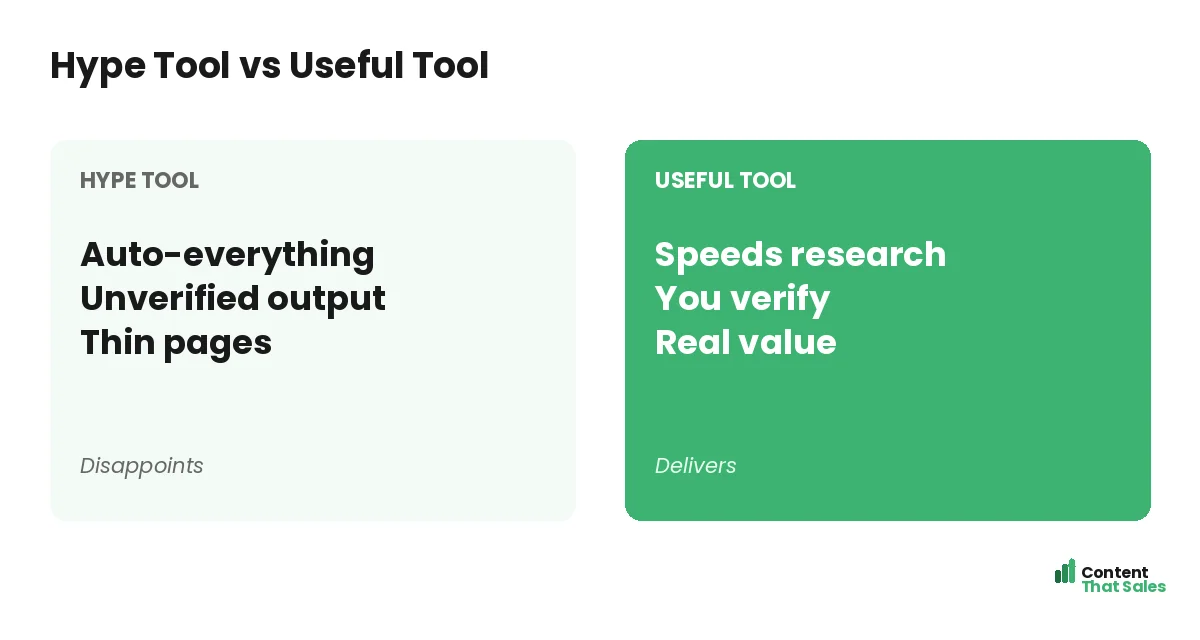
Keyword Tools With AI Features
Many keyword research tools have added AI clustering. They start from real keyword data and use AI to group terms into topics. This blend gives you data-backed clusters without the full cost of a complete SEO platform.
These are a solid middle ground. You get real search volumes plus AI organization, which is ideal for building data-grounded maps. They focus on keywords, so you may still draft the pillar structure yourself, but the data foundation is strong.
Standalone Topical Map Tools
Some newer tools focus specifically on building topical maps. They are designed for this one job, generating full map structures with pillars, clusters, and links. Quality varies, so test before committing, but the focus can be convenient.
A purpose-built tool can save setup time. Since readers scan more than they read, check that the tool plans pages around clear reader intent, not just keyword volume, before you rely on its output.
Free Versus Paid Tools
Free tools like general chat assistants are great for getting started and small projects. Paid tools offer real data, automation, and scale. The right choice depends on how much content you produce and how much accuracy you need.
For a single small site, free tools plus manual verification may be enough. For ongoing, large-scale content, paid tools with real data save time and improve accuracy. Match the spend to the size of your content effort.
Did you know?
No tool produces a finished map on its own. Every option, free or paid, still needs human review to catch errors and match the map to your strategy.
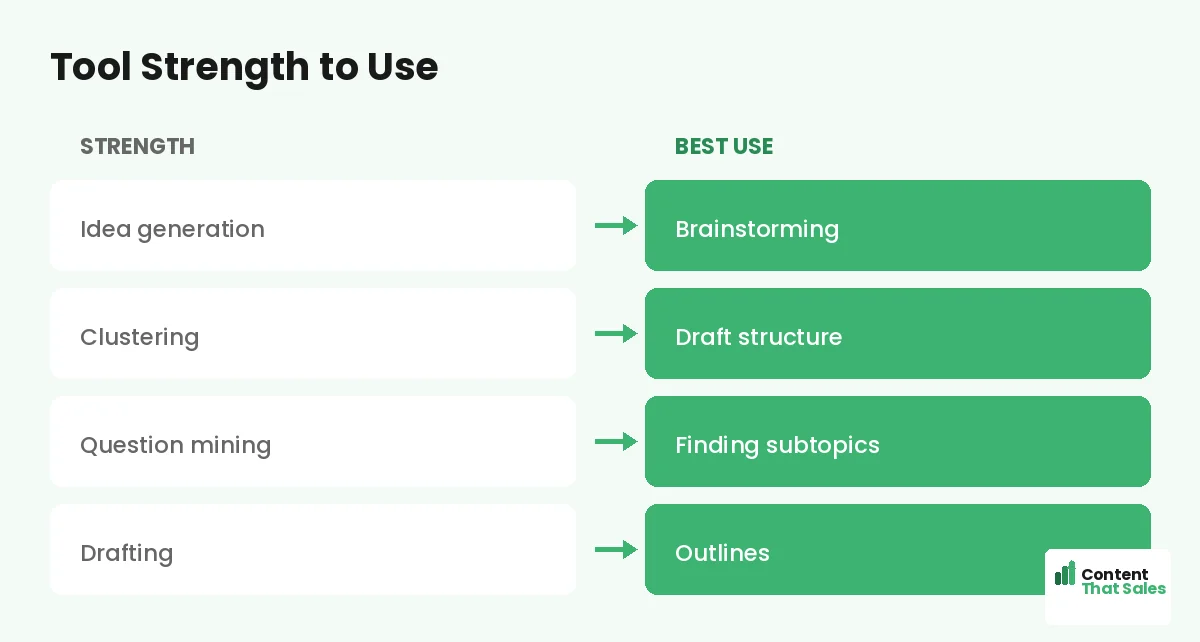
How to Choose the Right Tool
Start with your needs. For occasional, small projects, a free chat assistant works. For data accuracy, choose a keyword tool with AI features. For serious, ongoing SEO, invest in a full platform. Match the tool to your scale.
Also consider your workflow and skill. A tool you find easy to use beats a powerful one you avoid. Test a couple before committing, and pick the one that fits how you actually plan and produce your content.
The Limits of Any Tool
No matter which tool you pick, none produces a final map alone. Every tool needs human review to verify keywords, fix groupings, fill gaps, and match the map to your strategy. The tool drafts; you finalize and decide.
Remember this when comparing options. The tool’s job is speed and breadth; yours is quality and judgment. Simple, clear pages win, and since easy reading lifts engagement, plan each page for clarity.
Put It All Together
AI topical map tools fall into a few types: general chat assistants, full SEO platforms, keyword tools with AI features, and standalone map builders. Each has strengths, and the right one depends on your scale, budget, and needs.
General assistants are cheap and flexible; platforms and keyword tools add real data. Whatever you choose, every tool needs human review to finalize the map. Pick the tool that fits your workflow, then refine its output into a real strategy.
Combine Tools for the Best Results
You do not have to pick just one tool. Many people get the best results by combining them, using a keyword tool to pull real search data, then feeding that data into a chat assistant to organize it into pillars and clusters. This blend gives you data accuracy plus flexible, fast structuring.
A simple combined workflow might be: gather keywords and questions from a data tool, paste them into a chat assistant for grouping, then refine the structure yourself. This way you get grounded data and quick organization without paying for a single all-in-one platform. The tools complement each other, covering each other’s weaknesses.
Do Not Forget Internal Links
Most tools focus on generating topics, not connecting them. After a tool drafts your map, you still need to plan how pages link together, which clusters tie to which pillars and how related pages cross-link. This linking is what turns a list of pages into a real, authoritative structure.
Whichever tool you use, plan strong connections between pillar and cluster pages yourself. Good internal linking helps search engines understand your structure and keeps readers moving through your content. It is a step no tool fully handles, so make it part of your own review.
How Content That Sales Helps
If comparing tools feels like a lot, that’s where we come in. At Content That Sales, we already use the best mix of AI tools and real data to build your map, then refine it with expert judgment and write the pages.
You skip the tool research and the learning curve. We handle the AI, the data, and the content, often organizing it in a topical map template for clarity. The result is a strong, complete map without picking a single tool.
Ready to Skip the Tool Hunt?
Now you know the types of AI topical map tools and how to choose: match the tool to your scale, data needs, and workflow, then review the output. So why spend days comparing tools when the right approach is clear?
Let us build your map for you. Book your free consultation now. Call us at 8801631988589 or email service@contentthatsales.com. Let’s turn the best AI tools into a content plan that ranks and sells.
Frequently Asked Questions About AI Map Tools
What are AI topical map tools?
Tools that use AI to help build topical maps, including general chat assistants, SEO platforms with clustering, keyword tools with AI features, and standalone map builders.
Which type is best?
It depends on your scale and needs. Chat assistants are cheap and flexible; platforms and keyword tools add real data. Match the tool to your situation.
Are free tools good enough?
For small projects, yes, with manual verification. General chat assistants are great for drafting. For large-scale, ongoing work, paid tools with real data are worth it.
What should I look for?
How well it generates relevant topics, whether it uses real search data, how it organizes output, and whether it fits your budget and workflow.
Do AI tools use real search data?
Some do, SEO platforms and keyword tools. General chat assistants guess at demand, so verify their suggestions against real data before relying on them.
Can any tool build a finished map?
No. Every tool drafts; none finalizes. All output needs human review to verify keywords, fix groupings, fill gaps, and match your strategy.
How do I choose?
Start with your needs and scale, consider your workflow and skill, and test a couple of options. Pick the one that fits how you actually work.
Can Content That Sales help?
Yes. We use the best mix of tools and data to build your map and write the pages. Reach out for a quick quote.