 Skip to content
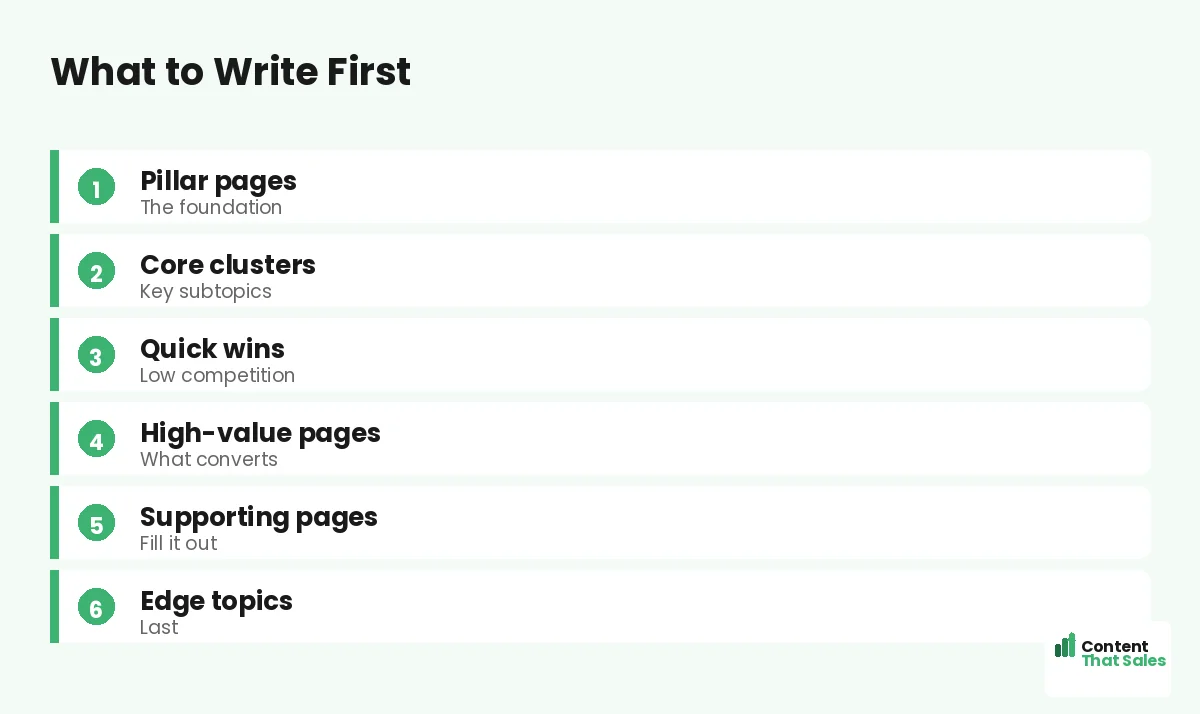
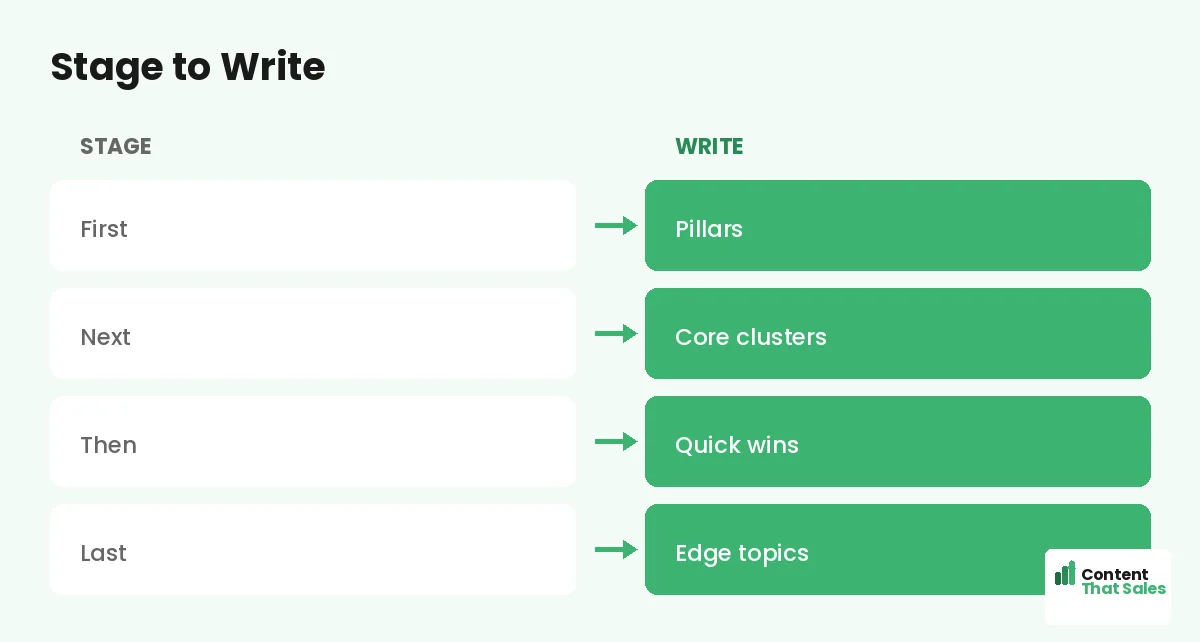
Getting your topical map publishing order right means deciding what to write first so your content builds on a strong foundation. The smart sequence usually starts with pillar pages, moves to core clusters, then quick wins, and saves edge topics for last. Publishing in a thoughtful order makes linking easier, builds authority faster, and produces early results. This guide explains the best order to publish your map and why sequence matters.
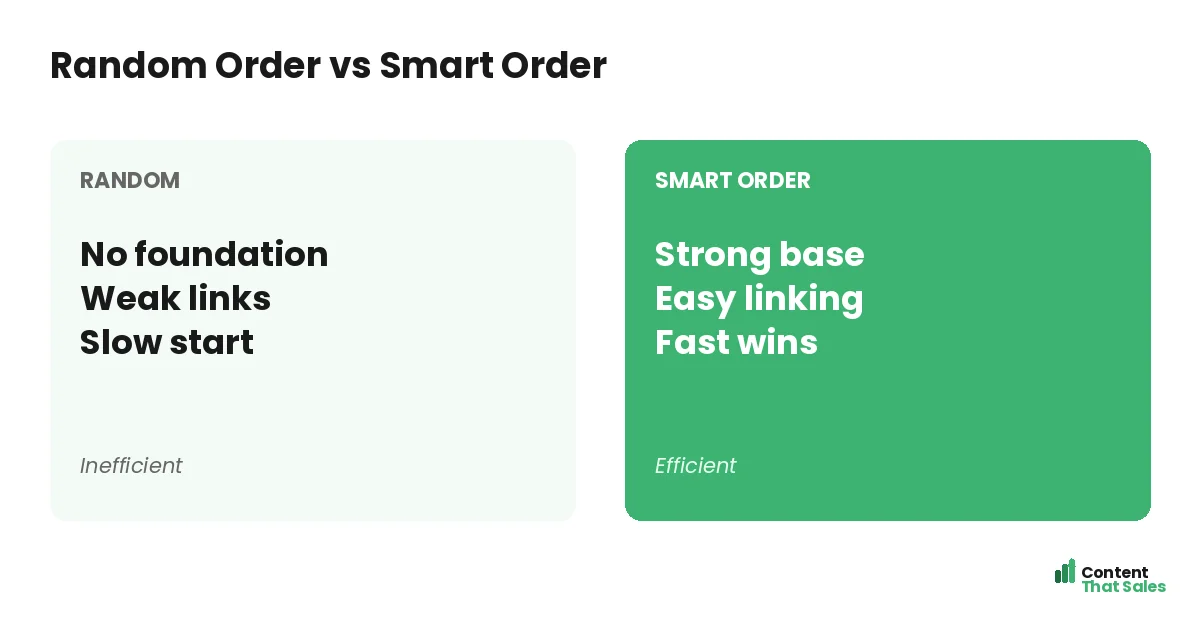
You cannot write everything at once, so order matters. The right sequence means each new page has something to link to and builds on what came before. The wrong order leaves you with weak links and a slow start.
Below, we walk through the smart publishing order for a topical map and the reasoning behind each stage.

Why Publishing Order Matters
The order you publish in affects how easily your pages link, how fast you build authority, and how soon you see results. A smart order gives each new page a foundation to connect to, while a random order leaves gaps and weak structure.
Sequence is part of executing a map well. As you build your topical map into published pages, the right order makes the whole process smoother and more effective. It is a simple lever that meaningfully improves your results.
Start With Pillar Pages
Begin with your pillar pages, the broad, foundational pages each cluster supports. Publishing these first gives your cluster pages something to link up to from the start, establishing the main structure of your map before you fill in the details.
Pillars are the backbone of your map. With them in place, every cluster page you add can immediately connect to its pillar. Starting here means your structure is sound from the beginning, rather than built around missing foundational pages.
Then Build Core Clusters
Next, write the core cluster pages, the most important subtopics under each pillar. These add depth where it matters most and reinforce your pillars. Core clusters are where your map starts to show real coverage and authority on key areas.
Focus on the clusters central to your topic first. They link naturally to the pillars you have published and to each other. Building core clusters early means you cover your most important subtopics while your structure is still taking shape.
Add Quick Wins Early
Mix in quick wins, pages targeting low-competition terms you can rank for fast. These early successes build momentum, bring in traffic sooner, and motivate you to continue. Quick wins are a smart way to see results while building the rest of your map.
Identifying quick wins is part of how you prioritize topics. Slot these easy, high-potential pages in early alongside your foundation. Their fast results provide encouragement and traffic while you work on the longer-term, more competitive pages.
Write High-Value Pages Next
Prioritize pages that drive business value, those attracting visitors likely to convert. Even if they are not the easiest to rank, their value to your business makes them worth tackling early once your foundation is in place and supporting them.
High-value pages turn traffic into results. With your pillars and core clusters published, these pages have a strong structure to sit within. Writing them earlier rather than later means you start capturing valuable, conversion-ready traffic sooner in your timeline.
Did you know?
Publishing pillars first can make every later page rank faster, because each new cluster page immediately gains support from an established pillar it links to.
Fill In Supporting Pages
Once your foundation, core clusters, quick wins, and high-value pages are live, fill in the supporting pages that round out each cluster. These complete your coverage, ensuring no important subtopic is left out and your map becomes truly comprehensive.
Supporting pages add the depth that full authority requires. They link into the structure you have already built, strengthening it further. This stage is about completeness, filling the remaining gaps so your coverage of each pillar is thorough.
Save Edge Topics for Last
Leave edge topics, the least important or most peripheral pages, for last. These add final completeness but matter least, so they belong at the end of your sequence once the high-impact pages are all published and performing.
Edge topics still have value for total coverage, but they are low priority. Publishing them last ensures your effort goes to high-impact pages first. Since readers scan more than they read, even these final pages should be clear and useful.
Link Each Page as You Go
Whatever the order, link each new page into your structure as you publish it. Connecting pages to their pillars and related clusters immediately builds your network naturally and avoids a pile of orphaned pages to fix later.
Publishing order and linking work together. Build the connections between pillar and cluster pages with each publish. Simple, clear pages keep winning, and since easy reading lifts engagement, keep each page in your sequence clear and useful.
Put It All Together
The smart topical map publishing order is: pillar pages first, then core clusters, quick wins early, high-value pages next, supporting pages to fill out coverage, and edge topics last, linking each page as you go.
This sequence builds on a strong foundation, makes linking easy, and produces early results. Publishing in a thoughtful order rather than at random is a simple way to make your map more effective and your effort pay off sooner.
Order Is Part of Implementation
Publishing order is not a separate decision, it is a core part of how you implement your map. Once you have your sequence, it becomes the backbone of your production schedule, telling you exactly what to work on first, next, and later. Without an order, implementation drifts; with one, it moves steadily from foundation to complete coverage.
Think of the publishing order as the bridge between planning and actually doing the work. It connects your priorities to your actual publishing calendar, so the strategy you set on paper turns into pages in the right sequence. This is why publishing order fits naturally into how you implement a topical map, it is the step that turns a prioritized list into a working production plan. Get the order right, build it carefully into your schedule, and your implementation stays focused, smooth, and efficient from the very first page to the last.
How Content That Sales Helps
Getting the order right takes strategic planning. That’s where we come in. At Content That Sales, we plan your publishing order, pillars first, then clusters, quick wins, and the rest, and produce the pages in the most effective sequence.
You get a smart sequence, not guesswork. We plan, write, and link in order, often organized in a topical map template for clarity. The result is a map published in the order that builds authority and results fastest.
Ready to Sequence Your Map?
Now you know the smart topical map publishing order: pillars first, then clusters, quick wins, high-value pages, supporting pages, and edge topics last. So why publish at random when a smart sequence builds authority and results faster?
Let’s sequence and publish your map together. Book your free consultation now. Call us at 8801631988589 or email service@contentthatsales.com. Let’s turn your map into a smart publishing plan that delivers.
Frequently Asked Questions About Publishing Order
What should I publish first in a topical map?
Pillar pages first. They are the foundation each cluster links to, so publishing them first establishes your structure before you fill in the details.
Why does publishing order matter?
It affects how easily pages link, how fast authority builds, and how soon you see results. A smart order gives each new page a foundation to connect to.
When should I write quick wins?
Early, alongside your foundation. Low-competition pages that rank fast build momentum and bring traffic sooner while you work on bigger pages.
What about high-value pages?
Write them next, once your foundation is in place. Even if not the easiest to rank, their conversion value makes them worth tackling early.
What comes last?
Edge topics, the least important, most peripheral pages. They add final completeness but matter least, so they belong at the end of your sequence.
Should I link pages as I publish?
Yes. Connect each new page to its pillar and related clusters immediately, building your network naturally and avoiding orphaned pages to fix later.
How does this relate to prioritizing?
Your priority ranking becomes your publishing order. Prioritizing decides impact; the order turns that into the sequence of what to write first, next, and last.
Can Content That Sales help?
Yes. We plan your publishing order and produce the pages in sequence, and can write them all. Reach out for a quick quote.