 Skip to content
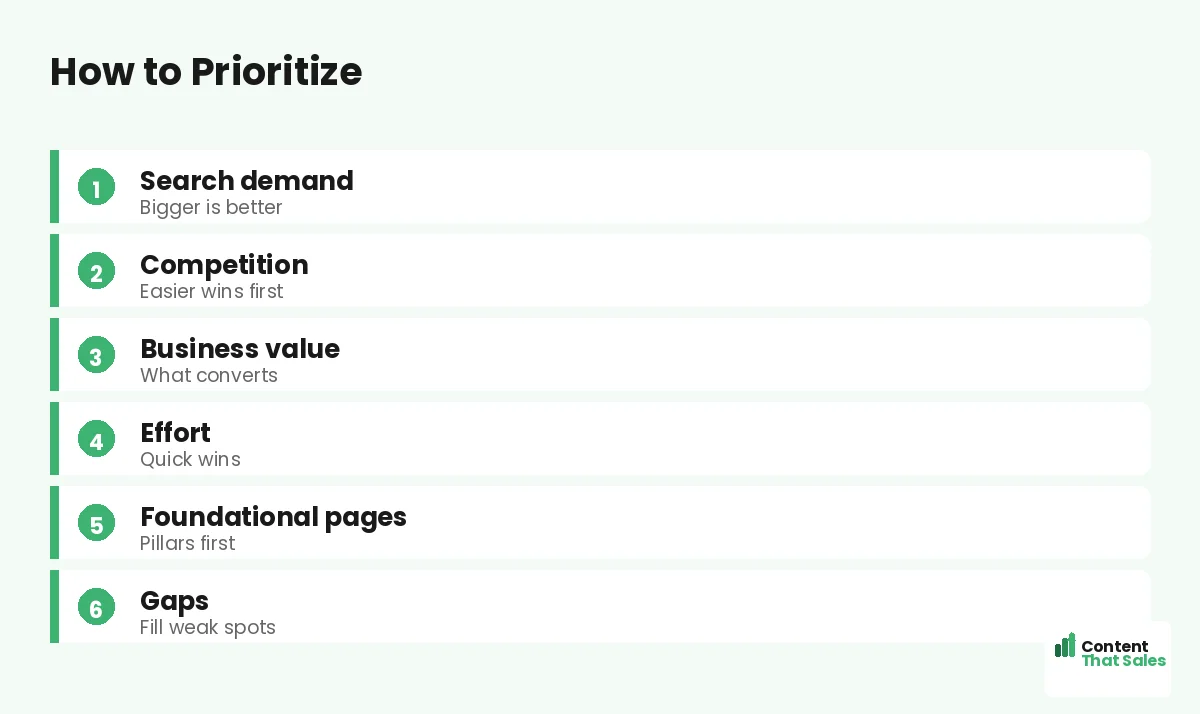
Learning how to prioritize topics in a topical map helps you start where it counts instead of writing pages at random. Not every page on your map matters equally. By scoring topics on search demand, competition, business value, and effort, you can decide what to write first, building momentum and results faster. This guide walks through how to prioritize the pages in your map so your effort delivers the biggest gains soonest.
A topical map can have dozens or hundreds of pages, and you cannot write them all at once. Prioritizing turns a long list into a smart sequence, so the pages with the most impact come first and your early work pays off quickly.
Below, we walk through the factors to weigh and how to turn them into a clear publishing order.

Why Prioritization Matters
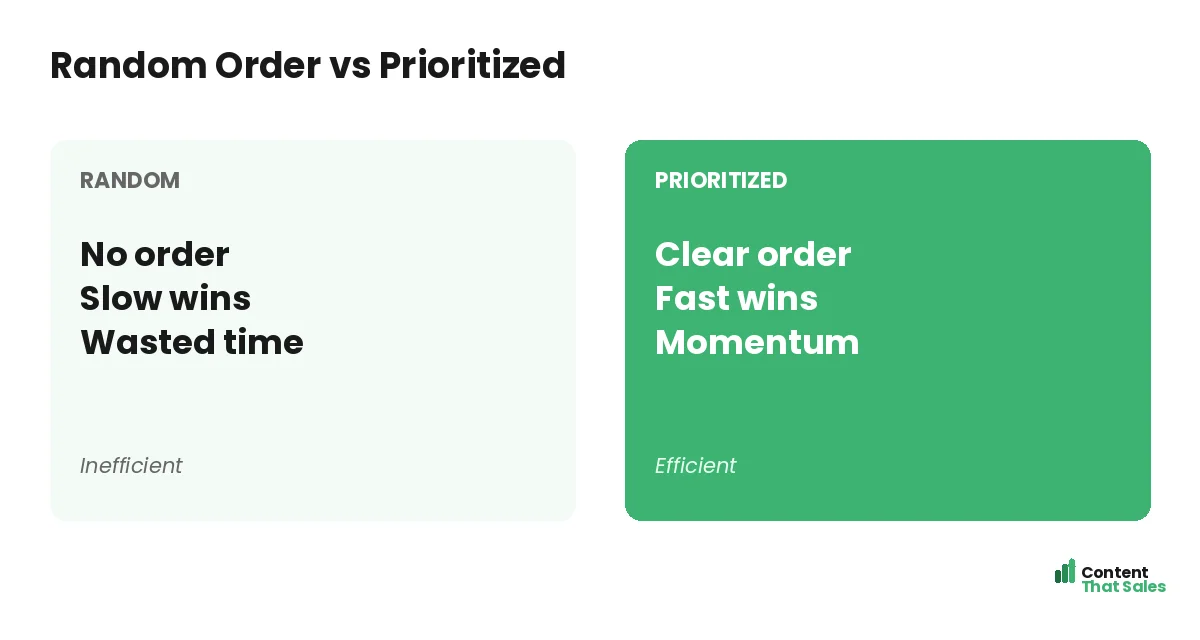
You cannot write every page at once, so the order you choose matters. Prioritizing means your earliest pages deliver the most value, building traffic and momentum sooner. Writing at random wastes your early effort on pages that may not move the needle.
Smart prioritization makes your whole map more effective faster. By tackling high-impact pages first, you see results that justify continued effort. A good order turns your topical map from a long to-do list into a strategic action plan.
Weigh Search Demand
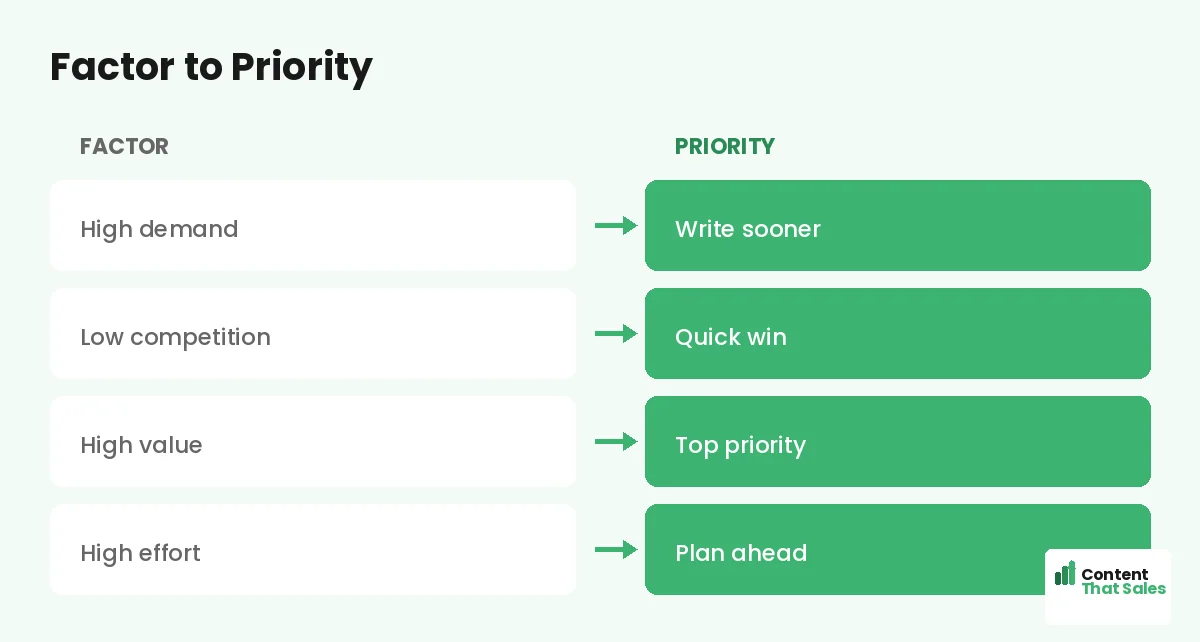
One key factor is search demand, how many people search each topic. Higher-demand pages can bring more traffic, so they often deserve priority. Weighing demand helps you focus on pages with the biggest potential audience first.
Demand is not the only factor, but it is a strong one. A high-demand page that ranks brings real traffic, so these are often worth writing early. Use search data to estimate demand and factor it into your priority decisions.
Weigh Competition
Competition matters too. Some topics are easier to rank for than others. Lower-competition pages can be quick wins, ranking faster with less effort. Balancing demand against competition helps you spot the topics where you can win soonest.
A high-demand, low-competition page is ideal, lots of potential traffic with an achievable climb. Prioritizing these quick wins early builds momentum and confidence. Save the most competitive topics for when your authority is stronger and you can compete.
Weigh Business Value
Not all traffic is equal. Some pages attract visitors more likely to become customers. These high-value pages, even with modest traffic, can matter more to your business than high-traffic pages that do not convert. Factor business value into priority.
Think about which topics attract people ready to buy or take action. Pages tied closely to your products or services often deserve priority for their conversion potential. Balancing traffic value with business value ensures your effort serves real goals.
Weigh Effort Required
Consider how much effort each page takes. Some pages are quick to write; others need deep research. Quick wins that are easy to produce can be worth doing early to build momentum, while high-effort pages may need more planning.
Balancing effort against impact helps you sequence smartly. A high-impact, low-effort page is an obvious early choice. Knowing the effort involved also helps you plan realistically, mixing quick wins with the bigger pages that take more time.
Start With Foundational Pages
Pillar pages and core clusters often deserve early priority because they form the foundation of your map. Other pages link to them, so having them in place early strengthens your structure and makes linking new pages easier as you go.
Foundational pages support everything else. Building them first means your connections between pillar and cluster pages have something to point to. Since readers scan more than they read, strong foundational pages also give readers clear entry points.
Did you know?
Tackling a few high-demand, low-competition pages first often produces early wins that fund and motivate the rest of the map, turning momentum into a self-reinforcing cycle.
Score and Rank Your Topics
Combine these factors into a simple score for each topic, weighing demand, competition, value, effort, and foundational importance. Ranking topics by their combined score gives you a clear, objective priority order rather than guessing what to write next.
A simple scoring system removes guesswork. You do not need precision, just a consistent way to compare topics. Once scored, your topics sort naturally into a priority list, telling you exactly where to focus first, next, and later.
Turn Priority Into a Plan
Finally, turn your ranked list into a publishing plan, what to write first, next, and over time. This sequence guides your content production, ensuring high-impact pages come first. Your priorities become a concrete roadmap for working through the map.
This plan connects naturally to your publishing order, deciding what to write first. Simple, clear pages keep winning, and since easy reading lifts engagement, make each prioritized page clear and useful as you work through your plan.
Put It All Together
To prioritize topics in a topical map, weigh search demand, competition, business value, effort, and foundational importance. Score and rank each topic, then turn the ranking into a publishing plan so high-impact pages come first.
Prioritizing turns a long list into a smart sequence, building momentum and results faster. Start with foundational pages and quick wins, then work down your ranked list. A clear priority order is what makes your map an effective action plan.
Revisit Priorities as You Go
Priorities are not fixed once and forgotten. As you publish and see results, what matters most can shift. A page you ranked low might suddenly look important if a related page takes off, or a competitor move might bump a topic up your list. Treat your priority order as a living plan you revisit regularly.
Checking in every so often keeps your effort aimed at the highest-impact work. Look at which published pages are performing, where new gaps have appeared, and whether your business goals have changed. The same research you used to find cluster topics can resurface opportunities worth promoting up the list. A priority order that adapts to real results will always beat one you set once and never touch again.
Avoid Common Prioritization Mistakes
A few mistakes trip people up. Chasing only the highest-volume terms ignores competition and value, so you write hard-to-rank pages that may not convert. Ignoring foundational pages leaves later pages with nothing to link to. And never revisiting your order means you keep following a plan that no longer fits.
The fix is balance. Weigh all the factors together rather than fixating on one, build your foundation early, and review your priorities as results come in. Avoiding these traps keeps your sequence smart and your effort focused on the pages that genuinely move your map forward.
How Content That Sales Helps
Prioritizing well takes data and judgment. That’s where we come in. At Content That Sales, we score your topics on demand, competition, value, and effort, then build a priority plan so your highest-impact pages come first.
You get a smart sequence, not a random list. We research, score, and plan, often organized in a topical map template for clarity, and can write the pages too. The result is a map you work through in the most effective order.
Ready to Prioritize Your Map?
Now you know how to prioritize topics in a topical map: weigh demand, competition, value, and effort, then score, rank, and plan. So why write at random when prioritizing gets you results and momentum faster?
Let’s prioritize your map together. Book your free consultation now. Call us at 8801631988589 or email service@contentthatsales.com. Let’s turn your map into a smart sequence that delivers the biggest gains first.
Frequently Asked Questions About Prioritizing Topics
How do I prioritize topics in a topical map?
Weigh search demand, competition, business value, effort, and foundational importance, then score and rank each topic to decide what to write first, next, and later.
What factors matter most?
Demand, competition, and business value are key, balanced against effort. High-demand, low-competition, high-value pages that are quick to write are top priorities.
Should I start with pillar pages?
Often yes. Pillar and core cluster pages form the foundation others link to, so building them early strengthens your structure and makes linking easier.
What is a quick win?
A high-demand, low-competition page that is easy to produce. These rank faster with less effort, building early momentum and confidence.
Why does business value matter?
Not all traffic converts. Pages that attract people likely to become customers can matter more than high-traffic pages that do not, so factor in value.
How do I score topics?
Combine the factors into a simple score per topic. You do not need precision, just a consistent way to compare and rank them into a priority order.
How does this connect to publishing order?
Your ranked priority list becomes your publishing order, the sequence of what to write first, next, and over time as you work through the map.
Can Content That Sales help?
Yes. We score your topics and build a priority plan, and can write the pages too. Reach out for a quick quote.