 Skip to content
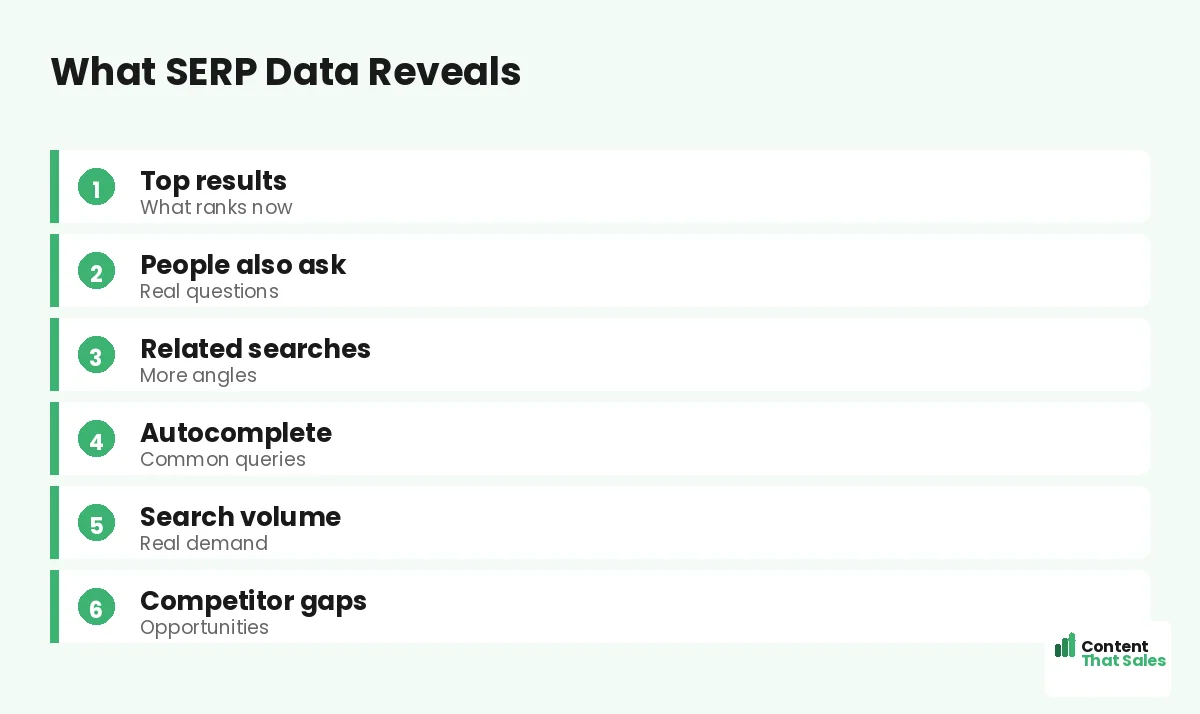
Learning how to research a topical map from SERP data is how you build a map grounded in real demand instead of guesswork. The search results pages are full of clues: the questions in people-also-ask, the related searches, the autocomplete suggestions, and the pages already ranking. Mine these, group them by intent, and you get a map built on what people actually search. This guide walks through the process step by step so your map reflects reality.
SERP data is free, abundant, and direct from your audience. Every results page tells you what searchers want and what already works. Using it to build your map means every page you plan targets a real search with a real audience behind it.
Below, we walk through what SERP data to gather, how to read it, and how to turn it into a grounded topical map.

Why SERP Data Beats Guesswork
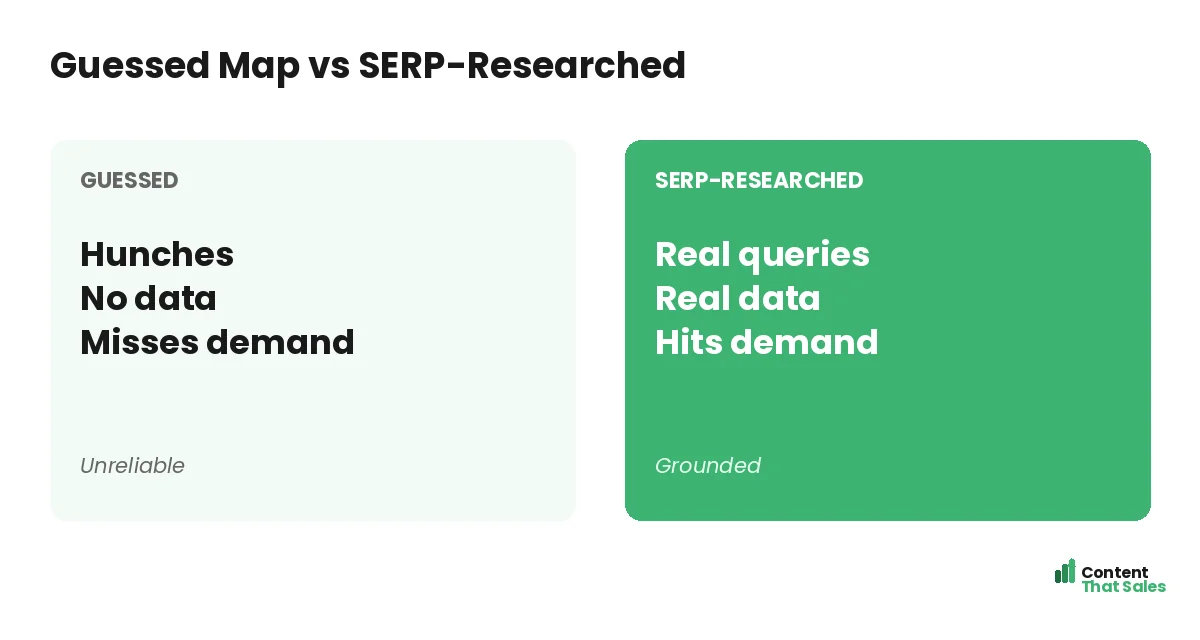
Building a map from assumptions risks planning pages no one searches for. SERP data fixes this by showing what people actually query. It is evidence of real demand and intent, the only solid foundation for a map that will actually drive traffic.
Grounding your map in SERP data keeps it tied to reality. Rather than guessing subtopics, you build a topical map from proven searches. Every page traces back to a real query, which is what makes the map effective.
Start With Your Seed Topic
Begin by searching your main topic and a few core terms. The results pages for these seed searches are your raw material. Look at what ranks, what questions appear, and what related searches show, this is where your research starts.
Your seed searches open the door to the whole landscape. From them, you follow the trails of questions and related terms outward, uncovering subtopics. Start broad, then let the SERP data guide you into the specifics of your subject.
Mine People Also Ask
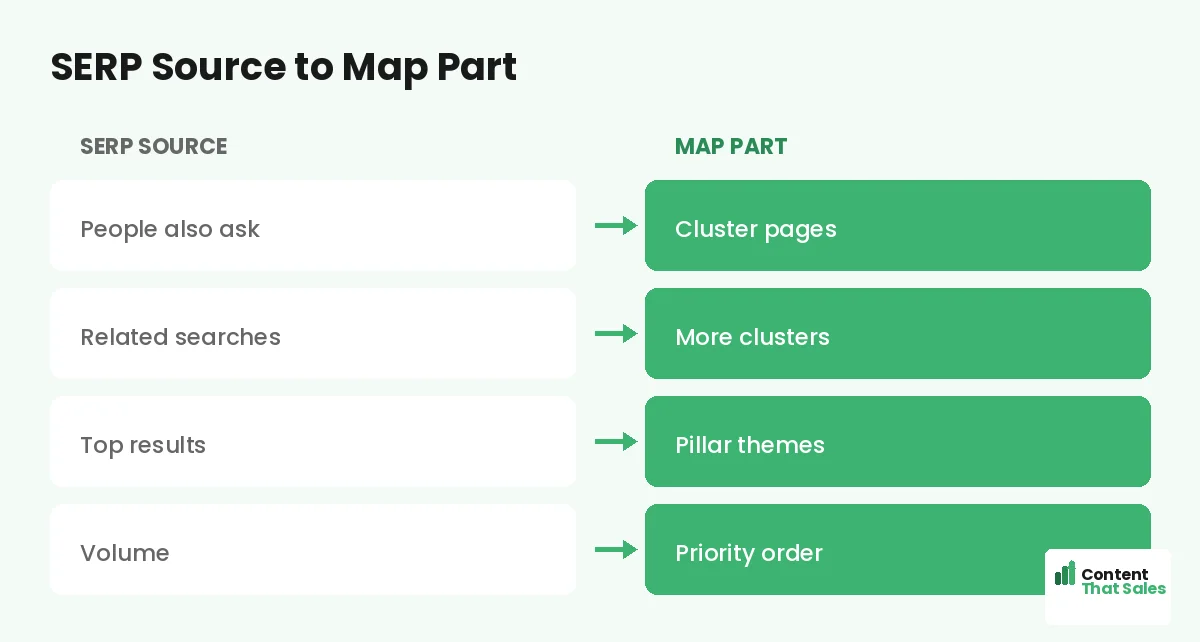
The people-also-ask box is a goldmine. It shows real questions searchers have about your topic, often dozens once you expand them. Each unanswered question is a potential cluster page aimed at a query people genuinely type into search.
Collect these questions systematically. They reveal the specific subtopics your audience cares about, straight from the source. Mining people-also-ask is one of the fastest ways to find cluster topics grounded in actual demand.
Study Related Searches
The related searches at the bottom of results pages show terms and angles connected to your query. Each one is a possible page or cluster. They reveal how people search around your topic, surfacing subtopics you might not have considered.
Work through related searches for your main terms, then for the new terms they surface. This branching exploration maps out the territory of your subject. Each related search is a clue to another piece of coverage your map should include.
Use Autocomplete Suggestions
Search autocomplete reveals common queries as you type. Start typing your topic and note the suggestions, these are popular real searches. Trying different prefixes and question words uncovers a wide range of queries people actually make about your subject.
Autocomplete is a quick way to gather real search phrasing. It shows the exact words people use, which helps with both topic discovery and keyword targeting. Combine it with people-also-ask and related searches for thorough coverage of real queries.
Analyze the Ranking Pages
The pages already ranking for your terms tell you what works. Study them for the subtopics they cover, the angles they take, and the gaps they leave. This shows both what you need to match and where you can do better.
Ranking pages reveal the bar to clear and the structure of the topic. Since readers scan more than they read, note how the best pages are structured for clarity, and plan your pages to be clearer and more complete.
Did you know?
Expanding every people-also-ask question reveals more questions, often dozens from a single seed search. That one feature can map out a whole cluster on its own.
Group Findings by Intent
Once you have gathered queries, group them by intent and topic. Questions and terms with the same goal belong together as a cluster; broad themes become pillars. This grouping turns a pile of raw queries into the structure of your map.
Grouping by intent ensures each page serves a clear purpose. It also prevents overlap, since related queries are handled together. This step transforms your SERP research from a list of findings into an organized, coherent plan for coverage.
Turn Research Into a Map
Finally, organize your grouped findings into pillars and clusters, a complete map built entirely on SERP data. Assign each page a primary query and note its intent. The result is a map where every entry reflects a real, proven search.
This is your grounded map, ready to act on. Plan the connections between pillar and cluster pages too, so your data-backed pages reinforce each other. Simple, clear pages keep winning, and since easy reading lifts engagement, plan each page to serve its query clearly.
Put It All Together
To research a topical map from SERP data: start with seed searches, mine people-also-ask, study related searches, use autocomplete, analyze ranking pages, group findings by intent, and organize them into pillars and clusters. The result is a map grounded in real demand.
SERP data turns guesswork into evidence. Every page on your map traces back to a real search, so your content targets genuine demand. This research is the difference between a map that drives traffic and one built on assumptions.
Speed It Up With AI
SERP research is thorough but can be slow when done entirely by hand. You can speed it up by feeding the queries you gather into an AI tool and asking it to group them by intent and topic. The AI handles the tedious sorting, while you keep control of the strategy and verify the results against the real data you collected.
This pairing works well because the SERP data keeps the AI honest. Instead of letting it invent keywords, you give it real queries to organize, so its output stays grounded. Learning how to combine SERP data with AI gives you the best of both, the accuracy of real search data and the speed of automated grouping, so your research turns into a finished map far faster without losing its grounding in genuine demand.
How Content That Sales Helps
Mining SERP data thoroughly takes time and know-how. That’s where we come in. At Content That Sales, we research your topic from the search results, pull the real queries, and build a map grounded in genuine demand.
You get a data-backed map without the research grind. We mine the SERP, group by intent, and map it, often organized in a topical map template for clarity, and can write the content too. The result is a map that targets real searches.
Ready to Research From Real Data?
Now you know how to research a topical map from SERP data: mine the results pages, group by intent, and build a grounded map. So why guess at topics when the search results show you exactly what people want?
Let’s build your data-backed map together. Book your free consultation now. Call us at 8801631988589 or email service@contentthatsales.com. Let’s turn real search data into a map that targets genuine demand.
Frequently Asked Questions About SERP Research
What is SERP data for a topical map?
The clues on search results pages, people-also-ask questions, related searches, autocomplete, and ranking pages, that reveal what people actually search about your topic.
Why use SERP data?
It grounds your map in real demand instead of guesswork. Every page you plan from SERP data targets a query people genuinely search, not an assumption.
What is people-also-ask?
A results-page feature showing real questions searchers have. Each unanswered one is a potential cluster page, making it a goldmine for topic discovery.
How do related searches help?
They show terms and angles connected to your query, revealing subtopics you might miss. Each is a possible page or cluster for your map.
Why analyze ranking pages?
They show what already works, the subtopics covered, angles taken, and gaps left. This tells you what to match and where you can do better.
How do I turn findings into a map?
Group your gathered queries by intent and topic into clusters under pillars, assign each page a query, and plan the links. That structure is your map.
Is SERP research free?
Largely yes. The results pages are free to study. Some volume data needs tools, but the core clues, questions and related searches, cost nothing.
Can Content That Sales help?
Yes. We mine SERP data, group by intent, and build a grounded map, and can write the content too. Reach out for a quick quote.