 Skip to content
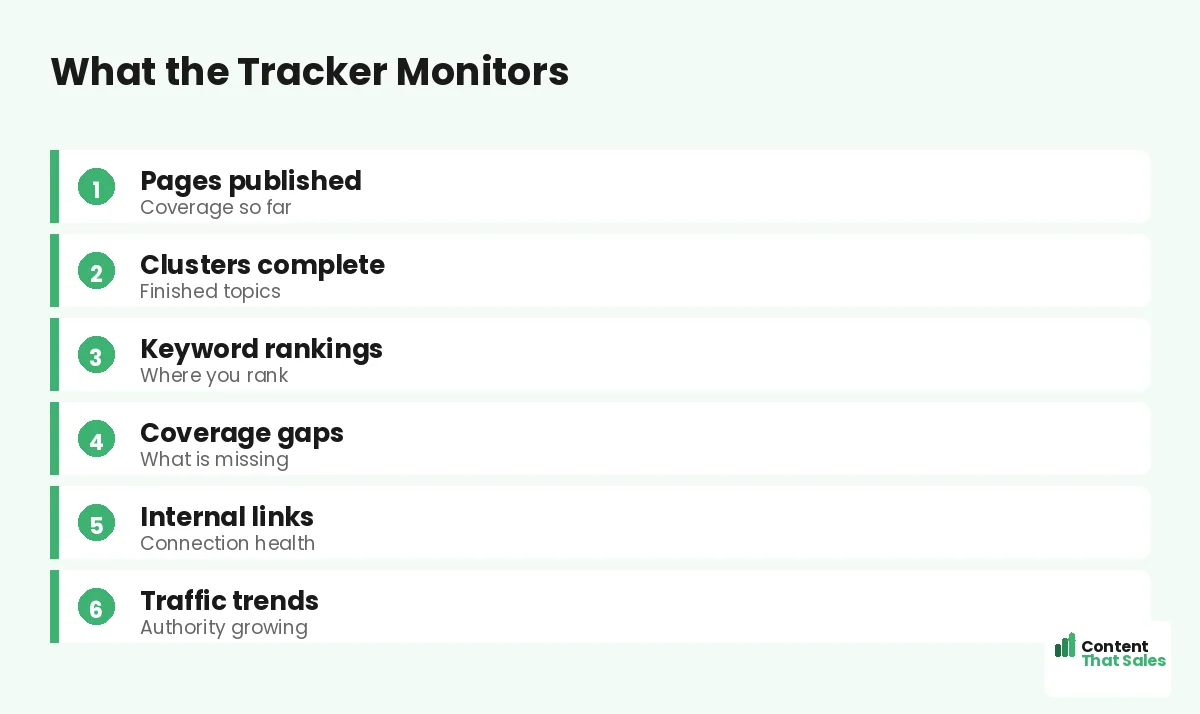
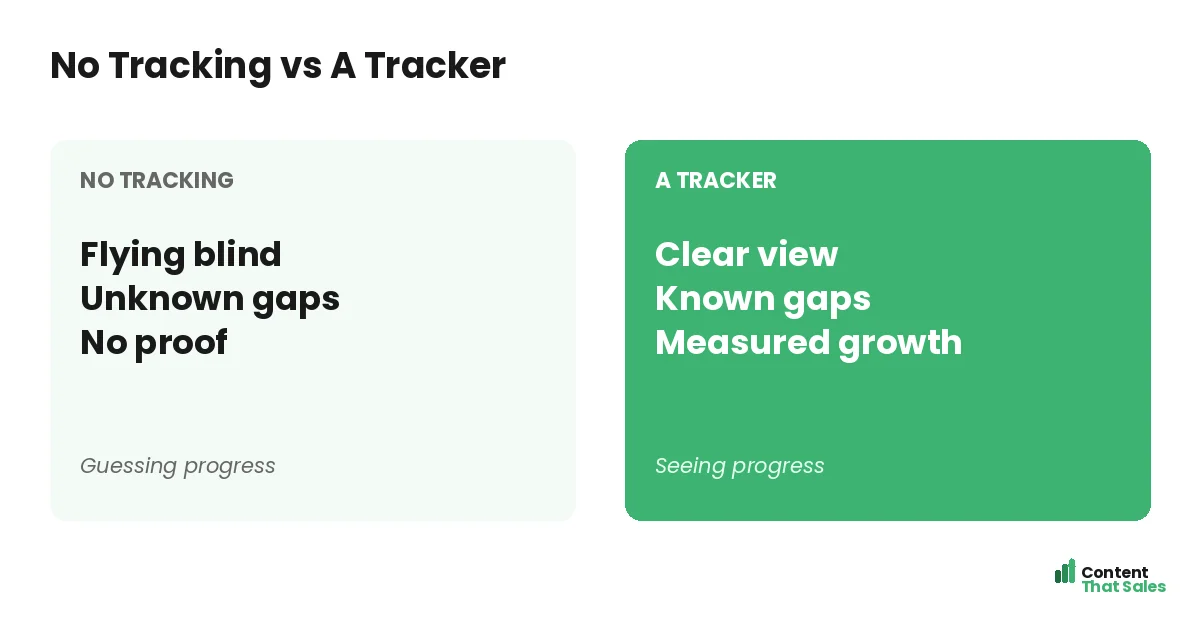
A topical authority tracker is a simple tool that shows how well you are covering your topic and how your authority is growing over time. It tracks which pages you have published, which subtopics are still missing, how your rankings move, and where the gaps are. Instead of guessing whether your content strategy is working, a tracker gives you a clear view. This guide explains what to track and how to build one.
Building topical authority takes many pages over time, and without a tracker it is hard to see your progress. A tracker turns a vague sense of progress into clear, visible data you can act on.
Below, we walk through what a topical authority tracker measures, how to set one up, and how it keeps your content strategy on course.

Why Track Topical Authority
Topical authority builds slowly, page by page, over months. Without tracking, it is hard to know if you are making progress or where to focus next. A tracker makes the invisible visible, so you can manage your strategy with data.
A tracker keeps your effort on course. As you work to build topical authority, the tracker shows what is done, what is left, and what is working, so you always know your next move.
Track Your Published Pages
The first thing to track is which pages you have published. List every page in your topical map and mark its status, published, drafted, or planned. This gives you an instant view of how much of your map is live.
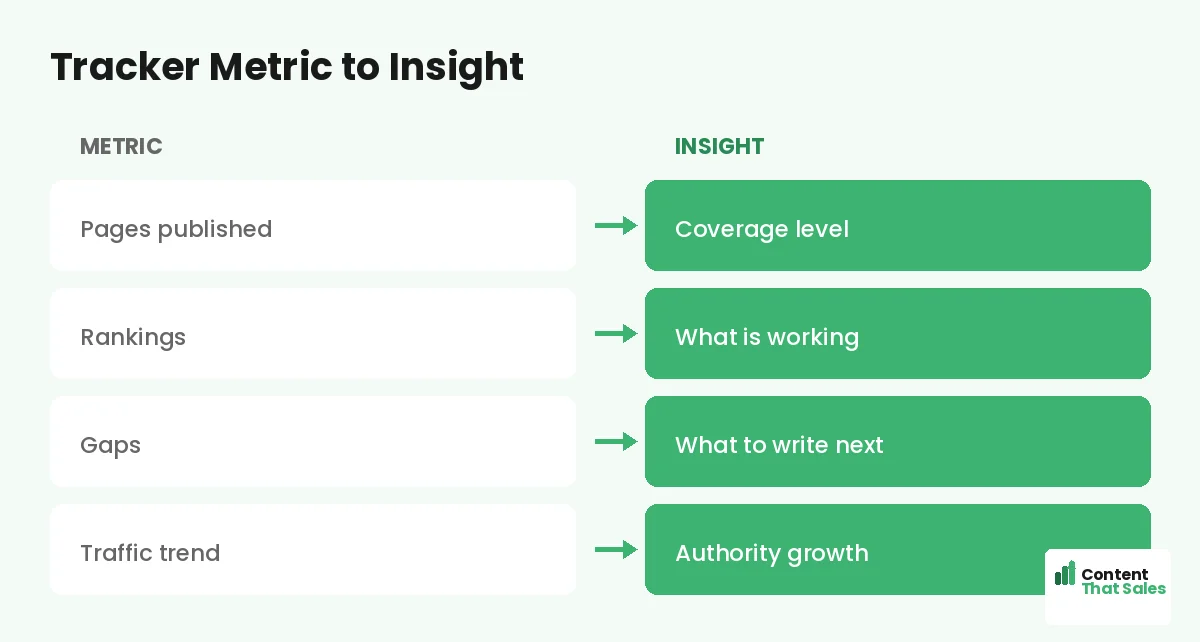
Tracking published pages against your full map shows your coverage at a glance. It is the simplest, most important metric, since topical authority comes from actually covering your topical map completely.
Track Missing Subtopics
Just as important is tracking what is missing. The tracker should highlight subtopics in your map that you have not covered yet. These gaps are where your authority is incomplete and where your next pages should go.
Seeing missing subtopics keeps you focused on completing your coverage. The gaps tell you exactly what to write next, helping you systematically find cluster topics you still need to address.
Track Keyword Rankings
The tracker should record how your pages rank for their target keywords over time. Rankings are the clearest signal that your authority is growing, as more pages climb and rank for more terms across your topic.
Logging rankings periodically shows the trend. You want to see pages improving and new keywords appearing. Since readers scan more than they read, rankings also reflect whether your pages serve searchers well.
Track Internal Links
A tracker can note whether each page is properly linked into your map. Orphaned pages, ones with no internal links, weaken your structure. Tracking links ensures every page is connected and contributing to your authority.
Noting link status helps you catch pages that need connecting. Strong internal linking is part of authority, so the tracker reminds you to maintain the connections between pillar and cluster pages as your map grows.
Track Traffic and Trends
The tracker should include traffic for each page or cluster, showing which parts of your map are drawing visitors. Traffic trends reveal what is resonating and where your authority is paying off in real results.
Watching traffic over time confirms whether your strategy is working. Rising traffic across a cluster is strong evidence of growing authority, while flat traffic flags areas that may need attention or stronger content.
Did you know?
Authority often shows up first as a cluster of pages all rising together, not one page jumping. A tracker helps you spot that pattern early.
Build It in a Spreadsheet
The easiest tracker is a spreadsheet. One row per page, columns for status, keyword, ranking, links, and traffic. Update it on a regular schedule, and your spreadsheet becomes a living record of your authority growth.
A spreadsheet is flexible and free. You can build it from your existing map, often starting from the same topical map in Google Sheets you already use, just adding columns for tracking metrics.
Update on a Schedule
A tracker only helps if you keep it current. Set a regular cadence, monthly works well, to update rankings, traffic, and page status. Consistent updates turn the tracker into a reliable picture of your progress over time.
Pick a schedule you can stick to. The point is to see trends, which requires regular data points. A tracker updated monthly will show you patterns that a one-time snapshot never could.
Act on What You See
A tracker is only useful if you act on it. Use it to decide what to write next, which pages to improve, and where to add links. The tracker turns data into a clear plan for your next moves.
Reviewing the tracker regularly keeps your strategy sharp. Simple, clear data drives better decisions, and since easy reading lifts engagement, the pages you prioritize should be clear and useful too.
Keep It Simple
A tracker does not need to be complicated. Track the few metrics that matter, coverage, rankings, traffic, and links, and skip the rest. A simple tracker you actually update beats a complex one you abandon.
Start small and add metrics only if they help you decide something. The best tracker is the one you keep using, so favor clarity and ease over comprehensiveness. Simplicity keeps the habit alive.
Put It All Together
A topical authority tracker shows your coverage, missing subtopics, rankings, links, and traffic in one place. It turns the slow, invisible work of building authority into clear data you can see and act on.
Build it in a spreadsheet from your map, update it on a schedule, and use it to guide what you do next. With a tracker, you always know where your authority stands and where to push to grow it.
Compare Progress Across Clusters
A good tracker lets you compare how different clusters are performing side by side. One cluster might be fully covered and ranking well, while another is thin and lagging. Seeing them together tells you where to invest your next pages and where you have already won.
This comparison turns the tracker into a strategy tool, not just a record. You can shift effort toward clusters with the most potential, double down on ones already gaining traction, and avoid spreading yourself too thin. The pages you build follow the data instead of guesswork, so your authority grows where it matters most over time.
How Content That Sales Helps
Tracking is one thing, producing the pages to fill the gaps is another. That’s where we come in. At Content That Sales, we build your map, track your coverage, and write the pages that close the gaps and grow your authority.
You see the progress; we do the work. We monitor what is missing, write the pages, and connect them into your map. The result is steady, measurable authority growth without you managing every detail.
Ready to Track Your Authority?
Now you know what a topical authority tracker measures: coverage, gaps, rankings, links, and traffic. It turns slow progress into clear data. So why keep guessing when you could see exactly where you stand?
Let’s build and track your authority together. Book your free consultation now. Call us at 8801631988589 or email service@contentthatsales.com. Let’s turn your content strategy into measurable, growing authority.
Frequently Asked Questions About the Tracker
What is a topical authority tracker?
A simple tool, usually a spreadsheet, that tracks your content coverage, missing subtopics, rankings, links, and traffic, so you can see how your authority is growing.
Why do I need one?
Authority builds slowly over many pages. A tracker makes that progress visible, so you know what is done, what is missing, and what is working.
What should I track?
Published pages versus your map, missing subtopics, keyword rankings, internal link status, and traffic trends. These few metrics show your authority clearly.
How do I build one?
A spreadsheet is easiest. One row per page, columns for status, keyword, ranking, links, and traffic. Build it from your existing topical map.
How often should I update it?
Monthly works well. You need regular data points to see trends, so pick a cadence you can stick to and update consistently.
What does growing authority look like?
Often a cluster of pages rising together, more keywords ranking, and increasing traffic across a topic, rather than one page jumping alone.
Should I keep the tracker simple?
Yes. Track the few metrics that matter and skip the rest. A simple tracker you actually update beats a complex one you abandon.
Can Content That Sales help?
Yes. We track your coverage and write the pages that close the gaps and grow your authority. Reach out for a quick quote.