 Skip to content
Your landing page quality score is one of the most powerful and overlooked levers in paid search, because it decides how much you pay per click and how often your ads show. Google scores how relevant and useful your ad and page are, and the landing page is a major input. A higher score means cheaper clicks and better positions. This guide shows you exactly what quality score is, why the page drives it, and how to raise it to lower your ad costs.
Two advertisers can bid the same amount, yet the one with the better page pays less and ranks higher. That is the quiet edge a strong page gives you. Improve the page, and your whole campaign gets cheaper without touching your bids.
Below, we break down what quality score is, the page factors that drive it, and the practical steps to raise yours and cut your cost per click.

What Quality Score Actually Is
Quality score is Google’s rating, on a scale of one to ten, of how relevant and useful your keyword, ad, and landing page are to a searcher. It is built from three parts: expected click-through rate, ad relevance, and landing page experience.
A higher score signals that you give searchers what they want. Google rewards that with lower costs and better ad positions. The landing page experience is the part many advertisers ignore, which is exactly why improving it offers such an easy win.
Why the Landing Page Drives It
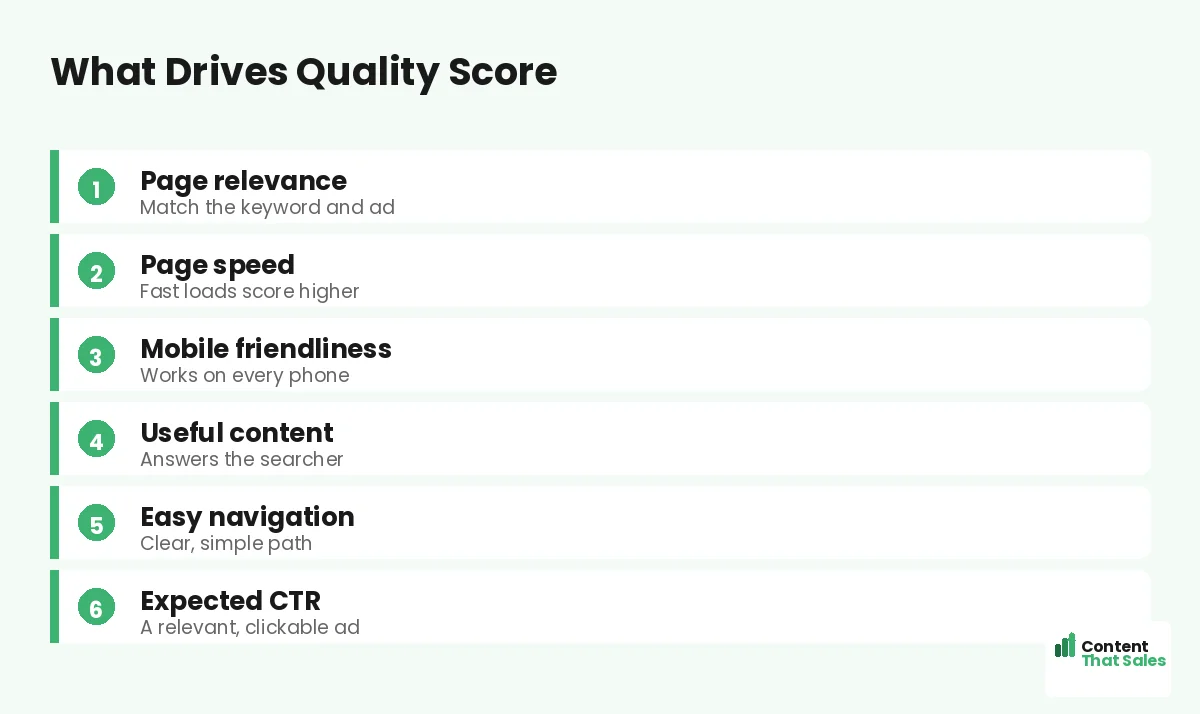
Landing page experience is a core piece of quality score. Google looks at whether your page is relevant to the search, easy to navigate, fast, and mobile friendly. A page that matches the query and serves the visitor well lifts your whole score.
This is why a focused page built on a strong landing page structure pays off twice. It converts better for you and scores better with Google, so you get more leads and cheaper clicks from the same campaign, which is the heart of building landing pages for Google Ads.
Factor 1: Page Relevance
Relevance is the biggest driver. The page must match the keyword and the ad. If someone searches and clicks an ad for “tax help,” the page should be about tax help, using that language in the headline and copy.
Send that visitor to a generic homepage and relevance drops, dragging your score down. Match the page tightly to the keyword theme. The closer the page reflects what the searcher typed, the higher your relevance and your score, which is the core idea behind message match between ads and pages.
Factor 2: Page Speed
Speed counts for both users and Google. A slow page frustrates visitors and signals a poor experience, lowering your score. Many paid visitors are on mobile, where slow loads hurt most. A fast page protects both conversions and quality score.
Keep images light, trim heavy scripts, and test load time on a phone. Even a second of delay can cost you. A quick page is one of the simplest, most reliable ways to lift your landing page experience rating.
Factor 3: Mobile Friendliness
Most searches happen on phones, so Google weighs mobile experience heavily. A page that is hard to read or tap on mobile scores poorly. Design mobile first, with a single column, a clear headline, and easy-to-tap buttons.
Test the page on a real device before you spend. If the headline is cut off or the form is fiddly, both your conversions and your score suffer. A smooth mobile page is now the baseline for a strong quality score.
Factor 4: Useful, Clear Content
Google wants pages that genuinely help the searcher. Clear, relevant content that answers the visitor’s need signals a good experience. Vague or thin pages that do not match intent score lower, even if they load fast.
Lead with what the visitor came for and make it easy to find. Since readers scan more than they read, clear headings and concise copy improve both the experience and your score at once.
Did you know?
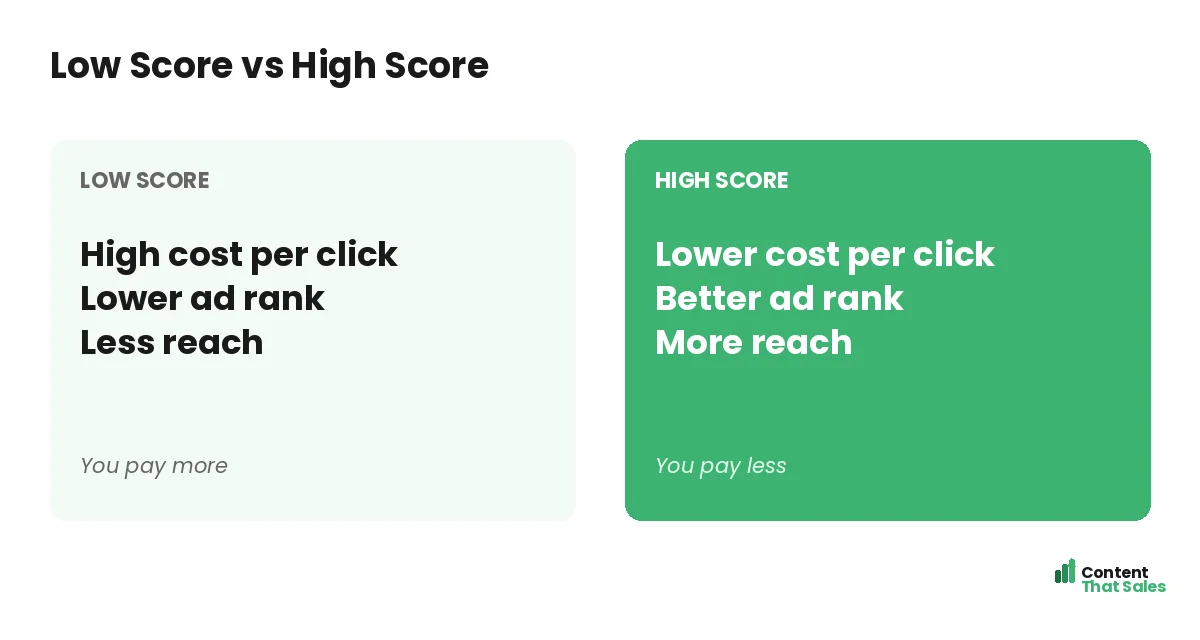
A higher quality score can meaningfully lower your cost per click, so improving the page is often cheaper than raising your bids to win the same positions.
How a Higher Score Lowers Cost
Here is the payoff. Google rewards a high quality score with a lower cost per click and a better ad rank. So a strong page does not just convert more visitors, it makes every click cheaper and helps your ads show more often.
That means a better page can lower your cost per lead from two directions at once: more conversions and cheaper clicks. Few changes in paid search deliver that kind of compounding return for so little ongoing cost.
Steps to Raise Your Quality Score
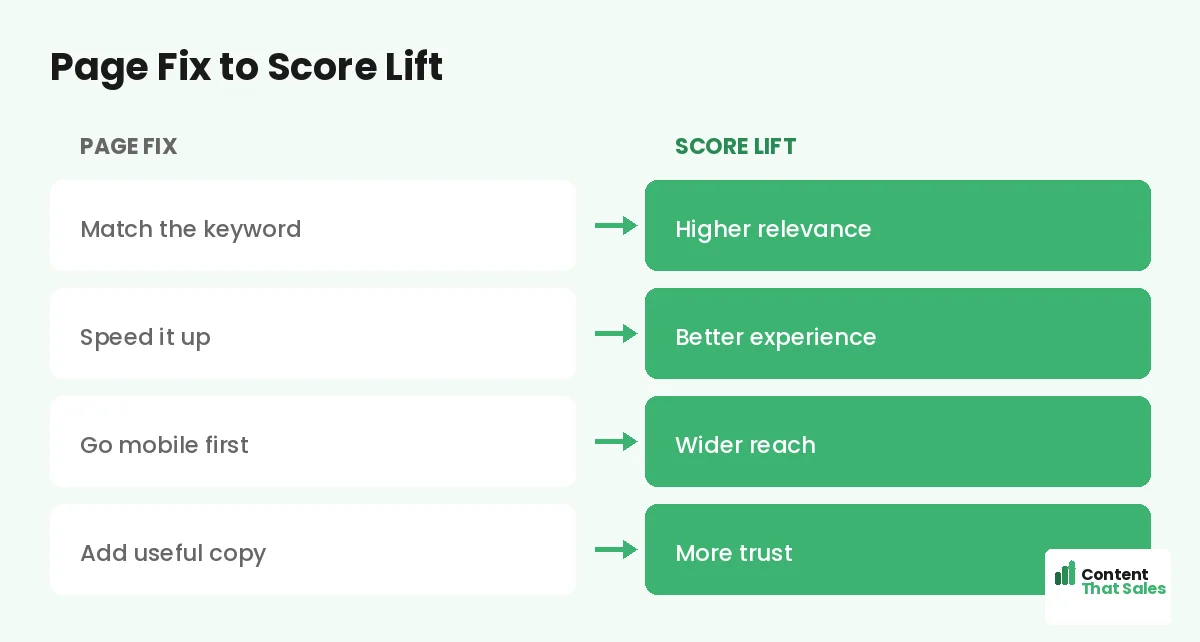
Start by tightening relevance. Build a dedicated page per keyword theme and echo the search term in the headline. Then speed up the page, confirm it works on mobile, and make the content clear and useful. Each step lifts a part of your score.
A ready landing page copy template makes building these focused, relevant pages fast. Tighten the match, trim the load time, and serve the searcher well, and your score climbs while your costs fall.
Match One Page to One Keyword Theme
A single generic page for all your ads waters down relevance. Instead, build a focused page for each keyword theme or ad group. The tighter the match between the search, the ad, and the page, the higher your relevance score.
This takes more effort, but it directly lifts quality score and conversions together. Each focused page speaks the exact language of its searcher, which is exactly what Google rewards with cheaper clicks and stronger positions.
Do Not Forget the Ad Side
Quality score is not only the page. Expected click-through rate and ad relevance matter too. Write ads that match the keyword and earn clicks, then back them with a page that delivers. The ad and page work together to lift the score.
When the ad, the keyword, and the page all align, every part of your quality score improves. Treat them as one connected journey, not separate pieces, and Google rewards the consistency with lower costs across the board.
Track and Improve Over Time
Quality score is not set once. Check it regularly in your ad account and watch how changes to the page move it. A few points of improvement can noticeably cut your cost per click, so the tracking pays for itself.
Simple, clear copy keeps winning, since easy reading lifts conversions. Keep refining the page, watch the score respond, and your campaign gets steadily cheaper and more effective with each round.
How Content That Sales Helps
We build pages that score and convert. That’s where we come in. At Content That Sales, we write relevant, fast, focused landing pages that lift your quality score and lower your cost per click.
You share your keywords and your offer. We write pages that match the search, serve the visitor, and convert. The result is a higher quality score, cheaper clicks, and an ad budget that goes further.
Ready to Lower Your Ad Costs?
Now you know how your landing page quality score works and how to raise it with relevance, speed, mobile design, and useful content. A better page means cheaper clicks and better positions. So why keep overpaying for a low score?
Let’s build a page that lifts your score and cuts your cost. Book your free consultation now. Call us at 8801631988589 or email service@contentthatsales.com. Let’s turn your next click into your next lead, for less.
Frequently Asked Questions About Landing Page Quality Score
What is quality score?
It is Google’s one-to-ten rating of how relevant and useful your keyword, ad, and landing page are. It is built from expected CTR, ad relevance, and landing page experience.
How does the landing page affect it?
Landing page experience is a core input. Google checks relevance, speed, mobile friendliness, and useful content. A strong page lifts your whole score.
Why does quality score matter?
A higher score lowers your cost per click and improves your ad position. Two advertisers can bid the same, and the one with the better page pays less.
What is the biggest page factor?
Relevance. The page must match the keyword and ad, using the searcher’s language in the headline and copy. A generic homepage drops relevance fast.
Does page speed really matter?
Yes. A slow page hurts the user experience and your score, especially on mobile. Keep images light and scripts trim to load fast.
Should I build one page per keyword theme?
Yes, when you can. A focused page per ad group tightens relevance and lifts both quality score and conversions compared to one generic page.
How do I raise my quality score?
Tighten relevance, speed up the page, confirm mobile friendliness, and make the content clear and useful. Track the score and refine over time.
Can Content That Sales help?
Yes. We write relevant, fast, focused pages that lift your quality score and lower your cost per click. Reach out for a quick quote.