 Skip to content
A topical map brief template for content writers turns each entry on your map into a clear, complete brief, so writers know exactly what to produce, the keyword, the intent, the points to cover, and the links to include. A good brief means the first draft lands close, with fewer revisions and better pages. This guide walks through what the brief template covers and how to use it for every page in your map.
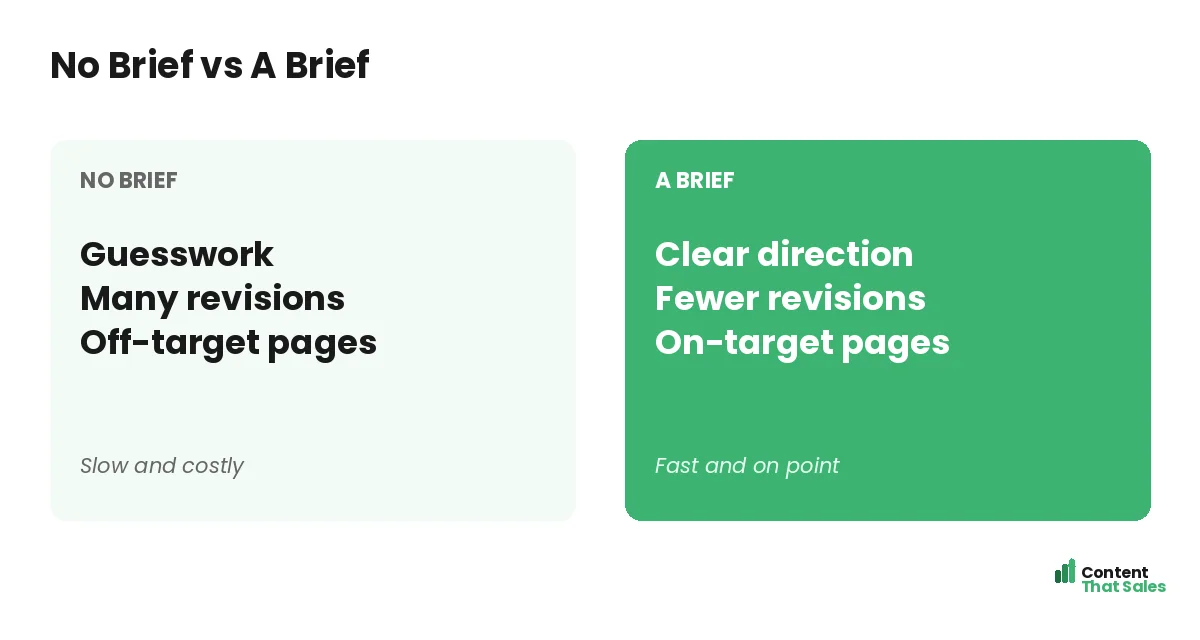
A topical map tells you what to write; a brief tells the writer how to write each page well. Without briefs, writers guess, and pages drift off-target. With a consistent brief template, every page in your map gets written to spec.
Below, we walk through what the brief template covers, how it connects to your map, and how it produces better pages with fewer revisions.

Why Briefs Matter for a Topical Map
Your topical map plans what to cover, but each page still needs to be written well to rank. A brief bridges the gap, telling the writer exactly what each page should do. Without briefs, even a great map produces inconsistent, off-target pages.
Briefs are how you execute a map at quality and scale. Built from your topical map, each brief turns a planned page into clear instructions, so every piece of content serves the map’s strategy.
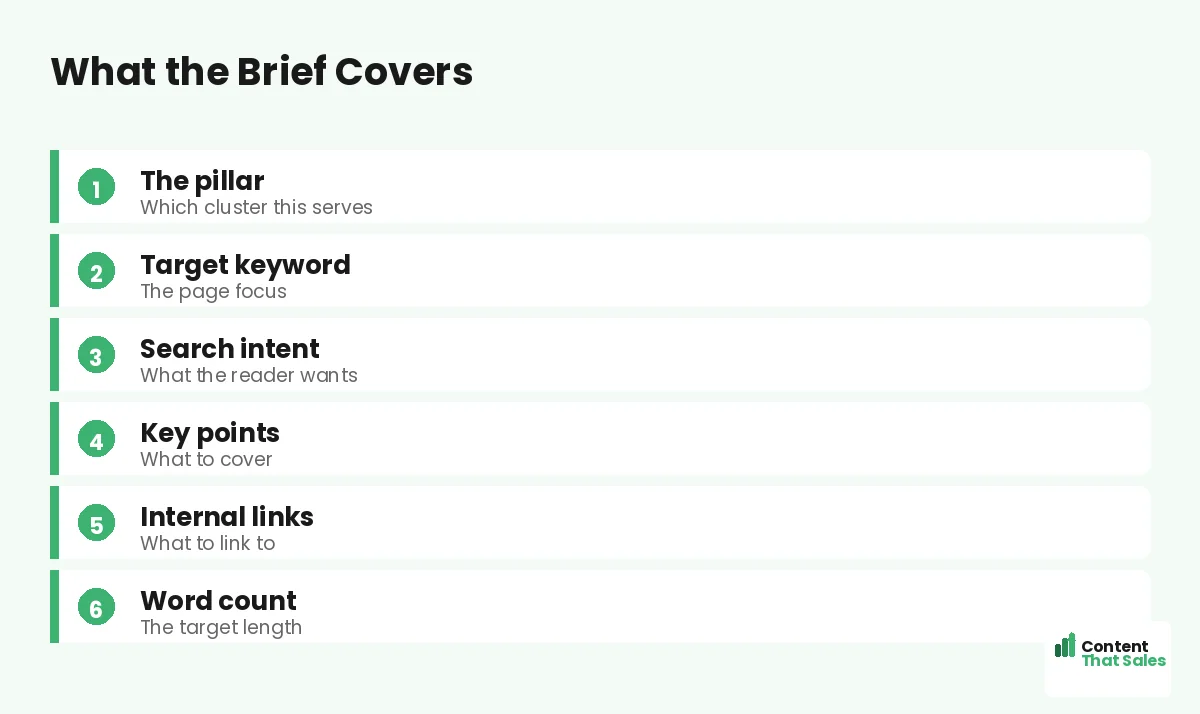
The Pillar and Cluster Field
The brief starts by noting which pillar and cluster the page belongs to. This tells the writer where the page fits in the map and what it should support. Context matters, since the page must complement, not duplicate, its siblings.
Knowing the page’s place in the pillar-and-cluster framework helps the writer pitch it at the right level and link it correctly. The brief grounds each page in its role within the cluster.
The Target Keyword Field
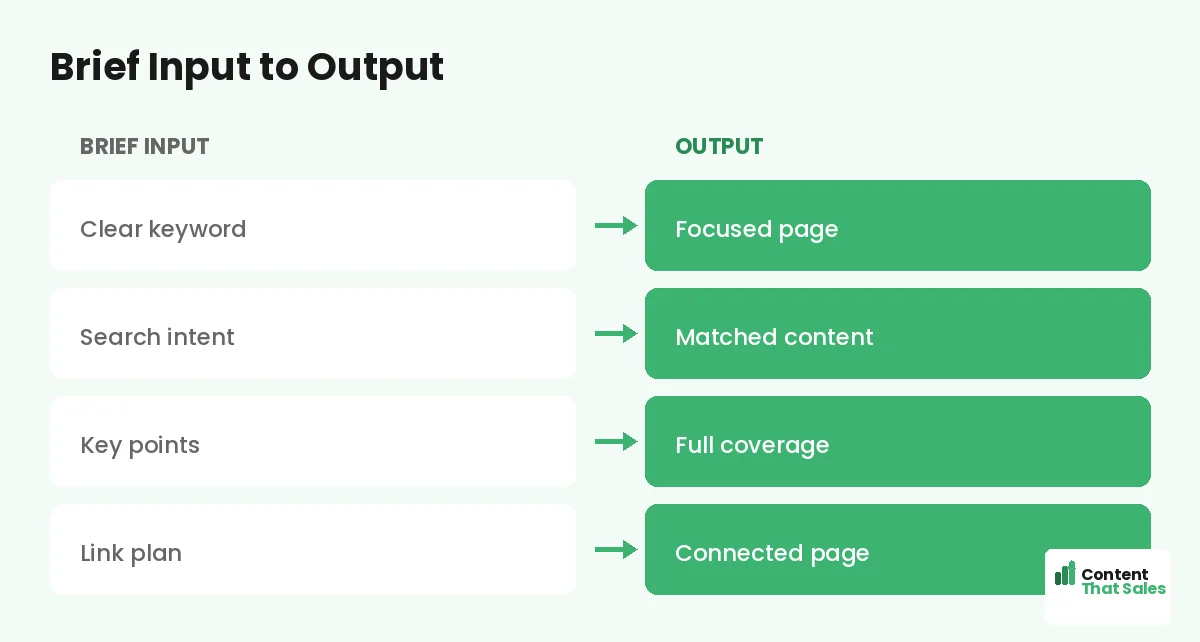
The brief specifies the target keyword, the primary term the page should rank for. This focuses the writer on one clear goal and keeps the page from overlapping with others. One page, one keyword, stated plainly in the brief.
Including the keyword ensures the writer optimizes for the right term and avoids cannibalization. It is the single most important targeting instruction in the brief, anchoring the whole page to its search.
The Search Intent Field
The brief describes the search intent, what the reader actually wants from this search. Informational, commercial, or transactional, the intent shapes the whole page. Getting it right is what makes the page satisfy the searcher and rank.
Telling the writer the intent prevents a common failure, content that targets a keyword but misses what the searcher needs. Since readers scan more than they read, the brief should note how to deliver that intent fast.
The Key Points Field
The brief lists the key points the page must cover, the subtopics, questions, and angles that make it complete. This ensures the writer covers the subject thoroughly rather than missing important parts. It is the content outline in brief form.
These points come from research into what the page should address, often drawn from the same work you do to find cluster topics. Listing them guides the writer to full, useful coverage of the subtopic.
The Internal Links Field
The brief specifies the internal links the page should include, which pillar to link up to and which related pages to connect. This ensures the writer builds the connections that make the map work, rather than leaving the page orphaned.
Specifying links in the brief is how you guarantee proper connections between pillar and cluster pages. The writer knows exactly what to link, so every page joins the cluster from the moment it is written.
Did you know?
A clear brief can cut revision rounds in half, because the writer hits the keyword, intent, and key points on the first draft instead of guessing.
The Word Count and Format Field
The brief notes the target word count and format, roughly how long the page should be and how it should be structured. This sets expectations and helps the writer match the depth the subtopic and competition require.
Rather than a strict count, this guides the writer toward the right depth. A brief might note key sections to include too. Format guidance keeps pages consistent and appropriately thorough for their place in the map.
Add Tone and Notes
The brief can include tone and any special notes, the voice to use, things to emphasize or avoid, and any specifics for this page. This keeps every page on-brand and captures details that would otherwise be lost.
A short tone note ensures consistency across writers and pages. Notes catch the one-off details, like a key statistic or a particular angle, so the writer does not miss them. These extras polish the brief.
How the Brief Connects to the Map
Each brief corresponds to one row in your topical map. The map lists the page; the brief expands it into instructions. Together they form a system: the map plans coverage, the briefs execute each page to spec.
This connection is what lets you scale quality. A writer working from a brief produces a page that fits the map perfectly. Simple, clear content keeps winning, since easy reading lifts engagement, and the brief guides writers to deliver it.
Use the Same Template Every Time
Consistency is the point. Use the same brief template for every page in your map, so writers always know what to expect and nothing gets missed. A consistent template means consistent quality across your whole content effort.
Build the template once, then copy it for each page, filling in the specifics. The structure stays the same; the details change. This repeatable system is how you produce a large, high-quality map efficiently.
Keep Briefs Concise
A good brief is clear, not long. Give the writer what they need, keyword, intent, key points, links, format, tone, without burying it in extra detail. A concise, complete brief is faster to write and easier to follow.
Aim for enough guidance to ensure a strong first draft, no more. Over-long briefs waste time and overwhelm writers. The best brief is the shortest one that still tells the writer everything they need to nail the page.
Put It All Together
A topical map brief template for content writers covers the pillar and cluster, target keyword, search intent, key points, internal links, word count, and tone, for every page in your map. It turns each planned page into clear instructions.
Use the same concise template for every page, built from your map. Briefs are how you execute a topical map at quality and scale, cutting revisions and producing on-target pages. With consistent briefs, every page serves the strategy.
How Content That Sales Helps
We brief and write every page to spec. That’s where we come in. At Content That Sales, we turn your map into clear briefs and write the pages from them, so every piece is on-target, well-linked, and built to rank.
You share your map and goals. We create the briefs, write the pages, and connect them, all consistent and to spec. The result is a content program where every page serves the strategy, produced efficiently at quality.
Ready to Brief Your Writers?
Now you know what a topical map brief template covers: pillar and cluster, keyword, intent, key points, links, format, and tone. A clear brief means better pages and fewer revisions. So why let writers guess?
Let’s brief and build your content. Book your free consultation now. Call us at 8801631988589 or email service@contentthatsales.com. Let’s turn your map into pages written to spec.
Frequently Asked Questions About the Brief Template
What does the brief template cover?
The pillar and cluster, target keyword, search intent, key points to cover, internal links, word count and format, and tone, everything a writer needs for one page.
Why do I need briefs with a topical map?
The map plans what to cover; the brief tells the writer how to write each page well. Without briefs, even a great map produces inconsistent, off-target pages.
Why include search intent?
Intent shapes the whole page. Telling the writer what the searcher wants prevents content that targets a keyword but misses what the reader needs.
Why specify internal links in the brief?
So the writer builds the connections that make the map work. Specifying links ensures every page links to its pillar and siblings, not orphaned.
How does a brief cut revisions?
It tells the writer the keyword, intent, and key points up front, so the first draft lands close instead of requiring multiple rounds of correction.
Should I use the same template every time?
Yes. A consistent template means writers always know what to expect and nothing gets missed, producing consistent quality across your whole map.
How long should a brief be?
Concise but complete. Give the writer everything they need without burying it in detail. The shortest brief that ensures a strong first draft is best.
Can Content That Sales help?
Yes. We turn your map into clear briefs and write the pages to spec, on-target and well-linked. Reach out for a quick quote.