 Skip to content
Long-form SEO landing pages combine the depth that ranks on Google with the persuasion that converts, giving you one page that earns free traffic and turns it into leads. Where a short PPC page is too thin to rank, a long-form page gives search engines real content to reward while still guiding the reader to act. This guide shows you when long-form wins, how to structure it, and how to keep it converting from top to bottom.
The fear with long pages is that more words mean fewer conversions. The opposite is true when it is done right. A well-built long-form page answers every question, builds trust as the reader scrolls, and offers the CTA again and again, capturing both searchers and buyers.
Below, we cover when to go long, how to structure the page, how to keep it converting, and the mistakes that make long pages fail.

What a Long-Form SEO Page Is
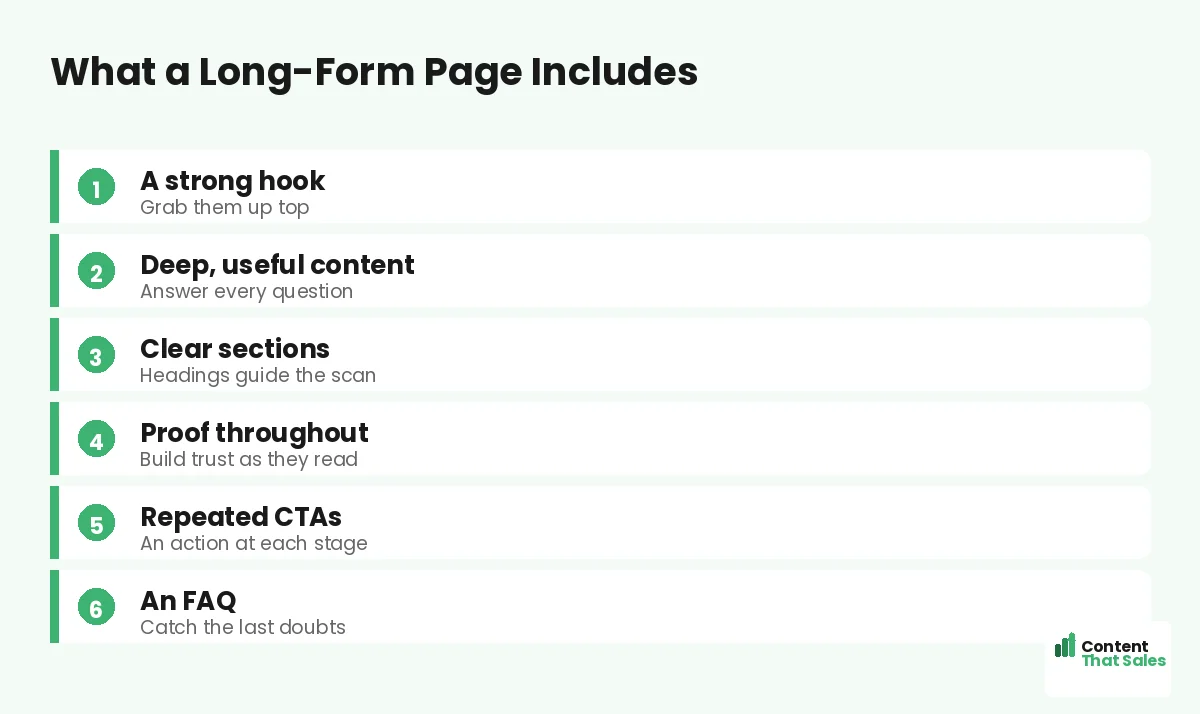
A long-form SEO landing page is a longer page built to rank in search and convert visitors at once. It has the depth Google wants, real content that answers a query, plus the persuasive elements of a landing page: a hook, proof, and clear CTAs.
It sits between a blog post and a sales page. It still follows a strong landing page structure, but with much more content woven in, so it satisfies searchers and search engines while moving the reader toward action.
When Long-Form Wins
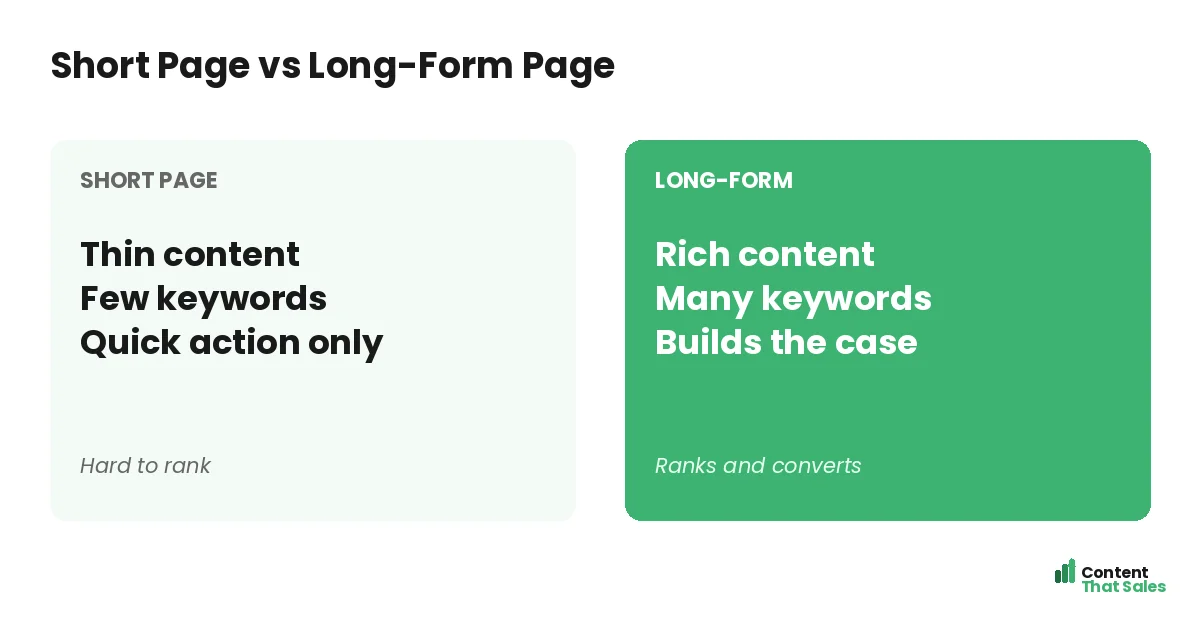
Long-form wins when you want organic traffic, target competitive or informational keywords, or sell something that needs explanation. Searchers researching a topic want depth, and Google ranks pages that deliver it. A thin page simply cannot compete.
It also wins for considered purchases. A complex service or a higher-priced offer needs more convincing, and a long-form page has room to answer every objection. When the buyer needs to learn before they act, length is an advantage, not a liability.
When to Keep It Short Instead
Long-form is not always right. For a simple offer aimed at warm traffic, like a paid-ad page for a free trial, a short page often converts better. When the visitor already knows what they want, extra content just adds friction.
So match the length to the job. Cold searchers and complex offers call for long-form. Warm, paid clicks on a simple offer call for short and focused. The goal decides the format, not a rule that longer is always better.
Start With a Strong Hook
Even a long page must grab fast. The top of the page needs a clear headline and an opening that pulls the reader in, just like a short page. If you lose them at the top, the depth below never gets a chance to work.
Lead with the main benefit or the searcher’s core question. Promise that the page will deliver, then make good on it. A strong hook earns the scroll, and on a long page the scroll is everything.
Structure With Clear Sections
Long content must be easy to navigate. Break it into clear sections with descriptive headings so readers can scan and jump to what they need. Since readers scan more than they read, headings turn a wall of text into a usable page.
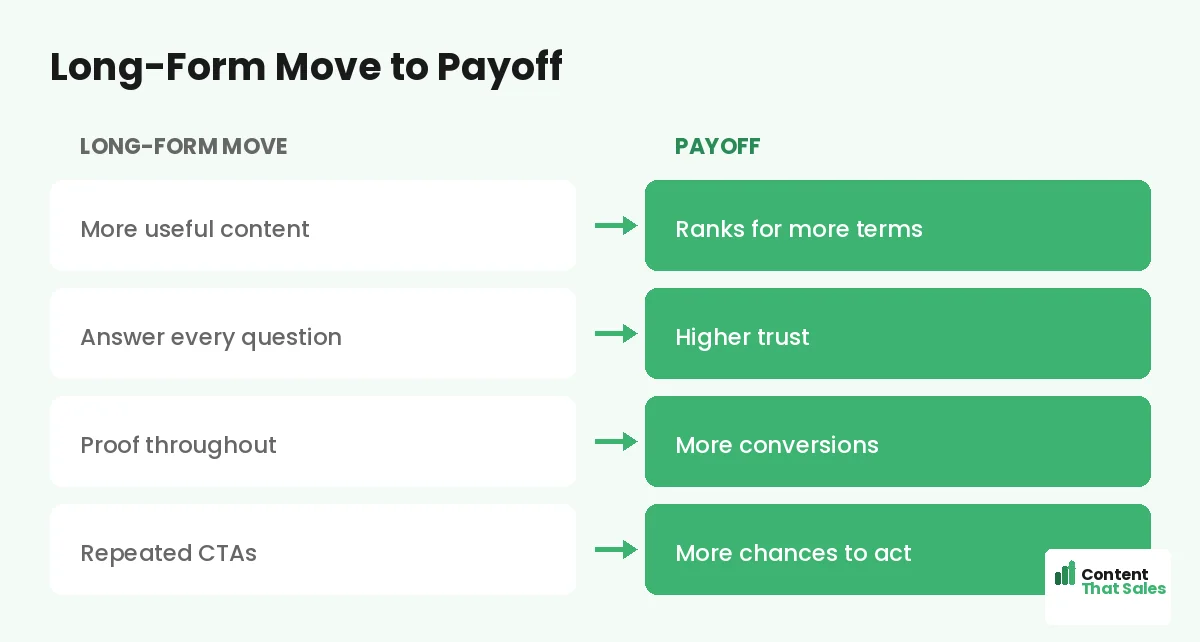
Good structure also helps SEO. Clear headings tell Google what each part covers, helping you rank for more related terms. A logical flow from problem to solution to proof to action keeps both readers and search engines happy.
Answer Every Question
The power of long-form is thoroughness. Cover every question and objection a reader might have. Address pricing, how it works, what makes you different, and why they can trust you. Each answered question removes a reason to leave.
This depth is also what ranks. A page that fully satisfies a search captures more keywords and earns Google’s trust. Answer the searcher so completely that they have no need to click back to the results, and you win on both fronts, which is exactly how landing pages rank on Google.
Did you know?
A long-form page can rank for dozens of related keywords at once, because its depth naturally covers the many phrasings searchers use around one topic.
Weave Proof Throughout
On a long page, do not save proof for the end. Sprinkle testimonials, results, and trust signals throughout, so the reader keeps building confidence as they scroll. Each section can carry a small proof point that supports its claims.
This steady drip of proof keeps trust high across a long read. By the time the reader reaches a CTA, they have seen evidence many times. Proof spread through the page converts better than one block of testimonials tucked at the bottom.
Repeat the CTA
A long page needs multiple calls to action. Readers reach the decision point at different scroll depths, so offer the action several times, after the benefits, after the proof, and at the end. Never make a convinced reader hunt for the button.
Keep the CTA consistent and clear, following solid landing page CTA best practices. Repeating one focused action, not scattering different asks, lets readers act the moment they are ready, wherever that happens on the page.
End With an FAQ
An FAQ near the bottom is perfect for long-form. It catches the last lingering questions, adds more keyword coverage for SEO, and reassures the reader right before they decide. It is one of the highest-value sections on the page.
Use real questions your customers ask, answered clearly and concisely. The FAQ both converts the hesitant and helps you rank for question-based searches. A ready landing page copy template makes building these sections fast and consistent.
Avoid the Long-Form Traps
Length is only an asset if every word earns its place. The big trap is padding, adding fluff to hit a word count. That bores readers and dilutes SEO. Every section must add real value, or it should be cut.
Other traps include burying the CTA, walls of text with no headings, and losing focus across topics. Stay on one goal, keep the structure clean, and make every section useful. Long-form fails when it rambles and wins when it is dense with value.
Put It All Together
A long-form SEO landing page wins when it pairs depth with persuasion: a strong hook, clear sections, every question answered, proof throughout, repeated CTAs, and an FAQ. Built this way, it ranks for many keywords and converts the traffic it earns.
Match the length to the job, cut every word that does not add value, and keep one clear goal from top to bottom. Simple, clear copy keeps winning, since easy reading lifts conversions, even across a long page. Done right, long-form is a page that earns free traffic and turns it into leads for years.
How Content That Sales Helps
We write long-form pages that rank and convert. That’s where we come in. At Content That Sales, we build content-rich landing pages with the depth Google rewards and the persuasion that turns readers into leads.
You share your keyword and your offer. We write a structured, thorough page that answers every question, weaves in proof, and repeats the CTA. The result is a page that earns organic traffic and converts it, working for you long after launch.
Ready to Rank and Convert With Long-Form?
Now you know how long-form SEO landing pages pair depth with persuasion to rank for many keywords and convert the traffic they earn. Built right, one page can earn free clicks for years. So why settle for a thin page that cannot rank?
Let’s build a long-form page that ranks and converts. Book your free consultation now. Call us at 8801631988589 or email service@contentthatsales.com. Let’s turn your next searcher into your next customer.
Frequently Asked Questions About Long-Form SEO Landing Pages
What is a long-form SEO landing page?
A longer page built to rank in search and convert at once. It has the depth Google rewards plus a landing page’s hook, proof, and clear CTAs.
When should I use long-form?
When you want organic traffic, target competitive or informational keywords, or sell something that needs explanation. Depth wins for cold searchers and complex offers.
When is short better?
For a simple offer aimed at warm traffic, like a paid-ad page for a free trial. When the visitor already knows what they want, extra content adds friction.
Does a long page hurt conversions?
Not when done right. Answering every question, weaving in proof, and repeating the CTA can convert better, because the reader is fully informed and reassured.
How do I keep a long page readable?
Use clear sections with descriptive headings so readers can scan and jump. Good structure helps both readers and SEO by signaling what each part covers.
Where do CTAs go on a long page?
Repeat one focused CTA several times, after the benefits, after the proof, and at the end, since readers reach the decision point at different scroll depths.
What is the biggest long-form mistake?
Padding to hit a word count. Fluff bores readers and weakens SEO. Length should come from real value, with every section earning its place.
Can Content That Sales help?
Yes. We write content-rich long-form pages that rank and convert, answering every question and repeating the CTA. Reach out for a quick quote.