 Skip to content
A topical map for real estate websites helps you rank for the searches that matter, neighborhood guides, buying and selling advice, and the questions clients ask, instead of relying on property listings alone. Real estate is intensely local and research-heavy, which makes it perfect for a topical map. This guide shows you how to plan one that wins buyers and sellers in your market.
Listings alone do not capture the people researching a move months in advance. A topical map adds the neighborhood pages, guides, and answers that meet those clients early, build trust, and lead them to you when they are ready to act.
Below, we walk through what a real estate topical map should cover, how to structure it around locations and journeys, and how to turn it into inquiries.

Why Real Estate Suits a Topical Map
Real estate is local and research-heavy. Buyers and sellers spend months researching areas, prices, and the process before acting. That long, question-filled journey is exactly what a topical map covers, capturing clients early and guiding them to you.
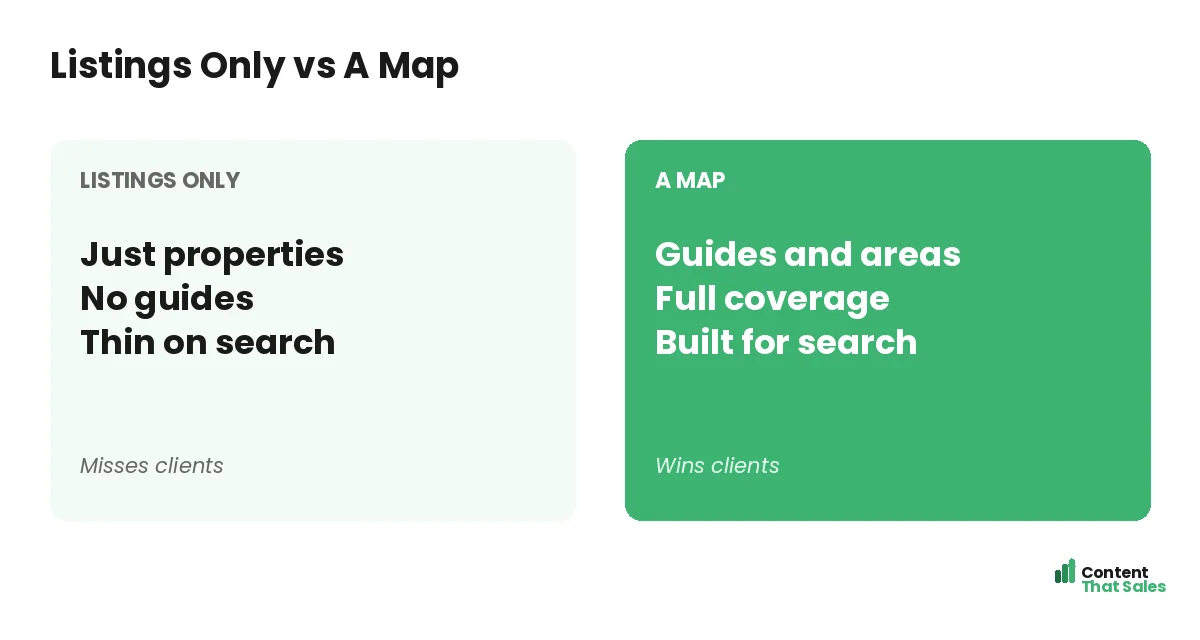
It applies the topical map approach to property. Most agents rely on listings, leaving the research searches wide open. A complete map lets you own those searches and become the local authority.
Map Locations and Neighborhoods
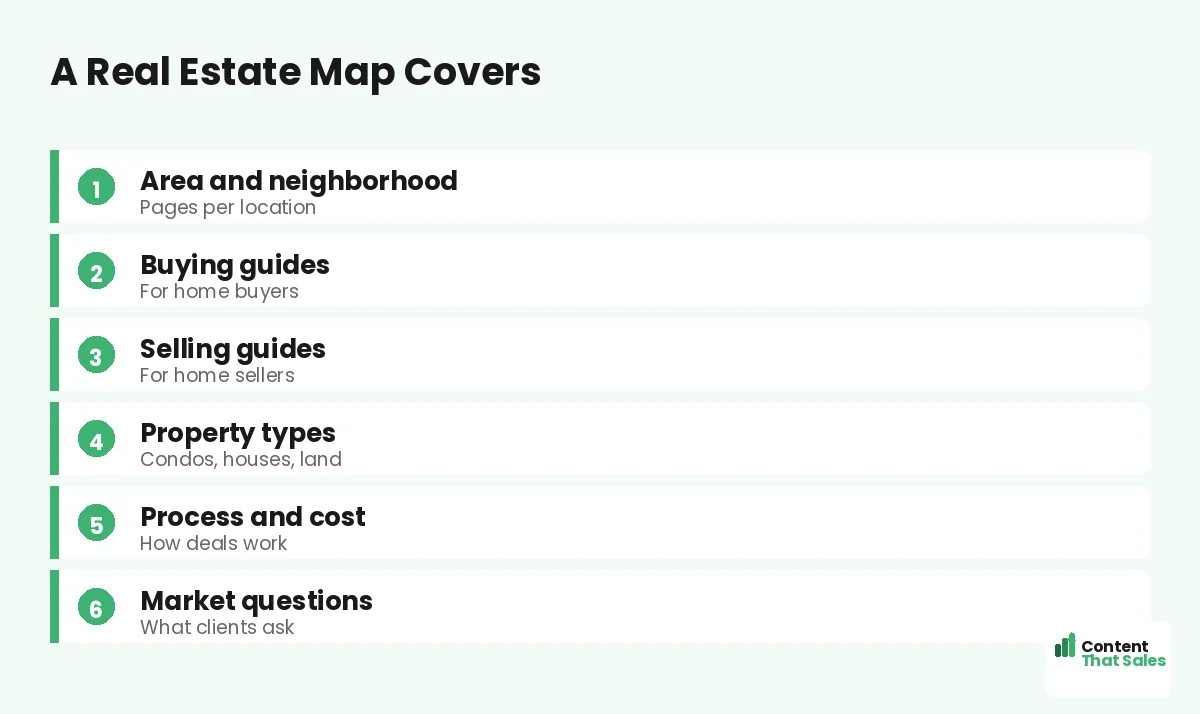
Location is the heart of real estate search. Create pages for each area and neighborhood you serve, covering what it is like to live there, prices, and local detail. These pages capture the many searches people make about specific places.
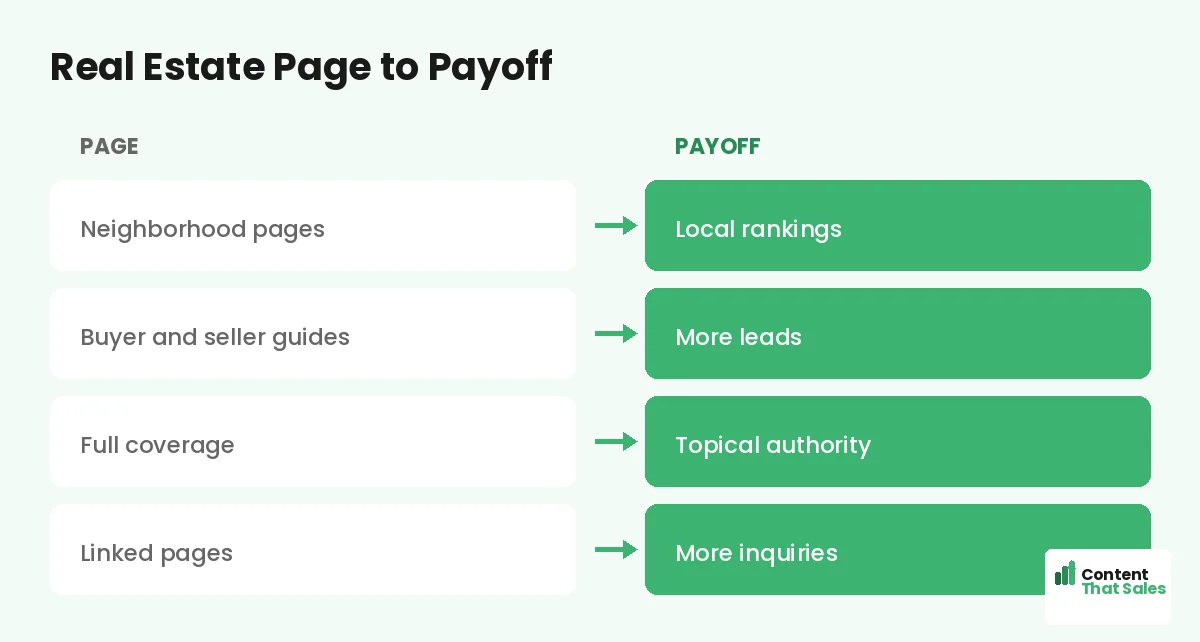
Neighborhood pages position you as the local expert and capture high-intent local searches. This mirrors the discipline behind strong local landing pages, applied across every area you cover. Location coverage is the backbone of a real estate map.
Cover the Buying Journey
Buyers have a long list of questions and steps. Map guides for the buying journey: how to buy in your area, what to look for, financing basics, and the process from offer to close. This content attracts buyers early and earns their trust.
Buyer guides capture researchers months before they transact. By answering their questions thoroughly, you become the resource they return to and the agent they call. Mapping the buying journey covers a huge swath of real estate search.
Cover the Selling Journey
Sellers research too: how to sell, what their home is worth, how to prepare it, and what selling costs. Map guides for the selling journey to capture this audience. Sellers are valuable clients, and their searches are often underserved.
Selling content positions you as the expert who can guide them through the process. Covering both buying and selling journeys means your map serves both sides of the market, doubling the audience your content can capture and convert.
Map Property Types
Buyers often search by property type: condos, houses, townhomes, land, or investment properties. Map pages for the property types you handle, covering what buyers should know about each. These capture searches specific to what people want.
Property type pages let you address the distinct needs of each buyer. Someone searching for condos has different questions than someone seeking land. Since readers scan more than they read, make each page quickly relevant to that buyer.
Answer Market and Process Questions
Map the questions clients ask about the market and process: how deals work, current conditions, costs and fees, timelines, and common concerns. Each question becomes a page that builds trust and captures informational searches.
These question pages reach clients early and show your expertise and transparency. Answering the real concerns buyers and sellers have, clearly and helpfully, builds the trust that turns a researcher into a client when they are ready to act.
Did you know?
Buyers and sellers often research for months before transacting, so the agent whose content answers their early questions is the one they remember and call.
Structure the Map
Organize your map into clusters: location pages, a buying journey cluster, a selling journey cluster, property type pages, and market question content. This covers where clients want to be, what they want to do, and what they need to know.
The location pages and journey clusters form the core. Filling them completely means a client searching about your area, the buying or selling process, or a property type finds you. That completeness builds the topical authority that ranks.
Link It All Together
Connect your pages with internal links. Neighborhood pages link to relevant buying and selling guides; journey guides link to property types and questions; question pages link to the guides they support. This linking spreads authority and guides clients.
Strong internal linking ties your real estate map into one connected system and helps Google understand your local relevance. It also moves clients from a question to a guide to contacting you. A well-linked map outperforms scattered pages.
Turn the Map Into Inquiries
Coverage gets you found; clear calls to action get you contacted. Every page should guide the visitor to reach out, with a clear next step, your contact details, and an easy way to request a valuation or viewing. Rankings mean little without inquiries.
Make every page convert, not just inform. Simple, clear content keeps winning, since easy reading lifts engagement. A real estate map that ranks and converts turns the searchers you attract into buyer and seller clients.
Put It All Together
A topical map for real estate websites covers locations and neighborhoods, the buying and selling journeys, property types, and market questions, all structured into clusters, linked, and built to convert. It captures the long research journey listings miss.
Real estate is local and research-heavy, perfect for a topical map. Cover where clients want to be, what they want to do, and what they need to know, link it all, and drive inquiries. Do that, and you own your market while competitors rely on listings.
Build It Cluster by Cluster
A real estate map can be large, so build it in order rather than all at once. Start with your most important locations and the buying or selling journey that drives the most business, then expand into property types, more neighborhoods, and market questions. Finishing one cluster before the next keeps your effort focused and sends a strong signal of complete coverage.
This steady, finishing-focused approach is the heart of a sound topical map strategy. Prioritize the areas and journeys with the most opportunity, complete each cluster fully, and your authority compounds. Over months, those finished clusters turn a thin agent site into the comprehensive local resource buyers and sellers rely on.
How Content That Sales Helps
We map and write real estate content that wins clients. That’s where we come in. At Content That Sales, we plan your real estate map, cover your areas and journeys, and write the pages that rank locally and convert.
You share your market and goals. We map the locations and journeys, write the neighborhood, guide, and question pages, and link them to convert. The result is complete coverage that makes you the authority buyers and sellers find.
Ready to Own Your Real Estate Market?
Now you know how a topical map for real estate websites covers locations, journeys, property types, and questions, all linked and built to convert. Listings alone miss the research journey. So why leave those searches to competitors?
Let’s map your market and win it. Book your free consultation now. Call us at 8801631988589 or email service@contentthatsales.com. Let’s turn property searches into client inquiries.
Frequently Asked Questions About Real Estate Topical Maps
Why do real estate sites need a topical map?
Real estate is local and research-heavy. Buyers and sellers research for months. A map covers that journey, capturing clients early instead of relying on listings alone.
What is the core of a real estate map?
Location and neighborhood pages, plus the buying and selling journeys. These capture the local, research-driven searches clients make before they transact.
Should I cover both buying and selling?
Yes. Both audiences research extensively. Covering both journeys means your map serves both sides of the market, doubling the audience you can capture.
Why map property types?
Buyers search by type, condos, houses, land, and each has distinct questions. Property type pages capture those specific searches and serve each buyer’s needs.
What questions should I answer?
How deals work, market conditions, costs and fees, timelines, and common concerns. Each builds trust and captures informational searches early in the journey.
How should I structure the map?
Into clusters: location pages, a buying cluster, a selling cluster, property type pages, and market questions, all linked so clients flow from research to contact.
How do I turn rankings into inquiries?
Make every page convert, with clear contact details and an easy way to request a valuation or viewing. Coverage gets you found; CTAs get you contacted.
Can Content That Sales help?
Yes. We map your areas and journeys and write the neighborhood, guide, and question pages that rank locally and convert. Reach out for a quick quote.