 Skip to content
Landing pages for Facebook Ads face a unique challenge: they catch people who were not searching for you, scrolling a feed, and have to stop them, warm them up, and convert them fast. Unlike search traffic, Facebook visitors are cold, distracted, and almost always on a phone. The page must match the ad, hook attention, and lead to one clear action. This guide shows you how to build Facebook Ads landing pages that turn paid clicks into real leads.
The biggest mistake is treating Facebook traffic like search traffic. These visitors did not type a query, so they need context, a hook, and a reason to care before any ask. Get the page right and your cost per lead drops while your results climb.
Below, we walk through scent match, the hook, mobile speed, warming cold traffic, proof, and the single clear CTA that makes paid social pay.

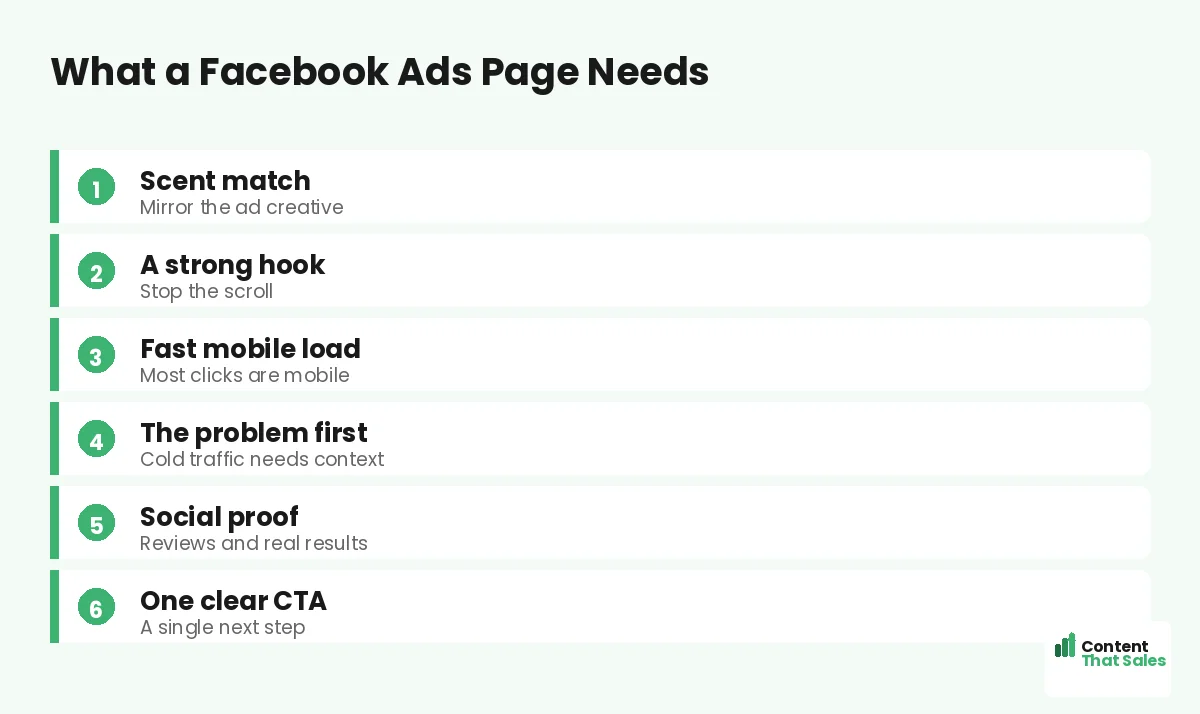
Why Facebook Traffic Is Different
Facebook visitors are not looking for you. They were scrolling, saw your ad, and tapped out of curiosity. That makes them colder and more distracted than search traffic. Your page has to earn their attention before it earns the conversion.
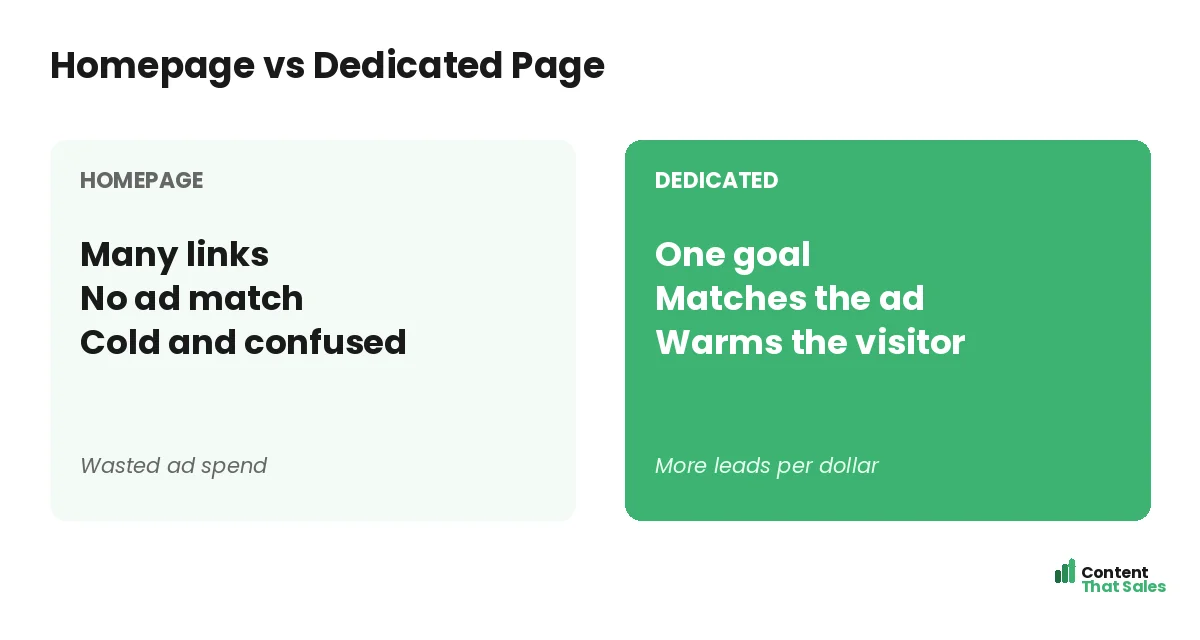
This is why a dedicated page built on a focused landing page structure beats your homepage. A homepage scatters cold visitors across links. A focused page keeps the promise the ad made and walks the visitor toward one action, the same discipline that powers strong landing pages for Google Ads.
Scent Match: Continue the Ad
Scent match means the page picks up exactly where the ad left off. The headline, the image, and the offer should mirror the ad creative the visitor just tapped. When the page looks and sounds like the ad, the visitor relaxes and reads on.
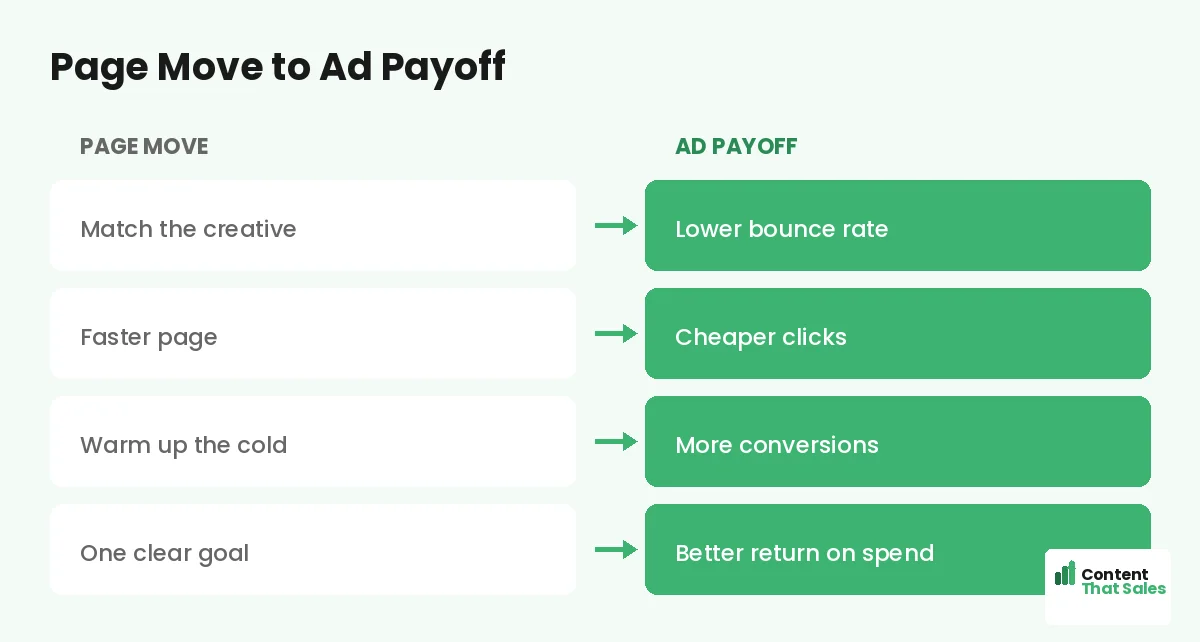
Break the scent and you break trust. If the ad showed a bright offer and the page looks unrelated, the visitor feels tricked and bounces. Match the visuals and the promise, and you keep the momentum the ad worked to build.
Lead With a Strong Hook
Cold visitors decide in seconds, so the top of the page must hook them. Open with the benefit, the problem, or a bold promise that pulls them in. The hook earns the next few seconds, which is all you have to make your case.
Avoid slow intros and company history. Get to what is in it for them immediately. A sharp hook that speaks to the visitor’s desire or pain is what turns a curious tap into someone actually willing to keep reading.
Build for Mobile and Speed
Nearly all Facebook traffic is on a phone, so design mobile first. One column, a big readable headline, and a tap-friendly button. If the page is hard to use on a small screen, you lose the visitor before your copy gets a chance.
Speed is just as critical. Scrollers are impatient, and a slow page loses them instantly. Keep images light and scripts trim so the page loads fast. Every second of delay quietly raises your cost per lead on paid social.
Warm Up Cold Traffic
Because the visitor is cold, do not ask for the sale too soon. First, show you understand their problem. Name the pain, agree it is frustrating, then present your offer as the relief. This short warm-up earns the right to make the ask.
Think of the page as a quick conversation, not a hard pitch. Build a little context and trust before the CTA. Cold traffic converts when it feels understood first, so spend a few lines connecting before you ask for action.
Show Strong Social Proof
Cold visitors are skeptical, so proof matters even more on Facebook. Reviews, ratings, a customer count, or testimonials reassure a visitor who has never heard of you. Place your strongest proof near the CTA, where doubt is highest.
Specific proof works best. “Loved by 3,000 customers” beats “highly rated.” Since readers scan more than they read, make proof visible at a glance with numbers, stars, and short quotes that build instant trust.
Did you know?
Because Facebook visitors are cold and on mobile, a slow or unmatched page can quietly waste most of your ad spend before a single word is read.
One Clear Goal and CTA
Give the page one job. Remove the menu and extra links so nothing competes with your action. Whether it is a signup, a call, or a purchase, make that one step obvious and repeat the button as the visitor scrolls.
Use a clear, benefit-led button and follow solid landing page CTA best practices. A single focused goal converts far better than a page full of choices, especially for distracted social traffic that needs an obvious next step.
Match the Audience to the Page
Facebook lets you target tight audiences, so match the page to each one. A page that speaks to new parents should sound different from one aimed at business owners. The closer the page fits the audience, the higher it converts.
If you run several audiences or creatives, build a page variant for each. It takes more work, but the relevance pays off. A ready landing page copy template makes spinning up matched variants fast and consistent.
Keep the Offer Simple
Cold traffic does not want a complex decision. Offer one clear thing, a free guide, a discount, a quick consult, and make the value obvious. The simpler the offer, the easier the yes for a visitor who just met you seconds ago.
Avoid asking for too much, too soon. A low-friction first step, like an email for a freebie, often beats a hard sell. You can deepen the relationship later. On Facebook, the first conversion is about starting, not closing.
Test Creatives and Pages Together
Your ad and your page are a team, so test them together. A new creative may need a matching page tweak to keep the scent. Try different hooks, offers, and proof, and watch which pairing lifts conversions and lowers cost per lead.
Paid social gives fast feedback, so use it. Simple, clear copy keeps winning, since easy reading lifts conversions. Keep the pairings that perform and cut the rest, and your campaigns get cheaper and stronger over time.
Put It All Together
A strong Facebook Ads page matches the ad, hooks fast, loads quick on mobile, warms the cold visitor, proves its claims, and drives one clear action. Get those right and your paid social turns scrollers into leads instead of burning budget.
The page is where the ad spend pays off or disappears. Give it the same care you give your targeting and creative, and your cost per lead will reflect it. Cold traffic can convert well when the page meets it where it is.
How Content That Sales Helps
We build pages that make paid social pay. That’s where we come in. At Content That Sales, we write Facebook Ads landing pages that match your creative, warm your cold traffic, and convert more of the clicks you pay for.
You share your audience and your offer. We write a focused, scent-matched page built to convert distracted scrollers. The result is a lower cost per lead and paid social that finally earns its keep.
Ready to Make Facebook Ads Pay?
Now you know how landing pages for Facebook Ads turn cold scrollers into leads by matching the ad, hooking fast, and driving one clear action. The page decides whether your social spend pays off. So why send paid clicks to a page that lets them slip away?
Let’s build a page that converts your Facebook traffic. Book your free consultation now. Call us at 8801631988589 or email service@contentthatsales.com. Let’s turn your next paid click into your next lead.
Frequently Asked Questions About Facebook Ads Landing Pages
Why is Facebook traffic different from search traffic?
Facebook visitors were not searching for you. They are cold, distracted, and on mobile, so the page must hook them and warm them up before any ask.
What is scent match?
It means the page continues the ad. The headline, visual, and offer mirror the ad creative the visitor tapped, so they feel they are in the right place.
Can I send Facebook traffic to my homepage?
You should not. A homepage scatters cold visitors across links. A dedicated, matched page keeps the promise and drives one action, converting far better.
How important is mobile and speed?
Critical. Nearly all Facebook clicks are on phones, and scrollers are impatient. A slow or clunky mobile page loses visitors before your copy is read.
How do I warm up cold traffic?
Name the problem first, show you understand it, then present your offer as the relief. A short warm-up earns the right to make the ask.
What offer works best on Facebook?
One simple, low-friction offer, like a free guide or a quick consult. Cold visitors want an easy yes, not a complex decision or a hard sell.
Should I test pages and creatives together?
Yes. The ad and page are a team. Test hooks, offers, and proof together, keep the pairings that lift conversions, and cut the rest.
Can Content That Sales write my Facebook page?
Yes. We write scent-matched pages that warm cold traffic and convert paid social, lowering your cost per lead. Reach out for a quick quote.