 Skip to content
To match landing page copy to ad intent, you make the page keep the exact promise the ad made, in the same words and the same look. That is message match, and it is one of the cheapest ways to lift conversions. When someone clicks an ad, they expect a specific thing. If the page delivers it instantly, trust clicks into place. If it does not, they bounce and your ad money burns.
Most wasted ad spend dies right here, in the gap between the click and the page. The ad does its job. The page drops the ball. Closing that gap costs nothing but care. This guide shows you how to read ad intent and echo it on the page, step by step.
Get this right and every other tactic works harder. Get it wrong and even great copy underperforms. So let’s make your page and your ad sing the same tune.

What Message Match Really Means
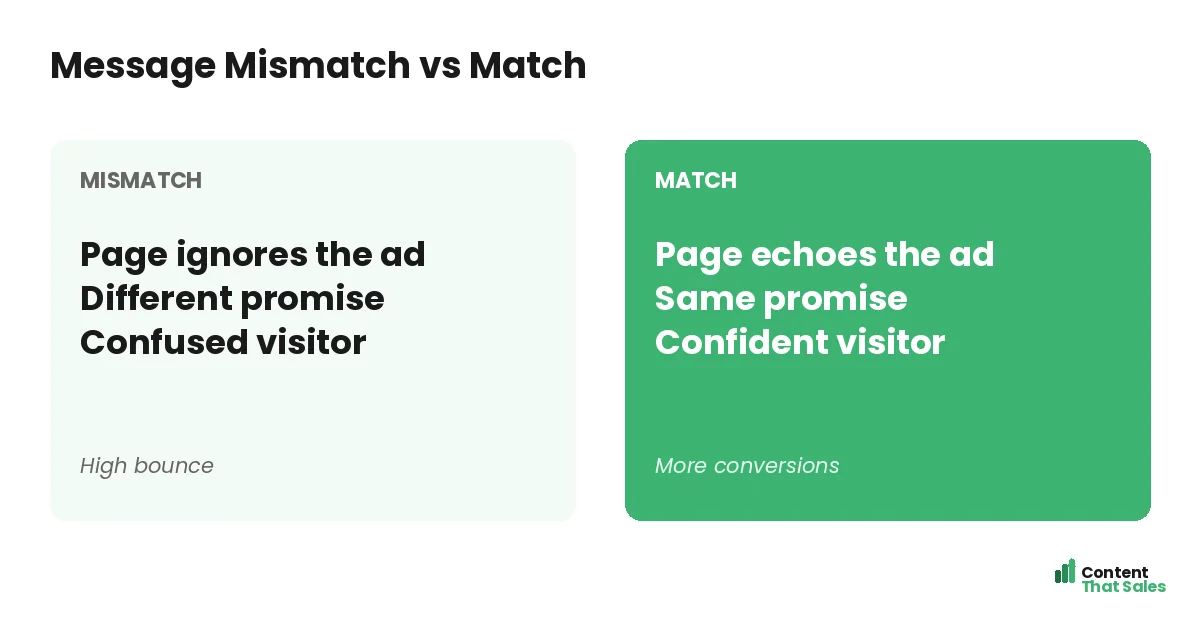
Message match is simple. The page picks up where the ad left off. Same promise. Same key words. Same offer. The visitor never feels a jolt or a doubt. They feel they landed in the right place.
Think of it like meeting a friend who said “I’ll be by the red door.” If you arrive and the door is red, you relax. If it is blue, you wonder if you got the wrong address. Your page is that door. Make it the color you promised.
Why Ad Intent Drives the Whole Page
Every ad carries an intent. The clicker wants something specific right now. A discount. A free trial. A quick fix. Your page must serve that exact want first, before anything else.
Ignore the intent and you lose. The reader scans, finds no match, and leaves. Serve it fast and they lean in. To go deeper on reading what people want, see our guide on search intent. Intent sets the page, not the other way around.
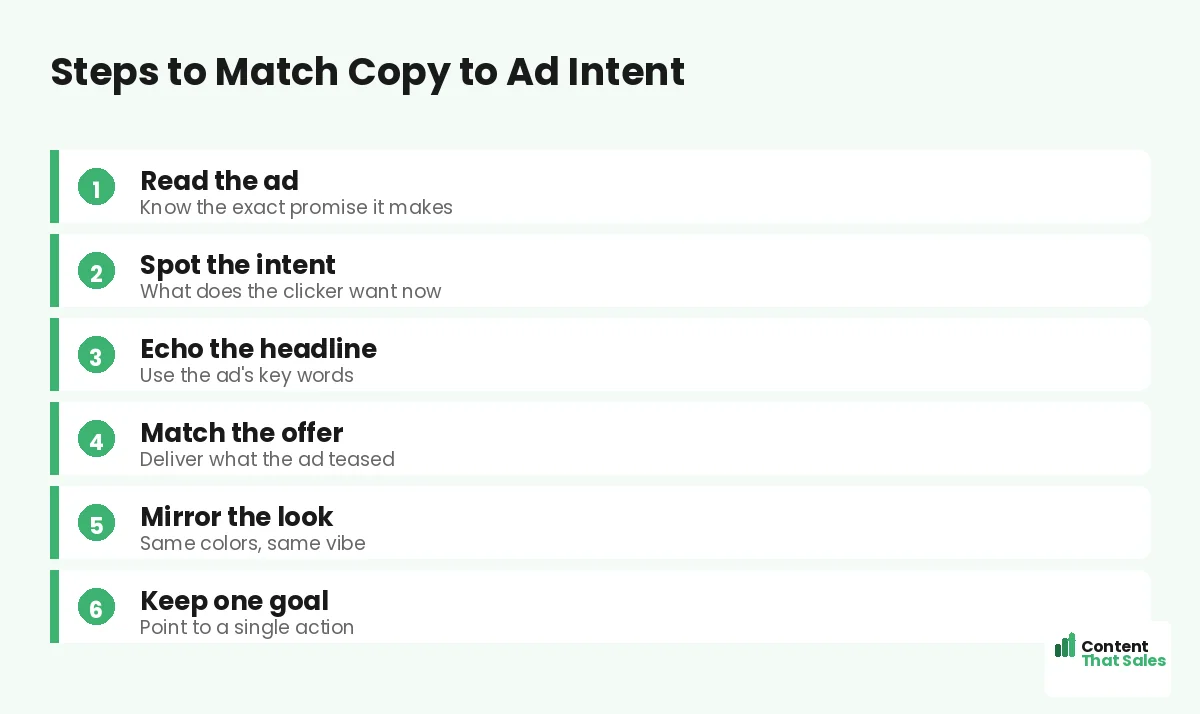
Step 1: Read the Ad Like the Visitor Does
Start with the ad itself. Read the headline, the offer, and the call. What exactly did it promise? What feeling did it spark? That promise is the contract your page must honor.
Write down the ad’s main words. Those words are gold. They are the phrases in the visitor’s head as they land. Your job is to greet them with the same language, not a fresh sales pitch.
Step 2: Name the Intent Behind the Click
Look past the words to the want. Is the clicker ready to buy, or just curious? Do they want a deal, a demo, or a quick answer? Naming the intent tells you what the page must lead with.
A bargain hunter wants the price up top. A researcher wants proof and detail. A ready buyer wants a fast path to act. Match the page to that stage, and the copy almost writes itself.
Step 3: Echo the Ad in Your Headline
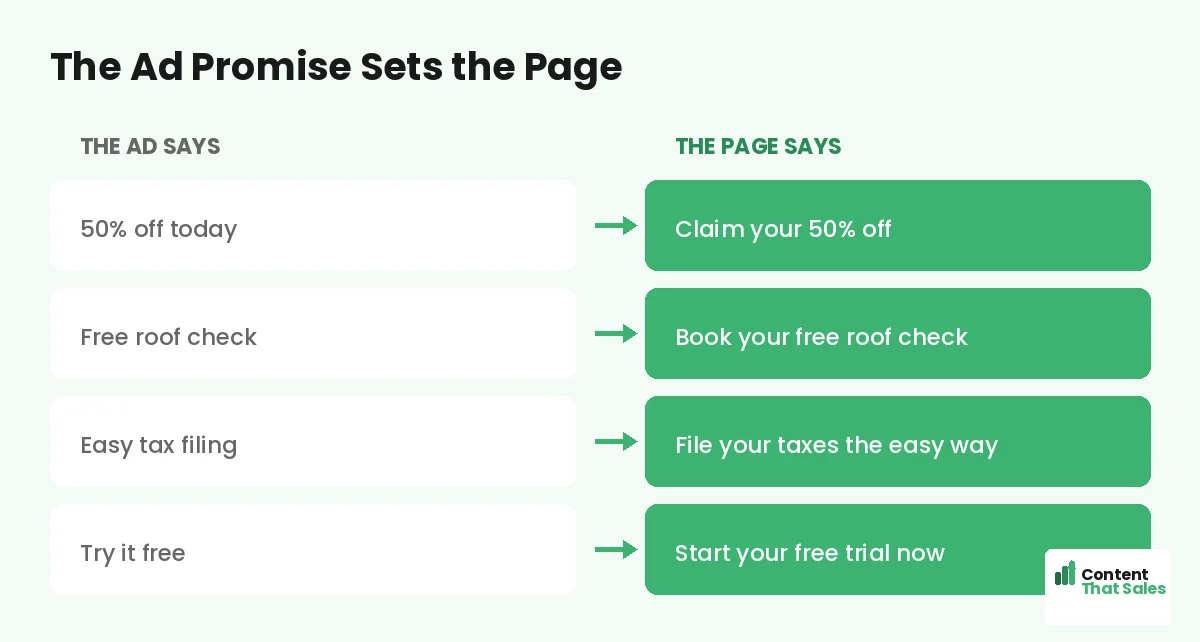
Your headline is where match matters most. It should echo the ad’s promise in the visitor’s first glance. If the ad said “50% off boots today,” the headline should say “Your 50% off boots, right here.”
This is not lazy repetition. It is reassurance. People scan more than they read, so the echo confirms they are in the right place in a split second. For the full method, see how to write landing page copy that converts.
Step 4: Match the Offer and the Visuals
Words are only half of it. The offer must match too. If the ad teased a free guide, the page must hand over that guide, not a sales pitch. A swapped offer feels like a bait and switch.
The look should match as well. Use the same colors, images, and tone from the ad. When the page mirrors the ad’s design, the visitor feels a smooth handoff. Same vibe, same trust, fewer bounces.
Did you know?
Strong message match can lift conversions by a wide margin, simply by making the page deliver exactly what the ad promised.
Step 5: Keep One Goal That Matches the Ad
The ad pointed at one action. The page should ask for that same action and no other. If the ad said “book a call,” the page should make booking a call the obvious next step. Do not bury it under extra offers.
One ad, one page, one goal. Competing asks split focus and undo your match. Keep the path straight from click to conversion. A single, clear goal is what turns a good match into a sale.
Build One Page Per Ad or Ad Group
Match gets hard when one page serves many ads. The fix is simple. Build a dedicated page for each ad or tight ad group. Each page can then echo its ad perfectly.
Yes, that means more pages. But the lift is worth it. Each focused page converts better than one generic catch-all. Don’t dig a well when you’re already thirsty, so plan these pages alongside your campaigns.
How Mismatch Quietly Wastes Your Budget
A mismatch rarely throws an error. The page loads fine. It just does not match, so people leave. You keep paying for clicks that never convert, and the problem hides in plain sight.
This is a top reason pages underperform. If your spend feels wasted, check the match first. For more traps to avoid, see our breakdown of why landing pages fail. Often, the fix is a closer match, not a bigger budget.
Test and Tighten the Match
Match is not a one-time task. Ads change, so pages must keep up. Review your top campaigns often and check each page against its ad. Small gaps are easy to miss and easy to fix.
Change one thing at a time and watch the numbers. Simple, clear copy helps, since easy reading lifts conversions. A tighter match almost always beats a flashier design.
How Content That Sales Nails the Match
Reading ad intent and echoing it well takes a trained eye. That’s where we come in. At Content That Sales, we study your ads, then write pages that keep every promise word for word.
You share the campaign and the goal. We craft the matching headline, offer, and call. If you want done-for-you landing page copy, we make it effortless. The result is a page that turns clicks into customers instead of bounces.
Ready to Turn Visitors Into Customers?
Now you know how to match landing page copy to ad intent. Read the ad. Name the want. Echo the promise. Keep one goal. So why keep paying for clicks that hit a page they did not expect?
Let’s close the gap between your ads and your pages. Book your free consultation now. Call us at 8801631988589 or email service@contentthatsales.com. Let’s turn your next click into your next customer.
Frequently Asked Questions About Matching Copy to Ad Intent
What does it mean to match landing page copy to ad intent?
It means your page keeps the exact promise the ad made, in the same words and look. The visitor instantly feels they landed in the right place, which lifts conversions.
Why is message match so important?
It closes the gap between the click and the page. A close match builds instant trust, while a mismatch makes people bounce and wastes your ad spend.
How do I find the intent behind an ad?
Read the ad’s promise and ask what the clicker wants right now. A deal, a demo, or a quick answer each calls for a different page focus.
Should each ad have its own landing page?
Ideally, yes. One page per ad or tight ad group lets you echo each promise perfectly, which converts far better than a generic page.
Can I send ads to my homepage?
It is rarely wise. A homepage matches no single ad, so it breaks message match and lowers conversions. Use a dedicated landing page instead.
Does the page design need to match the ad too?
Yes. Matching colors, images, and tone make the handoff feel smooth. A consistent look reinforces trust and reduces bounces.
How do I test message match?
View the ad and page side by side, then change one element at a time and track conversions. Tighten the match where the gap is widest.
Can you write ad-matched landing pages for me?
Yes. Content That Sales writes pages that mirror your ads and convert clicks into customers. Reach out for a quick quote.