 Skip to content
A landing page sub-headline is the short line under your headline that backs up the promise and earns the next few seconds of attention. The headline grabs the eye, and the sub-headline keeps it. Most people obsess over the headline and treat the subhead as an afterthought, which wastes a powerful spot on the page. This guide shows you how to write a subhead that adds real value and pulls the reader deeper.
Think of the headline and subhead as a duo. The headline makes a bold claim. The subhead makes it believable, clear, or specific. Apart, each is weaker. Together, they form a one-two punch that hooks the reader and starts the scroll. Let’s make your subhead pull its weight.
Below, we cover what a subhead should do, how to write one, and the mistakes that turn it into wasted space. By the end, your subhead will earn its spot right under the star of the page.

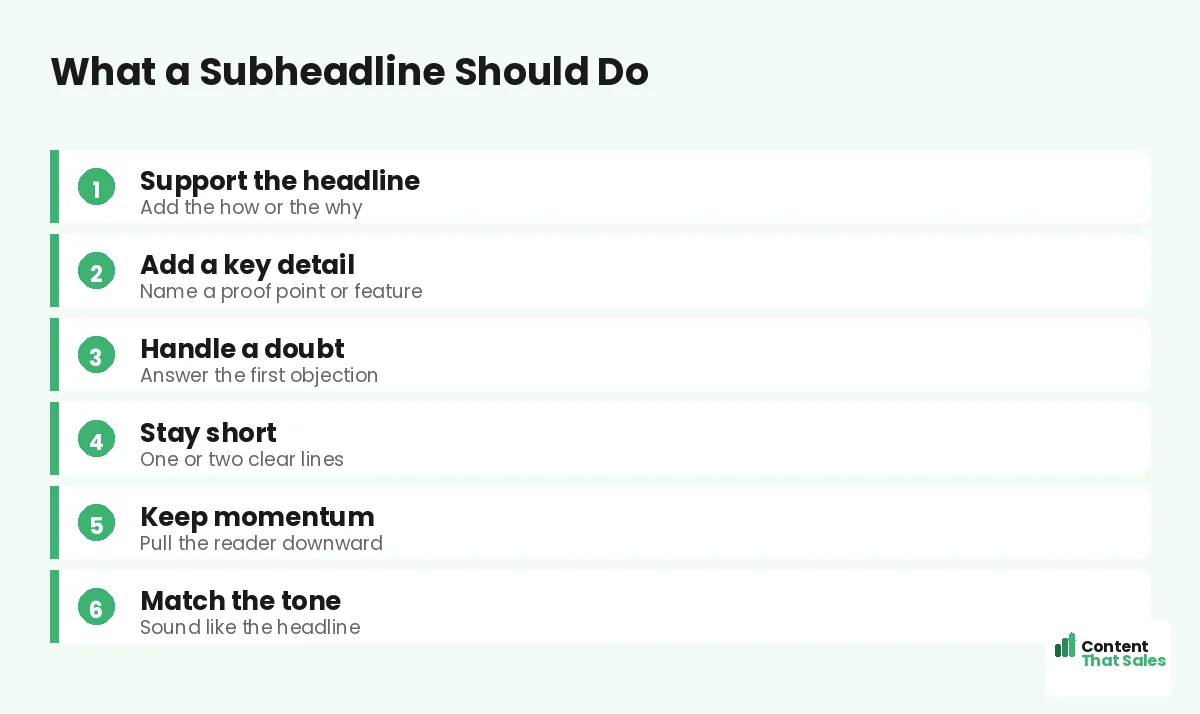
What a Sub-Headline Actually Does
A subhead has one core job. It supports the headline and moves the reader forward. The headline makes the promise. The subhead explains the how, adds proof, or removes a doubt. It turns a bold claim into a believable one.
It also buys you a moment. After the headline hooks them, the subhead earns the next few seconds. Those seconds carry the reader toward the benefits and proof below. A strong subhead is the bridge from attention to interest. Without that bridge, even a brilliant headline can leave the reader hanging, unsure whether the rest is worth their time.
Why the Subhead Is Easy to Waste
Most subheads fail by repeating the headline in different words. That adds nothing and wastes a prime spot. If the reader learns nothing new, the subhead is dead weight. It should always push the message forward.
The subhead sits high in your above-the-fold strategy, so it deserves real thought. People scan more than they read, and many scan the subhead right after the headline. Make it count.
Use It to Add the How or the Why
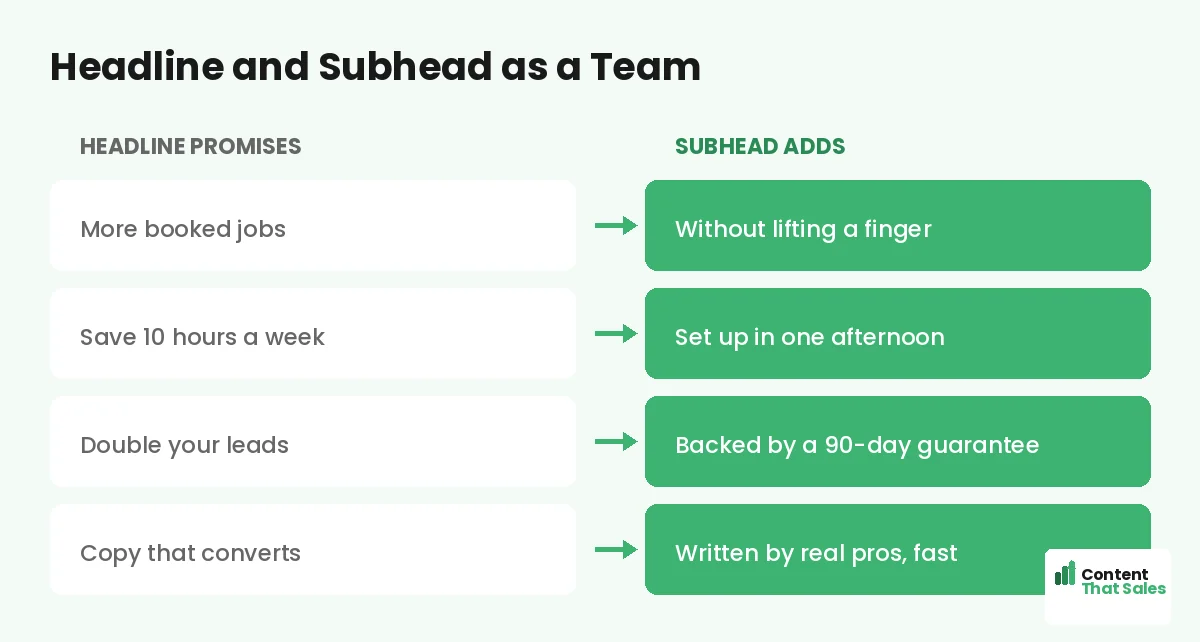
The headline names the win. The subhead can name how you deliver it. If the headline promises more booked jobs, the subhead can say how, like “with done-for-you pages that book work while you sleep.”
This answers the silent question the headline raises. A bold claim makes the reader think, “really, how?” The subhead answers before doubt creeps in. It turns curiosity into belief in a single line. That tiny shift, from wondering to trusting, is what keeps a skeptical visitor reading instead of reaching for the back button.
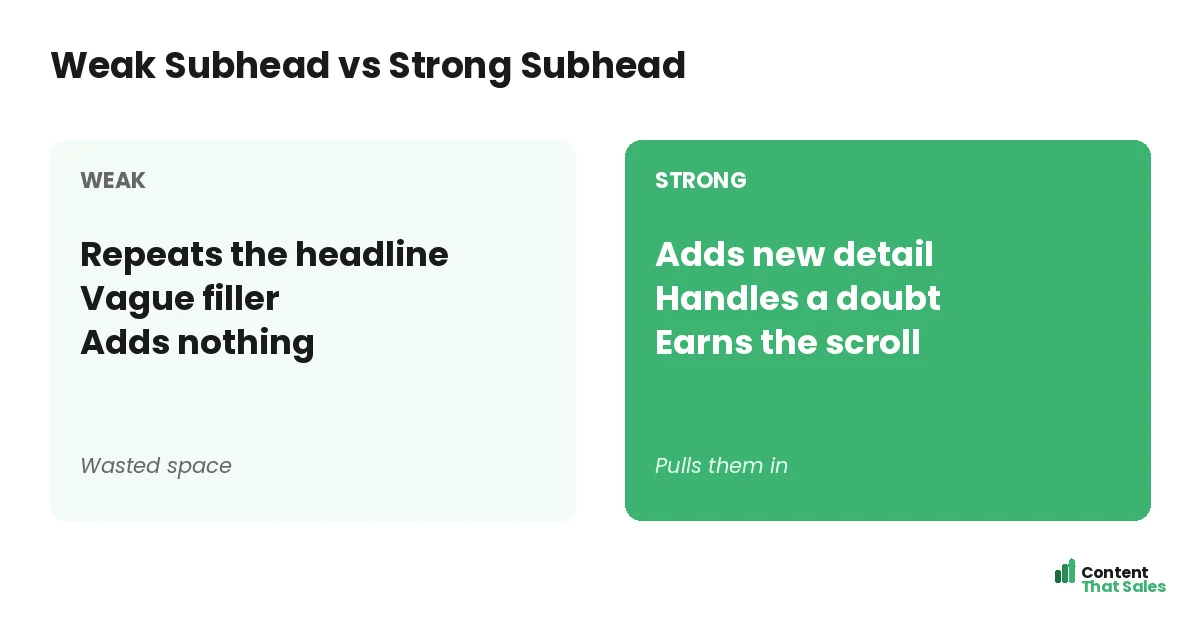
Use It to Add Proof or Specifics
A subhead is a great place for a quick proof point or a concrete detail. A number, a guarantee, or a client count all work. They make the headline’s promise feel grounded and real.
For example, under “Double your leads,” a subhead might say “backed by a 90-day money-back guarantee.” That single line lowers risk and lifts trust. A specific detail in the subhead can do more than a paragraph below. Scanners may never reach that paragraph, but they almost always see the subhead, so put your strongest proof point where the most eyes land.
Use It to Handle the First Objection
Readers arrive with doubts. The subhead can disarm the biggest one right away. If people fear setup is hard, the subhead can promise “live in one afternoon, no tech skills needed.” Knock down the doubt before it grows. A worry that is named and answered loses its power, while a worry left alone quietly talks the reader out of acting.
Pick the one objection most likely to stop the reader. Then answer it plainly in the subhead. Clearing that first hurdle keeps people moving toward the offer instead of bouncing at the top.
Did you know?
Many visitors read the headline and subhead, then decide whether to scroll. Together, those two lines often determine the fate of the whole page.
Keep It Short and Scannable
A subhead is not a paragraph. Keep it to one or two short lines. Long subheads blur into body copy and lose their punch. Tight and clear beats long and detailed here.
Lead with the most important word. Cut filler and jargon. The subhead should read in a single glance, just like the headline. If it takes effort to parse, trim it down until it flows.
Match the Tone of the Headline
The subhead should sound like the headline’s partner, not a stranger. If the headline is warm and direct, keep the subhead warm and direct. A sudden shift in tone feels jarring and breaks the flow.
Read the two lines together out loud. Do they feel like one voice? If the rhythm stumbles, smooth it. The headline and subhead should feel like a single thought split across two lines. When they click together, the reader barely notices the seam, and that smoothness is exactly what keeps them gliding down the page toward your offer.
Write the Subhead After the Headline
Nail the headline first, then write the subhead to support it. Trying to write both at once muddies each. Once the promise is set, the subhead’s job becomes clear, whether that is the how, the proof, or the objection.
To build both inside a page that sells, see how to write landing page copy that converts. Strong headlines and subheads are the entry point, and a great landing page headline deserves a subhead that matches its power.
Common Sub-Headline Mistakes
A few slips waste the subhead. Repeating the headline. Stuffing it with three ideas at once. Writing it so long it becomes a paragraph. Using vague filler that adds no value. Each one drops the reader’s momentum.
The fix is focus, and easy reading lifts conversions here too. One clear idea. One or two lines. Something new that supports the headline. Clear beats clever in the subhead, just like everywhere else.
How Content That Sales Writes Subheads
A great subhead takes the same care as a great headline. That’s where we come in. At Content That Sales, we pair every headline with a subhead that adds proof, clarity, or reassurance, so the top of your page pulls hard.
You share the offer and the goal. We craft the duo that hooks and holds the reader. If you want done-for-you landing page copy, we make it effortless. The result is a top section where every line earns its place.
Ready to Turn Visitors Into Customers?
Now you know how to write a landing page sub-headline that pulls its weight. Back the headline. Add the how, the proof, or the objection. Keep it short and on tone. So why waste a prime spot on a line that just repeats the headline?
Let’s craft a headline and subhead that hook every reader. Book your free consultation now. Call us at 8801631988589 or email service@contentthatsales.com. Let’s turn your next visitor into your next customer.
Frequently Asked Questions About Landing Page Sub-Headlines
What is a landing page sub-headline?
A sub-headline is the short line under your headline that supports the promise. It adds the how, a proof point, or an answer to the first objection, and earns the next few seconds of attention.
How long should a sub-headline be?
One or two short lines. Keep it tight and scannable so it reads in a glance and does not blur into the body copy below.
What should a sub-headline include?
Something new that supports the headline, like how you deliver the result, a quick proof point, or a line that removes the reader’s main doubt.
Should the sub-headline repeat the headline?
No. Repetition wastes the spot. The subhead must add value the headline did not, or it becomes dead weight at the top of the page.
Do I write the headline or subhead first?
Write the headline first. Once the promise is set, the subhead’s job becomes clear, whether that is the how, the proof, or the objection.
Where does the sub-headline go?
Directly under the headline, high above the fold. It is one of the first things visitors read after the headline, so it carries real weight.
Can a sub-headline handle objections?
Yes, and it should. Answering the reader’s biggest doubt up front keeps them moving toward the offer instead of bouncing early.
Can you write my headline and subhead?
Yes. Content That Sales writes headline-and-subhead duos built to hook and hold. Reach out for a quick quote.