 Skip to content
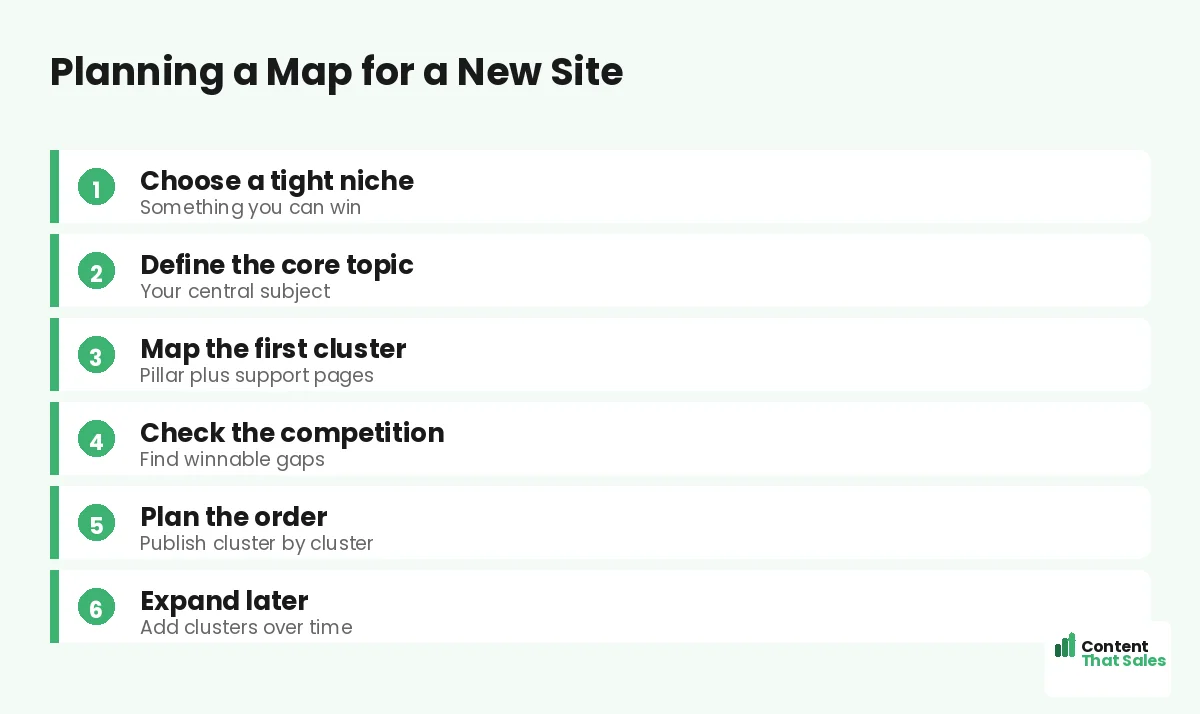
Knowing how to plan a topical map for a new website is one of the smartest first moves you can make, because starting with structure beats publishing random posts and hoping they rank. A new site has no authority yet, so focus is everything: pick a tight niche, map one core cluster, and build from there. This guide walks you through planning a topical map for a brand-new site, step by step.
New websites face a hard truth, Google does not trust them yet. You earn that trust by covering a focused subject completely. A topical map gives a new site the plan to do exactly that, turning your first months of effort into real, compounding authority.
Below, we walk through choosing a winnable niche, defining your core topic, mapping your first cluster, and growing the map as your new site gains traction.

Why New Sites Need a Map Most
A new site has no authority, so it cannot rank for broad, competitive terms yet. The way forward is to dominate a narrow slice first. A topical map gives you the focused plan to cover that slice completely and earn early authority.
Without a map, new sites tend to publish scattered posts that never add up. With one, every early post builds toward authority on a winnable subject. If you are new to the concept, see our guide on what a topical map is first.
Start Narrow, Not Broad
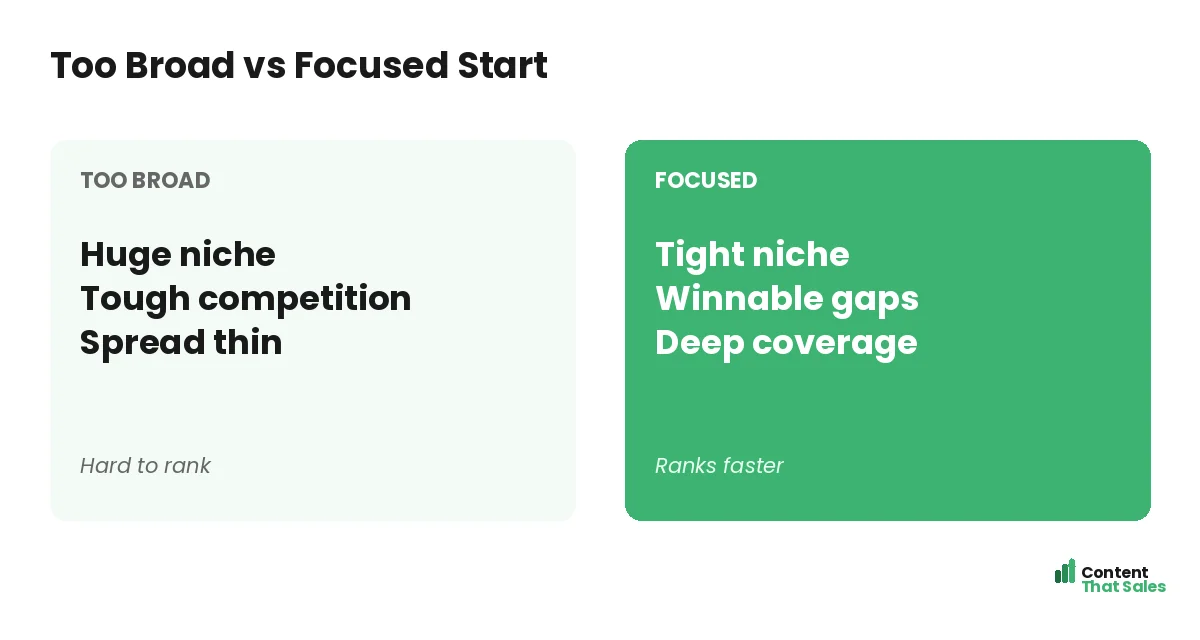
The biggest new-site mistake is going too broad. A wide niche means tough competition and thin coverage, exactly what a new site cannot win. Instead, pick a narrow corner you can realistically own and cover it deeply before expanding.
Narrow focus is a competitive advantage for new sites. While big sites spread across whole industries, you can become the clear expert on one specific subject. Depth in a small niche beats shallow coverage of a big one every time.
Choose a Winnable Niche
Pick a niche where you can actually compete. Look for real search demand but manageable competition, the gaps bigger sites have left thin or ignored. A winnable niche lets a new site rank sooner and build momentum.
Balance demand against difficulty. A niche with no searches is not worth covering; one dominated by giants is hard to crack. The sweet spot is genuine interest with beatable competition. For more, see how to choose a niche for your topical map.
Define Your Core Topic
Within your niche, define one clear core topic, the central subject your site will be known for. It should be specific enough to cover fully but broad enough to support many pages. This core anchors your whole map.
Your core topic should tie directly to your business and your expertise. Get it right and every cluster branches naturally from it. For help nailing this, see our guide on defining your core topic for a topical map.
Map Your First Cluster
Now map one cluster around your core topic: a pillar page plus the supporting pages that cover it in depth. List every subtopic and question within that one cluster. This first cluster is your beachhead, the focused coverage that earns initial authority.
Keep this first map small and complete. One pillar with several strong supporting pages is enough to start. The goal is full coverage of one cluster, not a sprawling plan you will never finish. Completeness here beats ambition.
Check the Competition
Before committing, check who ranks for your cluster’s topics. Look at the top results: are they huge authority sites or beatable pages with gaps? Finding winnable gaps tells you where a new site can realistically break in.
Aim your first cluster at the subtopics where competition is weakest and you can offer something better. Since readers scan more than they read, clear, thorough pages that beat thin competitors give a new site its earliest wins.
Did you know?
A new site that fully covers one narrow niche often outranks bigger sites there, because complete, focused coverage signals more authority than scattered pages.
Plan the Publishing Order
Decide what to publish first: the pillar page, then the supporting pages, finishing the cluster before moving on. For a new site, completing one cluster sends a strong, focused signal to Google far better than scattering posts.
A clear order also keeps you motivated, since you see a cluster come together. Work top to bottom through your first cluster, then plan the next. This steady, finishing-focused approach is the heart of a strong topical map strategy and how new sites build authority fastest.
Grow the Map Over Time
Once your first cluster is complete and gaining traction, expand. Add a related cluster under the same core topic, then another, widening your coverage step by step. Each new cluster builds on the authority the last one earned.
This is how a small new-site map grows into a comprehensive one. You are not building everything at once; you are growing cluster by cluster as your authority allows. Over time, those finished clusters make your once-new site a real authority.
Link As You Build
From your very first pages, link them together. Supporting pages link to the pillar and to each other; later clusters link to related earlier ones. Strong internal linking helps a new site establish structure and spread its budding authority.
Internal links also help Google discover and understand your new pages faster. Build the linking habit from day one, and your new site grows as a connected web of content rather than a pile of isolated, hard-to-find posts.
Be Patient and Consistent
A new site takes time to rank. Google needs to crawl, index, and learn to trust you, which does not happen overnight. Plan for months of consistent publishing before authority builds. Patience and consistency are the new site’s real superpowers.
Simple, clear content keeps winning, since easy reading lifts engagement. Keep finishing clusters on a steady cadence, and your new site will climb. The map gives direction; consistency over time delivers the results.
Put It All Together
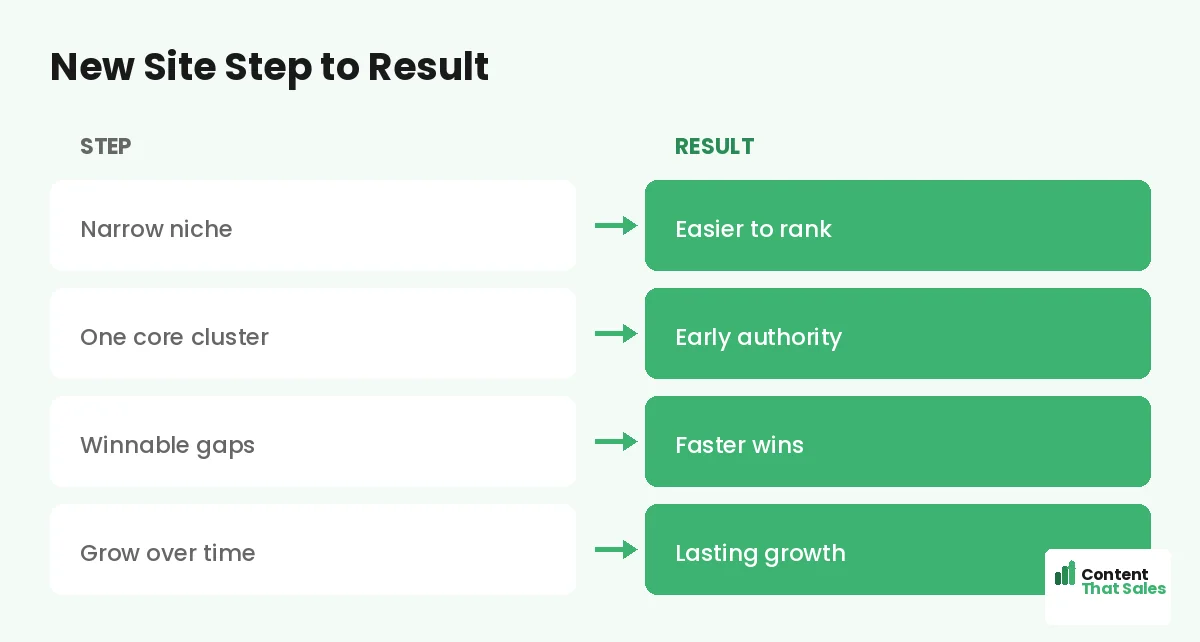
To plan a topical map for a new website, start narrow, choose a winnable niche, define a focused core topic, map and finish one cluster, check the competition, and grow cluster by cluster. Link as you build and stay consistent.
A new site wins by focus, not breadth. The map turns your first months into compounding authority instead of scattered posts. Pick a winnable corner, cover it completely, and grow from there, and your new site builds the authority to rank.
How Content That Sales Helps
We give new sites a winning start. That’s where we come in. At Content That Sales, we help you pick a winnable niche, map your first cluster, and write the focused pages that earn a new site its early authority.
You share your business and goals. We plan a focused map, sequence the first clusters, and produce the connected pages that rank. The result is a new site built on strategy from day one, not scattered posts.
Ready to Launch With a Plan?
Now you know how to plan a topical map for a new website: start narrow, pick a winnable niche, map one core cluster, and grow from there. New sites win by focus. So why launch without a plan?
Let’s map your new site for fast authority. Book your free consultation now. Call us at 8801631988589 or email service@contentthatsales.com. Let’s turn your launch into rankings and traffic.
Frequently Asked Questions About Topical Maps for New Sites
Why does a new website need a topical map?
A new site has no authority, so it must dominate a narrow slice first. A map gives the focused plan to cover that slice completely and earn early authority.
How narrow should I start?
Quite narrow. Pick a small corner you can realistically own and cover deeply. Depth in a small niche beats shallow coverage of a big one for new sites.
How do I find a winnable niche?
Look for real search demand with manageable competition, the gaps bigger sites left thin or ignored. Balance genuine interest against beatable difficulty.
What is the first cluster?
A pillar page plus supporting pages covering one part of your core topic in depth. It is your beachhead, the focused coverage that earns initial authority.
Should I check the competition first?
Yes. Look at who ranks for your cluster’s topics. Aim at subtopics where competition is weak and you can offer something better, for early wins.
How fast will a new site rank?
Not fast. Google needs time to crawl, index, and trust you, often months. Patience and consistent publishing are a new site’s real superpowers.
How do I grow the map?
Once your first cluster gains traction, add related clusters under the same core topic, widening coverage step by step on the authority you have built.
Can Content That Sales help?
Yes. We help pick a winnable niche, map the first cluster, and write the focused pages that earn a new site early authority. Reach out for a quick quote.