 Skip to content
Page speed for landing pages is one of the most overlooked conversion factors, yet a slow page quietly drives away visitors before they ever read your offer. Every extra second of load time raises your bounce rate and lowers conversions, and on mobile the effect is even sharper. This guide explains why speed converts, what slows a page down, and the practical fixes that make your landing pages load fast and convert more.
Speed is not just a technical nicety; it is a business lever. A fast page keeps the visitors you paid to attract, lifts your conversions, and even improves your ad quality score and search rankings. Slow pages leak money on every front.
Below, we cover why speed matters, the common culprits that slow pages down, and a clear set of fixes to speed up your landing pages and protect your conversions.

Why Page Speed Converts
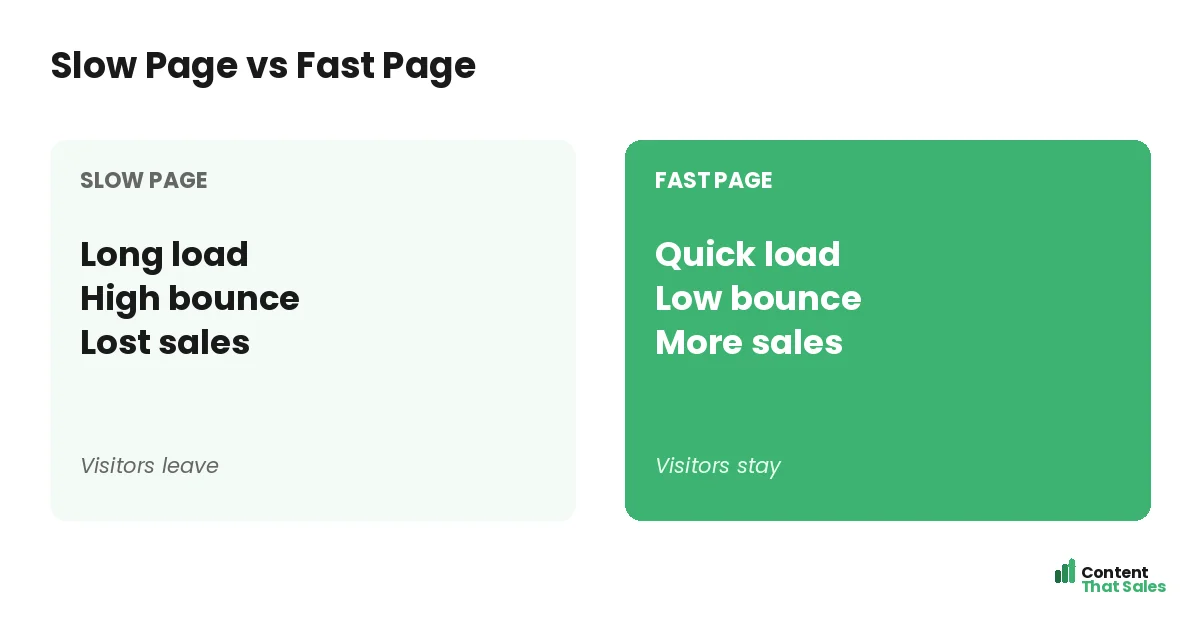
Visitors are impatient. When a page takes too long to load, many leave before it even appears, and that lost visitor is a lost conversion. The faster your page, the more people stay long enough to read your offer and act on it.
Speed supports everything else. A brilliant headline on a strong landing page structure means nothing if the page never loads. Speed is the foundation that lets all your other optimization work actually reach the visitor.
Speed Affects More Than Bounce
Slow pages do not just raise bounce rates. They lower your conversion rate, hurt your Google Ads quality score, and drag down your search rankings. Speed touches paid and organic performance alike, so a slow page costs you on every channel.
That means speeding up your page can lower your cost per click, lift your rankings, and increase conversions all at once. Few single improvements pay off across so many areas. Speed is a multiplier on the rest of your marketing.
Culprit 1: Heavy Images
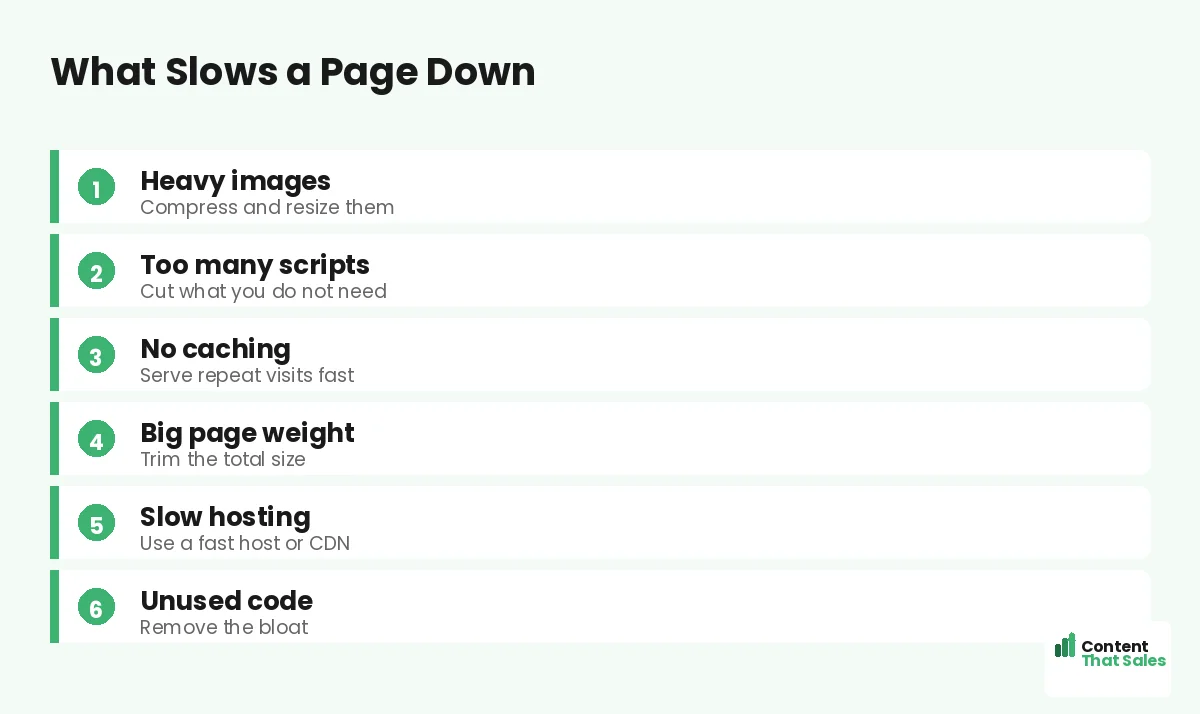
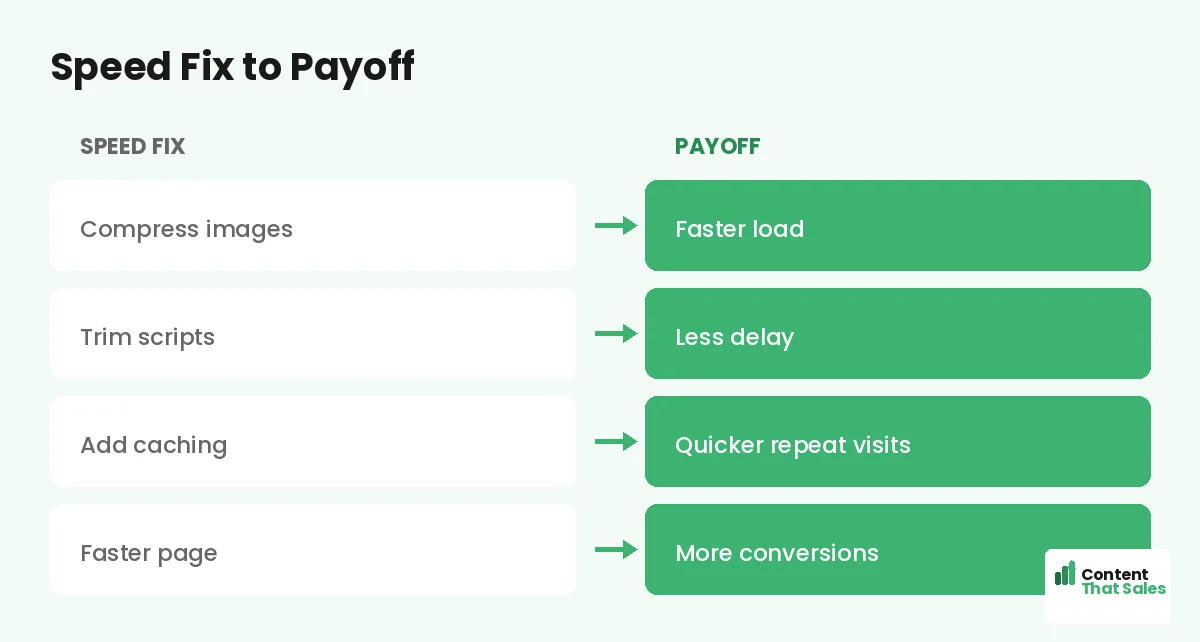
Images are usually the biggest drag on load time. Large, uncompressed images take forever to download, especially on mobile. Compress every image, size it correctly for where it appears, and use modern, efficient formats to slash the weight.
Done right, this alone can transform your load time. An image that looks identical can often be a fraction of its original file size. Light images are the single highest-impact speed fix on most landing pages.
Culprit 2: Too Many Scripts
Every script, tracker, widget, and plugin adds weight and slows the page. Many pages load scripts they do not need, each one costing milliseconds that add up. Audit your scripts and remove anything that does not earn its place.
Keep only the essentials, and load non-critical scripts so they do not block the page from appearing. Fewer, leaner scripts mean a faster page. Since readers scan more than they read, they will not wait for a bloated page to load.
Culprit 3: No Caching
Without caching, every visit rebuilds the page from scratch, which is slow. Caching stores a ready version so repeat visits and returning elements load almost instantly. Enabling proper caching is one of the easiest speed wins available.
Most hosts and platforms offer caching with a simple setting or plugin. Turn it on and you serve pages faster with little effort. Caching is low-hanging fruit that meaningfully improves load times for many visitors.
Culprit 4: Big Page Weight
The total size of everything on the page, images, scripts, fonts, and code, determines how fast it loads. A bloated page is a slow page. Trim the total weight by cutting what you do not need and compressing what you keep.
Be ruthless about what earns a place on the page. Every extra font, animation, or embed adds weight. A lean page not only loads faster but also feels cleaner and more focused, which helps conversions on its own.
Did you know?
Even a one-second delay in load time can measurably lower conversions, which is why speeding up a page often lifts results more than any copy change.
Culprit 5: Slow Hosting
Your host matters. Cheap, overloaded hosting responds slowly no matter how lean your page is. Good hosting and a content delivery network, which serves your page from servers near each visitor, can cut load times significantly.
If you have optimized the page and it is still slow, the host may be the bottleneck. Upgrading to faster hosting or adding a CDN is an investment that speeds up every page you run, paying back in better conversions.
Culprit 6: Unused Code
Over time, pages accumulate unused code, old styles, leftover scripts, and bloat from page builders. This dead weight slows things down for no benefit. Cleaning up unused code keeps your page lean and fast.
Minify your code to strip unnecessary characters, and remove anything no longer in use. A tidy codebase loads faster and is easier to maintain. Regular cleanup prevents the slow creep of bloat that drags pages down over time.
Test Your Page Speed
You cannot improve what you do not measure. Use a speed testing tool to see how fast your page loads and what is slowing it down. These tools point to the specific culprits, heavy images, slow scripts, so you know exactly where to focus, and they pair well with a full landing page audit.
Test on both mobile and desktop, since mobile is usually slower and matters most. Retest after each fix to confirm it helped. Regular speed testing turns vague slowness into a clear, fixable list of improvements.
Prioritize Mobile Speed
Most traffic is on phones, often on slower connections, so mobile speed is critical. A page that is quick on desktop can crawl on mobile. Always optimize and test for mobile first, where speed has the biggest effect on conversions.
Speed is a core part of mobile landing page optimization. Light images, lean scripts, and caching all matter even more on a phone. Win on mobile speed and you protect the majority of your traffic.
Make Speed Part of Optimization
Treat speed as an ongoing part of optimizing your page, not a one-time task. Pages tend to slow down over time as you add content and tools, so check speed regularly and keep it lean. Fold it into your routine page reviews.
Pair speed checks with your broader landing page optimization checklist. Simple, clear copy keeps winning, since easy reading lifts conversions, and a fast page makes sure that copy actually gets seen.
Put It All Together
Page speed is a foundational conversion factor: a fast page keeps visitors, lifts conversions, lowers ad costs, and helps rankings. Compress images, trim scripts, enable caching, cut page weight, fix hosting, and remove unused code.
Test regularly, prioritize mobile, and make speed a standing part of optimization. Few changes return as much across so many channels. Build a fast page and you protect every visitor you work so hard to attract.
How Content That Sales Helps
We build pages that are fast and convert. That’s where we come in. At Content That Sales, we create lean, lightweight landing pages with optimized images and clean code, so speed never costs you a conversion.
You share your offer and goal. We deliver a fast, focused page that loads quickly on every device and converts the traffic you attract. The result is a page where great copy and great speed work together to win.
Ready to Speed Up Your Page?
Now you know why page speed for landing pages matters and how to fix it: compress images, trim scripts, enable caching, and prioritize mobile. A fast page protects every click you pay for. So why let slow load times leak your conversions?
Let’s build a page that loads fast and converts. Book your free consultation now. Call us at 8801631988589 or email service@contentthatsales.com. Let’s turn your next visitor into your next customer.
Frequently Asked Questions About Page Speed
Why does page speed matter for landing pages?
Visitors are impatient. A slow page loses many before it even loads, and that lost visitor is a lost conversion. A fast page keeps people long enough to act.
Does speed affect more than bounce rate?
Yes. Slow pages lower conversions, hurt your Google Ads quality score, and drag down search rankings. Speed touches paid and organic performance alike.
What slows a page down most?
Usually heavy, uncompressed images. Too many scripts, no caching, big page weight, slow hosting, and unused code also add up to slow loads.
What is the easiest speed fix?
Compressing and properly sizing images, and enabling caching. Both are simple and often transform load time with little effort.
How do I test my page speed?
Use a speed testing tool to measure load time and see what is slowing the page. Test on mobile and desktop, and retest after each fix.
Why prioritize mobile speed?
Most traffic is on phones, often on slower connections, so mobile speed has the biggest effect on conversions. A page fast on desktop can crawl on mobile.
Is speed a one-time fix?
No. Pages slow down over time as you add content and tools. Make speed a standing part of your optimization routine and check it regularly.
Can Content That Sales help?
Yes. We build lean, fast landing pages with optimized images and clean code, so speed never costs you a conversion. Reach out for a quick quote.