 Skip to content
The PASTOR formula for landing pages is a six-step framework, Problem, Amplify, Story, Testimony, Offer, Response, that builds trust through narrative before it asks for the sale. Where shorter formulas rush to the offer, PASTOR takes the reader on a journey, using story and proof to earn belief. This guide explains each of the six steps, how they map to your page, and how to apply the formula with a clear example flow.
PASTOR is ideal for higher-consideration offers, where the reader needs more convincing. By weaving in a relatable story and strong testimony, it builds the deep trust that bigger decisions require. The offer then lands to a reader who already believes you can help.
Below, we break down all six PASTOR steps, show which page elements deliver them, and walk through how to apply the formula to a real landing page.

What PASTOR Is
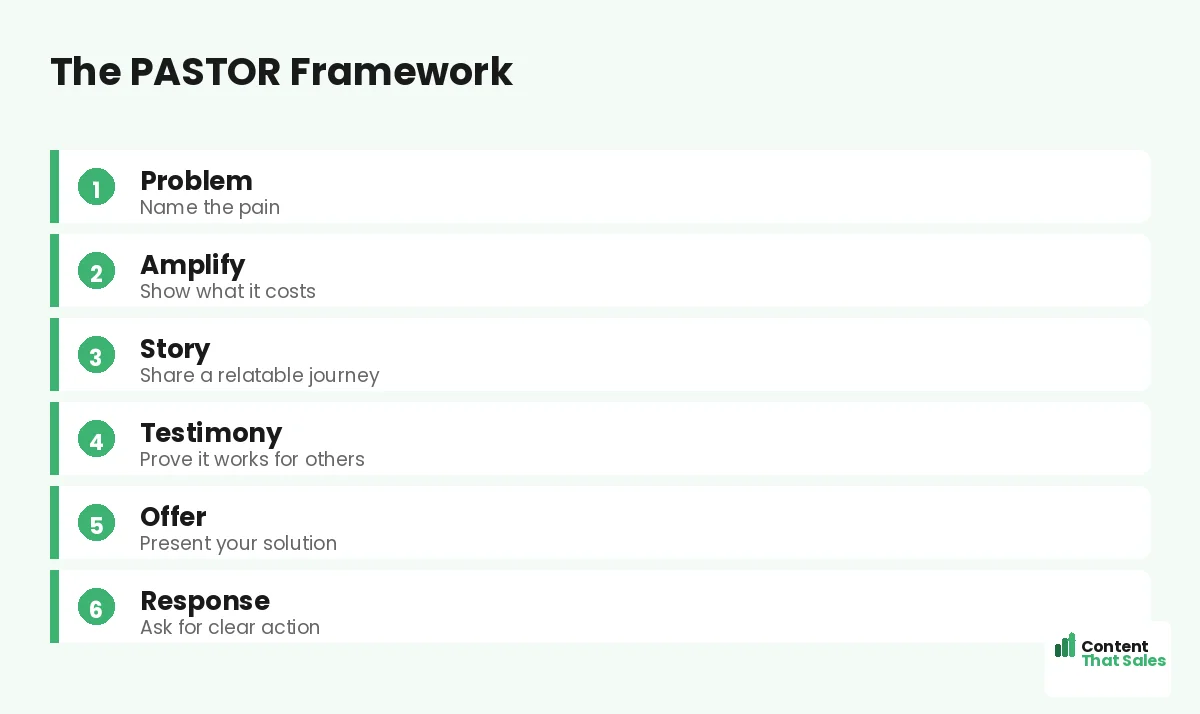
PASTOR stands for Problem, Amplify, Story, Testimony, Offer, and Response. It is a copywriting framework that builds a persuasive case step by step, leaning on story and proof to create trust before the pitch. It is fuller than formulas like PAS or AIDA.
On a landing page, PASTOR gives you a complete narrative arc. It fits a strong landing page structure, especially for longer pages where you have room to tell a story and stack testimony before making the offer.
Step 1: Problem
Like PAS, PASTOR opens by naming the reader’s problem. Describe their pain in their own words so they feel understood from the first line. This recognition hooks the reader and earns their attention for the journey ahead.
Be specific and empathetic. The better you name the real problem, the more the reader trusts that you understand their situation. This opening sets up everything that follows, so make it land squarely on the pain they feel.
Step 2: Amplify
Next, amplify the problem by showing its consequences. Like the agitate step in PAS, this deepens the stakes, what it costs to leave the problem unsolved. Amplifying makes the reader feel the urgency of finding a real solution.
Paint the picture of continued frustration, lost time, or missed opportunity. Keep it honest, grounded in real consequences the reader recognizes. By amplifying the true cost, you turn mild awareness into genuine motivation to keep reading and act.
Step 3: Story
Here is where PASTOR stands apart: the story. Share a relatable narrative, how you, a customer, or the founder faced this same problem and found a way through. Story builds emotional connection and makes your message memorable and human.
A good story lets the reader see themselves in it. They think, “that is just like me,” which deepens trust. Since readers scan more than they read, keep the story tight and vivid so it pulls them along rather than slowing them down.
Step 4: Testimony
After the story comes testimony, proof that your solution works for others. Testimonials, results, reviews, and case studies show the reader that real people achieved what they want. Testimony turns your story into believable, repeatable results.
Specific testimony is strongest. A named customer with a concrete result beats a vague quote. By following the story with real proof, you move the reader from emotional connection to rational confidence that your solution delivers.
Step 5: Offer
Now present your offer. After problem, amplification, story, and testimony, the reader is ready to hear it. Lay out exactly what they get, the benefits, and the value. The offer lands as the natural answer to everything that came before.
Make the offer clear and compelling, framed around the problem and the results others got. The groundwork you laid means the reader sees the offer not as a pitch, but as the obvious solution to a problem they now urgently want to solve.
Did you know?
PASTOR adds story and testimony that shorter formulas skip, which makes it especially effective for higher-priced or higher-trust offers that need more convincing.
Step 6: Response
Finally, ask for the response, your call to action. After building trust through every step, prompt the reader to act with one clear, low-risk next step. The response is the natural conclusion of the journey you guided them through.
Make the CTA clear and confident. Following solid landing page CTA best practices, ask plainly for the action. By now the reader believes you can help, so a clear ask converts the trust you have earned.
Map PASTOR to Your Page
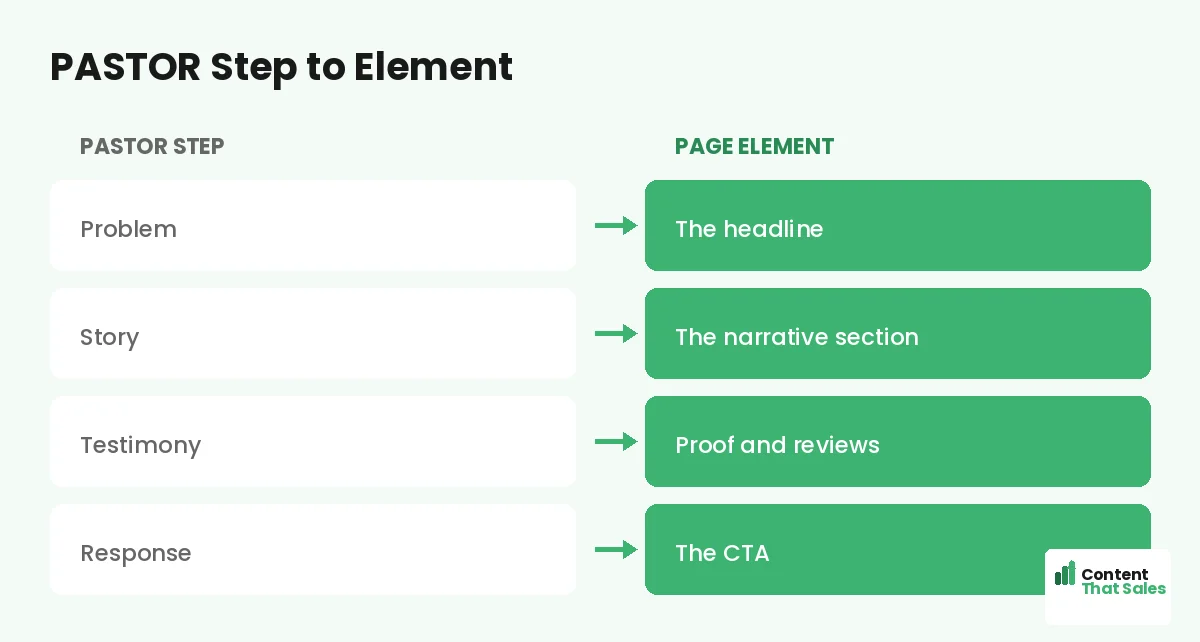
Each step maps to part of your page. Problem is the headline and intro. Amplify is the stakes section. Story is a narrative block. Testimony is your proof section. Offer is the product and benefits. Response is the CTA. The order builds the case.
This gives you a clear plan for a longer, story-driven page. Open with the problem, amplify it, tell the story, prove it with testimony, present the offer, and ask for the response. Each step earns the right to the next.
An Example PASTOR Flow
Imagine a page for a coaching program. Problem: “Stuck at the same income for years?” Amplify: “Every month that passes is money and confidence lost.” Story: “I was stuck too, until I found a system that changed everything.”
Testimony: client results and quotes. Offer: “Join the program and get the same system.” Response: “Book your free call today.” The reader travels from pain to belief to action, convinced by story and proof along the way.
Why the Story Matters Most
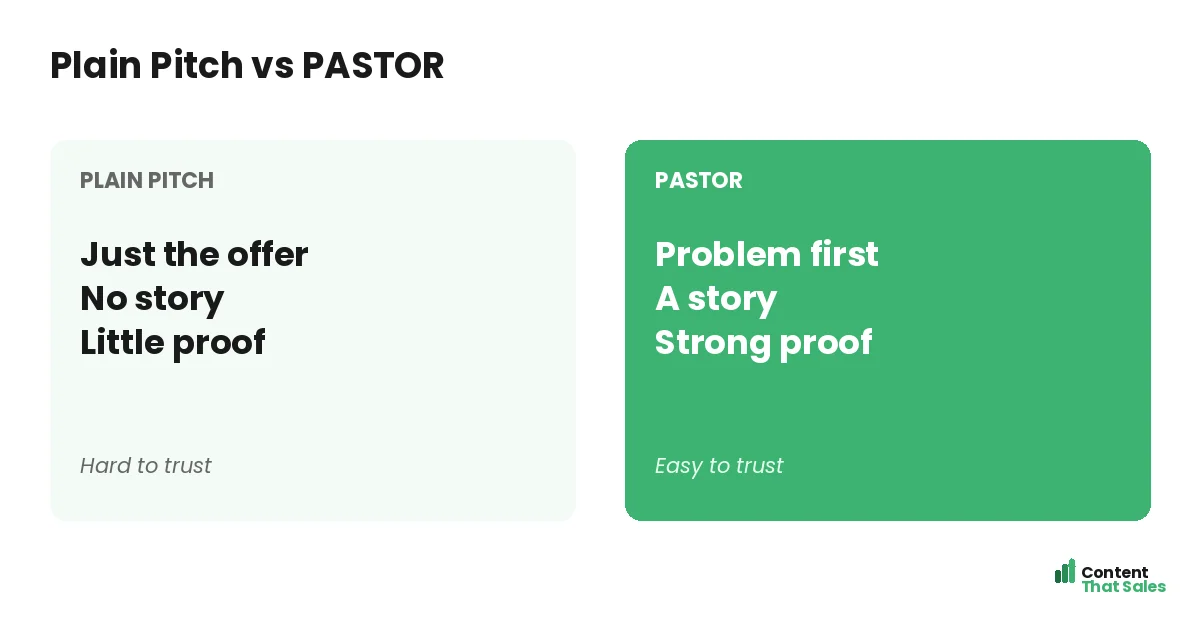
The story is what sets PASTOR apart from leaner formulas. Stories are memorable, relatable, and disarming. They lower the reader’s guard and build a human connection that pure logic cannot. A good story makes your whole page more persuasive.
Use a real, specific story that mirrors the reader’s situation. Authenticity matters; a forced or fake story backfires. When the reader sees their own struggle reflected in your narrative, they trust that you truly understand and can help them too.
When to Use PASTOR
PASTOR suits higher-consideration offers, coaching, courses, services, or premium products, where the reader needs more trust before buying. The extra steps build the belief that bigger decisions require, which shorter formulas may not establish.
It is less suited to simple, low-cost, or impulse offers, where a leaner flow converts faster. A ready landing page copy template helps you build the longer, story-rich page PASTOR needs when the stakes and price are high.
PASTOR vs Other Frameworks
PASTOR is the most complete of the common formulas. PAS leads with pain and moves fast; the AIDA formula offers a smooth attention-to-action flow; PASTOR adds story and testimony for deeper trust. Each fits a different page.
Choose PASTOR when trust and story drive the decision, like premium or personal offers. Choose a leaner formula for quick, simple conversions. Knowing all three lets you match the framework to the offer, the audience, and the price point.
Put It All Together
The PASTOR formula gives your landing page a full, trust-building arc: Problem, Amplify, Story, Testimony, Offer, Response. By weaving narrative and proof before the offer, it earns the belief that higher-stakes decisions require.
Map the steps to a longer page, keep the story and testimony real, and use PASTOR when trust drives the sale. Simple, clear copy keeps winning, since easy reading lifts conversions. Follow PASTOR and your page turns skeptics into believers, then buyers.
How Content That Sales Helps
We write story-driven pages that build trust. That’s where we come in. At Content That Sales, we craft landing pages on frameworks like PASTOR, weaving story and proof to earn belief before the offer.
You share your offer, your story, and your proof. We shape them into a page that takes the reader from problem to belief to action. The result is a page built to convert higher-consideration offers through trust, not just features.
Ready to Apply PASTOR to Your Page?
Now you know the PASTOR formula for landing pages: Problem, Amplify, Story, Testimony, Offer, Response. It builds the deep trust bigger decisions need. So why rush to the offer when a story earns belief first?
Let’s build a page that earns trust and converts. Book your free consultation now. Call us at 8801631988589 or email service@contentthatsales.com. Let’s turn your next visitor into your next customer.
Frequently Asked Questions About the PASTOR Formula
What does PASTOR stand for?
Problem, Amplify, Story, Testimony, Offer, and Response. It is a six-step copywriting framework that builds trust through story and proof before the offer.
How is PASTOR different from PAS or AIDA?
It is fuller. PAS and AIDA move quickly to the offer, while PASTOR adds a story and testimony to build deeper trust for higher-consideration sales.
What makes the story step important?
Story builds emotional connection and lowers the reader’s guard. When they see their own struggle in your narrative, they trust you understand and can help.
How does PASTOR map to a page?
Problem is the intro, Amplify is the stakes, Story is a narrative block, Testimony is proof, Offer is the product, and Response is the CTA.
When should I use PASTOR?
For higher-consideration offers like coaching, courses, services, or premium products, where the reader needs more trust before deciding to buy.
When is PASTOR not the best fit?
For simple, low-cost, or impulse offers, where a leaner formula like PAS or AIDA converts faster without the extra story and testimony steps.
Can the story be made up?
No. The story and testimony must be real. A forced or invented narrative breaks trust fast. PASTOR only works with authentic story and proof.
Can Content That Sales help?
Yes. We craft story-driven pages on frameworks like PASTOR that build trust and convert higher-stakes offers. Reach out for a quick quote.