 Skip to content
A/B testing landing page copy means showing two versions of your words to similar visitors, changing only one element, and letting the conversion rate decide which wins. It is how you replace guessing with proof. Your opinion about a headline or a button is just a hypothesis until real visitors vote with their clicks. Done right, A/B testing turns your page into an asset that improves month after month. This guide walks you through a clean, reliable test from start to finish.
Most teams argue about copy in meetings and ship whatever the loudest voice prefers. That is a gamble. A/B testing settles the debate with data, and the result often surprises everyone. The version you doubted can win big. Let’s set up tests you can actually trust, so every change you keep is one you have proven.
Below, we cover why copy tests matter, how to set one up, what to test first, and how to read the results honestly. By the end, you will know how to A/B test your way to a steadily higher conversion rate.

Why A/B Test Your Copy at All
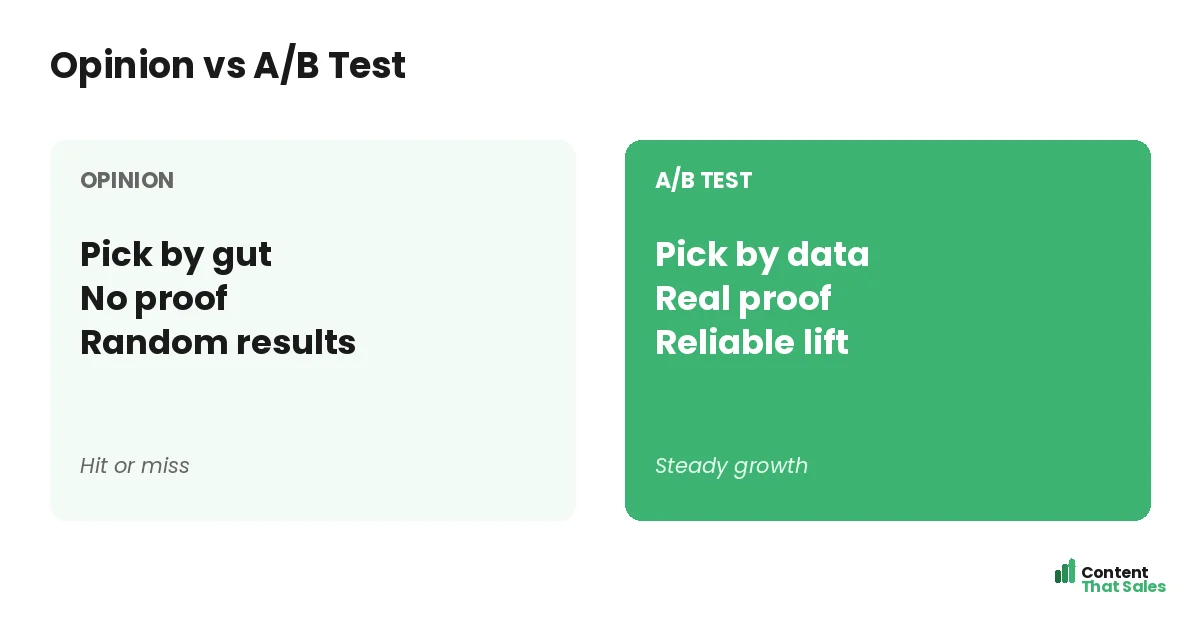
Copy carries most of the persuasion on a landing page, yet it is usually written on instinct. A/B testing checks that instinct against reality. It tells you whether a new headline, a sharper CTA, or a different benefit actually moves more people to act. No more guessing.
It also compounds. Each test that wins lifts your rate a little, and those lifts stack over time. A page tested steadily becomes far stronger than one shipped once and forgotten. Testing is the engine behind real landing page conversion rate optimization, not a one-off experiment.
Start With a Clear Hypothesis
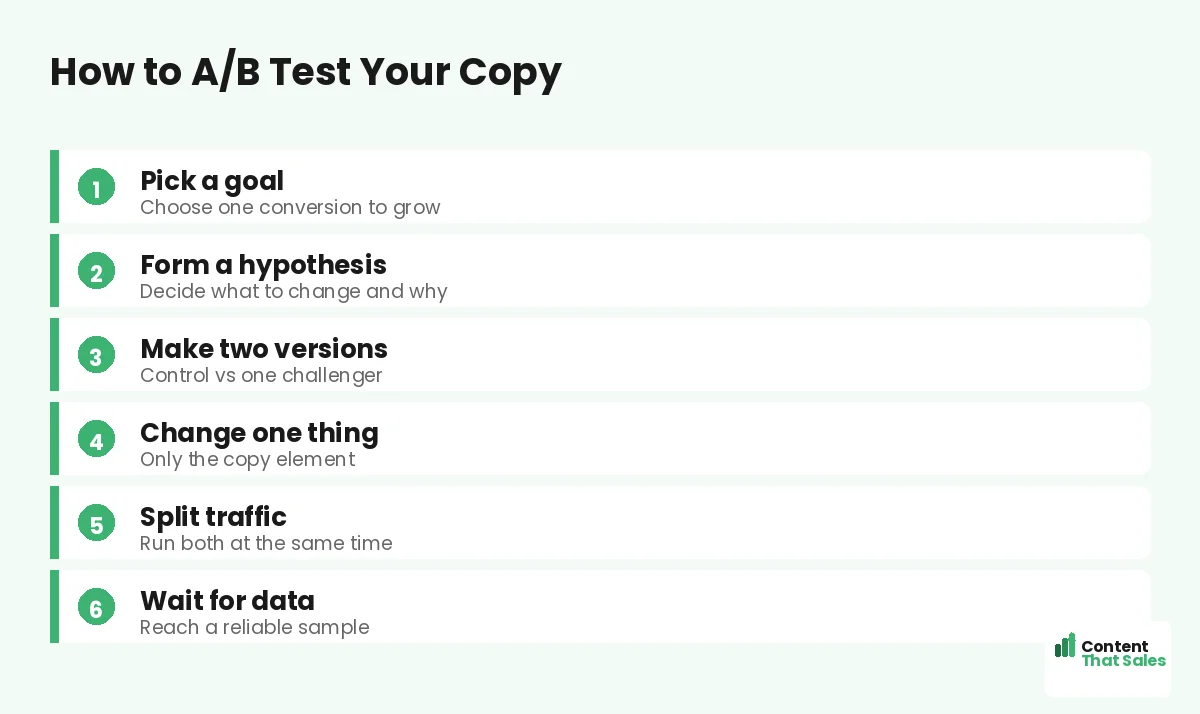
Do not test random ideas. Start with a reason. Maybe your headline is vague, so you test a specific one. Maybe your CTA names a task, so you test one that names value. A good hypothesis states the problem, the change, and the expected result.
Base it on evidence, not whim. Use what your data, heatmaps, or page review revealed. A hypothesis grounded in a real weakness is far more likely to win, and it teaches you something useful even when it loses. Clear thinking up front makes every test worthwhile.
Make Two Versions: Control and Challenger
Keep it simple. Test your current copy, the control, against one new version, the challenger. Two at a time keeps the result clean and easy to read. You can test more variations later, but start with a clear, focused duel.
Make the challenger meaningfully different. A swapped word rarely moves the needle, but a new angle does. Test a real change, like a fresh headline or a benefit-led rewrite, so the result actually teaches you something worth knowing about your audience.
Change Only One Element
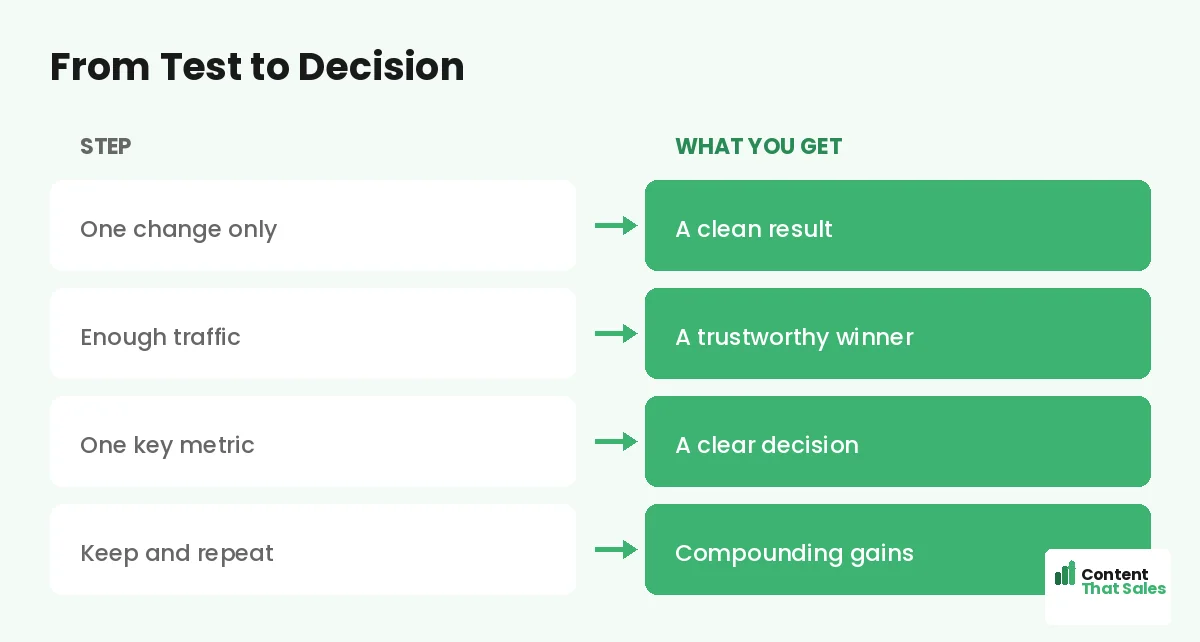
This is the golden rule. Change only one piece of copy per test. If you change the headline and the button and the proof all at once, a win tells you nothing about which change caused it. One variable keeps the answer clean.
It is slower than overhauling everything, but it is the only way to learn. Each clean test adds a real, reusable lesson about what your audience responds to. Patience here pays off in knowledge you can apply to every future page you build.
Split Traffic Fairly
Send half your visitors to each version at random, and run both at the same time. Testing one version this week and the other next week is not fair, because traffic and mood shift day to day. Parallel testing keeps the comparison honest.
Most testing tools handle the split and tracking for you. Just make sure the audience and timing match for both versions. People scan more than they read, so even small copy changes can shift behavior, which is exactly why a fair split matters.
Did you know?
A single copy change, like a clearer headline, has lifted conversions by double digits in real tests. The only way to capture that gain is to test it.
Track One Clear Metric
Pick the conversion that matters most as your metric. A booked call, a signup, or a sale. Not clicks, not time on page. The metric should be the action that makes the page a win. One clear number gives one clear answer.
Watching too many metrics muddies the decision. A version might win on clicks but lose on sales. Choose the metric tied to revenue and judge the test by that alone. Clarity in what you measure is half of a trustworthy test.
Wait for Enough Data
Do not call a winner too early. A handful of visitors proves nothing, and early leads often flip. You need enough traffic and conversions for the result to be reliable. Ending a test early is how people fool themselves with random noise.
Let the test run until the numbers settle and the gap holds steady. A bigger sample gives a safer answer. Rome wasn’t built in a day, and a trustworthy test is not run in an hour. Give it the time it needs to speak clearly.
What to Test First
Start with the elements that move the rate most. The headline is usually first, since most visitors read it and little else. Then the call to action, the main offer or hook, and your proof. Test the big levers before the tiny tweaks.
Chasing button colors before fixing a weak headline is a waste of traffic. Prioritize the changes with the biggest potential. A great place to begin is your headline, using the same method as how to test landing page headlines with real visitors.
Read the Results Honestly
When the test ends, look at the conversion data, not your feelings. If the challenger wins, adopt it, even if you preferred the control. If the control wins, keep it and learn why. The data is the boss, and ego only gets in the way.
A tie is useful too. It tells you that element was not the lever, so you can test something else next. Every result, win, loss, or tie, teaches you about your audience. Honest reading is what turns testing into a real advantage.
Keep the Winner, Then Test Again
Testing is a loop, not a one-time project. Once a version wins, make it the new control. Then write a fresh challenger and test again. Each round nudges your conversion rate higher, and the gains compound over months into a strong, proven page.
Write each challenger with the same care as any page, grounded in how to write landing page copy that converts. Favor clear, simple wording, since easy reading lifts conversions. Steady testing beats one big redesign every time.
How Content That Sales Runs Copy Tests
Good tests need sharp challengers, and writing those is our craft. That’s where we come in. At Content That Sales, we write copy variations worth testing and help you read the results, so you keep the version that truly converts.
You share the page and the goal. We craft the challengers and guide the test. If you want done-for-you landing page copy, we make it effortless. The result is a page that gets measurably better with every round.
Ready to Turn Visitors Into Customers?
Now you know how to A/B test landing page copy. Start with a hypothesis. Change one thing. Split traffic fairly. Track one metric, wait for data, then keep the winner. So why argue about copy when your visitors can settle it?
Let’s test your way to a higher conversion rate. Book your free consultation now. Call us at 8801631988589 or email service@contentthatsales.com. Let’s turn your next visitor into your next customer.
Frequently Asked Questions About A/B Testing Landing Page Copy
How do I A/B test landing page copy?
Show two versions to similar visitors at the same time, change only one copy element, and track your main conversion metric. The higher-converting version wins.
What should I change in an A/B test?
Only one element per test, like the headline, the CTA, or a benefit. Changing several at once makes the result impossible to read.
What should I test first?
The headline, since most visitors read it and little else. Then the CTA, the offer, and the proof. Test the big levers before tiny tweaks.
How much traffic do I need?
Enough conversions for the result to be reliable, not just a handful. Let the test run until the numbers settle and the gap holds steady.
What metric should I track?
Your main conversion, like a booked call or sale. Avoid vanity metrics like clicks or time on page, which do not equal real results.
When can I declare a winner?
Only after enough data and a steady gap. Early leads often flip, so resist calling it the moment one version pulls ahead.
What if the test is a tie?
That is useful. It means the element was not the lever, so test something else next. Every result teaches you about your audience.
Can you write and run copy tests for me?
Yes. Content That Sales writes strong challengers and helps you read results. Reach out for a quick quote.