 Skip to content
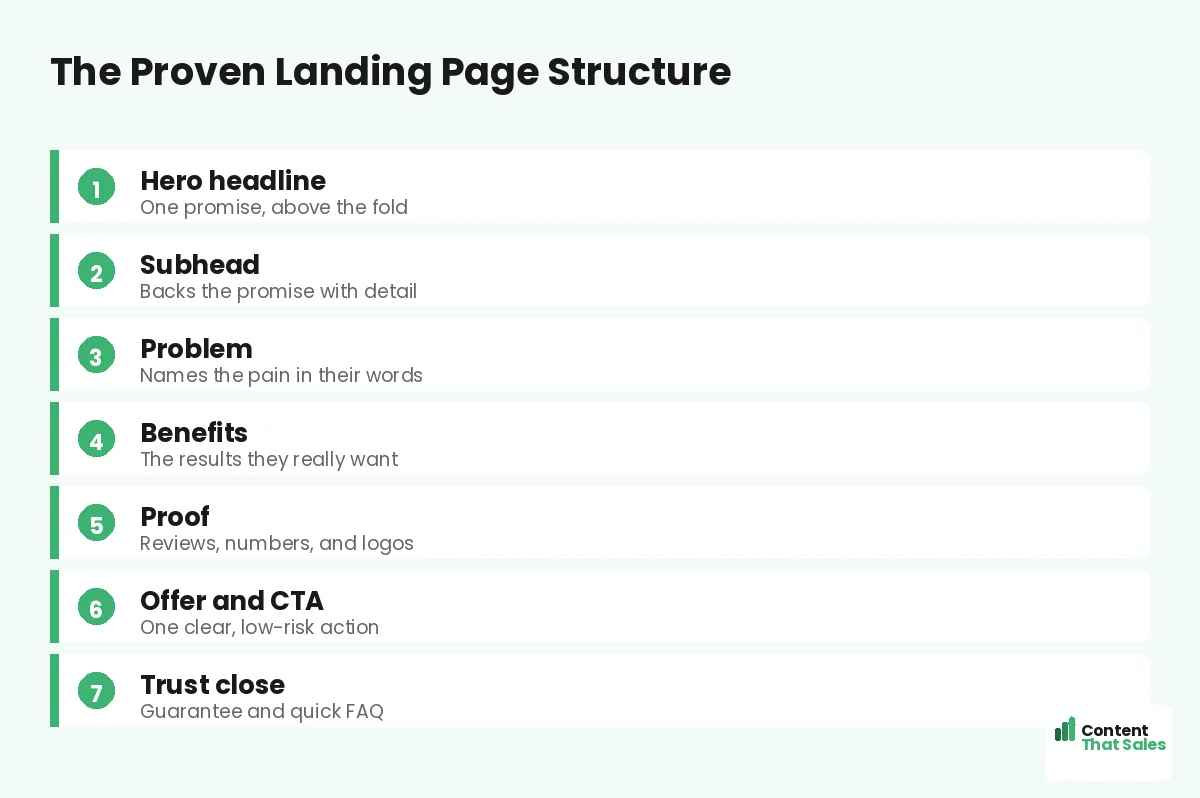
The best landing page structure that converts follows one proven order: hook, problem, benefits, proof, then one clear call to action. That order is not a trend. It mirrors how a buyer actually decides, step by step. When your blocks line up with that thinking, the page feels effortless to read and easy to act on. When they do not, even strong copy stumbles. This guide lays out the exact structure and why each block sits where it does.
Structure is the skeleton under your words. Great copy on a messy frame still flops. A clear frame, even with plain copy, can convert well. So before you polish a single sentence, get the bones right. That is where the real lift hides.
Below, we walk the structure from top to bottom. You will see what each block does, where it goes, and how they hand off to one another. Follow the order and your page will guide readers like a good story guides a listener.

Why Landing Page Structure Decides Conversions
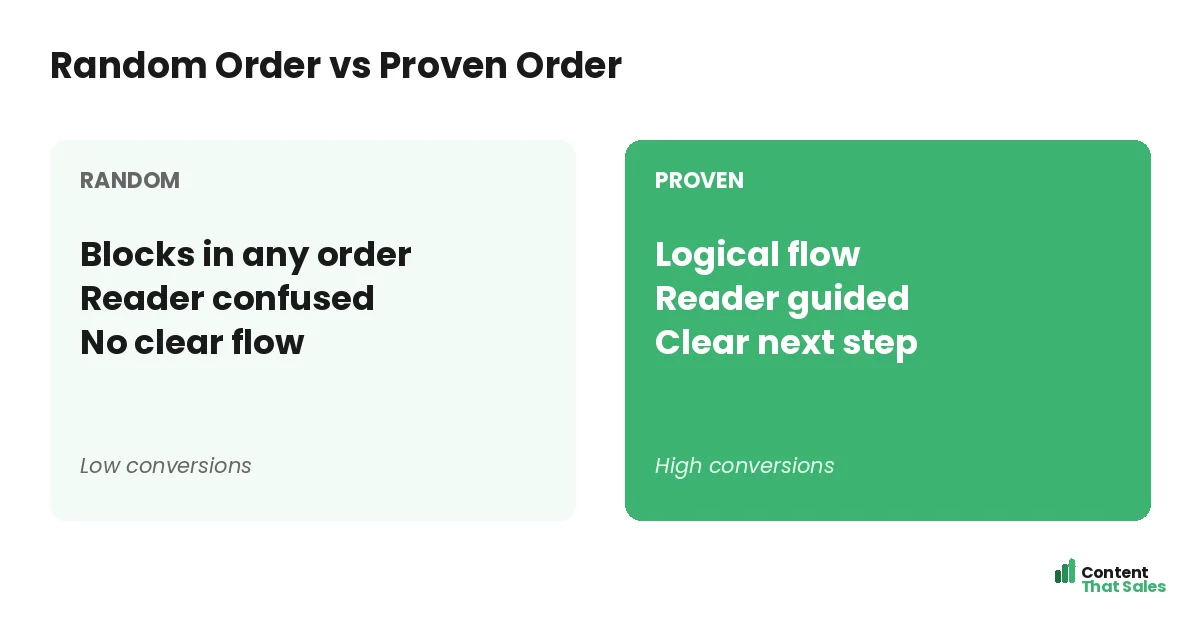
People do not read pages in random order. They move top to bottom, scanning for reasons to stay or leave. Your structure either feeds that journey or fights it. A logical order keeps them moving toward the goal.
A messy structure breaks the flow. The reader hits proof before they care, or a button before they trust you. Each jolt costs attention. The right structure removes those jolts, so reading feels smooth and natural the whole way down.
Block 1: The Hero and Headline
The hero sits above the fold and carries the headline. This is the make-or-break block. Most people read the headline and decide in a second. So promise one clear win for the reader, right at the top.
Add a short subhead that backs the promise with detail. Keep a clean visual that shows the offer or result. The hero should answer “what is this and why should I care” in a single glance. Nail it, and the rest gets a chance.
Block 2: The Problem You Solve
Right after the hook, name the problem. Show the reader you understand their pain in their own words. This builds instant trust, because people believe those who get them. Empathy opens the door that hype slams shut.
Keep it tight. Touch the nerve, then turn toward the fix. You are not here to wallow in the problem. You are here to prove you have the cure, which is exactly what the next block delivers.
Block 3: Benefits Over Features
Now show the payoff. Benefits, not features, win here. A feature is what your offer has. A benefit is what the reader gets. Lead with the result they truly want, then let features back it up.
Run each point through one question. So what? Keep asking until you reach the feeling. People don’t want a drill, they want the shelf on the wall. For the full method, see how to write landing page copy that converts.
Block 4: Proof That Builds Belief
After benefits, the reader thinks “prove it.” So you do. Reviews, testimonials, numbers, logos, and case results all belong here. Strong proof turns your claims into belief. Seeing is believing.
Place your best proof near the call to action too, where doubt peaks. A single sharp testimonial there can do more than a wall of stars elsewhere. Proof is the bridge between interest and action.
Did you know?
Most visitors never scroll past the hero unless it earns the scroll. Your top block sets the fate of every block below it.
Block 5: The Offer and One CTA
Now make the offer and ask for the action. Spell out exactly what the reader gets and what to do next. Keep one main call to action and repeat it down the page. This follows the rule of one goal per landing page.
Make the button specific and low-risk. “Book your free call” beats “Submit.” Remove fear with words like free and fast. A clear, safe-feeling ask turns a warm reader into a real lead.
Block 6: The Trust Close
Near the bottom, seal the deal. A guarantee, a short FAQ, and a few trust badges answer the last worries. This is where hesitation lives, so meet it head on. Reassure, then ask once more.
People scan more than they read, so keep the close short and skimmable. A simple guarantee can tip a maybe into a yes. End on confidence, not clutter.
How the Blocks Flow Together
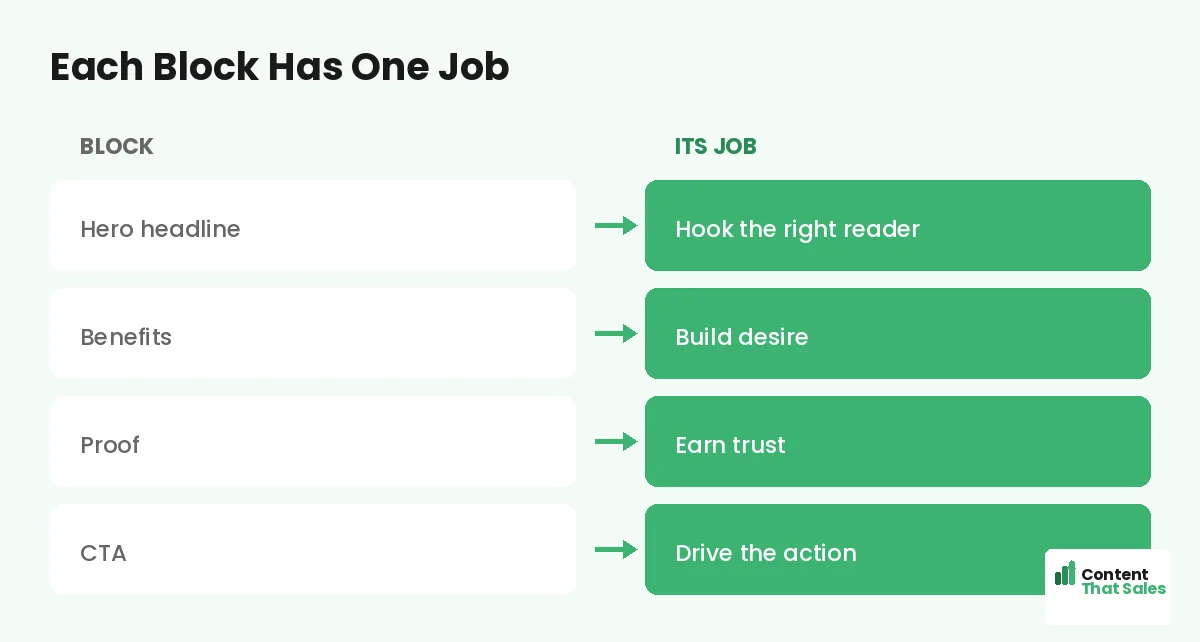
No block works alone. The hero earns the read. The problem builds trust. Benefits create desire. Proof removes doubt. The CTA collects the win. Each block calmly answers the exact question that the block before it just raised in the reader’s mind.
This is the same backbone you will find in the anatomy of a landing page. When the flow is smooth, the reader never has to think. They glide from promise to proof to action, and saying yes feels natural rather than forced. That smooth momentum is the quiet engine behind every high-converting page.
Adapt the Structure to Your Offer
The order stays the same, but the depth flexes. A simple offer needs a short version of each block. A costly offer needs more proof and detail before the ask. Read your buyer and adjust the length, not the order.
Cold traffic may need extra trust early. Warm traffic can reach the CTA faster. The structure bends to the moment, but it never breaks. Keep the flow intact and tune the volume of each block.
Structure Mistakes That Cost Conversions
A few structure slips show up often. A weak hero that buries the promise. Proof placed too late. A CTA that hides below the fold with no repeat. Each one breaks the flow and leaks leads.
The fix is order and clarity, and easy reading lifts conversions too. Lead with the win. Prove it early. Repeat the CTA. Clear beats clever, and order beats chaos, every time.
How Content That Sales Structures Pages
Knowing the structure is one thing. Filling each block with words that convert is another. That’s where we come in. At Content That Sales, we build every page on this proven frame, then write copy that makes each block sing.
You bring the offer and the goal. We bring the hero, the proof, and the close. If you want done-for-you landing page copy, we make it effortless. The result is a page with strong bones and sharp words.
Ready to Turn Visitors Into Customers?
Now you know the best landing page structure that converts. Hook, problem, benefits, proof, then one clear action. Adapt the depth, never the order. So why let a messy frame waste your best copy and your best traffic?
Let’s build a page with a structure that sells. Book your free consultation now. Call us at 8801631988589 or email service@contentthatsales.com. Let’s turn your next visitor into your next customer.
Frequently Asked Questions About Landing Page Structure
What is the best landing page structure?
The best landing page structure follows a proven order: hero and headline, the problem, benefits, proof, the offer with one CTA, and a trust close. It mirrors how buyers actually decide.
Why does the order of blocks matter?
People read top to bottom and look for reasons to act. The right order feeds that journey, while a random order breaks the flow and loses readers.
Where should the call to action go?
Place the main CTA after the benefits and proof, then repeat it down the page. People decide at different points, so give them more than one chance.
Should proof come before or after benefits?
After. First show the payoff with benefits, then back it up with proof. The reader wants the win first, then evidence that you deliver it.
Does every landing page need the same structure?
The order stays the same, but the depth flexes. Simple offers need short blocks. Costly offers need more proof and detail before the ask.
How long should a landing page be?
As long as the offer requires. Keep each block focused and skimmable. Length is fine when every section earns its place.
What is the most important block?
The hero and headline. Most visitors read it and little else, so it must promise one clear win and earn the scroll.
Can you structure and write my landing page?
Yes. Content That Sales builds pages on a proven structure and writes copy that converts. Reach out for a quick quote.