 Skip to content
One goal per landing page is the rule that separates pages that convert from pages that confuse. When a page asks for just one thing, the reader knows exactly what to do. When it asks for three, they freeze and leave. That is why one goal per landing page matters so much. Focus is not a nice-to-have. It is the engine of conversion.
It feels backward at first. Surely more options mean more chances to win? Actually, the opposite is true. Every extra ask splits attention and adds doubt. The page that tries to do everything ends up doing nothing well. Let’s unpack why one goal wins, and how to choose yours.
By the end, you will know how to spot a page with too many goals, how to pick the single one that matters, and where to send everything else.

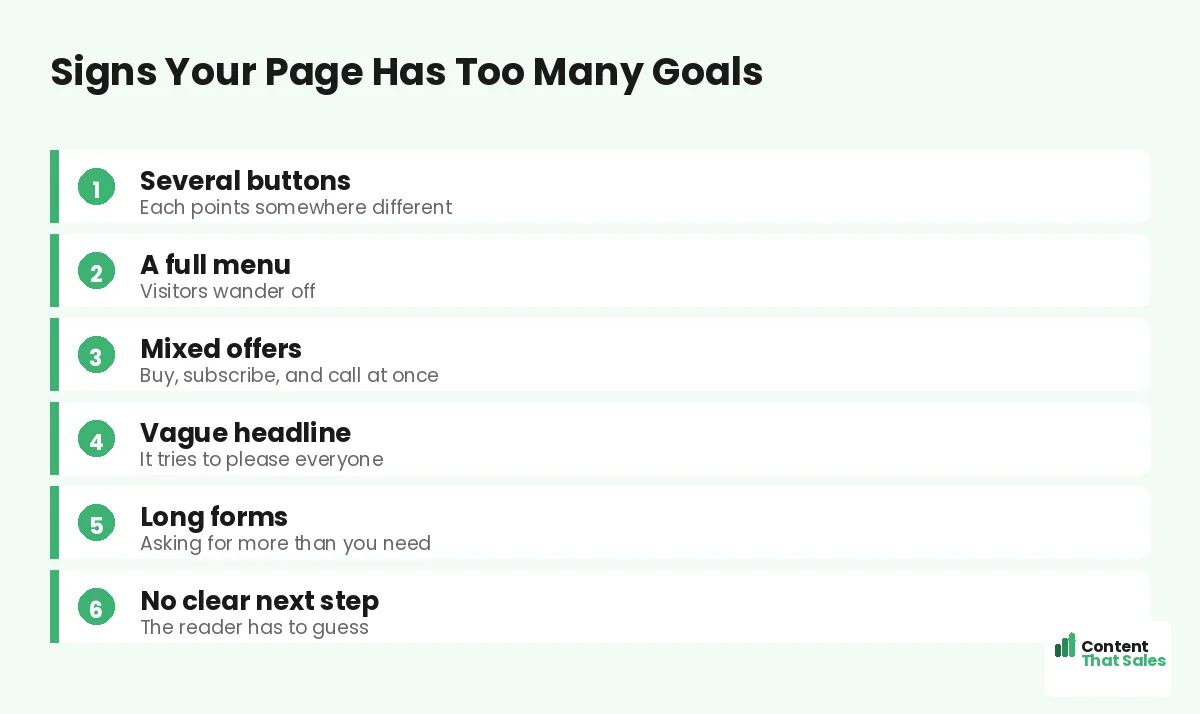
What “One Goal Per Landing Page” Means
One goal means one main action you want the visitor to take. Book a call. Start a trial. Grab the guide. Buy the product. The whole page bends toward that single step, and nothing competes with it.
It does not mean one sentence or one button. You can repeat the call several times. But every repeat points to the same action. The page speaks with one voice and asks for one thing.
Why Focus Beats Choice
More choices feel generous, but they paralyze. Faced with many options, people often pick none. This is choice overload, and it quietly kills conversions. A single clear option frees the reader to act.
Adding a second offer can drop results by a painful margin. The reader cannot decide, so they leave. As the saying goes, chase two rabbits and you catch neither. One goal keeps the reader, and you, on target.
The Hidden Cost of Extra Goals
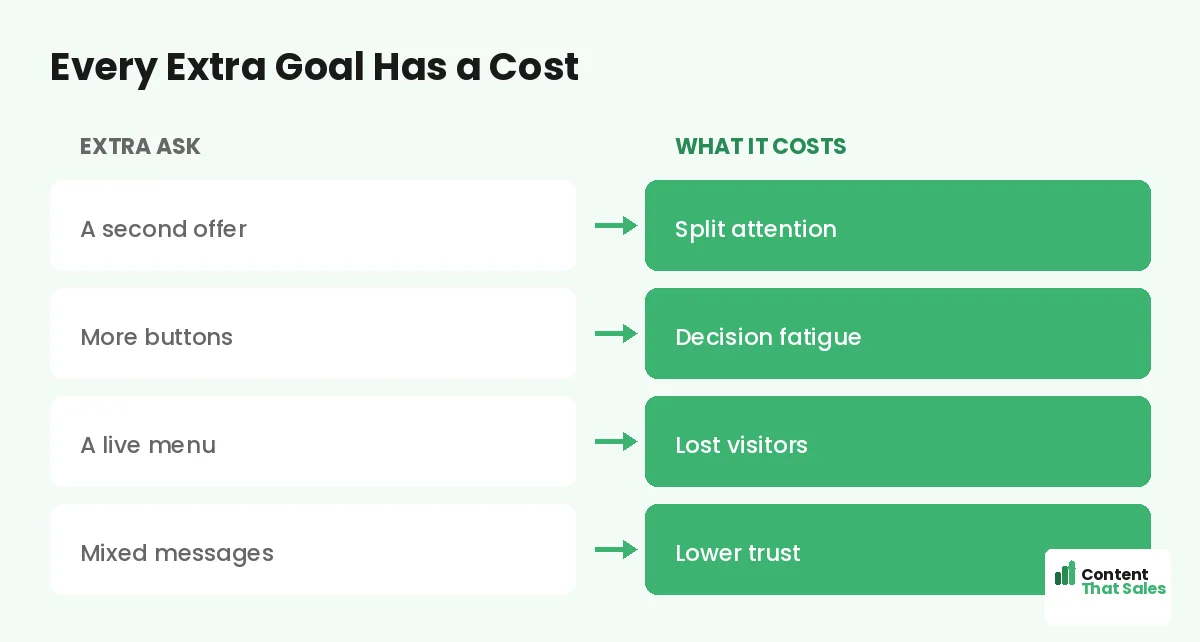
Every extra goal carries a cost you cannot see in the design. A second button steals clicks from the first. A live menu invites people to wander. Mixed messages chip away at trust. Each one shaves a little off your rate.
These costs add up fast. People scan more than they read, so a busy page overwhelms them in seconds. Strip the extras and the one goal shines. This is also a top reason behind why landing pages fail.
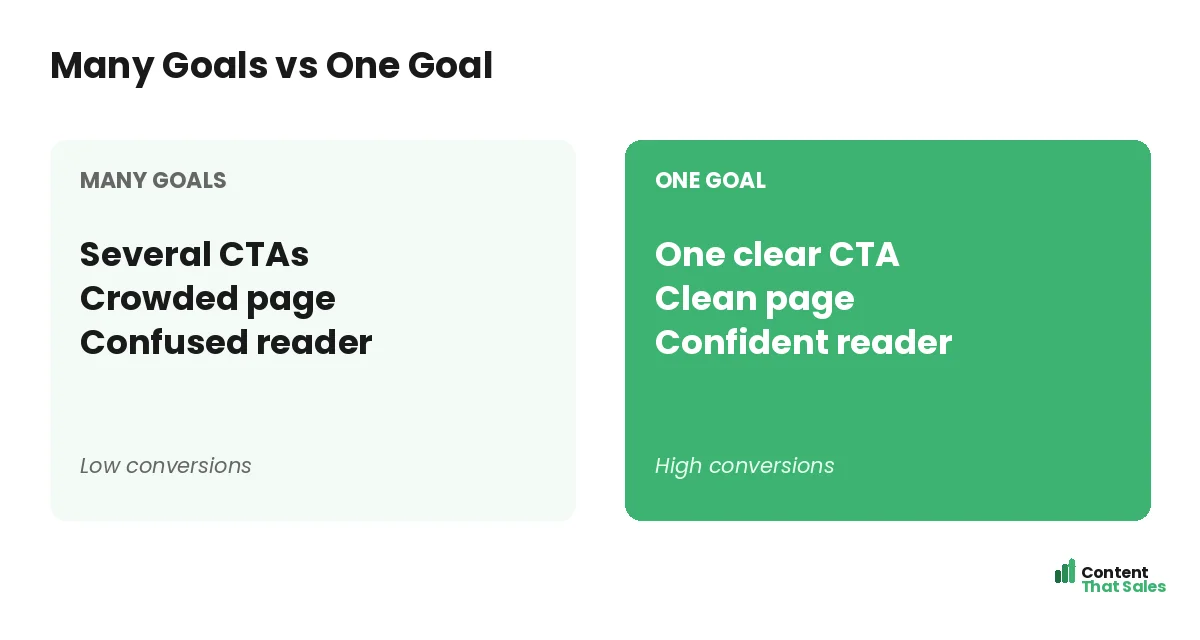
How to Choose Your One Goal
Start with the campaign behind the page. What single action would make it a win? That is your goal. Tie it to the traffic source and the offer, not to a wish list of everything you sell.
Pick the action closest to revenue that the visitor is ready for. A cold visitor may only be ready for a guide. A warm one may be ready to buy. Match the goal to the moment, and commit to it fully.
Build the Whole Page Around That Goal
Once you pick the goal, everything serves it. The headline promises the win tied to that action. The benefits support it. The proof removes doubt about it. The button asks for it, again and again.
Cut anything that does not help. A link that leads away. An offer that competes. A paragraph that wanders. To see how the pieces fit around one goal, study the anatomy of a landing page. Every block should push the reader toward the one step.
Did you know?
Pages with a single call to action often outperform pages with several. Removing competing links can lift clicks on the one that matters.
Repeat the One CTA, Don’t Add New Ones
Repetition is good. Variety is not. Show the same call to action several times down the page. People decide at different moments, so give them more than one chance to act on the same goal.
Just keep every button pointing to the same place. “Book your free call” at the top, middle, and end. To write that call so it lands, see how to write landing page copy that converts. One goal, repeated, beats many goals scattered.
Where to Send Everything Else
You still have other offers and pages. They just do not belong here. Send them to their own pages, each with its own single goal. Your site can hold many pages, each laser-focused.
This is how strong funnels work. One page per goal, one goal per page. Don’t dig a well when you’re already thirsty, so map your goals to pages before you launch. Each page does one job and does it well.
Common Objections to the One-Goal Rule
Some worry one goal leaves money on the table. What about the visitor who wanted something else? The answer is simple. A focused page wins more of the people it was built for, which beats half-serving everyone. The visitor who wanted something else was never going to convert here anyway, so chasing them only weakens the page for the buyers who would.
Others fear the page feels pushy. It does not, when the goal fits the reader’s stage. A well-matched single ask feels helpful, not aggressive. Clarity is a kindness, since easy reading lifts conversions and easy choices do too.
One Goal Makes Your Results Easy to Read
A focused page is also easier to measure. With one goal, you track one number that matters. Did the visitor take the action or not? No tangled web of mixed metrics to untangle later.
That clarity speeds up testing. Change the headline, watch the rate. Change the button, watch again. When the page chases one outcome, every test gives a clean answer. You learn faster and improve faster.
Multiple goals muddy the water. A bump in signups might hide a drop in sales. You end up guessing. One goal per page keeps your data honest, so you always know what is truly working. Over months, that honest feedback compounds into a page that quietly gets better and better, while busy pages stay stuck guessing.
How Content That Sales Keeps Pages Focused
It is hard to cut your own offers. Everything feels important from the inside. That’s where we come in. At Content That Sales, we find the one goal that matters and build the whole page around it.
You tell us the campaign and the win. We craft a focused page that drives that single action. If you want done-for-you landing page copy, we make it effortless. The result is a page that converts because it finally knows what it is for.
Ready to Turn Visitors Into Customers?
Now you know why one goal per landing page matters. Focus beats choice. Extra asks cost you. Pick one action and build everything around it. So why let a crowded page keep splitting your reader’s attention?
Let’s give your page a single, winning goal. Book your free consultation now. Call us at 8801631988589 or email service@contentthatsales.com. Let’s turn your next visitor into your next customer.
Frequently Asked Questions About One Goal Per Landing Page
What does one goal per landing page mean?
It means the page has one main action you want visitors to take, and everything points to it. You can repeat the call, but it always leads to the same single step.
Why is one goal better than several?
More choices cause decision fatigue, so people pick none. One clear goal removes that friction and lifts conversions. Focus beats choice almost every time.
Can I have more than one button on a landing page?
Yes, as long as every button points to the same action. Repeating one CTA is smart. Adding different CTAs splits attention and lowers results.
What if a visitor wants something else?
Send other offers to their own focused pages. A page that fully serves its target audience beats one that half-serves everyone.
Should a landing page have a navigation menu?
Usually no. A menu invites people to wander away from your one goal. Hide or trim it so the single action stays the clear choice.
How do I choose the one goal?
Pick the action that makes the campaign a win and that the visitor is ready for. Tie it to the traffic and the offer, not to everything you sell.
Does one goal make the page feel pushy?
Not when the goal fits the reader’s stage. A well-matched single ask feels helpful and clear, which builds trust rather than pressure.
Can you build a focused landing page for me?
Yes. Content That Sales builds pages around one clear goal so they actually convert. Reach out for a quick quote.