 Skip to content
The choice between a landing page vs squeeze page comes down to how much you ask for. A squeeze page wants one thing only, usually an email address. A landing page can carry a fuller offer and a bigger goal. Both capture leads, but they work in different ways. This guide shows you when to use each one.
Pick the wrong page and you leak leads. A long page can kill a simple email grab. A bare squeeze page can’t sell a real offer. So let’s clear it up, plain and simple. Which page should your next campaign use?

Landing Page vs Squeeze Page: The Short Answer
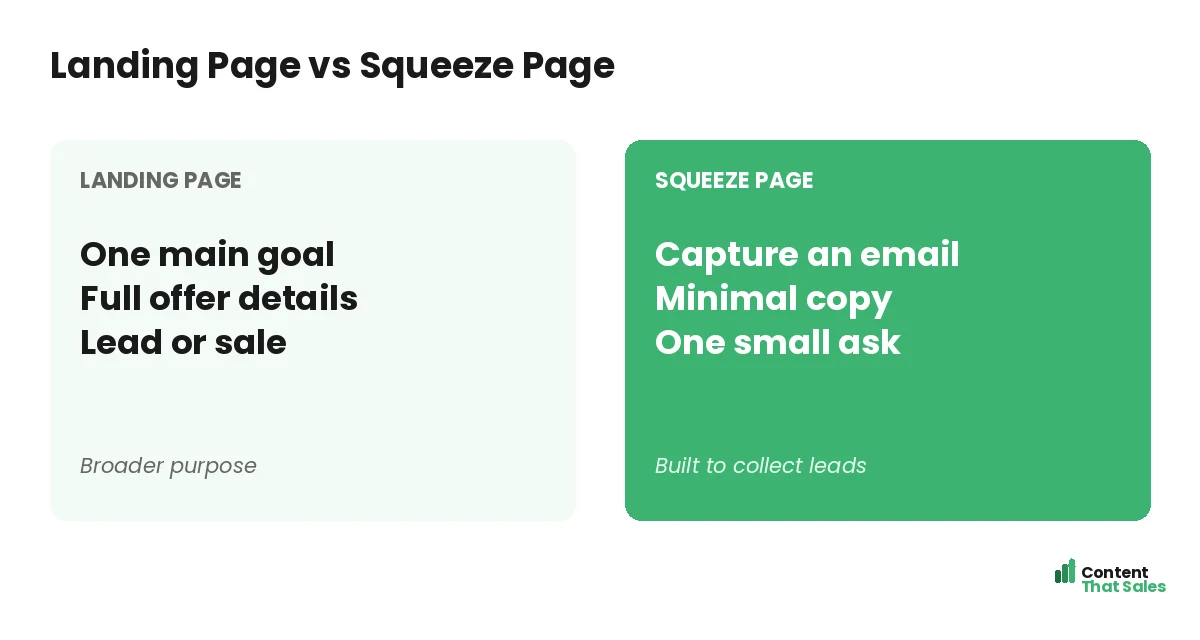
A squeeze page exists to capture an email. That’s it. A landing page can do more, like book a call or sell a product. One is narrow. One is broad.
Think of a squeeze page as a single turnstile. You give an email, you get a freebie, and you move on. A landing page is more like a room with one clear exit. Both guide you, but the squeeze page asks for the least.
So every squeeze page is a landing page, but not every landing page is a squeeze page. The squeeze page is the stripped-down cousin. It trades depth for speed.
That trade-off is the whole idea. You give up the chance to explain a big offer. In return, you get more emails, faster. For list building, that is often the smarter deal. You can always sell to those leads later, once trust has had time to grow.
What Is a Squeeze Page?
A squeeze page is a tiny page built to grow an email list. It offers one freebie in exchange for contact details. A checklist, a guide, or a discount works well. The form is short, often just an email field.
It hides almost everything else. No menu. No long copy. No second offer. The whole page squeezes the visitor toward one small yes. That single focus is the point.
Because the ask is tiny, these pages convert fast. People trade an email without much thought. You then nurture those leads over time. First the email, then the relationship.
What Is a Landing Page?
A landing page is a focused page built for one main goal. That goal can be a lead, a call, a signup, or a sale. It often carries more detail than a squeeze page. It explains the offer and shows proof.
It still keeps one clear action. But it has room to persuade. If you want the basics, see what a landing page is and how it works. The landing page is the flexible workhorse of your funnel.
The Key Differences That Matter
The biggest difference is the ask. A squeeze page wants an email. A landing page can want more. From there, length and detail follow.
Squeeze pages stay tiny. Landing pages can stretch when the offer needs it. The CTA differs too. One says “send me the guide.” The other might say “book your free call.” Same family, different depth.
Traffic plays a role as well. Squeeze pages suit cold, curious visitors. Landing pages handle warmer, more committed ones. Match the page to the moment, and results climb.
One more difference is intent. A squeeze page assumes the visitor wants the freebie and little else. A landing page assumes they want to weigh a real decision. So the squeeze page removes friction, while the landing page removes doubt. Both clear the path, just in different ways.
When to Use a Squeeze Page
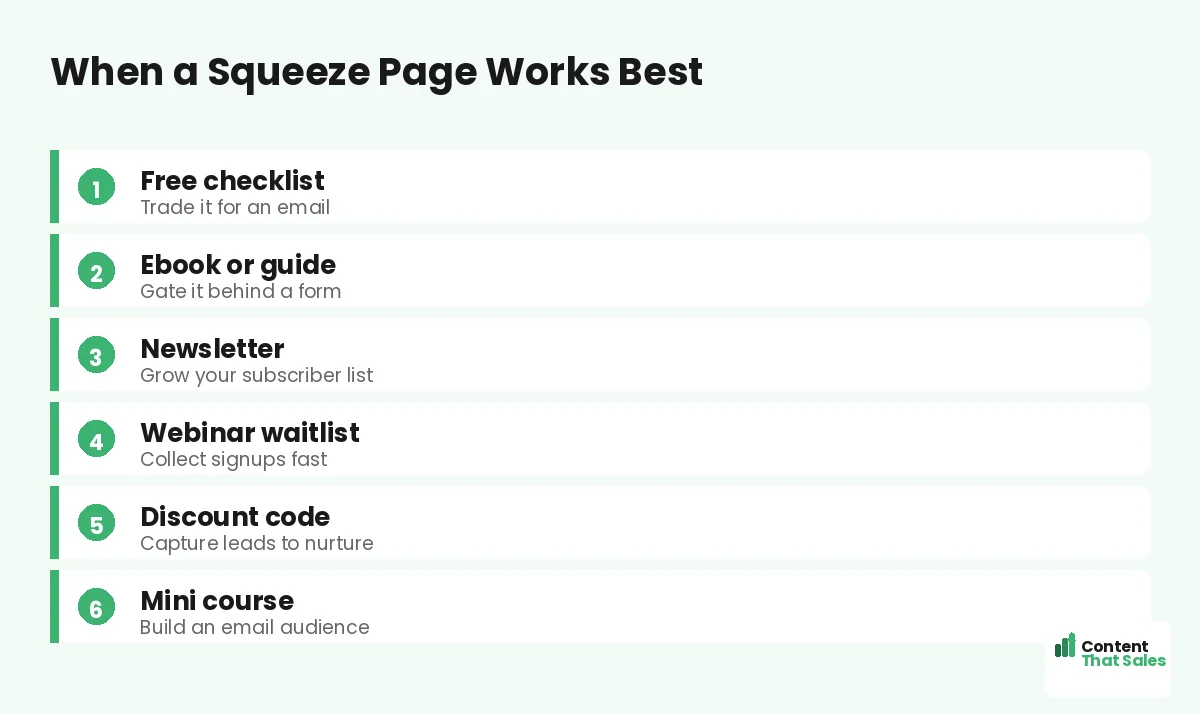
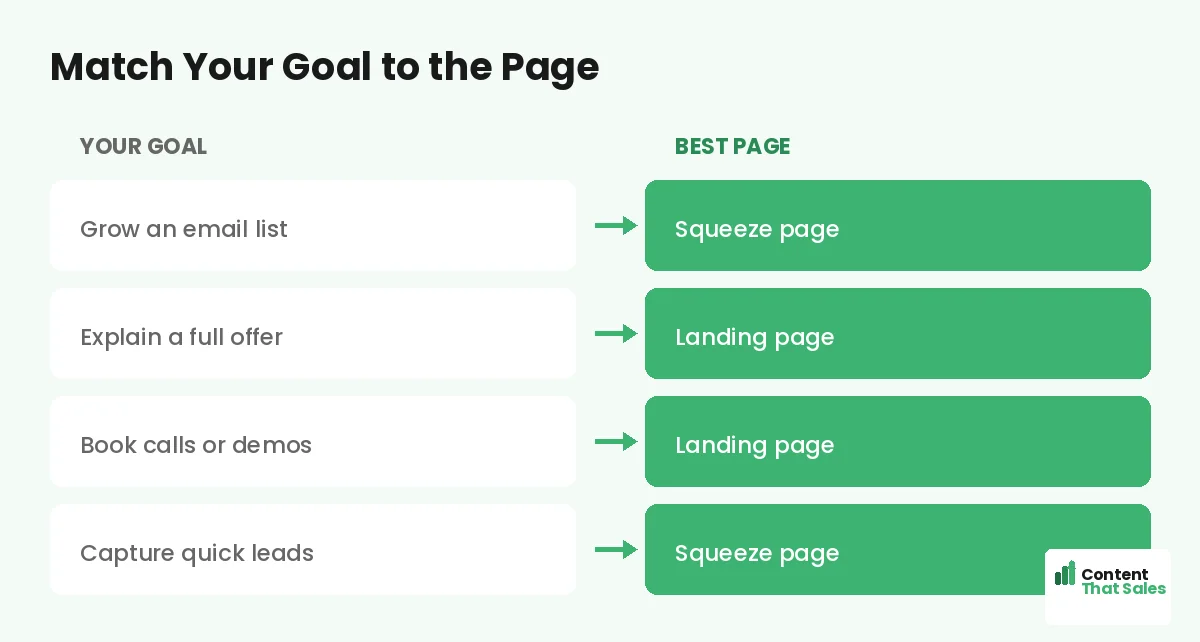
Use a squeeze page when your goal is the list. Free checklists, ebooks, newsletters, and waitlists all fit. The freebie pulls people in, and the email is the prize.
These pages shine at the very top of the funnel. They turn strangers into subscribers fast. From there, your emails do the slow, steady selling. Don’t dig a well when you’re already thirsty, so build the list before you need it.
Did you know?
Squeeze pages often post some of the highest conversion rates of any page, simply because the ask is so small and the freebie feels worth it.
When to Use a Landing Page
Use a landing page when the offer needs room. A demo, a consult, a trial, or a product all work. The reader needs more than a freebie to act, so you give them more.
These pages suit warmer traffic and bigger goals. They explain, persuade, and prove. To write one that converts, see how to write landing page copy that sells. The landing page does the fuller job.
How the Copy Differs on Each Page
Squeeze page copy is lean. One promise, one freebie, one field. Every word pushes the small ask. There’s no room to wander.
Landing page copy has more space to work. It can name the problem, stack benefits, and show proof. People scan more than they read, so both pages still need short lines and clear headers. The length grows with the size of the ask.
Which One Converts Better?
Neither wins by default. The right page for the goal converts best. A squeeze page beats a landing page for a quick email grab. A landing page beats a squeeze page for a real sale.
Compare apples to apples. A high squeeze rate means little if those leads never buy. Track the full funnel, not just the first yes. Simpler copy tends to help, since easy reading lifts conversions.
Common Mistakes With Both Pages
The usual slips repeat. A squeeze page that asks for too much. A landing page that hides the goal or skips proof. Both confuse the reader and cost you leads.
The fix is focus. One goal per page. A short form. Proof near the ask. Clear words over clever ones. For the full blueprint, study the landing page vs sales page breakdown too, so you can pick the right tool every time. When your goal, your traffic, and your page all line up, conversions stop being a guessing game and start becoming predictable.
How Content That Sales Helps You Choose and Write
Not sure which page fits your campaign? We’ll help you choose, then write it to convert. At Content That Sales, we match the page to your goal and your audience. No guesswork, no wasted words.
You bring the offer and the freebie. We bring the strategy and the copy. If you want done-for-you landing page copy or a high-converting squeeze page, we make it effortless. The result fits the moment and drives the action.
Ready to Turn Visitors Into Customers?
Now you know the difference between a landing page vs squeeze page. One grabs an email. One carries a fuller offer. Pick the right page, and your funnel runs smoother. So why let the wrong page slow your list and your sales?
Let’s build the page your goal actually needs. Book your free consultation now. Call us at 8801631988589 or email service@contentthatsales.com. Let’s turn your next visitor into your next customer.
Frequently Asked Questions About Landing Page vs Squeeze Page
What is the difference between a landing page vs squeeze page?
A squeeze page captures an email with one tiny ask. A landing page can carry a fuller offer and a bigger goal. The squeeze page is the stripped-down version.
Is a squeeze page a type of landing page?
Yes. A squeeze page is a landing page built only to collect emails. Every squeeze page is a landing page, but not the other way around.
When should I use a squeeze page?
Use one when your goal is list building. Free checklists, ebooks, and newsletters all work well with a short squeeze page.
How many form fields should a squeeze page have?
As few as possible, often just an email. Every extra field lowers your signup rate, so keep the ask tiny.
Do squeeze pages convert better than landing pages?
For a quick email grab, usually yes. But those leads still need nurturing. Track the full funnel, not just the first signup.
Can a landing page collect emails too?
Yes. A landing page can capture emails and do more, like book calls or sell. A squeeze page only does the email part.
Should a squeeze page have a menu?
No. Remove the menu and extra links so the only choice is to sign up. Focus is what makes it convert.
Can you write my squeeze and landing pages?
Yes. Content That Sales writes both, built to convert. Reach out for a quick quote.