 Skip to content
The StoryBrand framework for landing pages flips the usual approach: instead of making your brand the hero, you cast the customer as the hero and your brand as the guide who helps them win. Built on the structure of classic storytelling, it brings clarity to your message so visitors instantly understand how you help. This guide explains the StoryBrand idea, walks through its seven parts, and shows how to apply it with a clear example flow.
Most pages fail because they talk about the company, not the customer. StoryBrand fixes that by following how stories work: a hero with a problem meets a guide who gives a plan and calls them to action, leading to success. Put the customer in the hero’s seat and your message clicks.
Below, we cover the core StoryBrand idea, its seven parts, how each maps to your page, and how to apply it to a real landing page.

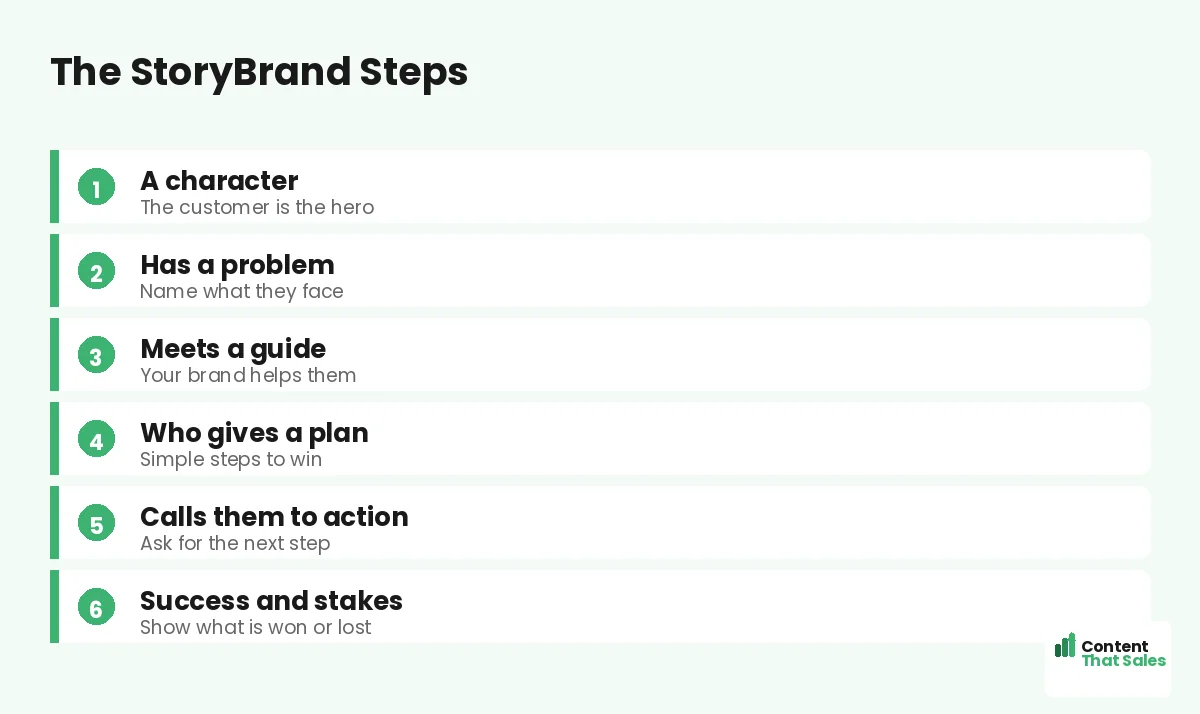
What StoryBrand Is
StoryBrand is a messaging framework based on the elements of a good story. It casts your customer as the hero and your brand as the guide. The core insight is simple: customers are not looking for another hero, they are looking for a guide to help them win.
On a landing page, StoryBrand brings clarity. By organizing your message around the customer’s journey, it pairs naturally with a strong landing page structure, so visitors instantly grasp the problem you solve and how you help.
Make the Customer the Hero
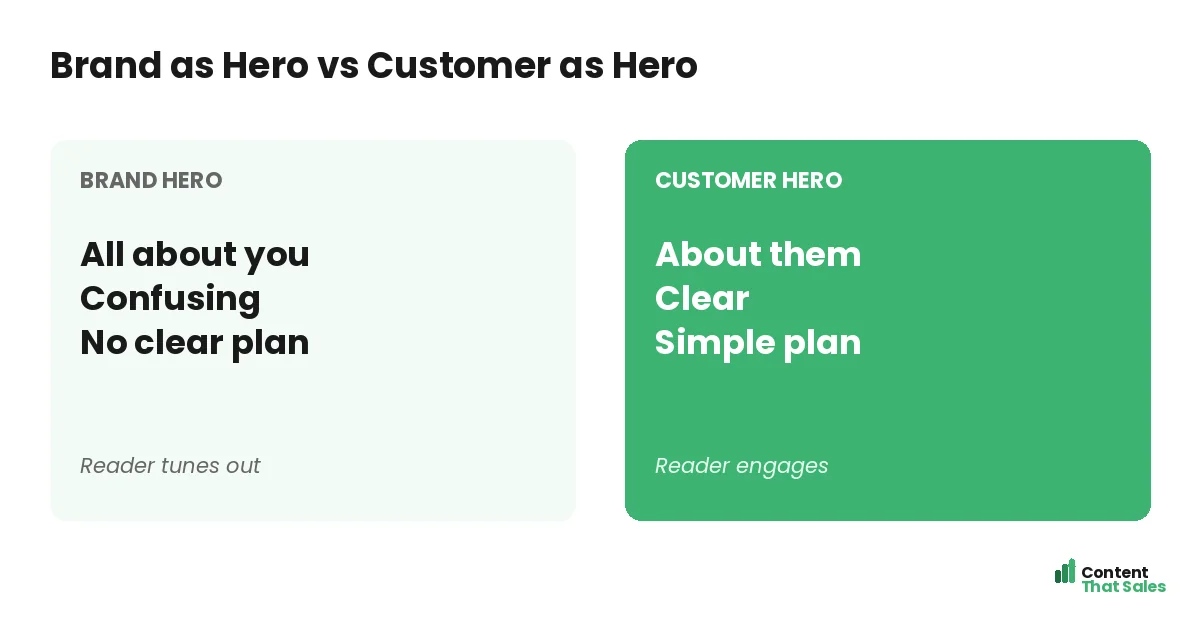
The biggest shift StoryBrand asks for is humility: your brand is not the hero, the customer is. The page should be about their journey, their problem, and their success, not your awards and history. Position everything around them.
This change alone transforms most pages. When the reader sees themselves as the hero of the story, they engage. When the page is all about the company, they tune out. Lead with “you,” not “we,” and the message connects.
A Character With a Problem
Every story starts with a hero who wants something. On your page, that is the customer and their goal. Name what they want and the problem standing in their way. StoryBrand splits the problem into external, internal, and philosophical layers.
The external problem is the practical issue; the internal is how it makes them feel; the philosophical is why it matters. Address all three and your message resonates deeply. Naming the problem clearly shows the reader you understand their story.
Meets a Guide
The hero then meets a guide, your brand. A good guide shows two things: empathy and authority. Empathy says “I understand your struggle.” Authority says “I have helped others win.” Together they make the reader trust you to lead them.
On the page, express empathy with language that shows you get their pain, then prove authority with testimonials, results, and credentials. The guide does not steal the spotlight; it earns trust so the hero feels safe following its lead.
Who Gives a Plan
Heroes need a plan to feel confident acting. So the guide gives one, a simple set of steps that shows the path to success. A clear three-step plan removes confusion and makes the next move feel easy and safe.
For example: “Book a call, get your strategy, watch results grow.” Since readers scan more than they read, a simple plan laid out in clear steps reassures the reader that working with you is straightforward.
And Calls Them to Action
The guide then calls the hero to action. This is your CTA, a clear, direct invitation to take the next step. StoryBrand stresses being explicit: heroes do not act unless challenged, so ask plainly and confidently for the action you want.
Use a direct CTA and consider a transitional one too, like a free resource, for those not ready to buy. Following solid landing page CTA best practices, a clear call to action moves the hero forward in their story.
Did you know?
StoryBrand’s core insight is that customers are not looking for another hero, they are looking for a guide, so the brand that positions itself as the helper wins trust.
Success and Stakes
Finally, the story needs stakes: what success looks like and what failure costs. Show the reader the happy ending your solution leads to, and hint at what they risk by doing nothing. Stakes give the story meaning and urgency.
Paint the success vividly, the transformation the hero achieves. Then gently note the cost of inaction. Balancing the bright future with the risk of staying stuck motivates the reader to act and step into the better version of their story.
Map StoryBrand to Your Page
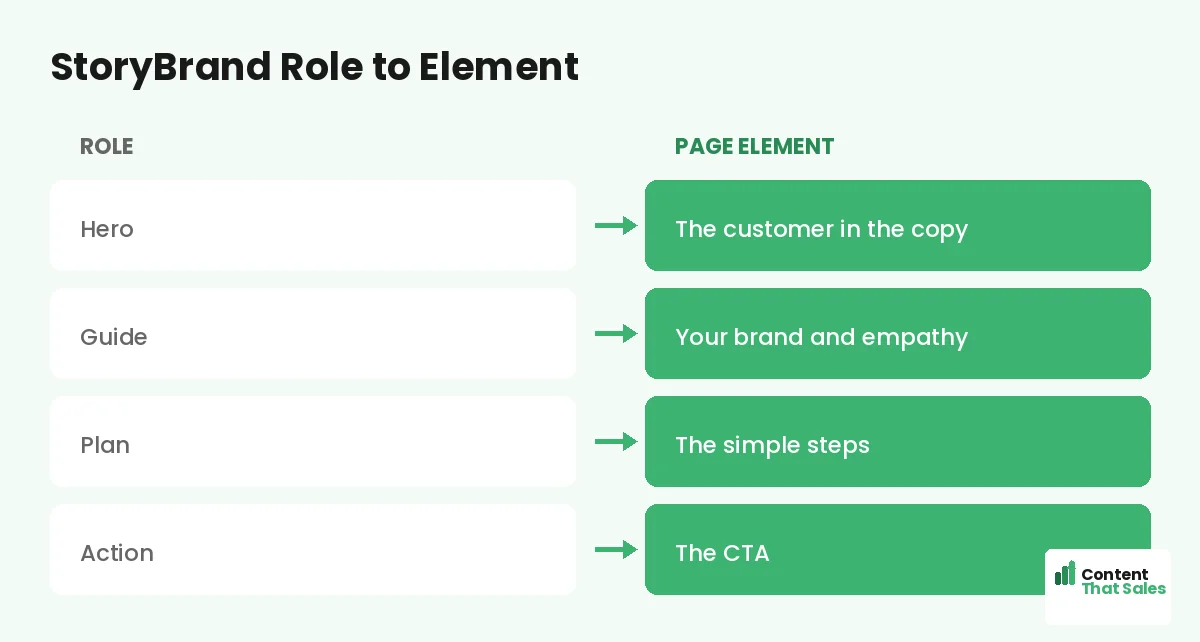
Each part maps to your page. The hero is the customer throughout the copy. The problem is the headline and intro. The guide is your empathy and authority. The plan is a simple steps section. The action is the CTA. Success and stakes weave throughout.
This gives you a clear, customer-centered structure. Open with the hero’s problem, position your brand as the empathetic, authoritative guide, give a simple plan, call them to action, and show the success at stake. The story carries the reader along.
An Example StoryBrand Flow
Imagine a page for a financial advisor. Hero and problem: “You want a secure retirement, but the options feel overwhelming.” Guide: “We have helped 500 families retire with confidence, and we understand the worry.” That blends empathy and authority.
Plan: “Book a call, build your plan, retire with confidence.” Action: “Schedule your free consultation.” Success and stakes: “Enjoy the retirement you have earned, instead of guessing and hoping.” The customer stays the hero throughout.
Clarity Is the Whole Point
The real power of StoryBrand is clarity. Confused visitors do not convert. By framing your message as a simple story with the customer at the center, you make it instantly clear what you offer and how it helps. Clarity beats clever every time.
If a visitor cannot quickly answer what you offer, how it helps, and what to do next, the page fails. StoryBrand forces those answers to the surface. A clear, customer-centered story is what turns confusion into confident action.
StoryBrand vs Other Frameworks
StoryBrand is more of a messaging philosophy than a rigid copy formula. It pairs well with structures like AIDA or the 4 Ps, guiding the voice while those guide the flow. Where the AIDA formula sequences attention to action, StoryBrand frames who the story is about.
Use StoryBrand to get your message clear and customer-centered, then layer a flow framework to structure the page. The two work together: StoryBrand decides the story, the formula decides the order. Together they make a page both clear and persuasive, much like pairing StoryBrand with the 4 Ps formula.
Put It All Together
The StoryBrand framework makes your customer the hero and your brand the guide, organizing your page around their problem, your plan, a clear call to action, and the success at stake. The result is a message of striking clarity.
Cast the customer as the hero, show empathy and authority, give a simple plan, and call them to act. Simple, clear copy keeps winning, since easy reading lifts conversions. Follow StoryBrand and your page becomes a clear story the reader wants to join.
How Content That Sales Helps
We make your message clear and customer-centered. That’s where we come in. At Content That Sales, we build landing pages on the StoryBrand approach, casting your customer as the hero and your brand as the guide that helps them win.
You share your customer and what you help them achieve. We craft a clear story with empathy, authority, a plan, and a call to action. The result is a page so clear that visitors instantly see how you help and what to do.
Ready to Clarify Your Message?
Now you know the StoryBrand framework for landing pages: make the customer the hero, be the guide, give a plan, and call them to action. Clarity converts. So why make your page about you when it should be about them?
Let’s build a page with a clear, customer-first story. Book your free consultation now. Call us at 8801631988589 or email service@contentthatsales.com. Let’s turn your next visitor into your next customer.
Frequently Asked Questions About the StoryBrand Framework
What is the StoryBrand framework?
A messaging framework based on storytelling that casts the customer as the hero and your brand as the guide, bringing clarity to how you help them win.
Why make the customer the hero?
Customers are not looking for another hero; they want a guide to help them succeed. When the page is about them, they engage; when it is about you, they tune out.
What role does the brand play?
The guide. A good guide shows empathy, that it understands the struggle, and authority, that it has helped others win, so the hero trusts it to lead.
Why include a plan?
Heroes act with confidence when they see a path. A simple three-step plan removes confusion and makes the next move feel easy and safe.
What are stakes in StoryBrand?
What success looks like and what failure costs. Showing the happy ending and hinting at the risk of inaction gives the story meaning and urgency.
Does StoryBrand replace formulas like AIDA?
No, it complements them. StoryBrand frames who the story is about; a flow formula structures the order. Use them together for clarity and persuasion.
What is the main benefit of StoryBrand?
Clarity. Confused visitors do not convert. Framing your message as a simple, customer-centered story makes it instantly clear how you help and what to do.
Can Content That Sales help?
Yes. We build pages on the StoryBrand approach that make the customer the hero and clarify your message. Reach out for a quick quote.