 Skip to content
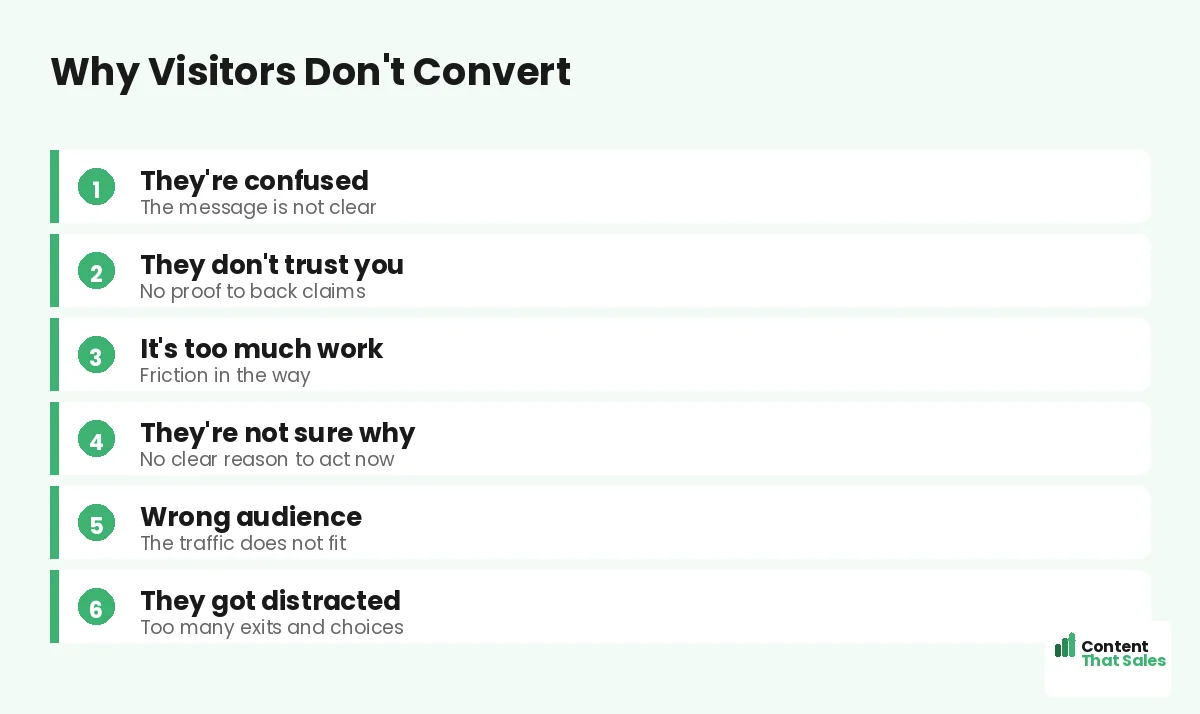
When visitors don’t convert on your landing page, it is almost never random. They leave for specific, human reasons: they are confused, they do not trust you, the next step feels like too much work, or they see no reason to act now. Traffic is arriving, but something on the page quietly talks them out of it. The fix starts with understanding what is going on in the visitor’s head. This guide walks through the real reasons people fail to convert, and how to remove each one.
It helps to step into the visitor’s shoes. They landed with a question and a bit of doubt. In a few seconds, they decide whether your page is worth their time and trust. If anything feels unclear, risky, or hard, they bounce. Let’s look at exactly what triggers that bounce, so you can stop it.
Below, we cover the main conversion killers, from confusion to friction to distrust, and the simple fix for each. By the end, you will see your page through your visitor’s eyes and know what to change.

They Land Confused About the Offer
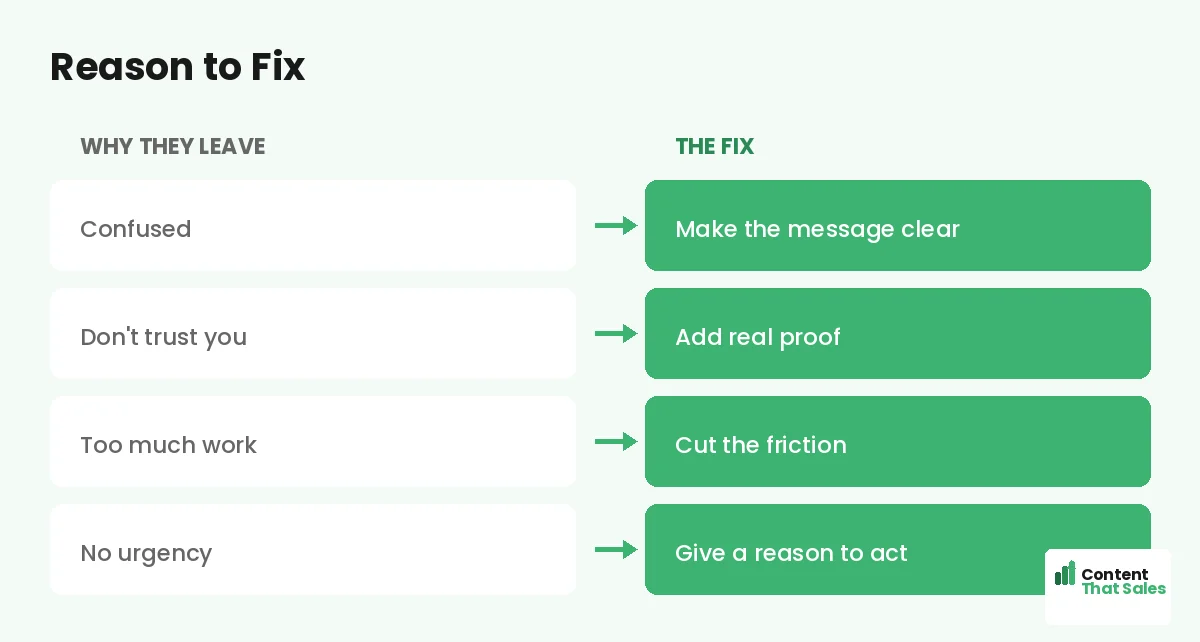
The most common reason visitors do not convert is simple confusion. They cannot tell what you offer, who it is for, or what to do next. A cluttered headline or a vague promise leaves them guessing, and a confused mind never acts. They leave to find an answer somewhere clearer.
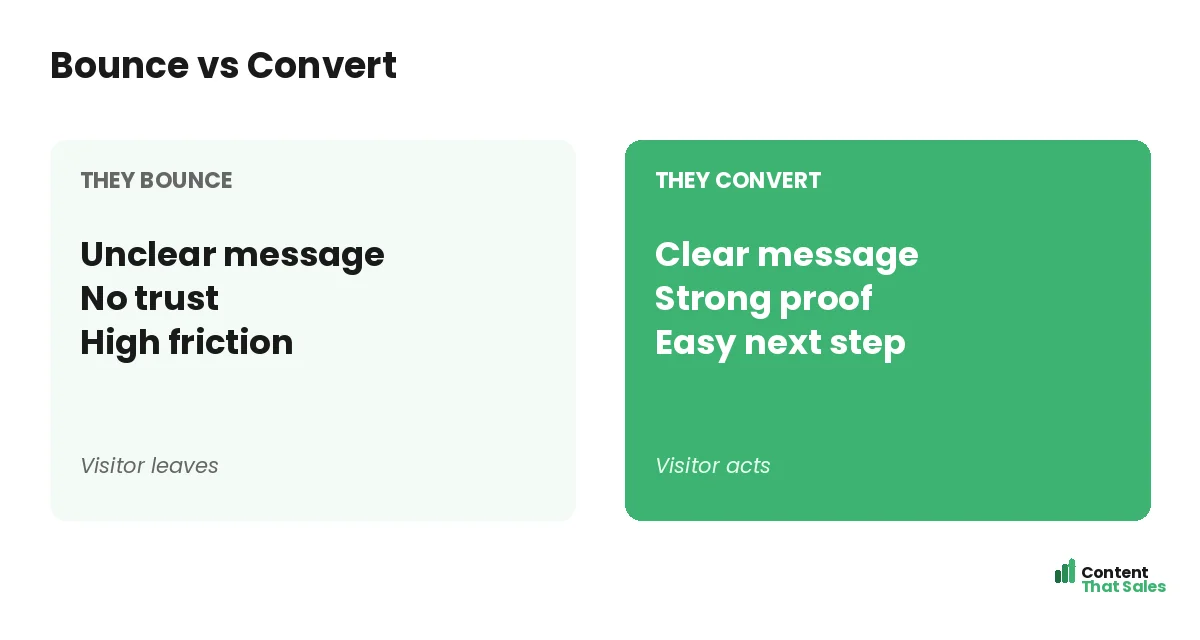
The fix is ruthless clarity. Say what you do and the win it delivers in plain words at the top. One clear promise beats a clever line every time. When the offer is obvious in a glance, confusion disappears and the reader keeps going.
They Don’t Trust You Yet
Strangers arrive skeptical. If your page makes bold claims with nothing to back them, doubt wins. People will not hand over an email or money to a business they do not believe. Without proof, even a great offer feels risky.
Add real proof to earn that trust. Reviews, testimonials, numbers, logos, and guarantees all help. Place the strongest proof near your call to action, where doubt peaks. Seeing that others trusted you and won gives the visitor permission to act too.
The Next Step Feels Like Too Much Work
Friction quietly kills conversions. A long form, a vague button, or too many choices all make acting feel hard. Visitors are busy and a little lazy, so any extra effort tips them toward leaving. They want the easy path, not a chore.
Clear the path. Shorten the form, sharpen the button, and remove competing links. Ask for only what you truly need. People scan more than they read, so make the next step obvious and effortless. A short path to yes wins far more action.
They See No Reason to Act Now
Even an interested visitor may stall without a reason to act today. If there is no urgency and no clear payoff for acting now, they think “later,” and later rarely comes. The page lets them drift away without a nudge.
Give a gentle reason to move. A limited offer, a clear next benefit, or simply a strong, confident call to action can do it. You do not need fake countdowns. You need to make the value of acting now feel real and worth it.
You’re Attracting the Wrong Audience
Sometimes the page is fine, but the traffic is wrong. If your ads bring people who do not want your offer, they will not convert no matter how good the page is. A mismatch between the visitor and the offer dooms the result.
Check your targeting and your message match. The ad should attract the right person and promise what the page delivers. When the right visitor meets the right offer, conversions follow naturally. The wrong visitor never will, so fix the fit first.
Did you know?
Most visitors decide whether to stay within seconds. Confusion or doubt in that first moment is enough to lose a sale you already paid for.
The Page Distracts Them Away
Every extra link is an exit. A full menu, social icons, related offers, and outbound links all give the visitor somewhere else to go. Distraction pulls attention off your one goal, and a distracted visitor rarely converts. They wander off and forget why they came.
Strip the distractions from your landing page. Keep one clear action and remove everything that competes. The fewer the choices, the more likely the reader takes the one you want. A focused page guides; a busy page scatters. Focus wins.
The Copy Talks About You, Not Them
Visitors care about their own goals, not your company story. A page full of “we” and “our” leaves them cold. If the copy never speaks to their problem and their win, they feel unseen and move on. Self-focused pages quietly repel readers.
Flip the focus to the reader. Lead with their problem and the result they want. Use “you” more than “we.” When visitors feel understood, they lean in. Reader-first copy is one of the biggest reasons a page converts instead of bounces, and clear, simple wording helps too, since easy reading lifts conversions.
The Page Loads Too Slowly
Some visitors never even see your page. A slow load loses them before the content appears, especially on mobile. Every extra second of wait sheds visitors who will not return. Speed is a silent, brutal conversion killer.
Lighten the page so it loads fast. Compress images, cut heavy scripts, and test on a real phone. A quick page gives your message a chance to work. If the page drags, fix that before you blame the copy or the offer.
How to Diagnose Your Own Page
Stop guessing and look at the data. Heatmaps show where attention dies. Session recordings show where people hesitate or leave. A high bounce on the first screen points to a weak headline. Lots of reads but no clicks points to a weak CTA or missing proof.
Compare your page against the common reasons landing pages fail and the steps in landing page conversion rate optimization. Find the biggest leak first, then fix it. One clear diagnosis beats a dozen random tweaks.
How Content That Sales Wins Back Lost Visitors
Most lost conversions come down to unclear, untrustworthy, or self-focused copy. That’s where we come in. At Content That Sales, we rewrite your page to be clear, trustworthy, and reader-first, so visitors stop bouncing and start acting.
You share the page and the goal. We fix the message, add the proof, and clear the friction. If you want done-for-you landing page copy, we make it effortless, and you can pair it with quick wins to increase landing page conversion rate fast. The result is a page that keeps the visitors you paid for.
Ready to Turn Visitors Into Customers?
Now you know why visitors don’t convert on your landing page. Confusion, doubt, friction, no urgency, the wrong audience, or distraction. So why keep losing hard-won traffic when each cause has a clear, simple fix?
Let’s turn your bouncing visitors into booked leads. Book your free consultation now. Call us at 8801631988589 or email service@contentthatsales.com. Let’s turn your next visitor into your next customer.
Frequently Asked Questions About Why Visitors Don’t Convert
Why don’t visitors convert on my landing page?
Usually because they are confused, do not trust you, find the next step too hard, or see no reason to act now. The wrong audience and a slow or cluttered page also cost conversions.
How do I make my offer clearer?
Say what you do and the win it delivers in plain words at the top. One clear promise beats a clever line, so remove anything that makes the reader guess.
How do I build trust quickly?
Add real proof: reviews, testimonials, numbers, logos, and guarantees. Place the strongest proof near your call to action, where doubt peaks.
What causes friction on a landing page?
Long forms, vague buttons, too many choices, and slow loads. Each adds effort, and effort tips busy visitors toward leaving instead of acting.
Could my traffic be the problem?
Yes. If your ads attract people who do not want your offer, they will not convert. Check your targeting and message match before blaming the page.
How do I find the real reason they leave?
Use heatmaps and session recordings to see where attention dies, then fix the biggest leak. Data beats guessing every time.
Does page speed affect conversions?
Yes. A slow page loses visitors before they read, especially on mobile. A faster page gives your message a chance to work.
Can you fix my page so visitors convert?
Yes. Content That Sales rewrites pages to be clear, trustworthy, and reader-first. Reach out for a quick quote.