 Skip to content
Landing page conversion rate optimization, or CRO, is the steady process of turning more of your existing visitors into leads and customers without spending a cent more on traffic. It is one of the highest-return things you can do in marketing, because every lift compounds across every click you already pay for. Instead of chasing more visitors, you make the visitors you have worth more. This guide walks you through the full CRO process, from finding the leaks to banking the wins.
Here is why CRO matters so much. If you double your conversion rate, you double your leads from the same ad spend. That is leverage most businesses ignore while they pour money into more traffic. The smarter path is to fix the page first. Let’s build a simple, repeatable system that lifts your rate over time.
Below, we cover what CRO really is, how to measure it, how to find where visitors drop off, and how to test fixes that stick. By the end, you will have a clear plan to grow your conversion rate month after month.

What Conversion Rate Optimization Means
CRO is the practice of improving the percentage of visitors who take your desired action. That action might be a booking, a signup, or a sale. You raise the rate by removing friction and adding clarity, then proving each change with data. It is part science and part craft.
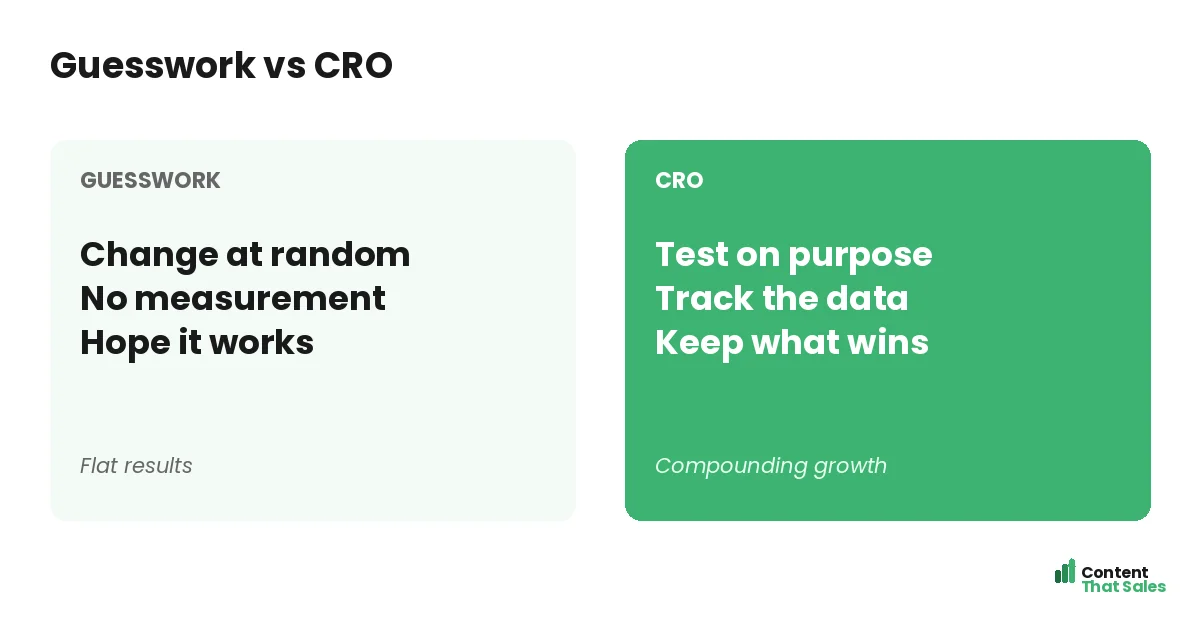
The key word is optimization, not guessing. You do not just redesign on a hunch. You measure, change one thing, and check the result. Over time, those proven changes stack into a much stronger page. CRO turns your landing page into an asset that keeps improving.
Why CRO Beats Buying More Traffic
More traffic is expensive and temporary. The moment you stop paying, it stops coming. A higher conversion rate is permanent and free to keep. Once you lift the rate, every future visitor is worth more, forever.
Think about the math. Going from a 2% to a 4% conversion rate doubles your results with the same spend. That is a raise you give yourself by fixing the page. Smart businesses optimize the page before they pour more money into ads.
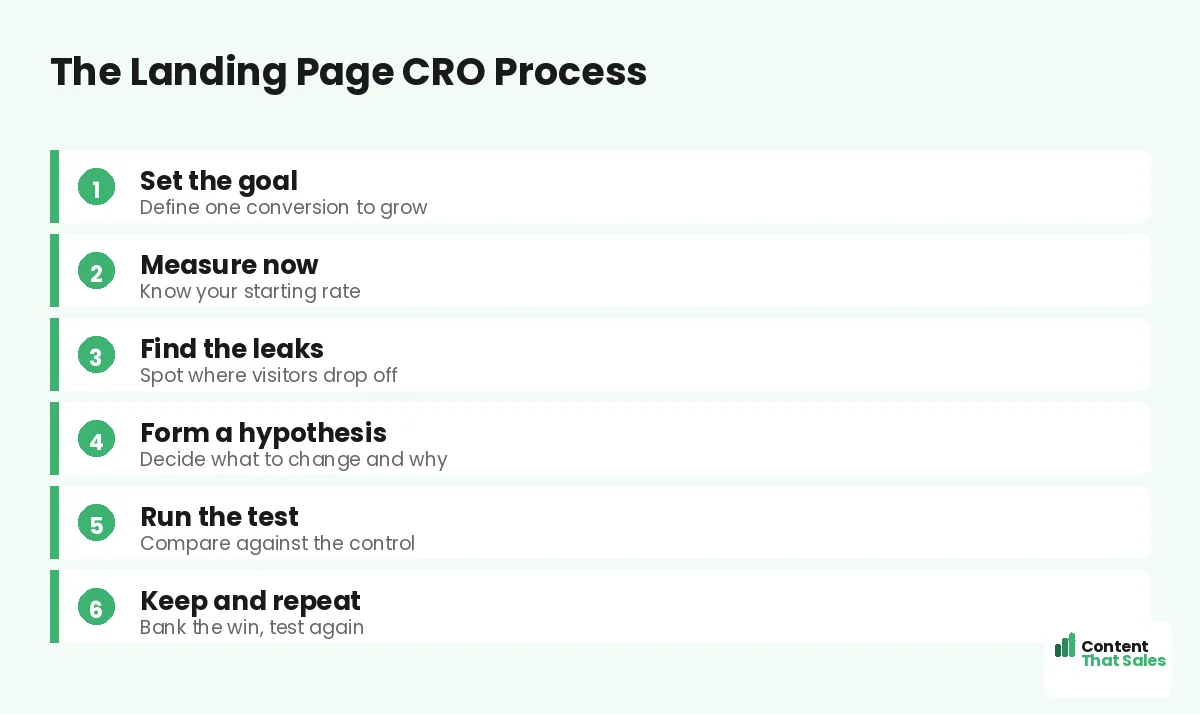
Step 1: Set the Goal and Measure It
Start by naming the one conversion that matters. A booked call, a form fill, or a purchase. Then measure your current rate so you have a baseline. Without a number to start from, you cannot tell if a change helped or hurt.
Keep the metric simple and tied to revenue. Avoid vanity numbers like clicks or time on page. One clear conversion metric gives you one clear scoreboard. That scoreboard is what every test will be measured against.
Step 2: Find Where Visitors Drop Off
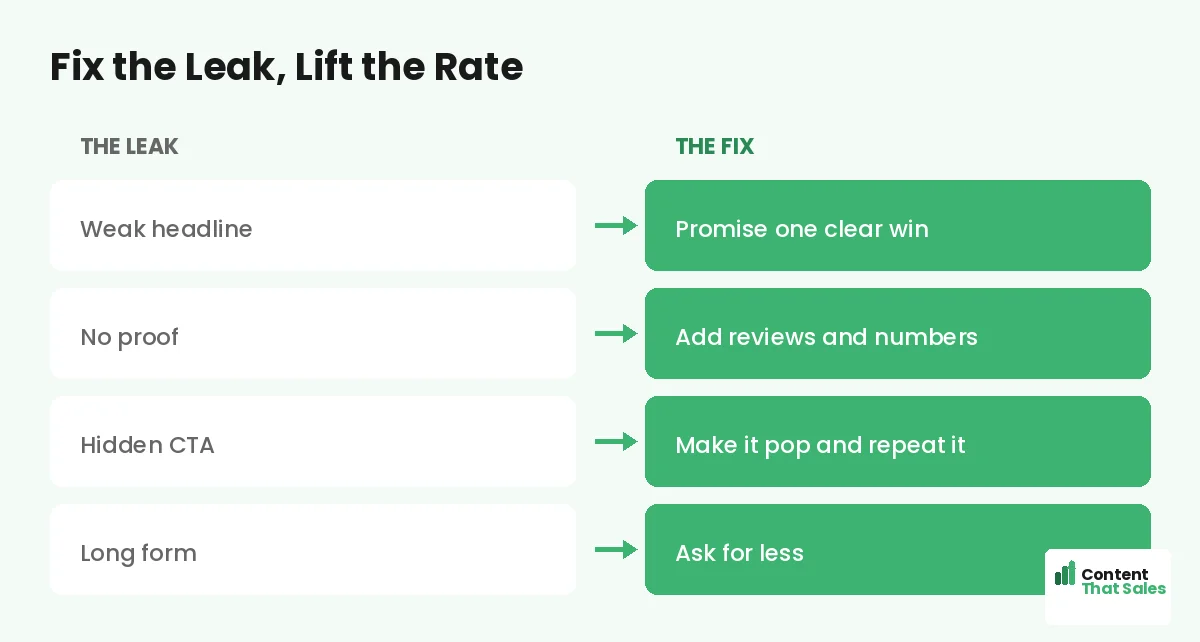
Before you fix anything, find the leak. Look at where people leave. A high bounce on the first screen points to a weak headline or offer. Lots of reads but few clicks points to a weak CTA or missing proof.
Tools like heatmaps and session recordings show where attention dies. Even a careful read of the page against the reasons landing pages fail can reveal the problem. Fix the biggest leak first, because that is where the easiest gains hide.
Step 3: Form a Clear Hypothesis
Do not change things at random. Form a hypothesis. For example, “the headline is vague, so a specific one will lift conversions.” A good hypothesis names the problem, the change, and the expected result. That clarity makes every test a lesson.
Base your hypothesis on evidence, not whim. Use what the data and the page review told you. A hypothesis grounded in a real leak is far more likely to win. It also teaches you something useful even when it loses.
Did you know?
The median landing page converts around 6.6%, but top performers reach double digits. The gap between average and great is usually CRO, not more traffic.
Step 4: Test the Change
Run an A/B test to prove the change. Show the new version to half your visitors and the old one to the other half, at the same time. Change only the one element so you know what caused any difference. Then let the data decide.
Wait for enough traffic before you call a winner, or you risk chasing noise. To go deeper on this, see how to test landing page headlines, since the same method applies to any element. Clean tests give answers you can trust.
Step 5: Keep the Winner and Repeat
When a version wins, make it the new control. Then pick the next leak and test again. CRO is a loop, not a one-time project. Each round nudges your rate higher, and the gains compound over months.
This habit is what separates pages that improve from pages that stall. A page tested every month becomes a strong performer within a year. Small, proven wins stack into big results. Patience and consistency are the real secret.
The Highest-Impact Things to Optimize
Not all changes are equal. The headline usually moves the rate most, since most people read it first. The offer and the CTA come next. Proof, page speed, and form length round out the big levers. Start at the top of that list.
Build on a solid foundation by following the best landing page structure. People scan more than they read, so clarity beats clever at every step. Focus your tests on the high-impact elements and you will see results faster.
Copy Is the Engine of CRO
Design gets the attention, but copy does the convincing. The words decide whether the reader believes the promise and feels safe acting. Most big CRO wins come from clearer headlines, sharper benefits, and stronger CTAs. The message is the lever.
That is why simple, specific writing lifts conversions, since easy reading lifts conversions. Before you redesign the layout, sharpen the words. Often the same page with better copy converts far better, no new design required.
Common CRO Mistakes to Avoid
A few habits sink CRO efforts. Testing too many things at once. Calling winners before there is enough data. Chasing tiny tweaks while ignoring the headline. Copying competitors without testing on your own audience. Each one wastes time and traffic.
The fix is discipline. One change at a time. Enough data before you decide. Focus on the big levers first. Test on your own visitors, not someone else’s. A steady, honest process beats a flurry of random changes every time.
How Content That Sales Drives CRO
Most CRO wins come from better words, and that is our specialty. At Content That Sales, we audit your page, find the leaks, and rewrite the copy that holds your conversions back. Then we help you test, so the gains are proven, not guessed.
You share the page and the goal. We sharpen the headline, the offer, and the CTA. If you want done-for-you landing page copy, we make it effortless. The result is a page that converts more of the traffic you already have.
Ready to Turn Visitors Into Customers?
Now you have a clear landing page conversion rate optimization guide. Measure the rate. Find the leaks. Form a hypothesis. Test, keep the winner, and repeat. So why keep buying traffic when a better page earns more from every click?
Let’s lift your conversion rate without raising your ad spend. Book your free consultation now. Call us at 8801631988589 or email service@contentthatsales.com. Let’s turn your next visitor into your next customer.
Frequently Asked Questions About Landing Page CRO
What is landing page conversion rate optimization?
It is the process of turning more of your existing visitors into leads or sales by removing friction, adding clarity, and testing changes. You grow results without buying more traffic.
Why is CRO better than more traffic?
A higher conversion rate is permanent and free to keep, while traffic stops when you stop paying. Lifting the rate makes every future visitor worth more.
How do I start with CRO?
Set one conversion goal, measure your current rate, then find where visitors drop off. Fix the biggest leak first and test the change.
What should I optimize first?
Usually the headline, since most people read it first. Then the offer, the CTA, the proof, page speed, and form length, in that rough order.
How long does CRO take to work?
Each test needs enough traffic to be reliable, so it varies. The gains compound over months, so steady testing beats one big redesign.
Does copy matter for CRO?
A lot. Most big wins come from clearer headlines, sharper benefits, and stronger CTAs. Often better copy lifts conversions with no new design.
What is the biggest CRO mistake?
Changing many things at once. If you test everything together, you cannot tell what worked. One change per test keeps results clean.
Can you handle CRO for my page?
Yes. Content That Sales audits, rewrites, and helps test your page to lift conversions. Reach out for a quick quote.