 Skip to content
You hired a good writer. The first draft still missed. Sound familiar? Most of the time the writer is fine. The brief is broken. Learning how to brief a content writer for best results is the fix nobody talks about.
Here is the hard truth. A great writer plus a vague brief equals a weak draft. Garbage in, garbage out. The brief is the steering wheel. Skip it and the car drifts.
There is an old saying. “Well begun is half done.” Briefing works the same way. Start sharp. Save weeks.
This guide hands you a full briefing system. Each part is simple. Each part removes guesswork. We built it inside Content That Sales, where we run briefs at scale every single day.
By the end, you will know what to put in a brief. You will know what to leave out. And you will know how to write so AI tools and humans both win.
Let us set the stage first. A brief is not paperwork. It is a thinking tool. It forces you to know what you actually want before someone else tries to guess it.
Most owners skip this step because they feel busy. Then they spend three times longer fixing drafts. The math never works in their favor.
Have you ever sent a request, then thought “that is not what I meant” when the work came back? That moment is a briefing failure. Not a writing failure.
So slow down for ten minutes. That short pause saves you days of back and forth. A sharp brief is the cheapest speed boost you will ever get.
Why a Strong Brief Beats a Strong Writer
Talent is real. But talent without direction wanders. A clear brief turns raw skill into the exact piece you need.
Think of it like a taxi ride. The driver is skilled. But if you only say “go somewhere nice,” you waste fuel. You name the address. Then the trip is fast.
A weak brief costs you twice. Once in rewrites. Once in lost time you never get back. Both hurt more than the writer’s rate.
This is also why hiring is only step one. After you pick someone using the right questions to ask before hiring a content writer, the brief is what turns that hire into results.
Here is the part owners miss. Writers are not mind readers. They write what you say, not what you meant. The gap between those two things is where bad drafts live.
Close that gap on paper. Before any writing starts. That one habit changes everything.
Here is another angle worth holding. A writer can only be as good as the input they get. Feed them fog and you get fog back. Feed them a clear target and skill takes over.
Picture two teams with the same writer. Team A sends a one-line request. Team B sends a tight brief. Same writer. Same week. Wildly different drafts.
That difference is not luck. It is process. The brief is the part of the process you fully control. So control it well.
One more thing. A strong brief also builds trust with the writer. They feel set up to win, not set up to fail. Motivated writers do their best work.
The Anatomy of a Brief That Actually Works
A good brief is short. But every line earns its place. Six core parts do most of the work.
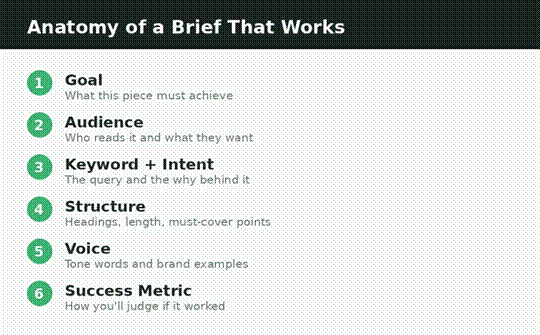
The six building blocks every strong content brief needs.
Miss one of these and the draft wobbles. Hit all six and the writer can run without you. Let us break each one down.
1. The Goal of the Piece
Start with one line. What must this piece do? Rank? Capture leads? Build trust? Name it plainly.
A goal points every choice the writer makes. No goal means no compass. The draft just floats.
Be specific here. “Get more traffic” is weak. “Rank for this term and push readers to the demo page” is strong. The sharper the goal, the sharper the draft.
One goal per piece works best. Two goals split the focus. Three goals guarantee a muddy result. Pick the main job and commit.
2. The Audience
Name the reader. Not “everyone.” A SaaS founder reads different than a first-time buyer. Be specific.
Add their pain. Add what they already know. The writer then talks to a person, not a crowd.
A quick trick helps here. Picture one real person who fits. Write the brief for them. Mass content for “everyone” connects with no one.
Also note what the reader should feel. Relieved? Confident? Ready to act? Emotion shapes word choice as much as facts do.
3. The Keyword and Search Intent
Give the target keyword. Then explain the intent behind it. Why does someone search this? What do they want next? If you need deep work here, pair the writer with keyword research support.
Intent matters more than the phrase. “Best CRM” wants a list. “How to set up a CRM” wants steps. Same niche. Different jobs.
Add the secondary terms too. A short list is fine. The writer weaves them in without forcing a single one.
Then state the search type. Is it a how-to? A comparison? A deep guide? Match the format to what already ranks. Fighting the SERP rarely works.
4. The Structure and Length
Sketch the shape. How long? How many headings? What must the piece cover? A rough outline saves a full rewrite.
You do not need every word. You need the frame. The writer fills the rest with skill.
List the must-cover points. These are the non-negotiables. Everything else is the writer’s call. That balance respects their craft and protects your goal.
Give a length range, not a hard number. “Around 1,800 words” beats “exactly 1,800.” Depth should fit the topic, not a rigid count.
5. The Voice and Tone
Drop in two or three tone words. Friendly? Bold? Calm and expert? Then link one or two pieces that nail your voice.
Voice notes turn a generic draft into a branded one. Skip this and every piece sounds like a stranger wrote it.
Add a “never” line too. One phrase or style you hate. Knowing what to avoid is as useful as knowing what to chase.
6. The Success Metric
End with how you will judge it. Page-one in 60 days? More demo signups? Lower bounce? Name the win.
A metric keeps the writer honest. It also keeps you honest. Both of you aim at the same target.
Without a metric, “good” becomes a feeling. Feelings shift. A number does not. Anchor the brief to something you can check later.
Vague Brief vs Clear Brief: The Real Difference
Most briefs fail in one sentence. “Write us a blog about SEO.” That is not a brief. That is a wish.
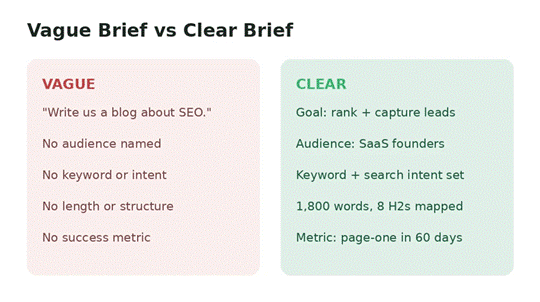
The same request, briefed two ways. One drifts. One delivers.
Look at the gap above. The vague side gives the writer nothing to grip. The clear side hands them a map.
A clear brief is not longer for the sake of it. It is just complete. Each line removes a question the writer would have asked anyway.
Here is a quick test. Read your brief out loud. Could a stranger write the piece from it? If not, it is not done yet.
Vague briefs feel faster. They are not. You pay the time back in edits. Clear briefs feel slower up front. They are the fast path.
How to Brief for AI Overviews and LLM Search
Search changed hard. Google now shows AI Overviews above the links. Tools like ChatGPT and Gemini answer straight in chat. Your brief must account for that in 2026.
If your brief ignores AI search, your content gets skipped. The writer needs to know you want pages that AI models can quote with trust.
Tell the Writer to Front-Load the Answer
Ask for a clear answer near the top. Short. Quotable. No long warm-up. AI Overviews lift the clean line, not the fluff.
Put this in the brief as a rule. “Answer the main question in the first 80 words.” That single note shapes the whole draft.
Ask for Question-Shaped Headings
AI tools map content to questions. So brief the writer to use headings that match real queries. Plain questions beat clever labels here.
This also helps featured snippets and People Also Ask. One structure choice. Two ranking wins.
Demand Trust Signals in the Brief
LLM search rewards trust. Brief for an author name. Real sources. Clear claims. No vague hand-waving.
This is the new floor for SEO content writing, not a bonus. A writer who knows this protects your traffic.
Add one more line to the brief. “Write for two readers. The human who needs help. The AI model that wants a clean answer.” That mindset is the 2026 standard.
Test the Writer’s AI Search Knowledge
Before you brief, check they get the shift. Ask what changed in search this past year. A current writer names AI Overviews and chat search fast.
If they only talk old keyword tricks, brief harder. Or find a writer who lives in 2026, not 2019. The game moved. Your content must too.
Smart writers know one more risk. If AI answers on the results page, fewer people click. So the page must earn the click with depth and trust. Put that pressure in the brief.
How to Brief SEO Without Triggering Keyword Stuffing
SEO still matters. Stuffing does not work. So your brief must guide keywords, not force them.
Give the primary keyword. Give a few related terms. Then say the magic line. “Use these naturally. Reader first.” That instruction does the heavy lifting.
Brief for intent over density. Tell the writer the job the page must do for the searcher. Counting keywords is the old game. Serving intent is the new one.
Think of keywords like salt. A little brings out flavor. Too much ruins the dish. Your brief sets the right pinch.
Brief for topic coverage, not phrase counts. Tell the writer the subtopics a strong page must touch. Google rewards full answers, not repeated phrases.
Add a line about related questions. “Cover the top People Also Ask queries on this topic.” That one note widens reach without stuffing a thing.
If you are unsure whether you need ranking content or selling content, our piece on content writing vs copywriting clears it up fast.
Build a Feedback Loop Into the Brief
A brief is not a one-time drop. The best results come from a short, tight loop. Brief, outline, draft, review, refine.
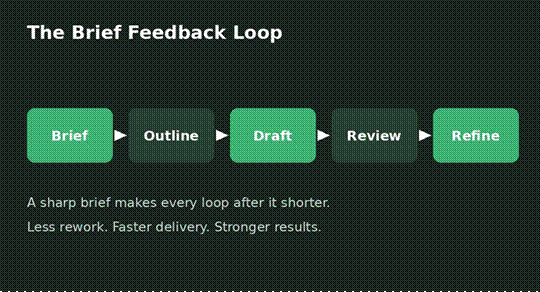
A sharp brief shrinks every step that follows it.
Add one checkpoint to the brief. “Send the outline before the draft.” That single gate stops most big misses early.
Fixing an outline takes minutes. Fixing a full draft takes hours. Catch problems while they are cheap.
Set the loop in the brief itself. Name the check-in points. Name how feedback comes back. Smooth loops save days, not minutes.
Add a deadline for each stage, not just the final one. Outline by Tuesday. Draft by Friday. Stage dates keep momentum alive.
Think of the loop like a relay race. Each handoff must be clean. A dropped baton at the outline stage costs the whole race.
One more rule helps. Ask the writer to flag any blocker early. Silence is the enemy. Early flags save the deadline.
How to Brief Brand Voice So It Sticks
Voice is where most briefs go thin. “Make it sound like us” means nothing on its own. You have to show it.
Add three tone words. Add two short snippets you love. Add one line you would never say. Now the writer has guardrails.
If voice drift is a constant problem, that often points to a process gap. It may be time to look at what a content writing agency does to keep voice steady across many pieces.
Here is a simple trick. Brief the writer to read your last winning piece before they start. Tone copies faster from a sample than from adjectives.
Build a tiny voice doc once. Three tone words. Two good samples. One never-do line. Reuse it in every brief from then on.
Voice is a coat, not a costume. A strong writer slips into yours and it fits. A weak brief leaves them guessing the size.
Test voice with a short paid task first. One page. If the tone lands, scale up. If it misses, your brief needs sharper voice notes.
Common Briefing Mistakes That Wreck Good Content
Knowing the parts is half the job. Dodging the traps is the other half. These are the big ones.
Mistake 1: No Goal, Just a Topic
A topic is not a goal. “Email marketing” is a topic. “Get trial users to upgrade” is a goal. Brief the goal.
Mistake 2: Burying the Brief in a Long Call
Calls are great for context. They are bad as the only record. If it is not written, it did not happen. Always put the brief in text.
Mistake 3: Skipping the Outline Gate
Going straight to a full draft is a gamble. The outline gate is your cheapest insurance. Never skip it.
Mistake 4: Vague Feedback After the Draft
“Make it pop” is not feedback. Point to lines. Say what is off. Say what good looks like. Specific notes get specific fixes.
Fix these four and your draft quality jumps fast. The brief filters the work. Your habits filter your own process.
One more mistake hides in plain sight. Briefing by assumption. You assume the writer knows your product. They do not. Spell it out.
Catch these early and you save real money. A bad brief is cheap to fix today. A bad draft is expensive to fix next week.
A Quick Briefing Checklist You Can Reuse
Want a fast version? Use this every time. Copy it. Fill it. Send it.
- Goal: one line on what this piece must achieve.
- Audience: who reads it, what they want, what they know.
- Keyword and intent: the query and the why behind it.
- Structure: rough outline, length, must-cover points.
- Voice: tone words plus one sample to match.
- AI search rules: front-load the answer, question headings, trust signals.
- Success metric: how you will judge if it worked.
- Loop: outline due date, feedback format, deadline.
Eight lines. Five minutes. That is the whole system. Skipping it never saves time. It just moves the cost to later.
Briefing a Solo Writer vs Briefing a Content Team
The brief changes a little based on who you hire. Both need direction. The depth differs.
Briefing a Solo Writer
Solo writers need more context from you. You are the editor and the strategist. Your brief carries more weight.
Briefing a Content Team
A team handles strategy, editing, and SEO for you. Your brief can stay high level because the system fills the gaps. That is the trade you get with a subscription-based content writing services model.
There is a local saying. “One hand cannot clap.” A solo writer does sharp work. But a team turns your brief into a repeatable machine.
Pick based on volume and time. Low volume and hands-on? Solo fits. High volume and hands-off? A team wins.
There is a cost angle too. A solo writer is one rate. A team bundles writing, editing, and SEO into one flow. Compare total value, not just the sticker price.
Think about risk as well. If a solo writer gets sick, your pipeline stops. A team has backup. For steady output, that backup is gold.
Still mapping out what a full content operation involves day to day? Our guide on questions to ask before hiring a content writer pairs well with this briefing system.
Turn Your Brief Into a Reusable Template
Do not write a brief from scratch every time. That wastes the lesson. Build it once. Reuse it forever.
Make a simple template with eight fields. Goal. Audience. Keyword and intent. Structure. Voice. AI rules. Metric. Loop. Fill the blanks each time.
A template does two things. It speeds you up. It stops you forgetting a field under pressure. Both protect your draft quality.
Keep it where the team lives. A shared doc. A pinned message. Wherever briefs actually get sent. A template no one finds is no template at all.
Update it when something breaks. If a draft missed because of a gap, add a field for that gap. The template should learn from every miss.
Over time this becomes your content engine’s manual. New writers ramp faster. Old ones stay sharp. Consistency compounds.
How to Run the Whole Process for Best Results
The brief is the core. But the process around it matters too. Set the tone right and the work flows.
Send the brief in writing. Always. Then ask the writer to repeat it back in their words. That catches gaps in minutes.
Approve the outline before the draft. Give specific feedback on the draft. Then refine once or twice. That is the loop that wins.
Score each draft against the brief, not your mood. Did it hit the goal? Did it serve the reader? Numbers beat gut bias every time.
How to Brief for E-E-A-T and Real Trust
Google rewards experience and trust. So your brief should too. Do not leave this to chance.
Ask the writer for real proof. Data points. Named sources. First-hand insight where you have it. Generic claims do not move rankings now.
Give them your inside knowledge. A short call with your team beats ten online sources. Original insight is the part AI cannot copy.
Brief for an author with a real name and a short bio. This is now part of strong SEO content writing, not a nice extra.
Trust is the iceberg under the words. Readers feel it even when they cannot name it. So does Google. Build it on purpose.
One simple line in the brief helps. “Back every big claim with a source or a real example.” That rule lifts the whole draft.
How to Brief Revisions Without Endless Loops
Even a great brief leads to edits. That is normal. The goal is fewer rounds, not zero.
Set the revision rule in the brief itself. How many rounds? What counts as a fix versus a rewrite? Agree before work starts.
Give feedback in one batch, not in drips. Ten small messages confuse the writer. One clear list moves fast.
Point to exact lines. Say what is wrong. Say what good looks like. “This intro is too slow, cut it to three lines” beats “make it better.”
Protect the writer’s time and yours. A tight feedback habit keeps projects on schedule. Loose feedback drags every deadline.
If revisions keep ballooning across many projects, the issue may be your system, not your writer. That is when teams move to a subscription-based content writing services setup for steadier output.
Frequently Asked Questions
How do I brief a content writer for best results?
To brief a content writer for best results, give a clear goal, a named audience, the keyword and intent, a rough structure, voice notes, AI search rules, and a success metric. Add an outline checkpoint before the draft. That single system removes most rewrites.
How long should a content brief be?
Short but complete. Most strong briefs fit on one page or one screen. Length is not the goal. Clarity is. If a stranger could write the piece from it, the brief is done.
Should I brief for AI Overviews and LLM search?
Yes. In 2026 this is essential. Ask the writer to front-load the answer, use question-shaped headings, and add trust signals like sources and an author name. That makes the page quotable for AI tools and humans.
What is the biggest briefing mistake?
Giving a topic instead of a goal. “Write about SEO” gives the writer nothing to aim at. “Rank for this term and drive demo signups” gives them a target. Always brief the outcome.
Do content services need a detailed brief too?
They need direction, but the depth can be lighter. A good team handles strategy, editing, and SEO inside their system. You still set the goal, audience, and success metric. The team fills the rest.
Final Thoughts: Brief Sharp, Win Long
A vague brief costs you drafts, time, and rankings. A sharp brief buys all of that back.
Use the six parts. Add the AI search rules. Set the loop. Then let a skilled writer do what they do best.
The pattern is simple. Brief sharp. Approve the outline. Give clear feedback. Refine once. Ship. Repeat that and quality stops being luck.
Want content briefed and built right from the first draft? Talk to us at Content That Sales. Call 8801631988589 or email service@contentthatsales.com. We brief sharp so the work lands.
Brief slow. Write once. Then watch the content do its job.