 Skip to content

The warning signs most buyers miss until it is too late.
Hiring help for your blog feels easy. Until it isn’t. Spotting the red flags when hiring content writing services can save you months of wasted cash. Most buyers learn this the hard way. They pay, they wait, and they get junk back.
Here’s the thing. A bad writer doesn’t just waste money. They tank your trust with Google too. And with real readers. So let’s slow down. Let’s look at the signs before you sign anything.
Ever hired someone who talked big and delivered small? Yeah. Me too. As we say back home, a goat is bought by feeling its ribs, not by hearing it bleat. You check the work, not the pitch. This guide walks you through every warning sign.
I’ve watched this play out dozens of times. A founder gets excited. A flashy proposal lands in the inbox. The price feels fair. The promises feel huge. Two months later, the blog reads like a robot wrote it half asleep.
The sad part? Most of these signs show up early. Before any money changes hands. People just don’t know what to look for. Or they ignore the gut feeling because the pitch sounds smooth.
So we’re going to fix that today. By the end, you’ll read proposals like a pro. You’ll spot the duds in five minutes flat. And you’ll know exactly what a good partner actually looks like.
Think of this as a friend pulling you aside before you make a mistake. No fluff. No jargon. Just the real signals that matter when your money and your brand are on the line.
What Counts As A Content Writing Service Anyway?
Let’s get the basics straight first. A content writing service writes words for your business. Blogs, web pages, emails, product copy. Some are solo freelancers. Some are full teams.
Want a deeper breakdown? This piece on what a content writing agency does explains the full scope. The point is simple. You pay for words that move people to act.
But not all services work the same way. Some sell volume. Some sell strategy. Knowing the type helps you spot when something feels off.
The Common Service Models
- Freelancers: one writer, low cost, limited bandwidth.
- Agencies: teams, editors, higher price, more polish.
- Subscription shops: set words per month for a flat fee.
Each model has trade-offs. If you want the full map, the guide on types of content writing services lays it out clean. Pick the wrong model and even good writers can’t help you.
Here’s a quick gut check. A solo freelancer is great for low volume and a tight budget. But they get sick. They take holidays. They juggle five other clients. Your deadline is not always their priority.
An agency costs more. You’re paying for editors, project managers, and backup writers. If one person drops out, the work still ships. That safety has a price tag, and for many brands it’s worth every cent.
Subscription shops sit in the middle. Flat fee, set output, predictable. The risk? Some treat it like a content factory. Volume over value. You have to watch the quality closely month to month.
There’s no single right answer here. It depends on your stage and budget. If you’re weighing the trade-offs, the breakdown of subscription based content writing services is worth a read before you decide.
Red Flag One: No Real Writing Samples
This is the big one. A real service shows its work. No samples means no proof. Walk away.
Some hide behind “client confidentiality.” Sure, that’s a thing. But a pro always has anonymized samples ready. Or a public portfolio. No exceptions.
Ask for samples in your niche. A great fintech writer may flop at recipes. Range matters. So does depth. Thin portfolios hide thin skills.
Why does this matter so much? Because words are the whole product. You wouldn’t buy a car you can’t test drive. Same logic here.
Let me show you what good samples look like. They match your industry or one close to it. They show a clear voice. They have structure, not just walls of text. And they read like a human, not a keyword robot.
Bad signs? One sample. Old work. Generic listicles with no point of view. Or worse, a portfolio link that’s broken. If they can’t keep a link alive, how will they handle your content calendar?
Here’s a trick I use. Ask for a sample on a topic they haven’t written about. A small paid test, even better. Real pros say yes. Fakers stall or vanish. That one ask filters out most of the trash.
Samples are the single fastest trust signal you have. When you’re vetting anyone, lean on the checklist in hire content writing service so you don’t skip this step in the rush to start.
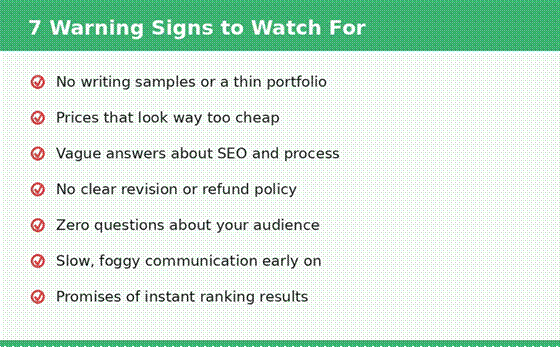
Seven signs that should make you pause before you pay.
Red Flag Two: Prices That Look Too Good
Cheap feels great. Until you read the work. A $5 blog post is a $5 blog post. You get what you pay for.
Rock-bottom rates usually mean spun text. Or rushed drafts. Or AI dumps with zero edits. None of that ranks. None of that converts.
Pricing should make sense for the work. The breakdown on why content writing services cost what they do shows where your money actually goes. Quality research takes time. Time costs money. Simple.
That said, expensive isn’t always better either. Want a fair comparison? See cheap vs premium content writing services. The sweet spot sits in the middle. Fair price, real value, clear scope.
Let’s do quick math. Say you pay $20 for a 1,500-word post. Sounds cheap. Now it ranks for nothing. You pay a real writer $200 to redo it. You just spent $220 for one post. The cheap route cost more.
This is the trap. Cheap content rarely fails loudly. It just quietly underperforms. No traffic. No leads. You don’t notice until you check the numbers months later. Then it stings.
Pricing models matter too. Some charge per word. Some per project. Some on retainer. The guide on content writing retainer pricing explained shows how each one works. Pick the model that matches your volume and goals.
And if you’re trying to set a baseline number, the breakdown of content writing cost per 1000 words gives you a real market range. Anything far below it should make you pause and ask why.
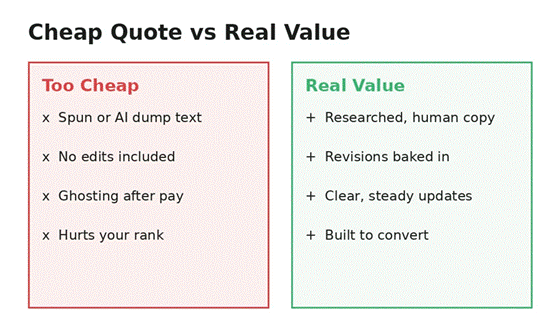
A cheap quote often costs more once you count the rewrites.
Red Flag Three: Vague Answers About SEO
Ask how they handle SEO. Listen close. If the answer is fluffy, that’s a problem.
“We make it Google friendly” means nothing. A real pro talks keywords, search intent, and structure. They mention internal links. They mention topical depth.
SEO writing is its own craft. The explainer on what is SEO content writing breaks down the moving parts. If a service can’t explain its process simply, it likely has no process.
Smart SEO Questions To Ask
- How do you research keywords for a topic?
- How do you match content to search intent?
- Do you map content into clusters or silos?
Good answers feel specific. Bad answers feel like a sales script. Trust the gut here.
Let me give you a real example. Ask, “How do you handle search intent?” A weak answer: “We write for Google.” A strong answer: “We check what already ranks, see if it’s a guide or a list, then match that format and beat the depth.”
See the difference? One is air. One is a method. You don’t need to be an SEO expert to feel which is which. You just need to listen for specifics.
Another tell. Ask about internal links. A pro lights up here. They talk about connecting posts, passing authority, guiding readers. A weak service goes quiet. They’ve never thought about it.
And watch for the keyword-stuffing crowd. If they brag about “hitting the keyword 30 times,” run. That’s 2010 thinking. Modern SEO rewards depth and clarity, not repetition that reads like a broken record.
Red Flag Four: No Clear Revision Policy
First drafts are rarely perfect. That’s normal. What matters is the fix.
A real service spells out revisions upfront. How many rounds? How fast? At what cost? No clear answer is a loud red flag.
Before you commit, run through these questions to ask before hiring a content writer. A fair revision policy protects you. A vague one protects them. Big difference.
Watch for endless extra fees too. Some hide charges in the small print. Read it. Twice. Then read it again.
Here’s what a fair revision policy sounds like. “Two rounds included, within five days, no extra charge for changes inside the original brief.” Clear. Bounded. Fair to both sides.
Here’s a bad one. “Revisions handled case by case.” That means you’ll argue about every change. And probably pay for each one. Vague policies always favor the seller, never you.
One more thing. Ask what counts as a revision versus a rewrite. A typo fix is not the same as a tone overhaul. Good services draw that line clearly upfront. Bad ones blur it on purpose.
Red Flag Five: They Never Ask About Your Audience
Great writing starts with one question. Who is this for? If they skip that, run.
A writer who doesn’t ask about your reader is guessing. Guesswork doesn’t convert. It just fills space on a page.
Good services dig in. They want your tone, your buyer, your goals. They treat your brand like it matters. Because it does.
This is a core part of how strong teams operate. The overview of content writing services everything you need to know shows what a real onboarding looks like. Skipped questions mean skipped quality.
Picture two writers pitching you. One says, “Send me the topics, I’ll write them.” The other asks, “Who buys from you? What stops them? What words do they use?” Which one will write copy that sells?
The second one. Every time. Because writing without a reader in mind is just typing. It fills a page. It doesn’t move anyone closer to a yes.
Good onboarding feels almost like an interview. They want your brand voice. Your customer pain points. Your competitors. Your goals for each piece. That depth shows up in the final draft.
Red Flag Six: Slow Or Foggy Communication
Watch how they talk before you pay. That’s a preview of everything after.
Slow replies now mean slower replies later. Vague emails now mean confusion later. Early signals rarely lie.
Ever feel like you’re chasing someone who took your money? Awful, right? Clear updates build trust. Silence builds dread. You want a partner, not a ghost.
A good service sets a rhythm. Weekly check-ins. Shared docs. A clear point of contact. You should never feel lost.
Test this before you pay. Send a detailed question during the sales chat. Time the reply. Notice the tone. Are they clear? Patient? Or short and vague? That’s your future, previewed.
Time zones matter too if you work across borders. A team in another country can still be great. But ask about overlap hours. Ask how they handle urgent fixes. Silence at deadline time is brutal.
Communication isn’t a soft skill here. It’s the whole relationship. Words are the product, and words are also how you’ll work together. Bad signals early almost never improve later.
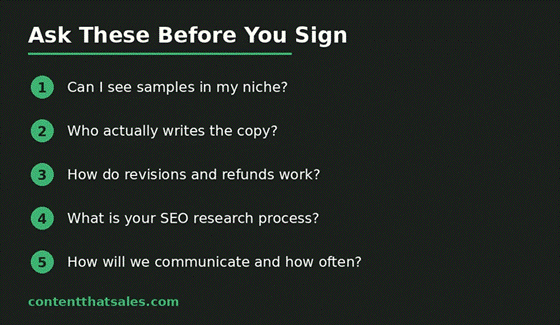
Run through these before you sign anything.
Red Flag Seven: Promises Of Instant Results
“You’ll rank number one in two weeks.” Run. Fast. SEO doesn’t work like that.
Real growth takes months. Anyone promising instant wins is selling a dream. Or a scam. Often both.
Honest services set honest timelines. They talk compounding gains. They show progress, not magic. Patience is part of the deal.
Content is a long game, much like planting a mango tree. You water it for seasons before you taste fruit. Steady work beats flashy claims every single time.
Let me set real expectations. New content usually takes three to six months to gain traction. Sometimes longer in tough niches. That’s normal. That’s how Google works.
A scammer hates this truth. So they sell speed instead. “Page one in 14 days.” “Guaranteed rankings.” No honest pro guarantees rankings. Google doesn’t let anyone promise that. Full stop.
What an honest service does promise is process. Solid research. Strong drafts. Steady publishing. Clear reporting. They sell the work, not a miracle. The results follow the work, in time.
Red Flag Eight: One Writer For Everything
A single writer can be great. But one person can’t master every field forever.
Tech, health, finance, law. Each needs its own depth. A real service matches the topic to the right writer.
This is where structured teams shine. The look at managed content writing services and how they work shows how editors and specialists team up. One overworked writer is a quality risk.
Red Flag Nine: No Plan, Just Random Posts
Random blogs don’t build authority. They just sit there. Alone. Doing nothing.
A strong service thinks in clusters. Pillar pages. Supporting posts. Internal links that connect it all.
Strategy is the difference between noise and growth. The guide on hiring a content writing service shows what a real content plan looks like. No plan means no compounding return.
Signs Of A Real Content Plan
- Topics grouped around core themes
- Clear pillar and support structure
- Internal links mapped on purpose
Red Flag Ten: They Ignore AI Overviews And LLMs
Search changed. Hard. Google now shows AI Overviews at the top. Chatbots answer questions too.
If a service ignores this, they’re stuck in 2019. Your content now has to feed both humans and machines.
What does that mean in practice? Clear answers. Strong structure. Real expertise on the page. AI tools pull from content that earns trust.
Modern writing has to win two readers at once. The person and the model. Services that grasp this build content that survives the AI shift. Those that don’t will fade.
How AI-Ready Content Looks
- Direct answers near the top of the page
- Clean headings that map the topic
- Real depth, real sources, real experience
This new layer matters more each month. A service that talks about what is SEO content writing and why it matters with an AI lens is thinking ahead. That’s who you want.
Let me explain why this is huge. When Google shows an AI Overview, it pulls from a few trusted sources. If your content is one of them, you win visibility even without a click sometimes.
Same with chatbots and large language models. People now ask AI tools for recommendations. Those tools pull from clear, structured, credible content. Vague fluff never gets cited. It just sits there, invisible.
So what should a smart service do differently now? They write answers, not just essays. They put the core point near the top. They use clean headings. They add real proof and real experience to the page.
They also think about entities and topics, not just keywords. AI systems map meaning, not just word matches. A service stuck on old keyword tricks will slowly lose ground as search keeps shifting.
Ask any service this question directly. “How are you adapting content for AI Overviews and LLMs?” If they look blank or wave it off, that’s a serious red flag in 2026. The game already changed.
Red Flag Eleven: Weak Or Fake Reviews
Check reviews before you trust anyone. But check them smart.
Five glowing five-star reviews posted on one day? Suspicious. Real feedback is messy. Mixed. Human.
Look for detail. Look for named clients. Look for results, not just praise. Vague hype is a warning, not proof.
Check more than the testimonials page too. That page is curated. Look at third-party spots. Old client sites. Real conversations. The fuller picture tells you more than a handpicked quote wall.
And ask for a reference you can actually contact. A confident service says sure. A shaky one finds excuses. One short call with a past client reveals more than ten polished testimonials ever could.
Red Flag Twelve: No Talk About Quality Control
Who checks the work before it reaches you? If the answer is “nobody,” that’s a problem.
A real service has editors. Plagiarism checks. Fact reviews. Quality control isn’t optional. It’s the backbone.
Want writing that holds up without losing speed? The guide on how to outsource content writing without losing quality shows the systems that protect quality at scale. No checks means no safety net.
Picture a single writer with no editor. They miss a wrong stat. Nobody catches it. It goes live on your site. Now your brand looks careless. One bad fact can dent years of trust.
Good services build layers. A writer drafts. An editor sharpens. A checker scans for copied text and weak claims. By the time it reaches you, three sets of eyes have already cleaned it up.
How To Choose The Right Service Instead
Spotting red flags is half the job. Now flip it. What does good look like?
Good services are clear. They show proof. They ask smart questions. They set fair timelines and stick to them.
If you want a full step-by-step, the resource on how to hire a content writing agency walks through the whole path. Use it as your checklist before you commit a cent.
Your Quick Green-Light Checklist
- Real samples in your niche, on request
- Clear pricing tied to clear scope
- Specific, simple SEO answers
- Written revision and refund policy
- Questions about your audience and goals
- A real content plan, not random posts
- Awareness of AI Overviews and LLMs
What About Budget And Cost?
Money matters. But cheapest is rarely smartest. Aim for value, not bargain-bin rates.
Set a real number before you shop. The walkthrough on how to budget for content writing helps you plan it sanely. A clear budget filters out the scammers fast.
Think long term. Good content earns for years. A cheap dud earns nothing. Sometimes it costs you more to fix it.
There’s also a difference between on-demand work and a full managed setup. The piece on on demand content writing services what to expect helps you match the buying model to your real needs and budget.
A Quick Story To Tie It Together
Let me leave you with a short tale. A small SaaS founder hired a $15-per-post service. Fast replies at first. Big promises. Cheap rate. It felt like a steal.
Three months in, traffic was flat. The posts read like a template on repeat. No one asked about his users. No editor touched the work. Revisions cost extra every time.
He switched to a real team. They asked about his buyers. They showed niche samples. They set a six-month plan. Slower at first. Then steady growth. Then real leads.
The lesson? Every red flag in this guide showed up in round one. He just didn’t know to look. You do now. That’s the whole point of reading this far.
If you want to see how the right setup runs end to end, the breakdown of full service content writing what’s included is a solid next read before you commit.
Frequently Asked Questions
What are the biggest red flags when hiring content writing services?
The biggest red flags when hiring content writing services are no samples, prices that look too cheap, vague SEO answers, and no clear revision policy. Slow communication and instant-result promises are also strong warning signs.
How do I know if a content writing service is legit?
Ask for niche samples, a clear process, and a written revision policy. Check reviews for detail, not just praise. A legit service asks about your audience and sets honest timelines.
Is cheap content writing always bad?
Not always, but very cheap work is risky. It often means spun text or zero edits. Aim for fair pricing tied to clear scope and real research.
Should a content service understand AI Overviews?
Yes. Search now leans on AI Overviews and LLMs. A modern service writes clear, structured, trustworthy content that both people and AI tools can use.
How many revisions should I expect?
A fair service usually offers at least one or two revision rounds. The key is that the policy is written down, not vague or hidden in fine print.
Final Word: Trust The Signs, Not The Pitch
You now know the warning signs. Use them. They’ll save you money, time, and a lot of stress.
A good writing partner feels easy. Clear talk. Real proof. Fair price. Honest plan. If it feels off, it probably is.
Don’t rush this choice. The right service becomes a growth engine for years. The wrong one drains your budget and your patience. A slow, careful pick beats a fast, regretful one.
Use this guide as your filter. Print the green-light checklist. Run every pitch through it. Trust the signals over the smooth talk. Your future self will thank you for being picky now.
Want a team that ticks every green box? Content That Sales writes copy built to rank and convert. Reach out and see the difference for yourself.
Call: 8801631988589 Email: service@contentthatsales.com Web: contentthatsales.com